
Choose Your Language / 言語を選択:
Introduction
War Truth and Hero Myth Fiction Questioning Robust Anti-War Film
March 26, 1945 day 36-day fierce Iwo Jima battle ended. This day, “Iwo Jima Battle End” declared, but this “victory” cost: approximately 20,000 Japanese military, approximately 7,000 American military tremendous casualties, Pacific War’s one most fierce battles.
For this historical day, recommending 2006 released Flags of Our Fathers. Clint Eastwood director’s work sharply depicts Iwo Jima flag-raising truth and war propaganda fiction, modern American cinema’s leading anti-war film.
Based James Bradley’s nonfiction Flags of Our Fathers, this work through 6 soldiers’ fates photographed famous Mount Suribachi flag-raising, depicts war beautification-reality divergence, hero-named pressure, war’s deep wounds giving individuals and families weighty human drama. Iwo Jima duology’s one work paired with Letters from Iwo Jima, from American perspective approaching war essence, this work “victory” emptiness and war’s true cost conveying next generation valuable visual record.
Basic Information & Synopsis
→ For synopsis and production information, see our Database Article
Director: Clint Eastwood
Year: 2006
Runtime: 132 minutes
Production: DreamWorks Pictures, Warner Bros., Amblin Entertainment
Commemorative Day: Iwo Jima Battle End Anniversary (March 26)
Synopsis: February 1945, Battle of Iwo Jima. Famous Mount Suribachi flag-raising photograph taken. Photographed 6 soldiers, 3 died battle, 3 survived. Surviving 3—Doc Bradley (Ryan Phillippe), Rene Gagnon (Jesse Bradford), Ira Hayes (Adam Beach)—government uses them war bond tour “heroes.” However, glamorous ceremonies behind, they suffer actual battlefield experience divergence. Film questions: What’s war truth? What’s hero meaning? What’s “victory” true cost?
Background Knowledge
Historical Background: Battle of Iwo Jima Significance
Battle of Iwo Jima (February 19-March 26, 1945) Pacific War’s one most fierce battles. This small volcanic island located approximately 1,250 kilometers south Tokyo held strategic importance as American military’s Japan mainland bombing relay base.
Lieutenant General Tadamichi Kuribayashi-led approximately 21,000 Japanese military built underground fortresses across island, deployed thorough protracted warfare. American military planned 3-day occupation, but actually forced 36-day fierce battle, suffered tremendous damage: approximately 7,000 dead, approximately 20,000 wounded. Japanese military also nearly annihilated, survivors merely 1,033.
This battle noteworthy: fought as modern positional warfare different from conventional Japanese military tactics like kamikaze attacks, banzai charges. Both armies paid tremendous sacrifices, this battle became event symbolizing war’s meaninglessness and tragedy.
Flag-Raising Photograph Truth
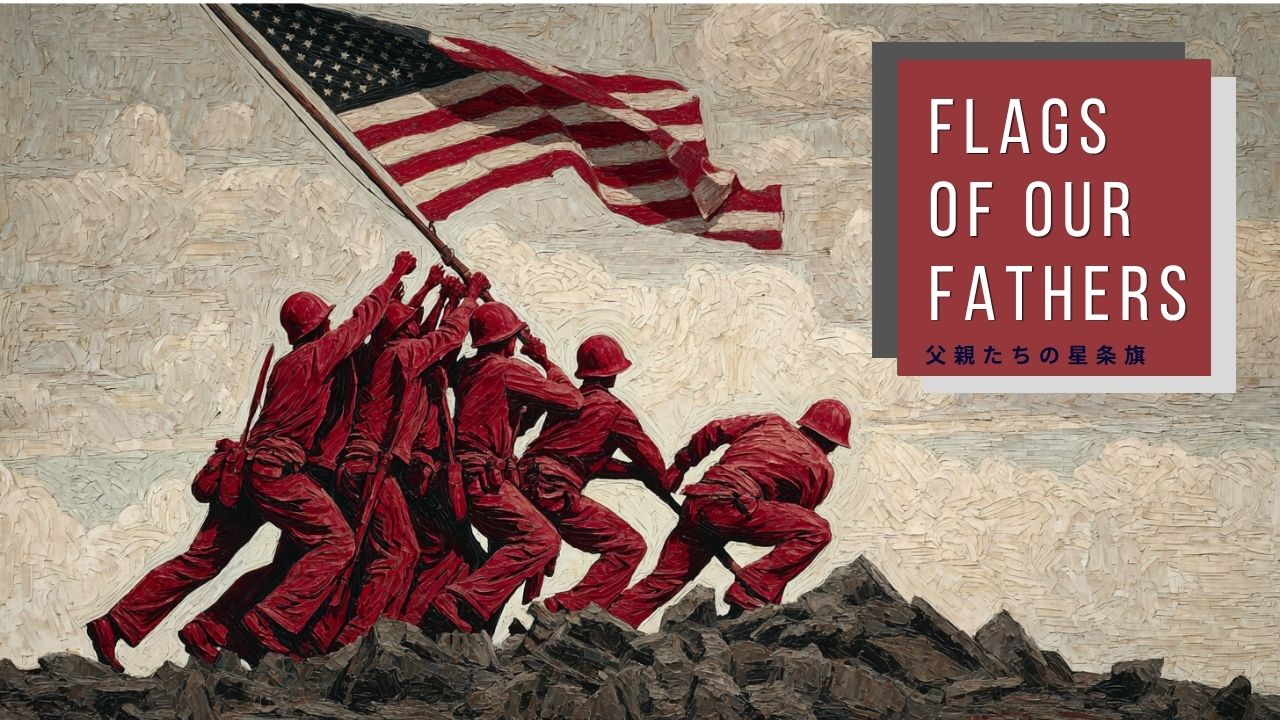
Joe Rosenthal’s photographed Mount Suribachi flag-raising photograph became 20th century’s one most famous war photographs. However, this photograph has complex background.
Actually two flag-raisings occurred, Rosenthal photographed second one. First raising practical during battle, but larger flag re-raising instructed, that moment coincidentally photographed.
Photographed 6 soldiers: John Bradley (corpsman), Rene Gagnon (Marine), Ira Hayes (Native American Marine), Franklin Sousley, Hank Hansen, Michael Strank. Among these latter 3 died Iwo Jima, survivors only first 3.
Photograph Person Identification Historical Misidentification
2016 and 2019 Marine Corps investigations revealed crucial facts concerning film’s foundation. Film’s protagonist John Bradley actually wasn’t in famous flag-raising photograph.
Film production time (2006) understanding: Photographed 6 people: John Bradley, Rene Gagnon, Ira Hayes, Michael Strank, Harlon Block, Franklin Sousley.
Later revealed truth:
- 2016: Not John Bradley but Harold Schultz photographed
- 2019: Not Rene Gagnon but Corporal Harold Keller photographed
Original author James Bradley himself admitted after Marine Corps investigation “father wasn’t in photograph.” This historical misidentification born immediate post-war confusion, believed as “official view” over 70 years.
Ironic correspondence: Film’s main theme “hero myth fictionality” and “history truth complexity” coincidentally also applies film itself, very suggestive point. This fact further strengthens message film depicts “war propaganda-reality divergence.”
Clint Eastwood’s Production Motivation
Clint Eastwood director’s background creating this work: unique perspective on war films. Strong will creating work excluding conventional Hollywood war film’s heroism aspects, focusing war reality and individual anguish.
75-year-old Eastwood challenging this major work, simultaneously produced Letters from Iwo Jima, realized unprecedented attempt depicting same battle from both Japanese-American perspectives. This method succeeded depicting war not one-sided perspective but humanity’s common tragedy.
Filming actually conducted Iceland, faithfully recreating Iwo Jima’s desolate landscape, detailed art sets constructed. Also detailed investigation actual battle video footage and testimonies, strove historically accurate depiction as possible.
What Makes It Exceptional
War Myth Deconstruction and Truth Pursuit
This work’s greatest strength: sharply accusing war propaganda fictionality. Through fact famous flag-raising photograph actually used as political tool for war bond sales, depicts truth hidden behind hero myth.
Particularly impressive: scene 3 “heroes” participate war bond tour. Behind glamorous ceremonies, soldiers suffering actual battlefield experience divergence psychologically depicted quietly yet powerfully through Eastwood’s restrained staging.
Ira Hayes’ anguish particularly painful. Native American receiving discrimination yet fighting for country, “hero” feted while suffering guilt battlefield comrades’ deaths and identity confusion, symbolically expresses war’s deep wounds giving individuals.
“Victory” Emptiness and War’s True Cost
Viewing with setting next day after March 26 battle end highlights how empty this “victory.” Despite Iwo Jima “suppression,” American military casualties exceeded Japanese military, Pacific War’s only battle where American military damage exceeded Japanese military.
Film questions this “victory’s” true meaning. While flag raised, citizens rejoice victory, what happened battlefield? Why surviving “heroes” continued suffering? Quietly appeals what war’s true cost was.
Non-Linear Story Structure’s Deep Insight
Eastwood adopted non-linear story structure skillfully interweaving modern son James’ perspective and past battlefield experiences. This method makes audiences deeply consider how war memories inherited next generation, and knowing truth importance.
Father Doc Bradley’s lifelong silence about war reasons gradually revealed through story progression, effectively expresses war experiencers’ deep pain. Paradoxical expression method war truth told through not speaking magnificently functions.
Realistic Battle Scenes and Human Depiction
Iwo Jima battle scenes alongside Saving Private Ryan one modern film history’s most realistic war depictions. However, Eastwood’s battle scenes not mere spectacle, function highlighting war meaninglessness and individual dignity.
Particularly impressive: scenes Doc Bradley as corpsman treating wounded comrades. His stance trying saving lives regardless enemy-ally quietly depicts humanity’s preciousness not lost even amid war.
Related Articles
- Flags of Our Fathers Database – Synopsis & Production Details
- Clint Eastwood – Filmmaker Profile
はじめに
戦争の真実と英雄神話の虚構を問いかける骨太な反戦映画
3月26日は、1945年に硫黄島での36日間に及ぶ激戦が終了した日です。この日、「硫黄島戦闘終了」が宣言されましたが、この「勝利」の代償は、日本軍約2万人、アメリカ軍約7000人という甚大な犠牲者を出すという、太平洋戦争最激戦の一つとなりました。
この歴史的な日に観る映画として、2006年公開の『父親たちの星条旗』(Flags of Our Fathers)を推奨します。クリント・イーストウッド監督が手がけたこの作品は、硫黄島での星条旗掲揚の真実と戦争プロパガンダの虚構を鋭く描いた、現代アメリカ映画界屈指の反戦映画です。
ジェームズ・ブラッドリーのノンフィクション『父親たちの星条旗』を原作とした本作は、あの有名な摺鉢山での星条旗掲揚写真に写った6人の兵士たちの運命を通じて、戦争の美化と現実の乖離、英雄という名の重圧、戦争が個人と家族に与える深い傷を描いた重厚な人間ドラマです。硫黄島二部作の一作として『硫黄島からの手紙』と対を成し、アメリカ側の視点から戦争の本質に迫った本作は、「勝利」の空虚さと戦争の真のコストを次世代に伝える貴重な映像記録といえるでしょう。
基本情報・あらすじ
→ あらすじや製作情報はデータベース記事へ
監督: クリント・イーストウッド
製作年: 2006年
上映時間: 132分
制作: DreamWorks Pictures、Warner Bros.、Amblin Entertainment
記念日: 硫黄島戦闘終了記念日(3月26日)
あらすじ: 1945年2月、硫黄島の戦い。有名な摺鉢山での星条旗掲揚写真が撮影されました。写真に写った6人の兵士のうち、3人は戦死し、3人が生還しました。生還した3人——ドク・ブラッドリー(ライアン・フィリップ)、レイニー・ガニオン(ジェシー・ブラッドフォード)、アイラ・ヘイズ(アダム・ビーチ)——は、政府によって戦時国債ツアーの「英雄」として利用されます。しかし、華やかなセレモニーの裏で、彼らは実際の戦場体験との乖離に苦しみます。映画は問いかけます:戦争の真実とは何か? 英雄の意味とは何か? 「勝利」の真のコストとは何か?
予備知識
歴史的背景:硫黄島の戦いの意義
硫黄島の戦い(1945年2月19日-3月26日)は、太平洋戦争において最も激戦となった戦闘の一つです。東京から約1,250キロ南に位置するこの小さな火山島は、アメリカ軍の日本本土爆撃の中継基地として戦略的に重要な意味を持っていました。
栗林忠道中将率いる日本軍約2万1千人は、島全体に地下要塞を築き、徹底的な持久戦を展開しました。アメリカ軍は3日で占領する予定でしたが、実際には36日間の激戦を強いられ、戦死者約7千人、負傷者約2万人という甚大な損害を被りました。日本軍もほぼ全滅し、生存者はわずか1,033人でした。
この戦いは、カミカゼ特攻やバンザイ突撃といった従来の日本軍戦術とは異なる、近代的な陣地戦として戦われた点で特筆されます。両軍ともに多大な犠牲を払ったこの戦闘は、戦争の無意味さと悲惨さを象徴する出来事となりました。
星条旗掲揚写真の真実
ジョー・ローゼンタールが撮影した摺鉢山での星条旗掲揚写真は、20世紀最も有名な戦争写真の一つとなりました。しかし、この写真には複雑な背景があります。
実際には二度の星条旗掲揚が行われており、ローゼンタールが撮影したのは二度目のものでした。最初の掲揚は戦闘の合間に行われた実用的なものでしたが、より大きな旗での再掲揚が指示され、その瞬間が偶然撮影されたのです。
写真に写った6人の兵士は、ジョン・ブラッドリー(衛生兵)、レイニー・ガニオン(海兵隊員)、アイラ・ヘイズ(アメリカ先住民の海兵隊員)、フランクリン・ソウスリー、ハンク・ハンセン、マイケル・ストランクでした。このうち後の3人は硫黄島で戦死し、生還したのは最初の3人だけでした。
写真の人物特定をめぐる歴史的誤認
2016年および2019年の海兵隊調査により、この映画の根幹に関わる重大な事実が明らかになりました。映画の主人公であるジョン・ブラッドリーは、実際には有名な星条旗掲揚写真に写っていなかったのです。
映画制作時(2006年)の認識:写真に写った6人は、ジョン・ブラッドリー、レイニー・ガニオン、アイラ・ヘイズ、マイケル・ストランク、ハーロン・ブロック、フランクリン・ソウスリーとされていました。
後に判明した真実:
- 2016年: ジョン・ブラッドリーではなくハロルド・シュルツが写っていた
- 2019年: レイニー・ガニオンではなくハロルド・ケラー伍長が写っていた
原作者ジェームズ・ブラッドリー自身も、海兵隊の調査後に「父親は写真に写っていなかった」と認めています。この歴史的誤認は戦争直後の混乱した状況で生まれ、70年以上にわたって「公式見解」として信じられてきました。
皮肉な符合:映画のメインテーマである「英雄神話の虚構性」や「歴史の真実の複雑さ」が、奇しくも映画自体にも当てはまることになった点は、非常に示唆的です。この事実は、映画が描く「戦争プロパガンダと現実の乖離」というメッセージを、より一層強化する結果となっています。
クリント・イーストウッドの製作動機
クリント・イーストウッド監督がこの作品を手がけた背景には、戦争映画に対する独自の視点がありました。従来のハリウッド戦争映画が持つ英雄主義的な側面を排し、戦争の現実と個人の苦悩にフォーカスした作品を作りたいという強い意志がありました。
75歳でこの大作に挑んだイーストウッドは、同時期に『硫黄島からの手紙』も製作し、日米双方の視点から同じ戦闘を描くという前例のない試みを実現しました。この手法により、戦争を一方的な視点ではなく、人類共通の悲劇として描くことに成功しています。
撮影は実際にアイスランドで行われ、硫黄島の荒涼とした風景を忠実に再現するため、細部にまでこだわった美術セットが構築されました。また、実際の戦闘の映像資料や証言を詳細に調査し、可能な限り史実に忠実な描写を心がけています。
優れている点
戦争神話の解体と真実の追求
本作の最大の優れた点は、戦争プロパガンダの虚構性を鋭く告発していることです。有名な星条旗掲揚写真が、実際には戦時国債販売のための政治的道具として利用されたという事実を通じて、英雄神話の裏に隠された真実を描き出しています。
特に印象的なのは、3人の「英雄」たちが参加する戦時国債ツアーの場面です。華やかなセレモニーの裏で、実際の戦場体験との乖離に苦しむ兵士たちの心理が、イーストウッドの抑制の効いた演出によって静かに、しかし力強く描かれています。
アイラ・ヘイズの苦悩は特に痛切です。アメリカ先住民として差別を受けながらも国のために戦った彼が、「英雄」としてもてはやされる一方で、戦友の死への罪悪感とアイデンティティの混乱に苦しむ姿は、戦争が個人に与える深い傷を象徴的に表現しています。
「勝利」の空虚さと戦争の真のコスト
3月26日の戦闘終了から翌日という設定で観ることにより、この「勝利」がいかに空虚なものだったかが浮き彫りになります。硫黄島を「制圧」したものの、アメリカ軍の犠牲者数は日本軍を上回り、太平洋戦争で唯一、アメリカ軍の損害が日本軍を超えた戦闘となりました。
映画は、この「勝利」の真の意味を問いかけています。星条旗が掲げられ、国民が勝利に沸く一方で、戦場で何が起きていたのか。生き残った「英雄」たちがなぜ苦しみ続けたのか。戦争の本当のコストとは何だったのかを、静かに訴えています。
非線形的な物語構造による深い洞察
イーストウッドは、現代の息子ジェームズの視点と過去の戦場体験を巧妙に織り交ぜた非線形的な物語構造を採用しています。この手法により、観客は戦争の記憶がいかに次世代に受け継がれるか、そして真実を知ることの重要性について深く考えさせられます。
父親ドク・ブラッドリーが生涯にわたって戦争について語らなかった理由が、物語の進行とともに明らかになる構成は、戦争体験者の心の奥底にある痛みを効果的に表現しています。語らないことによって語られる戦争の真実という、逆説的な表現手法が見事に機能しています。
リアリスティックな戦闘シーンと人間描写
硫黄島での戦闘シーンは、『プライベート・ライアン』などと並ぶ、現代映画史上最もリアルな戦争描写の一つです。しかし、イーストウッドの戦闘シーンは単なるスペクタクルではなく、戦争の無意味さと個人の尊厳を浮き彫りにするために機能しています。
特に印象的なのは、衛生兵としてのドク・ブラッドリーが負傷した戦友を治療するシーンです。敵味方を問わず人命を救おうとする彼の姿勢は、戦争の中にあっても失われない人間性の尊さを静かに描き出しています。
関連記事
- 父親たちの星条旗 データベース – あらすじ・製作情報
- クリント・イーストウッド – 監督プロフィール