

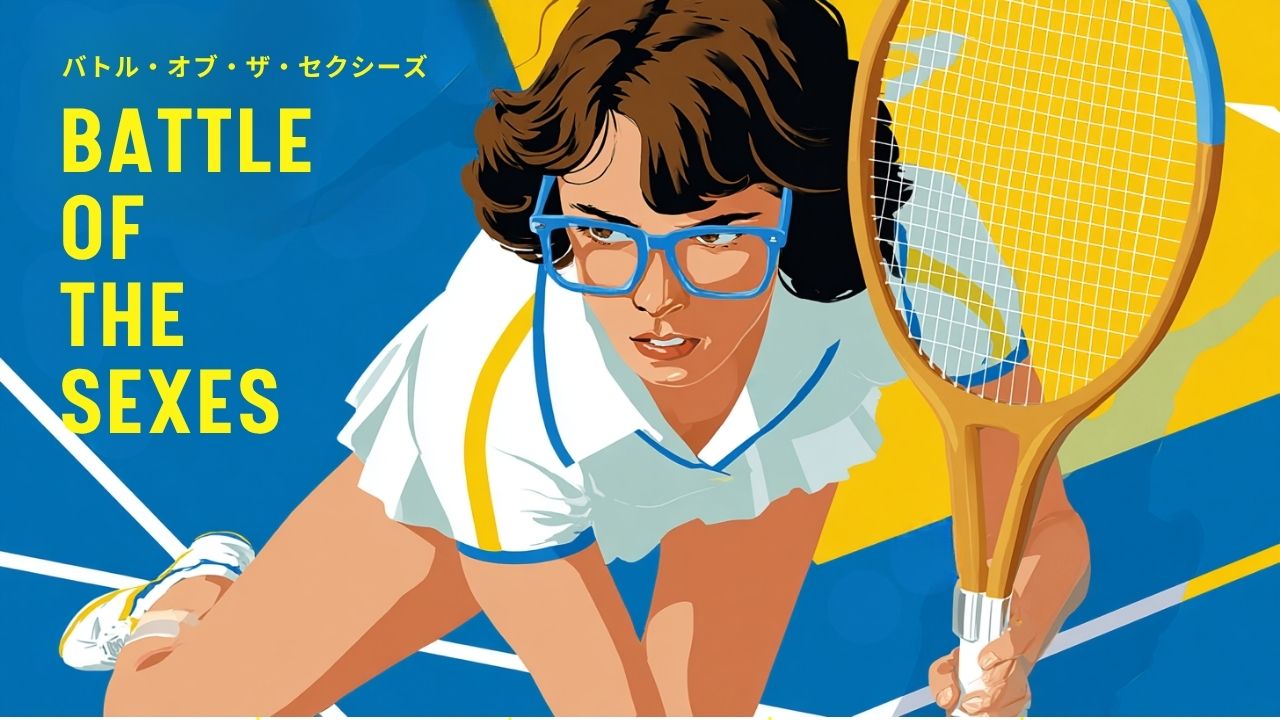
Basic Info / 基本情報
| Item | English / 日本語 |
|---|---|
| Director | Jonathan Dayton, Valerie Faris / ジョナサン・デイトン、ヴァレリー・ファリス |
| Year | 2017 |
| Running Time | 121 min (2h 1m) |
| Genre | Biography, Drama, Comedy / 伝記、ドラマ、コメディ |
| Production | Fox Searchlight Pictures, Cloud Eight Films, Decibel Films |
| Box Office | $15.3 million (Worldwide) |
Synopsis / あらすじ
[English / 英語] Set in 1973 America, the film chronicles the historic “Battle of the Sexes” tennis match between women’s world champion Billie Jean King (Emma Stone) and former men’s champion/serial hustler Bobby Riggs (Steve Carell). While Billie Jean fights to establish the WTA (Women’s Tennis Association) and demands equal prize money to combat systemic sexism in the sport, the aging Bobby bets on a spectacle, provocatively claiming that the female game is inferior to the male’s. Accepting his challenge, Billie Jean steps onto the court not just for a trophy, but as the face of a burgeoning women’s rights movement. The film poignantly depicts her private struggles with her identity, Bobby’s desperate showmanship, and the match’s monumental social impact. It asks: What is the transformative power of sports in society? What is the true meaning of gender equality? And what constitutes the ultimate form of courage?
[日本語] 1973年のアメリカ。女子テニス界の至宝ビリー・ジーン・キング(エマ・ストーン)は、男子との圧倒的な賞金格差に異を唱え、自ら女子テニス協会(WTA)を設立して地位向上への孤独な闘いに身を投じていました。そこへ、元男子王者のボビー・リッグス(スティーヴ・カレル)が、女性蔑視的な言動を繰り返しながら「男女対決」の挑戦状を叩きつけます。単なるスポーツの枠を超え、女性の権利運動の象徴となったこの一戦。映画は、自身のアイデンティティに悩み、私生活の葛藤を抱えながらもラケットを振るビリー・ジーンの勇姿と、ショーマンシップの裏に潜むボビーの悲哀、そして世界を変えた試合の熱狂を描き出します。問いかけます。スポーツには社会を変革する力が宿っているのか。ジェンダー平等がもたらす真の価値とは何か。そして、時代に立ち向かう「勇気」の正体とは一体何なのでしょうか。に勝てることを示すためにキングに挑戦します。キングは最初断ります。マーガレット・コートが挑戦を受け大敗します。キングは試合を承諾します。1973年9月20日、ヒューストン・アストロドームの30,000人の観客と全世界9,000万人のテレビ視聴者の前で、ビリー・ジーン・キングはボビー・リッグスを6–4、6–3、6–3で破ります。『バトル・オブ・ザ・セクシーズ』はその試合についての映画です——そして試合が内包し運んだすべてのものについて:同一賃金、クローゼットの代償、シンボルであることを求められながら同時に一人の人間でもあるという特殊な重荷、そしてスポーツが最善の状態にあるとき、社会が自分たちの信念について議論するアリーナとなりうることについて。
Cast & Crew / スタッフ・出演
|
Role |
English / 日本語 |
|---|---|
|
Director |
Jonathan Dayton, Valerie Faris / ジョナサン・デイトン、ヴァレリー・ファリス |
|
Screenplay |
Simon Beaufoy / サイモン・ボーフォイ |
|
Producer |
Christian Colson, Danny Boyle, Robert Graf / クリスチャン・コルソン、ダニー・ボイル、ロバート・グラフ |
|
Cinematography |
Linus Sandgren / リナス・サンドグレン |
|
Music |
Nicholas Britell / ニコラス・ブリテル |
|
Editing |
Pamela Martin / パメラ・マーティン |
|
Distribution |
Fox Searchlight Pictures / フォックス・サーチライト・ピクチャーズ |
|
Cast |
Emma Stone (Billie Jean King) / エマ・ストーン(ビリー・ジーン・キング) |
|
Steve Carell (Bobby Riggs) / スティーヴ・カレル(ボビー・リッグス) |
|
|
Andrea Riseborough (Marilyn Barnett) / アンドレア・ライズバラ(マリリン・バーネット) |
|
|
Sarah Silverman (Gladys Heldman) / サラ・シルバーマン(グラディス・ヘルドマン) |
|
|
Bill Pullman (Jack Kramer) / ビル・プルマン(ジャック・クレーマー) |
|
|
Austin Stowell (Larry King) / オースティン・ストウェル(ラリー・キング) |
|
|
Alan Cumming (Ted Tinling) / アラン・カミング(テッド・ティンリング) |
|
|
Elisabeth Shue (Priscilla Riggs) / エリザベス・シュー(プリシラ・リッグス) |
|
|
Natalie Morales (Rosie Casals) / ナタリー・モラレス(ロジー・カザルズ) |
|
|
Jessica McNamee (Margaret Court) / ジェシカ・マクナミー(マーガレット・コート) |
Additional Information / 追加情報
Awards / 受賞歴
- 75th Golden Globe Awards (2018) – 2 nominations:
- Best Actor in a Motion Picture – Musical or Comedy – nomination (Steve Carell)
- Best Actress in a Motion Picture – Musical or Comedy – nomination (Emma Stone)
- BAFTA Awards (2018) – 1 nomination:
- Best Actress in a Leading Role – nomination (Emma Stone)
- Screen Actors Guild Awards (2018) – 1 nomination:
- Outstanding Performance by a Female Actor in a Leading Role – nomination (Emma Stone)
- Critics’ Choice Awards (2018) – 1 nomination:
- Best Actress – nomination (Emma Stone)
- Costume Designers Guild Awards (2018) – 1 win:
- Excellence in Period Film – WON (Mary Zophres)
Critical Reception / 批評的評価
- Rotten Tomatoes: 83% (Critics), 72% (Audience)
- Metacritic: 66/100 (Generally Favorable Reviews)
- IMDb: 7.0/10
- Eiga.com(映画.com): 3.6/5
- Emma Stone’s performance universally praised — her physical transformation into King (the posture, the footwork, the glasses, the specific quality of concentration that King brought to the court) described as meticulous and inhabited
- Steve Carell praised for playing Riggs as genuinely funny without making him a buffoon — a man whose public persona of chauvinism was partly performance and whose private life was more complicated than the showman allowed
- The film’s treatment of King’s relationship with Marilyn Barnett praised for its sensitivity — a love story told with warmth and without sensationalism, understanding what was at stake for King in 1973
- Linus Sandgren’s cinematography — warm, grainy, 1970s-inflected Super 16mm aesthetic — praised as one of the most precisely period-accurate visual designs of the year (Sandgren won the Oscar for La La Land the same year)
- Simon Beaufoy’s screenplay praised for balancing the public spectacle with the private cost
- Roger Ebert.com: ★★★ “A crowd-pleasing film about something genuinely important — the performances carry it”
- The New York Times: “Lively and warm — Stone and Carell are perfectly matched”
- Variety: “A film that wears its politics openly and earns them through character”
- The Guardian: ★★★ “Entertaining, if slightly too comfortable — the real story was messier and more interesting”
- The most consistent critical note: the film is somewhat safer than its subject demands — it smooths the complicated edges of both King and Riggs in favor of a satisfying narrative
- The real Billie Jean King’s public endorsement of the film and its treatment of her sexuality was noted as significant — she had not publicly acknowledged the relationship with Barnett until many years after the match
- Dayton and Faris — whose previous feature was Little Miss Sunshine (2006) — praised for managing the tonal balance between comedy, drama, and political argument without letting any element overwhelm the others
Box Office Performance / 興行成績
- Worldwide Total: $15.3 million
- Domestic (US/Canada): $12.6 million
- International: $2.7 million
- Production Budget: $25 million
- Return on Investment: ~0.6x (modest theatrical; strong ancillary)
- Opening Weekend (US):
- Wide release: September 22, 2017
- $3.8 million opening weekend (#7)
- 2,306 theaters
- Performance Analysis:
- Released during a crowded fall 2017 awards season — competing against Kingsman: The Golden Circle, Flatliners, and other wide releases
- The political timing — released one year into the Trump presidency, at the height of #MeToo’s emergence — gave the film resonance beyond sports history
- Despite strong critical reception, the film underperformed commercially — adult drama remains a difficult theatrical proposition
- Strong streaming performance on Hulu and Amazon extended its cultural life
- International performance was notably weak ($2.7M) — the specific cultural memory of the 1973 match is predominantly American
- The Real Match’s Legacy:
- The original September 20, 1973 match drew 30,472 spectators to the Houston Astrodome — the largest crowd ever to watch a tennis match
- An estimated 90 million viewers watched on television worldwide
- The match was broadcast in 37 countries
- It remains the most-watched tennis match in history
Related Review / 関連レビュー
🔗 English Review
・[International Day of Sport for Development and Peace] “When Women Demanded Rights, Can’t Even Allow Men’s Fraction?” — Moving Work Depicting Sports’ Power Changing Society
🔗 日本語レビュー
・【発展と平和のためのスポーツ国際デー】「女性が権利を求めたとき、男の何分の一でも許せないのね」—スポーツが社会を変える力を描いた感動作