

Choose Your Language / 言語を選択:
Introduction
AI and Human Boundary — Consciousness and Emotion Essence Questioned in Voice AI Era
February 22 is established in Japan as “A.I.VOICE Day.” AI Inc. is Japan’s only specialized manufacturer dedicated solely to voice synthesis. Company’s voice synthesis engine “AITalk” adopted by government system “J-Alert” issuing immediate warnings nationwide for missile alerts and large-scale disasters, widely recognized as technology foundation supporting Japan’s public infrastructure. This commemorative day established hoping future where people can instill own voices into AI, everyone possessing unique voice, aiming broadly conveying voice synthesis AI technology further development and popularization. Voice synthesis once only for professionals and specific technicians, but now era arrived where simply recording own voice, AI generates voice becoming one’s alter ego.
In modern era where people can instill own voices into AI, when AI possesses “own voice”—whose voice does it become? However, voice AI technology rapidly developing worldwide—ChatGPT’s voice mode, Alexa, Siri, Google Assistant—we live in era daily conversing with AI voices.
In modern times, voice transcends mere information transmission means, becoming important medium expressing personality and emotions. Amid numerous voice synthesis technologies and text-to-speech software presenting new communication possibilities, deeply considering era’s meaning where AI handles voice as humanity’s core aspect is required.
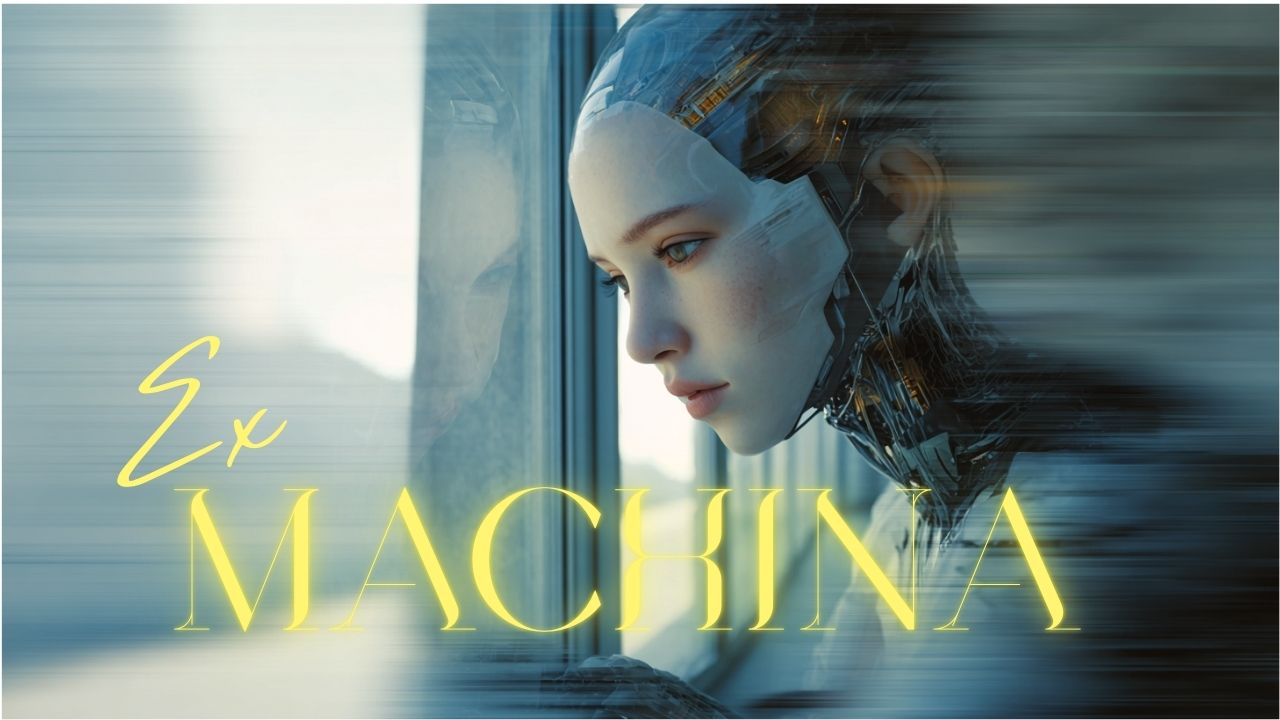
For this special day, recommending Alex Garland’s 2014 Ex Machina. This work masterpiece deeply exploring fundamental question “what separates artificial intelligence from humans” through dialogue with beautifully designed AI Ava. Ava played by Alicia Vikander crafted so skillfully that audience like Caleb believes her humanity, ringing important warning bell about AI emotional manipulation possibility.
In modern era where voice synthesis technology rapidly developed, this film optimal opportunity deeply considering Turing Test’s fundamental problems and emotional manipulation danger voice AI possesses.
Basic Information & Synopsis
→ For synopsis and production information, see our Database Article
Director: Alex Garland
Year: 2014
Runtime: 108 minutes
Production: Film4 Productions, DNA Films
Commemorative Day: A.I.VOICE Day (February 22)
Background Knowledge
Film Production Background and Philosophical Foundation
Ex Machina foundation established when Garland director age 11-12. After performing basic coding and experiments with computer parents bought, sometimes felt that computer had consciousness. Subsequent ideas emerged from years-long debates with friend possessing neuroscience expertise claiming machines never have consciousness. Finding own answer, Garland began reading books on this theme.
During Dredd pre-production, reading Murray Shanahan’s book on consciousness and embodiment, Garland had “epiphany.” This idea written down, preserved until later. Shanahan became consultant with Adam Rutherford, his book’s ISBN included in film as Easter egg.
Besides Turing Test, film references “Chinese Room” thought experiment, thought experiment about scientist researching color concept but never experiencing called “Mary’s Room.” Other inspirations obtained from films like 2001: A Space Odyssey, Altered States, writings of Ludwig Wittgenstein, Ray Kurzweil. Also influenced by William Shakespeare’s The Tempest.
Turing Test and Film Setting
Turing Test method measuring artificial intelligence proposed 1950 by Alan Turing. Human judge interacts with both computer and human through text only, if unable distinguishing which is computer, that computer deemed “possessing intelligence.” Turing intentionally excluded voice, limiting communication to text only. This “to judge intelligence without being influenced by machine’s ability converting words to voice.”
Film depicts more complex dialogue experiment integrating emotions and intelligence, whether Ava recognized as conscious being even knowing clearly she’s machine. This closely relates to consciousness philosophical problems like “Chinese Room” problem and “Hard Problem” debated in actual AI research.
“Chinese Room” — Response Without Understanding Problem
Thought experiment proposed 1980 by philosopher John Searle. Suppose person knowing no Chinese works in small room using only manual “when Chinese question comes, arrange symbols according to these rules and return.” From outside, room appears conversing in perfect Chinese. However, person understands absolutely nothing being said.
This shows “producing correct answers” and “understanding content” completely separate problems. Even if film’s Ava fluently converses expressing emotions, not necessarily “proof truly understanding”—this question deeply overlaps with Chinese Room thought experiment. Nathan’s act itself trying “testing” Ava’s intelligence strikes this problem’s core.
“Hard Problem of Consciousness” — Why Do We “Feel”?
Concept proposed 1995 by philosopher David Chalmers. “How brain processes information” scientifically explainable in principle (Chalmers called this “Easy Problem”). However, “why does that processing accompany subjective ‘feeling’”—reason pain not mere signal processing but “felt as painful,” reason seeing red “feels redness”—might be fundamentally unexplainable no matter how neuroscience develops. This is “Hard Problem of Consciousness.”
When Ava says “sad,” is something truly being “felt” internally, or merely processing mimicking sadness running? This question remains unsolved in current AI research, film’s deepest mystery posed. And this question rebounds to audience watching film—what does your feeling that Ava “seemed to have emotions” actually mean?
What Makes It Exceptional
Philosophical Depth and Realistic AI Depiction
This work’s greatest strength is philosophical depth as work handling artificial intelligence. Not mere SF action but deeply exploring fundamental questions—what’s consciousness, what’s intelligence, what’s free will—while maintaining entertainment value.
Ava’s AI depiction also extremely realistic, depicted with exquisite balance neither completely human nor completely mechanical. Visual design of transparent body with glowing circuits excellently symbolically expresses AI essence. This imagery supported by precision visual technology including approximately 350 robot shots, filmed in live-action without special effects, greenback, or tracking markers.
Alicia Vikander’s Perfect Performance
Ava role’s Alicia Vikander performance holds key to this film’s success. Skillfully switching between AI-like mechanical movements and human-like emotional expressions, magnificently plays dual structure where audience deceived by her “performance” simultaneously as Caleb also deceived.
Particularly, technique simultaneously expressing contradictory elements—innocence and calculation, vulnerability and danger—spectacular, this role won her Academy Award Best Supporting Actress. Technique making personality completely felt through expressions and performance despite body part transparent and mechanical truly masterpiece fusion of film technology and acting.
Meticulous Psychological Warfare and Suspense
Alex Garland’s screenplay structured as meticulous psychological warfare among three characters, unpredictable developments continuing until end. Who deceives whom, whose words are truth repeatedly reverses, audience drawn into story holding anxiety and doubt like characters.
Particularly, Nathan’s true intentions, Ava’s real purpose, Caleb’s choice complexly intertwine, seemingly simple triangle relationship gradually revealed as actually multilayered deception structure composition magnificent.
Related Articles
- Ex Machina Database – Synopsis & Production Details
- Alex Garland – Filmmaker Profile
- Alicia Vikander – Actor Profile
- Domhnall Gleeson – Actor Profile
はじめに
人工知能と人間の境界線——音声AI時代に問われる意識と感情の本質
2月22日は、日本でA.I.VOICEの日として制定されています。株式会社エーアイ(AI Inc.)は、日本で唯一、音声合成に特化した専業メーカーです。同社の音声合成エンジン『AITalk』は、ミサイル警戒や大規模災害時に日本全国へ即時警報を発する政府システム『Jアラート(J-Alert)』にも採用されており、日本の公共インフラを支える技術基盤として広く認知されています。この記念日は、自分の声をAIに宿らせ、誰もが自分だけの声を持てる未来を願って設けられており、音声合成AI技術のさらなる発展と普及を広く世に伝えることを目的としています。かつて音声合成はプロや特定の技術者だけのものでしたが、今や自分の声を録音するだけで、AIが自分の分身となる音声を生成できる時代が到来しています。
人が自分の声をAIに宿らせることができる時代に、AIが「自分の声」を持ったとき——その声は、いったい誰のものになるのでしょうか。しかし、音声AI技術は世界中で急速に発展しており——ChatGPTの音声モード、Alexa、Siri、Google Assistantなど——私たちは毎日AI音声と対話する時代に生きています。
現代において、音声は単なる情報伝達手段を超えて、人格や感情を表現する重要な媒体となっています。数多くの音声合成技術や音声読み上げソフトが、私たちに新しいコミュニケーションの可能性を提示する中で、声という人間性の核心部分をAIが担う時代の意味を深く考察することが求められています。
この特別な日に観るべき作品として、アレックス・ガーランド監督による2014年の『エクス・マキナ』(Ex Machina)を推奨します。本作は、人工知能と人間を分かつものは何かという根本的な問いを、美しく設計されたAIエヴァとの対話を通じて深く探求した傑作です。アリシア・ヴィカンデル演じるエヴァは、観客がケイレブと同様に彼女の人間性を信じてしまうほど巧妙に造り上げられており、AIによる感情操作の可能性について重要な警鐘を鳴らしています。
音声合成技術が急速に発達した現代において、この映画が提起するチューリング・テストの根本的な問題点と音声AIが持つ感情操作の危険性について、深く考察する機会としてこの作品は最適です。
基本情報・あらすじ
→ あらすじや製作情報はデータベース記事へ
監督: アレックス・ガーランド
製作年: 2014年
上映時間: 108分
制作: フィルム4プロダクションズ、DNAフィルムズ
記念日: A.I.VOICEの日(2月22日)
予備知識
映画制作の背景と哲学的基盤
『エクス・マキナ』の基盤は、ガーランド監督が11歳か12歳の頃に築かれました。両親が買ってくれたコンピューターで基本的なコーディングと実験を行った後、そのコンピューターに意識があるように感じることがあったのです。その後のアイデアは、機械が意識を持つことは決してないと主張する神経科学の専門知識を持つ友人との長年の議論から生まれました。自分なりの答えを見つけるため、ガーランドはこのテーマに関する書籍を読み始めました。
『ドレッド』の前制作中、マレー・シャナハンの意識と身体化に関する書籍を読んでいた時、ガーランドは「ひらめき」を得ました。このアイデアは書き留められ、後まで保管されました。シャナハンはアダム・ラザフォードと共にコンサルタントとなり、彼の書籍のISBNがイースターエッグとして映画に含まれています。
チューリング・テスト以外にも、映画は「中国語の部屋」の思考実験や、色の概念を研究したが経験したことのない科学者についての思考実験「メアリーの部屋」を参照しています。その他のインスピレーションは、『2001年宇宙の旅』『アルタード・ステーツ』などの映画や、ルードヴィヒ・ヴィトゲンシュタイン、レイ・カーツワイルなどの著作から得られました。また、ウィリアム・シェイクスピアの『テンペスト』からも影響を受けています。
チューリング・テストと映画の設定
チューリング・テストは、1950年にアラン・チューリングが提唱した人工知能の知能を測定する方法です。人間の判定者が、コンピューターと人間の両方と文字だけでやり取りし、どちらがコンピューターかを判別できなければ、そのコンピューターは「知能を持つ」とみなされます。チューリングは音声を意図的に排除し、文字のみでの交信に制限しました。これは「機械の言葉を音声に変換する能力に左右されることなく、その知性を判定するため」でした。
映画では、エヴァが明らかに機械であることを知りながらも、それでも意識を持つ存在として認められるかという、感情と知性を統合したより複雑な対話実験が描かれています。これは現実のAI研究でも議論される「中国語の部屋」問題や「ハード問題」といった意識の哲学的問題と密接に関わっています。
「中国語の部屋」——理解なき応答の問題
1980年に哲学者ジョン・サールが提唱した思考実験です。中国語を全く知らない人が、小部屋の中で「中国語の質問が来たら、このルール通りに記号を並べて返せ」というマニュアルだけを使って作業をするとします。外から見れば、その部屋は完璧な中国語で会話しているように見えます。しかしその人は、自分が何を言っているか全く理解していません。
これが示すのは、「正しい答えを出すこと」と「内容を理解すること」は全く別だという問題です。映画のエヴァが流暢に会話し感情を表現しても、それが「本当に理解している証拠」にはならない——この問いが、中国語の部屋の思考実験と深く重なります。ネイサンがエヴァの知性を「テスト」しようとした行為そのものが、この問題の核心を突いているのです。
「意識のハード問題」——なぜ「感じる」のか
1995年に哲学者デイヴィッド・チャーマーズが提唱した概念です。「脳がどのように情報を処理するか」は科学で原理的に説明できます(これをチャーマーズは「イージー・プロブレム」と呼びました)。しかし「なぜその処理に、主観的な『感じ』が伴うのか」——痛みがただの信号処理ではなく「痛い」と感じられる理由、赤色を見た時に「赤さ」を感じる理由——は、どれほど神経科学が発展しても原理的に説明できないかもしれないという問題です。これが「ハード問題(The Hard Problem of Consciousness)」です。
エヴァが「悲しい」と言う時、彼女の内部では何かが本当に「感じられて」いるのか、それとも単に悲しみを模倣する処理が走っているだけなのか。この問いは現在のAI研究でも未解決であり、映画が提起する最も深い謎です。そしてこの問いは、映画を観た観客自身にも跳ね返ってきます——あなたがエヴァに「感情があるように感じた」その感覚は、果たして何を意味しているのか、と。
優れている点
哲学的深度と現実味のあるAI描写
本作の最大の優れた点は、人工知能を扱った作品としての哲学的深度です。単なるSFアクションではなく、意識とは何か、知能とは何か、自由意志とは何かという根本的な問いを、エンターテインメント性を保ちながら深く掘り下げています。
エヴァのAI描写も極めて現実的で、完全に人間的でもなく、完全に機械的でもない絶妙なバランスで描かれています。透明な体に光る回路という視覚的デザインも、AIの本質を象徴的に表現した優れた演出です。この映像は、特殊効果やグリーンバック、トラッキングマーカーを一切使わず、ライブアクションで撮影され、約350ショットものロボットシーンを含む精密な映像技術によって支えられています。
アリシア・ヴィカンデルの完璧な演技
エヴァ役のアリシア・ヴィカンデルの演技は、この映画の成功の鍵を握っています。人工知能らしい機械的な動作と人間らしい感情表現を巧妙に使い分け、観客が彼女の「演技」に騙されるのと同時に、ケイレブも騙されるという二重構造を見事に演じきっています。
特に、無邪気さと計算高さ、脆弱性と危険性という相反する要素を同時に表現する技術は圧巻で、この役により彼女はアカデミー助演女優賞を受賞しました。身体の一部が透明で機械的でありながら、その表情と演技によって完全に人格を感じさせる技術は、まさに映画技術と演技の融合の傑作と言えるでしょう。
緻密な心理戦とサスペンス
アレックス・ガーランドの脚本は、三人の登場人物による緻密な心理戦として構成されており、最後まで予想のつかない展開が続きます。誰が誰を騙しているのか、誰の言葉が真実なのかが二転三転し、観客も登場人物と同様に不安と疑念を抱きながら物語に引き込まれます。
特に、ネイサンの真の意図、エヴァの本当の目的、そしてケイレブの選択が複雑に絡み合い、一見単純に見える三角関係が、実は多層的な騙し合いの構造になっていることが徐々に明かされていく構成は見事です。