
Basic Info / 基本情報
|
English |
日本語 |
|---|---|
|
Director |
Clint Eastwood / クリント・イーストウッド |
|
Year |
2006 |
|
Running Time |
132 min (2h 12m) |
|
Genre |
War, Drama / 戦争、ドラマ |
|
Production |
DreamWorks Pictures, Warner Bros. Pictures, Amblin Entertainment, Malpaso Productions |
|
Box Office |
$65.9 million (Worldwide) |
Synopsis / あらすじ
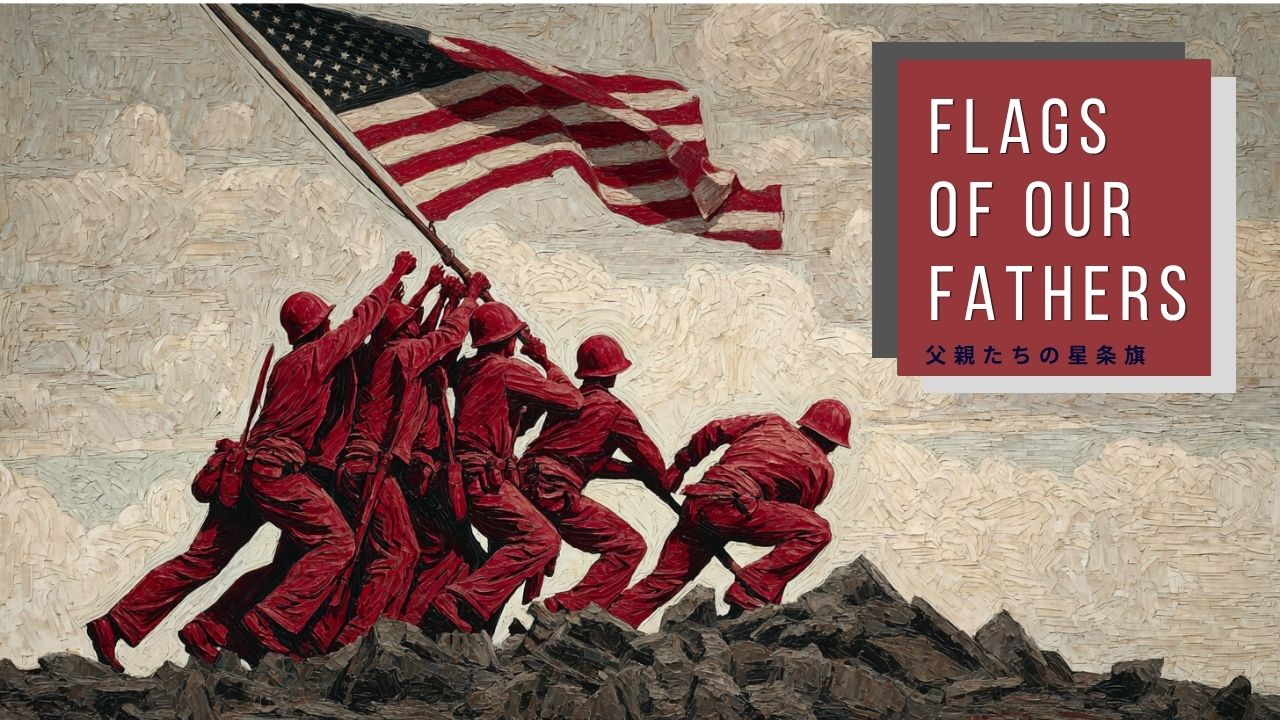
[English / 英語] In February 1945, during the Battle of Iwo Jima, the iconic photograph of the flag-raising atop Mount Suribachi was taken. Of the six soldiers in the frame, three died in battle, while three survived. The survivors—Doc Bradley (Ryan Phillippe), Rene Gagnon (Jesse Bradford), and Ira Hayes (Adam Beach)—are brought home by the government to be paraded as “heroes” for a nationwide war bond tour. Yet, behind the glamorous ceremonies, they struggle with the haunting divergence between their actual battlefield experiences and the myth they are forced to represent. The film asks: What is the true nature of war? What does it really mean to be a “hero”? And what is the ultimate cost of a nation’s “victory”?
[日本語] 1945年2月、硫黄島の戦い。摺鉢山の山頂で星条旗が掲げられた瞬間、あの一枚の写真が撮影されました。写真に写った6人の兵士のうち、3人はその後の戦いで命を落とし、3人が生還しました。生き残った3人——ドク・ブラッドリー(ライアン・フィリップ)、レイニー・ガニオン(ジェシー・ブラッドフォード)、アイラ・ヘイズ(アダム・ビーチ)は、戦時国債を売るための「英雄」として政府に利用されます。しかし、華やかなセレモニーの裏側で、彼らは自分たちが経験した戦場の凄惨な現実と、作り上げられた英雄像との埋めがたい乖離に苦しむことになります。映画は問いかけます。戦争の真実とは何なのか。「英雄」という言葉の本当の意味とは。そして、国家が手にする「勝利」の背後で支払われた、真のコストとは何だったのでしょうか。
Cast & Crew / スタッフ・出演
|
Role |
English |
日本語 |
|---|---|---|
|
Director / 監督 |
Clint Eastwood |
クリント・イーストウッド |
|
Screenplay / 脚本 |
William Broyles Jr., Paul Haggis |
ウィリアム・ブロイルズ・Jr.、ポール・ハギス |
|
Based on |
Book Flags of Our Fathers by James Bradley and Ron Powers |
ジェームズ・ブラッドリーとロン・パワーズの著書『父親たちの星条旗』 |
|
Producer / プロデューサー |
Clint Eastwood, Steven Spielberg, Robert Lorenz |
クリント・イーストウッド、スティーヴン・スピルバーグ、ロバート・ロレンツ |
|
Cinematography / 撮影 |
Tom Stern |
トム・スターン |
|
Music / 音楽 |
Clint Eastwood |
クリント・イーストウッド |
|
Editing / 編集 |
Joel Cox, Gary Roach |
ジョエル・コックス、ゲイリー・ローチ |
|
Production Design |
Henry Bumstead |
ヘンリー・バムステッド |
|
Distribution / 配給 |
DreamWorks Pictures / Warner Bros. Pictures (US) |
ドリームワークス / ワーナー・ブラザース(米国) |
|
Cast / 出演 |
Ryan Phillippe (John “Doc” Bradley) |
ライアン・フィリップ(ジョン・「ドク」・ブラッドリー) |
|
Jesse Bradford (Rene Gagnon) |
ジェシー・ブラッドフォード(レネ・ガニオン) |
|
|
Adam Beach (Ira Hayes) |
アダム・ビーチ(アイラ・ヘイズ) |
|
|
John Benjamin Hickey (Keyes Beech) |
ジョン・ベンジャミン・ヒッキー(キーズ・ビーチ) |
|
|
John Slattery (Bud Gerber) |
ジョン・スラッタリー(バッド・ガーバー) |
|
|
Barry Pepper (Mike Strank) |
バリー・ペッパー(マイク・ストランク) |
|
|
Joseph Cross (Ralph Ignatowski) |
ジョセフ・クロス(ラルフ・イグナトウスキー) |
|
|
Benjamin Walker (Hank Hansen) |
ベンジャミン・ウォーカー(ハンク・ハンセン) |
|
|
Stark Sands (Franklin Sousley) |
スターク・サンズ(フランクリン・サウスリー) |
|
|
Tom McCarthy (James Bradley) |
トム・マッカーシー(ジェームズ・ブラッドリー) |
Additional Information / 追加情報
Awards / 受賞歴
- 79th Academy Awards (2007) – 2 nominations:
- Best Sound Mixing – nomination
- Best Sound Editing – nomination
- 64th Golden Globe Awards (2007) – 1 nomination:
- Best Original Score – nomination (Clint Eastwood)
- 60th BAFTA Awards (2007) – 1 nomination:
- Best Sound – nomination
- National Board of Review (2006) – 1 win:
- Top Ten Films of the Year – WON
- Satellite Awards (2006) – 3 nominations:
- Best Motion Picture – Drama – nomination
- Best Supporting Actor – nomination (Adam Beach)
- Best Adapted Screenplay – nomination
Critical Reception / 批評的評価
- Rotten Tomatoes: 74% (Critics), 73% (Audience)
- Metacritic: 73/100 (Generally Favorable Reviews)
- IMDb: 7.1/10
- Eiga.com(映画.com): 3.8/5
- Almost universally discussed in tandem with its companion film Letters from Iwo Jima — together considered one of the most ambitious diptychs in American war cinema
- Adam Beach’s performance as Ira Hayes widely regarded as the film’s emotional and moral center — a portrayal of marginalization, survivor’s guilt, and the particular cruelty of being celebrated by a system that has destroyed your people
- The nonlinear structure — cutting between battle, bond tour, and the elderly present — praised by some as formally precise, criticized by others as distancing
- Tom Stern’s cinematography — draining color from the battle sequences, leaving them in near-monochrome — called one of the decade’s most distinctive visual choices
- Roger Ebert.com: ★★★★ “A painful and important film — Eastwood at his most questioning”
- The New York Times: “A film about the lies nations tell themselves — and the men who are asked to live inside those lies”
- Variety: “Sombre, skeptical, and morally serious”
- The Guardian: ★★★★ “Eastwood deconstructs the war film from the inside”
- Some critics found the domestic bond tour sequences more compelling than the battle scenes — an inversion of the genre’s usual priorities
- Consistently cited alongside Apocalypse Now and Born on the Fourth of July in discussions of American cinema’s critique of war mythology
- The companion film Letters from Iwo Jima (2006) received stronger awards recognition, including a Best Picture nomination and Best Director nomination for Eastwood
- Eastwood’s decision to compose his own score — understated, mournful, almost absent — praised as formally consistent with the film’s refusal of triumphalism
Box Office Performance / 興行成績
- Worldwide Total: $65.9 million
- Domestic (US/Canada): $33.6 million
- International: $32.3 million
- Production Budget: $55 million
- Return on Investment: 1.2x (modest)
- Opening Weekend (US):
- Wide release: October 20, 2006
- $10.2 million opening weekend (#2)
- 1,876 theaters
- Performance Analysis:
- Released alongside Letters from Iwo Jima (December 2006) as a planned diptych
- The films were conceived, shot, and released as companion pieces — two perspectives on the same battle
- Flags underperformed commercially relative to its budget and Eastwood’s standing
- A war film that refuses heroism in 2006 — three years into the Iraq War — found a complicated reception
- Letters from Iwo Jima outperformed Flags both critically and commercially internationally, particularly in Japan
- Oscar season: Letters received Best Picture, Best Director nominations; Flags received only technical nominations
- The critical consensus: together they are greater than either alone
- Context: Iraq War (2006):
- Released at the height of American public disillusionment with the Iraq War
- A film about manufactured heroism, government propaganda, and the gap between image and reality arrived at a moment of acute national anxiety about all three
- The bond tour sequences — a government deploying the bodies of traumatized veterans to raise money — resonated with contemporary audiences in ways Eastwood may not have fully anticipated
- Japan:
- Letters from Iwo Jima was a major commercial and critical success in Japan
- Flags of Our Fathers received more limited Japanese release — a film about the American side of the battle that is principally skeptical of American institutions
Related Review / 関連レビュー
🔗 English Review
・[End of the Battle of Iwo Jima] War Truth and Hero Myth Fiction Questioning Robust Anti-War Film
🔗 日本語レビュー
・【硫黄島の戦い終了日】戦争の真実と英雄神話の虚構を問いかける骨太な反戦映画