
Choose Your Language / 言語を選択:
Introduction
Automobile as Human Passion and Creativity Crystallization
January 29 is positioned as automobile’s birthday, as Karl Benz obtained patent for world’s first gasoline automobile “Benz Patent-Motorwagen” on this day in 1886. Automobile history began from this day, fundamentally transforming post-Industrial Revolution world as transportation means replacing horse carriages. Beyond mere transportation means, automobiles became cultural existence with multilayered meanings: symbol of human technological innovation, aspiration for speed, mechanical engineering essence, challenge to human limits.
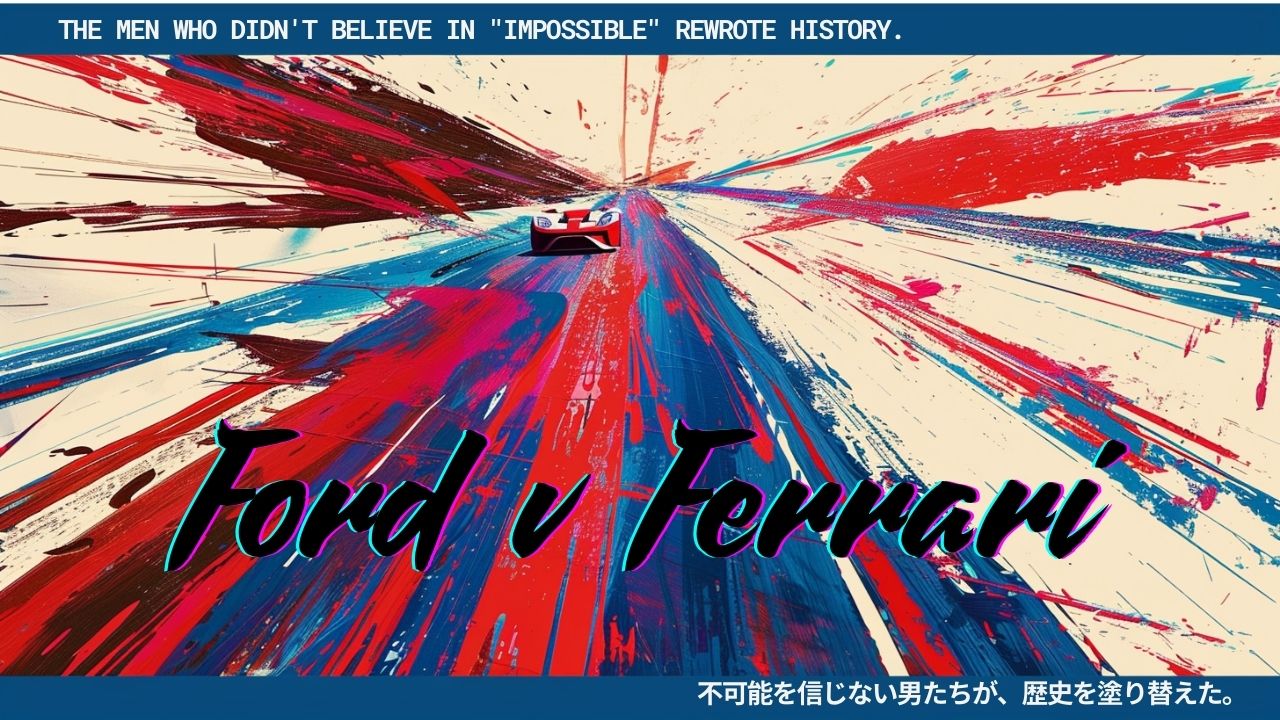
For this special day, James Mangold’s 2019 Ford v Ferrari (Le Mans ’66 in Europe) comes highly recommended. This work, based on true story of Ford defeating Ferrari at 1966 Le Mans 24 Hours race, depicts moving sports drama of two geniuses—automotive designer Carroll Shelby and British racer Ken Miles—creating ultimate racing car while fighting corporate logic.
Friendship and conflict between Shelby played by Matt Damon and Miles played by Christian Bale, technical challenges and corporate politics walls they face, craftsmanship pursuing perfect machine beautifully depicts automobiles as not mere industrial products but crystallization of human passion and creativity. 80 years after Karl Benz obtained patent, at race track where automotive technology reached pinnacle, as story where engineer and driver souls unite challenging limits, it becomes masterpiece worthy of automobile’s birthday.
Basic Information & Synopsis
→ For synopsis and production information, see our Database Article
Director: James Mangold
Year: 2019
Runtime: 152 minutes
Production: Chernin Entertainment, 20th Century Fox
Commemorative Day: Automobile Birthday (January 29)
Background Knowledge
Long Path to Film Adaptation and Changes
Ford v Ferrari film adaptation was realized through development period exceeding 10 years. Project dates back to 2009, initially planned under director Michael Mann with Brad Pitt starring. Subsequently in 2013, Joseph Kosinski (director of Top Gun: Maverick, Oblivion) assumed directorship, project proceeded under title Go Like Hell. This title was taken from A.J. Baime’s 2009 book Go Like Hell: Ford, Ferrari, and Their Battle for Speed and Glory at Le Mans.
Kosinski version had Tom Cruise cast as Carroll Shelby, Brad Pitt as Ken Miles, actually progressing to point where two did table read of screenplay. Director Kosinski stated: “Reached point where Tom Cruise and Brad Pitt read screenplay together at table.” However, this version collapsed for two reasons.
First reason was budget problem. With appearance fees of two major stars Cruise and Pitt, plus requirement for large-scale filming using real cars, budget couldn’t reach appropriate number. Second reason was Tom Cruise-specific problem. Brad Pitt later revealed: “Both wanted to drive. Tom wanted to play Shelby, I wanted to play Ken Miles. When Tom realized Carroll Shelby doesn’t drive that much in film, project didn’t materialize.”
February 2018, James Mangold was newly appointed director, Matt Damon and Christian Bale decided as leads. Screenplay was by Jez Butterworth, John-Henry Butterworth, Jason Keller, basically same as Kosinski version. Filming began in California July 2018, completed in approximately 2+ months.
Differences from True Story: Distinguishing Historical Facts and Cinematic Dramatization
Historically accurate elements: Ford winning 1966 Le Mans 24 Hours race, continuing victories in 1967, 1968, 1969. Carroll Shelby and Ken Miles were real people, their basic personas match film. Technical challenges in GT40 development (brake fade etc.) actually existed. Reason Miles became 2nd place (McLaren ran longer distance) is fact. Miles’s death actually occurred in August 1966 during J-car test accident. Enzo Ferrari’s insult to Ford, Miles’s victory at Daytona 24 Hours are historical facts.
Conversely, cinematic dramatization and exaggeration exist. Scene where Shelby takes Ford II in GT40 at high speed is very dramatic in film, but no record exists whether it actually happened—unknown. Regarding Leo Beebe’s depiction, film depicts him as complete villain, but reality was more complex, view exists that Beebe was just doing PR work.
Debate also exists about photo finish intention. Film depicts Beebe stealing victory from Miles, but reality suggests possibility of judgment error.
Ford Family Reaction and Historical Evaluation
Edsel Ford II, son of Henry Ford II (former Ford Company director), expressed dissatisfaction with father’s depiction in film. Film depicts Henry Ford II as ignorant, emotional person persuaded by Shelby, but actual Henry Ford II was very intelligent businessman.
What Makes It Exceptional
Matt Damon and Christian Bale’s Masterful Performances
This work’s greatest strength is Matt Damon and Christian Bale’s contrasting, complementary acting. Damon as Shelby magnificently expresses complex position—former racer harboring passion internally while forced to make realistic business judgments. Meanwhile, Bale as Miles plays craftsman-spirited racer with genius technique yet lacking sociability, vividly depicting both intense emotional fluctuations and delicate family love aspects.
Particularly impressive is their friendship depiction. Serious discussions at race track, bonds deepening through fistfights, ultimately building trust relationship—touches audience hearts through natural acting. Bale’s physical commitment (significantly reducing weight to reproduce Miles’s slender physique) and Damon’s calm presence create magnificent contrast.
James Mangold’s Excellent Direction
Mangold’s directorial excellence is balance between race scene power and human drama. Despite 2 hour 32 minute length, draws audience into story without boring. Particularly, Le Mans race scene spanning last 30 minutes becomes famous scene remaining in racing film history with breathtaking tension and beautiful footage.
Mangold deeply delves into themes not merely racing film but craftsman vs. corporation conflict, friendship and trust, ideal vs. reality struggle. By carefully depicting GT40 development process, effectively expresses automobiles as not mere machines but crystallization of human creativity and passion.
Overwhelming Realism Using Real Cars
Production team’s stance insisting on filming using real cars without relying on CGI brings unparalleled realism to film. Actually running approximately 30 GT40s and Shelby Cobras, fixing cameras directly to chassis, audience can experience same vibrations and speed sensation as drivers.
Sound design is also excellent—engine sounds, tire squeals, wind cutting sounds—winning Sound Editing Award at 92nd Academy Awards with convincing completion. Elaborate Le Mans circuit recreation set, art and costumes faithfully recreating 1960s atmosphere also enhance film’s immersion.
Related Articles
- Ford v Ferrari Database – Synopsis & Production Details
- James Mangold – Filmmaker Profile
はじめに
自動車は人間の情熱と創造性の結晶
1月29日は、1886年にカール・ベンツが世界初のガソリン自動車「ベンツ・パテント・モトールヴァーゲン」の特許を取得した日として、自動車の誕生日と位置づけられています。この日から自動車の歴史が始まり、馬車に代わる移動手段として産業革命後の世界を根本から変革していくことになりました。単なる移動手段を超えて、自動車は人類の技術革新の象徴となり、スピードへの憧憬、機械工学の粋、そして人間の限界への挑戦という多層的な意味を持つ文化的存在へと発展していきました。
この特別な日に観るべき作品として、ジェームズ・マンゴールド監督による2019年の『フォードvsフェラーリ』(Ford v Ferrari、欧州ではLe Mans ’66)を強く推奨します。本作は、1966年のル・マン24時間レースでフォードがフェラーリを破った実話を基に、自動車デザイナーのキャロル・シェルビーとイギリス人レーサーのケン・マイルズという二人の天才が、企業の論理と闘いながら究極のレーシングカーを創り上げていく過程を描いた感動的なスポーツドラマです。
マット・デイモン演じるシェルビーとクリスチャン・ベール演じるマイルズの友情と葛藤、彼らが直面する技術的課題と企業政治の壁、そして完璧なマシンを追求する職人魂は、自動車が単なる工業製品ではなく、人間の情熱と創造性の結晶であることを美しく描き出しています。カール・ベンツが特許を取得してから80年後、自動車技術は頂点を極めたレース場で、エンジニアとドライバーの魂が一体となって限界に挑む物語として、自動車の誕生日にふさわしい傑作となっています。
基本情報・あらすじ
→ あらすじや製作情報はデータベース記事へ
監督: ジェームズ・マンゴールド
製作年: 2019年
上映時間: 152分
制作: チャーニン・エンターテインメント、20世紀フォックス
記念日: 自動車の誕生日(1月29日)
予備知識
映画化の長い道のりと変遷
『フォードvsフェラーリ』の映画化は、実に10年以上の長い開発期間を経て実現しました。プロジェクトは2009年に遡り、当初はマイケル・マン監督のもとで、ブラッド・ピット主演で企画されていました。その後、2013年にはジョセフ・コシンスキー監督(『トップガン マーヴェリック』『オブリビオン』)が監督として就任し、プロジェクトは『Go Like Hell』というタイトルで進行しました。この題名は、A・J・ベイムによる2009年の書籍『Go Like Hell: Ford, Ferrari, and Their Battle for Speed and Glory at Le Mans』から取られたものです。
コシンスキー版では、トム・クルーズがキャロル・シェルビー役、ブラッド・ピットがケン・マイルズ役にキャスティングされており、実際に二人が脚本のテーブルリードを行うまで進んでいました。コシンスキー監督は「トム・クルーズとブラッド・ピットがテーブルで一緒に脚本を読むところまで到達した」と語っています。しかし、このバージョンは二つの理由で頓挫しました。
第一の理由は予算の問題でした。クルーズとピットという二大スターの出演料と、実車を使った大規模な撮影の要求により、予算が適切な数字に到達できなかったのです。第二の理由は、トム・クルーズ特有の問題でした。ブラッド・ピットは後に「二人とも運転したかった。トムはシェルビーを演じたがり、私はケン・マイルズを演じたかった。そしてトムが、キャロル・シェルビーは映画でそれほど運転しないことに気づいた時、プロジェクトは実現しなかった」と明かしています。
2018年2月、ジェームズ・マンゴールド監督が新たに起用され、マット・デイモンとクリスチャン・ベールが主役に決定しました。脚本はジェズ・バターワース、ジョン=ヘンリー・バターワース、ジェイソン・ケラーによるもので、コシンスキー版と基本的に同じものでした。撮影は2018年7月にカリフォルニアで始まり、約2ヶ月強で完了しました。
実話との相違点:史実と映画的脚色の区別
史実として正確な要素は以下の通りです。1966年のル・マン24時間レースでフォードが優勝し、その後1967年、1968年、1969年も優勝を続けたこと。キャロル・シェルビーとケン・マイルズは実在の人物であり、彼らの基本的な人物像は映画と一致しています。GT40の開発における技術的課題(ブレーキフェードなど)も実際に存在しました。マイルズが2位になった理由(マクラーレンがより長い距離を走行したため)も事実です。マイルズの死も1966年8月にJ-carテスト中の事故で実際に起きました。エンツォ・フェラーリによるフォードへの侮辱、デイトナ24時間でのマイルズの優勝も歴史的事実です。
一方で、映画的脚色や誇張も存在します。シェルビーがフォード2世をGT40に乗せて猛スピードで走るシーンは、映画では非常にドラマチックですが、実際にあったかは記録がなく不明です。レオ・ビービーの描写については、映画では完全な悪役として描かれていますが、実際はもっと複雑で、ビービーは広報の仕事をしていただけという見方もあります。
フォト・フィニッシュの意図についても議論があります。映画ではビービーがマイルズから勝利を奪ったという描写ですが、実際には判定ミスの可能性も指摘されています。
フォード家の反応と歴史的評価
ヘンリー・フォード2世の息子であるエドセル・フォード2世(フォード社の元取締役)は、映画での父親の描写に不満を表明しました。映画では、ヘンリー・フォード2世が無知で感情的で、シェルビーに説得される人物として描かれていますが、実際のヘンリー・フォード2世は非常に賢いビジネスマンでした。
優れている点
マット・デイモンとクリスチャン・ベールの名演
本作の最大の優れた点は、マット・デイモンとクリスチャン・ベールの対照的で補完的な演技です。デイモンはシェルビー役として、元レーサーとしての情熱を内に秘めながら、ビジネスマンとしての現実的判断を迫られる複雑な立場を見事に表現しています。一方、ベールはマイルズ役として、天才的な技術を持ちながら社会性に欠ける職人気質のレーサーを演じ、その激しい感情の起伏と繊細な家族愛の両面を鮮やかに描き出しています。
特に印象的なのは、二人の友情の描写です。レース場での真剣な議論、殴り合いを経て深まる絆、そして最終的な信頼関係の構築が、自然な演技によって観客の心に響きます。ベールの身体的なコミットメント(体重を大幅に減らしてマイルズの細身の体型を再現)と、デイモンの落ち着いた存在感が、見事なコントラストを生み出しています。
ジェームズ・マンゴールドの卓越した演出
マンゴールド監督の演出の優れた点は、レースシーンの迫力と人間ドラマのバランスです。2時間32分という長尺にもかかわらず、観客を飽きさせることなく物語に引き込みます。特に、最後の30分間にわたるル・マンのレースシーンは、息詰まるような緊張感と美しい映像で、レース映画史に残る名場面となっています。
マンゴールドは、単なるレース映画ではなく、職人と企業の対立、友情と信頼、理想と現実の葛藤というテーマを深く掘り下げています。GT40の開発過程を丁寧に描くことで、自動車が単なる機械ではなく、人間の創造性と情熱の結晶であることを効果的に表現しています。
実車を使った圧倒的なリアリティ
CGに頼らず実車を使った撮影にこだわった制作陣の姿勢は、映画に比類ないリアリティをもたらしています。約30台のGT40やシェルビー・コブラを実際に走らせ、シャシーに直接カメラを固定することで、観客はドライバーと同じ振動と速度感を体験できます。
エンジン音、タイヤの軋み、風切り音など、音響デザインも卓越しており、第92回アカデミー賞で音響編集賞を受賞したのも納得の完成度です。ル・マンのサーキットを再現したセットの精巧さ、1960年代の雰囲気を忠実に再現した美術や衣装も、映画の没入感を高めています。
関連記事
- Ford v Ferrari データベース – あらすじ・製作情報
- ジェームズ・マンゴールド – 監督プロフィール