

Choose Your Language / 言語を選択:
Introduction
A Story of a Man Left Alone on Mars, Trying to Survive with Only Science and Wit
On August 27, 2003, Mars came as close as about 55.76 million kilometers to Earth. This was a tremendous great approach — the closest in about 60,000 years (precisely, about 57,000 years). It means that since the age when humanity still lived in caves, not one human being had seen Mars this close.
Mars and Earth repeat their approaches roughly every 2 years and 2 months, but their closeness is not the same each time. Because Mars’s orbit describes an ellipse, when the position where Mars comes closest to the Sun overlaps with its approach to Earth, it becomes an especially great approach. This day in 2003 was precisely a “perihelic great approach” where those conditions were met, and such closeness was, as touched on above, the first in about 60,000 years. That year, red-glowing Mars radiated a conspicuously bright presence in the night sky, and people all over the world turned telescopes toward it. The Hubble Space Telescope too captured Mars at the moment of closest approach and delivered its vivid figure to us. And it was also this year that, not to miss this opportunity, the United States, Europe, and Japan all sent out Mars probes.
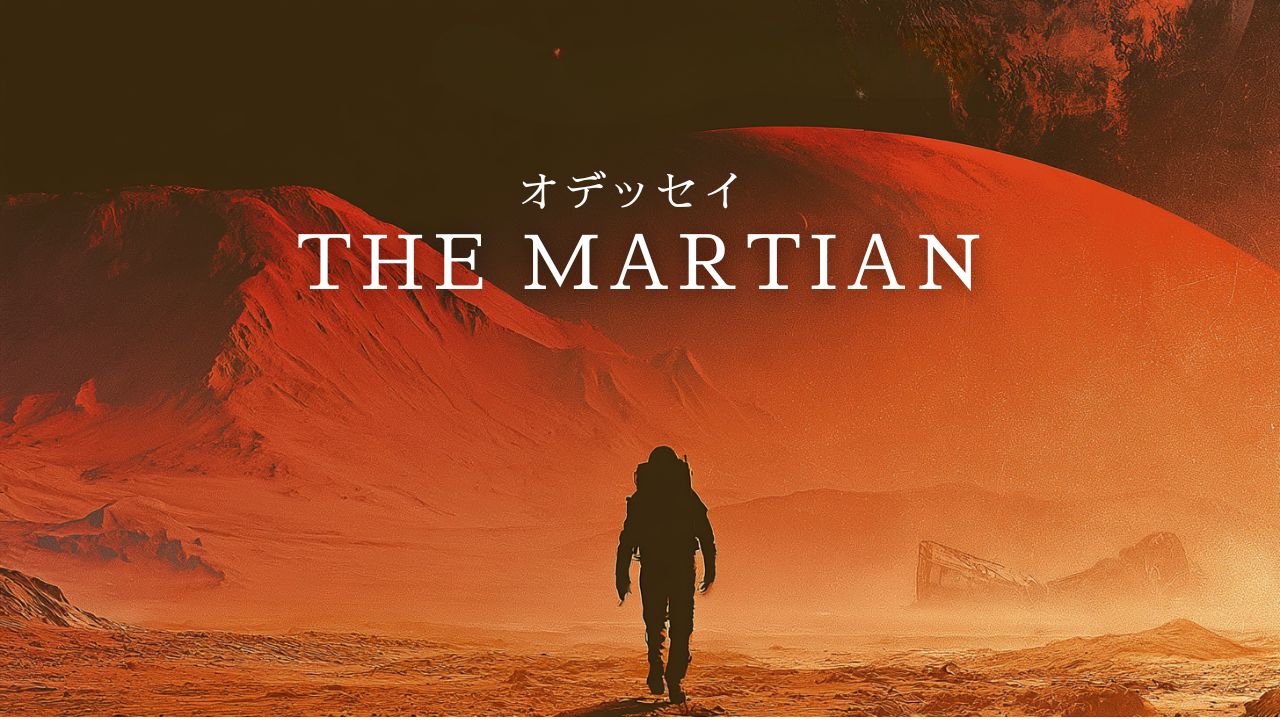
As a film to watch on this memorable day, we recommend Ridley Scott’s 2015 film The Martian. This work is a science-fiction survival drama depicting the figure of an astronaut who, during a Mars exploration mission, is left alone on Mars by an accident and tries to survive in a hopeless situation relying only on scientific knowledge and wit.
For the neighboring planet glowing red in the night sky, we have from ancient times held longing and awe. If one were left all alone on that distant star. This work answers that question with thorough scientific reality. To watch this work on this day, when Mars came closest, becomes an occasion to think anew about the harshness of that red planet and the power of the wit that keeps a person alive there.
Basic Information & Synopsis
→ For synopsis and production information, see our Database Article
Director: Ridley Scott
Year: 2015
Runtime: 144 minutes
Production: 20th Century Fox / Scott Free Productions
Commemorative Day: Anniversary of the 2003 Mars Close Approach (August 27)
Background Knowledge
The Source Novel and Its Surprising Origin
The source of this work is the science-fiction novel The Martian (2011) by Andy Weir. There is a somewhat unusual course to how this novel came to be.
The author, Andy Weir, was originally a computer programmer. He at first published this story — written out of a love of space that got the better of him — free of charge, chapter by chapter, on his own website. Then its scientific accuracy and the attractive narration of the protagonist won readers’ acclaim, and no sooner was it released as an e-book than it became a bestseller in an instant. A story that an individual began writing as a hobby gained worldwide popularity and reached adaptation into a film by a Hollywood master. That path looks somehow to overlap with the figure of this work’s protagonist, who carves out a way with only what he has on hand.
Thorough Scientific Realism
One of the major reasons this work is highly valued is its thorough scientific realism.
The protagonist Watney makes water on Mars, grows potatoes, and restores communications. Each and every one of these procedures is carefully depicted based on the laws of actual science. Rather than relying on preposterous super-technology, he combines existing scientific knowledge to solve the problems before him. This reality of “surviving by science” is precisely this work’s greatest attraction. This story, which the original author Weir wrote after minutely investigating physics, chemistry, and orbital mechanics, was highly valued by NASA as well, which is said to have cooperated in the film’s production.
What the Real Mars Is Like
Mars, the setting of the film, is the fourth planet of the solar system, a planet of reddish-brown sand and rock orbiting just outside Earth. Its red color is because oxidized iron — that is, rust — spreads over the surface. Its diameter is about half that of Earth, its atmosphere is very thin, and its main component is carbon dioxide. It is a cold world with an average temperature of about minus 60 degrees, and planet-scale great sandstorms often rage.
At the opening of the film, what drives Watney into a predicament is this sandstorm. However, because the real Mars’s atmosphere is extremely thin, in reality a windstorm strong enough to blow away people or equipment is said to be unlikely to occur. On this point, the original author Weir himself acknowledges it as one of the few dramatizations he permitted in order to move the story. That said, the depiction of Mars other than this is built up with astonishing fidelity, based on the actual data brought by probes. This work realistically draws out how harsh a world — one that will not admit humans — that red dot we look up at in the night sky is.
The Master Ridley Scott, and the Meaning of the Title
Director Ridley Scott is a master who has produced masterpieces remaining in the history of science-fiction film, such as Alien and Blade Runner. He, who has depicted the terror of space and dark futures, in this work made, in a complete turn, a bright story that praises hope and intelligence.
The Japanese title “Odyssey” derives from the epic The Odyssey by the ancient Greek poet Homer. This is the story of the Trojan War hero Odysseus continuing a long wandering and adventure aiming for a return to his homeland. The figure of Watney — left alone in a land far from home, overcoming every difficulty with wit, and aiming to return — is truly worthy of being called a modern Odysseus. From an angle different again from the original title The Martian, this Japanese title hits upon the essence of the story.
This word “Odyssey” has a further double resonance. One is that the original title of the monument of space science fiction 2001: A Space Odyssey is exactly that. And the other is a small coincidence with Mars. The Mars probe NASA launched in 2001 was named “2001 Mars Odyssey” as an homage to that masterpiece. This probe achieved results in observations searching for traces of water sleeping beneath the surface of Mars, and has long borne a part of Mars exploration. In other words, the word “Odyssey” is also a name that simultaneously calls up both the lineage of space science fiction and the history of real Mars exploration. As a Japanese title for a film about Mars, there are few words with meaning layered so many times over.
What Makes It Exceptional
A Protagonist Who Overcomes Despair with Humor
The most excellent point of this work is that, while depicting a hopeless situation, the story as a whole is astonishingly bright and positive. At its center is the incomparable character of the protagonist, Mark Watney.
Being left all alone on Mars, a situation of despair beyond any other. But Watney, rather than sinking into grief, confronts the problems calmly and powerfully, with humor and banter as his weapons. His record videos are full of wit and at times invite laughter. This image of a protagonist who does not lose his humor even in adversity makes this work not a heavy survival drama but an exhilarating, refreshing hymn to humanity. Not to let go of laughter and intelligence even at the edge of despair. That, this work teaches us, is precisely human strength.
The Stance of Depicting “Intelligence” as the Greatest Weapon
What makes this work exhilarating is the point that what saves the protagonist is neither superhuman power nor luck, but strictly “intelligence.”
Watney, making full use of knowledge of botany and engineering, grows crops in Martian soil, chemically produces water, and revives old machines to restore communications. His weapon is neither muscle nor arms, but his brain. Analyzing problems scientifically and devising solutions with the resources on hand. That process is this work’s greatest highlight. Intelligence is precisely what saves a person and carves out a way. This trust in science and reason runs through this work, and it also connects deeply with the very spirit that supports the endeavor of Mars exploration itself.
A Story of “Cooperation” Across Borders
This work is a solo survival drama and, at the same time, the story of the many people who try to save him. And that circle of cooperation crosses even national borders.
Watney on Mars, the NASA staff on Earth, the crew in space. People of different positions and places unite their wits and strength on the single point of saving one life. In the story’s final part, a scene is also depicted where America’s NASA seeks the cooperation of another country’s space agency. For the survival of one human being, humanity joins hands across the barriers of nations. This figure of cooperation, as a wish common to humanity before the vast stage of space, gives this work great emotion.
Related Articles
- The Martian Database – Synopsis & Production Details
- Ridley Scott – Profile
- Matt Damon – Profile
はじめに
たった一人、火星に取り残された男が、科学と知恵だけを頼りに生き延びようとする物語
2003年8月27日、火星は、地球からおよそ5,576万キロメートルの距離にまで近づきました。これは、約6万年ぶり(正確には約5万7,000年ぶり)という、途方もない大接近でした。人類がまだ洞窟に暮らしていた時代以来、これほど間近に火星を見た人間は、一人もいなかったことになります。
火星と地球は、およそ2年2か月ごとに接近を繰り返しますが、その近さは毎回同じではありません。火星の軌道は楕円を描いているため、火星が太陽にもっとも近づく位置と、地球との接近が重なったとき、とりわけ大きな接近となります。2003年のこの日は、まさにその条件が揃った「近日点大接近」であり、これほどの近さは、先に触れたとおり約6万年ぶりのことでした。この年、赤く輝く火星は、夜空でひときわ明るく存在感を放ち、世界中の人々が望遠鏡を空へと向けました。ハッブル宇宙望遠鏡も、最接近の瞬間の火星をとらえ、その鮮明な姿を私たちに届けています。そしてこの好機を逃すまいと、アメリカ、ヨーロッパ、日本が、こぞって火星探査機を送り出したのも、この年のことでした。
この記念すべき日に観るべき一本として、リドリー・スコット監督による2015年の映画『オデッセイ』(原題:The Martian)を推薦します。本作は、火星探査ミッションの最中、事故によって一人だけ火星に取り残された宇宙飛行士が、科学の知識と知恵だけを頼りに、絶望的な状況で生き延びようとする姿を描いた、SFサバイバル・ドラマです。
夜空に赤く輝く隣の惑星に、私たちは古来、憧れと畏れを抱いてきました。もし、あの遠い星に、たった一人取り残されたら。本作は、その問いに、徹底した科学のリアリティで答えてみせます。火星がもっとも近づいたこの日に本作を観ることは、あの赤い星の過酷さと、そこで人を生かす知恵の力について、あらためて考える機会となるでしょう。
基本情報・あらすじ
→ あらすじや製作情報はデータベース記事へ
監督: リドリー・スコット
製作年: 2015年
上映時間: 144分
制作: 20世紀フォックス/スコット・フリー・プロダクションズ
記念日: 火星大接近の日(2003年8月27日)
予備知識
原作小説と、その驚くべき出自
本作の原作は、アンディ・ウィアーによるSF小説『火星の人』(The Martian、2011年)です。この小説の成り立ちには、少し変わった経緯があります。
作者のアンディ・ウィアーは、もともとコンピューターのプログラマーでした。彼は、宇宙好きが高じて書いたこの物語を、当初、自分のウェブサイトで、章ごとに無料で公開していました。すると、科学的な正確さと、主人公の魅力的な語り口が読者の評判を呼び、電子書籍として発売するや、たちまちベストセラーとなります。個人が趣味で書き始めた物語が、世界的な人気を得て、ハリウッドの巨匠による映画化に至った。その道のりは、本作の主人公が、手持ちのものだけで道を切り拓いていく姿と、どこか重なって見えます。
徹底した科学的リアリズム
本作が高く評価される大きな理由の一つが、その徹底した科学的なリアリズムです。
主人公ワトニーが、火星で水を作り、ジャガイモを育て、通信を回復させる。その一つひとつの手順が、実際の科学の法則に基づいて、丁寧に描かれています。荒唐無稽な超技術に頼るのではなく、既存の科学知識を組み合わせて、目の前の問題を解決していく。この「科学で生き延びる」というリアリティこそが、本作の最大の魅力です。原作者ウィアーが、物理や化学、軌道力学を綿密に調べ上げて書いたこの物語を、NASAも高く評価し、映画の制作にも協力したと言われています。
実際の火星は、どんな星か
映画の舞台となる火星は、太陽系の第4惑星で、地球のすぐ外側をまわる、赤茶けた砂と岩の惑星です。その赤い色は、地表に酸化した鉄、つまり錆が広がっているためです。直径は地球のおよそ半分で、大気は非常に薄く、その主成分は二酸化炭素です。平均気温はマイナス60度ほどという寒冷な世界で、しばしば惑星規模の大砂嵐が吹き荒れます。
映画の冒頭で、ワトニーを窮地に追い込むのが、この砂嵐でした。ただし、実際の火星の大気は極めて薄いため、現実には、人や機材を吹き飛ばすほどの暴風は起こりにくいとされます。この点は、原作者ウィアー自身も、物語を動かすために許容した数少ない脚色の一つだと認めています。とはいえ、それ以外の火星の描写は、探査機がもたらした実際のデータに基づいて、驚くほど忠実に作り込まれています。私たちが夜空に見上げるあの赤い点が、いかに人間を寄せつけない過酷な世界であるかを、本作はリアルに描き出しています。
巨匠リドリー・スコットと、タイトルの意味
監督のリドリー・スコットは、『エイリアン』や『ブレードランナー』といった、SF映画の歴史に残る傑作を生み出してきた巨匠です。宇宙の恐怖や、暗い未来を描いてきた彼が、本作では、一転して、希望と知性を讃える、明るい物語を作り上げました。
日本語のタイトル「オデッセイ」は、古代ギリシャの詩人ホメロスの叙事詩『オデュッセイア』に由来します。これは、トロイア戦争の英雄オデュッセウスが、故郷への帰還を目指して、長い放浪と冒険を続ける物語です。故郷から遠く離れた地に一人取り残され、あらゆる困難を知恵で乗り越えて、帰還を目指すワトニーの姿は、まさに現代のオデュッセウスと呼ぶにふさわしいものです。原題の『The Martian(火星の人)』とはまた違った角度から、この邦題は、物語の本質を言い当てています。
この「オデッセイ」という言葉には、さらに二重の響きがあります。一つは、宇宙SFの金字塔『2001年宇宙の旅』の原題が『2001: A Space Odyssey』であること。そしてもう一つ、火星との、ちょっとした符合です。2001年にNASAが打ち上げた火星探査機の名は、この名作へのオマージュとして「2001マーズ・オデッセイ」と名づけられました。この探査機は、火星の地下に眠る水の痕跡を探る観測などで成果を上げ、長きにわたり火星探査の一翼を担ってきました。つまり「オデッセイ」という言葉は、宇宙SFの系譜と、現実の火星探査の歴史との、両方を同時に呼び起こす名でもあるのです。火星をめぐる映画の邦題として、これほど幾重にも意味の重なる言葉は、そうありません。
優れている点
絶望を、ユーモアで乗り越える主人公像
本作の最も優れた点は、絶望的な状況を描きながら、物語全体が、驚くほど明るく、前向きなことです。その中心にいるのが、主人公マーク・ワトニーの、比類なきキャラクターです。
たった一人、火星に取り残されるという、これ以上ない絶望的な状況。しかしワトニーは、悲嘆に暮れるのではなく、ユーモアと軽口を武器に、淡々と、そして力強く、問題に立ち向かっていきます。彼の記録動画は、ウィットに富み、時に笑いを誘います。この、逆境にあってなおユーモアを失わない主人公像が、本作を、重苦しいサバイバル劇ではなく、痛快で爽快な人間讃歌にしています。絶望の淵でも、笑いと知性を手放さないこと。それこそが、人間の強さなのだと、本作は教えてくれます。
「知性」を最大の武器として描く姿勢
本作が痛快なのは、主人公を救うのが、超人的な力でも、幸運でもなく、あくまで「知性」だという点です。
ワトニーは、植物学とエンジニアリングの知識を駆使して、火星の土で作物を育て、水を化学的に作り出し、古い機械を蘇らせて通信を回復させます。彼の武器は、筋力でも、武器でもなく、頭脳です。問題を科学的に分析し、手持ちの資源で解決策を編み出していく。その過程が、本作の最大の見せ場となっています。知性こそが、人を救い、道を切り拓く。この、科学と理性への信頼が、本作を貫いており、それは、火星探査という営みそのものを支える精神とも、深く通じ合っています。
国境を越えた「協力」の物語
本作は、一人のサバイバル劇であると同時に、彼を救おうとする、大勢の人々の物語でもあります。そして、その協力の輪は、国境をも越えていきます。
火星のワトニー、地球のNASAの職員たち、宇宙のクルーたち。立場も場所も異なる人々が、一人の命を救うという一点で、知恵と力を結集させていきます。物語の終盤では、アメリカのNASAが、他国の宇宙機関の協力を仰ぐ場面も描かれます。一人の人間の生還のために、国家の垣根を越えて、人類が手を取り合う。この、宇宙という広大な舞台を前にした、人類共通の願いとしての協力の姿が、本作に、大きな感動を与えています。
関連記事
- オデッセイ データベース – あらすじ・製作情報
- リドリー・スコット – プロフィール
- マット・デイモン – プロフィール