
Basic Info / 基本情報
|
English |
日本語 |
|---|---|
|
Director |
Clint Eastwood / クリント・イーストウッド |
|
Year |
2006 |
|
Running Time |
141 min (2h 21m) |
|
Genre |
War Drama, Historical Drama / 戦争ドラマ、歴史ドラマ |
|
Production |
Warner Bros. Pictures, DreamWorks Pictures, Amblin Entertainment, Malpaso Productions |
|
Box Office |
$68.7 million (Worldwide) |
Synopsis / あらすじ
English
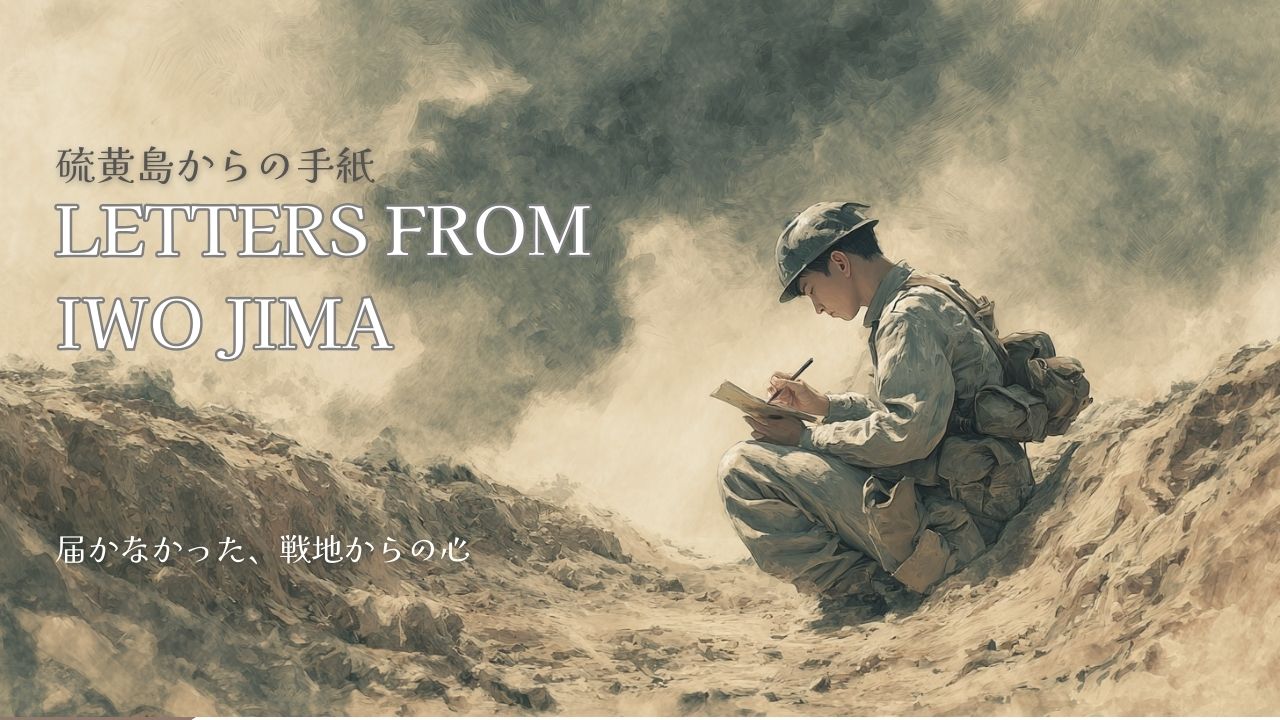
February 1945. On the scorched earth of Iwo Jima, 22,000 Japanese soldiers prepared for a battle they knew they could not win. General Tadamichi Kuribayashi, a pragmatic commander who once lived in America, rejects suicidal charges in favor of a grueling war of attrition from miles of underground tunnels. Through the eyes of Saigo, a simple baker conscripted into service, and the letters home from those facing the inevitable, the film explores the harrowing thin line between military honor and raw humanity. It is a haunting tribute to men who fought not for victory, but for a home they would never see again.
日本語
1945年2月。硫黄島の焦土にて、2万2000人の日本兵は勝機のない戦いに備えていました。アメリカ留学の経験を持つ知将・栗林忠道中将は、無謀な玉砕を禁じ、地下に張り巡らされた壮大な洞窟陣地による徹底抗戦を命じます。応召兵であるパン屋の西郷ら、極限状態に置かれた兵士たちが故郷へ綴った「手紙」を通し、軍人としての名誉と、一人の人間としての生への渇望が静かに描かれます。勝利のためではなく、愛する者の待つ本土を守るために戦い抜いた男たちの、悲劇的かつ崇高な記録です。
Cast & Crew / スタッフ・出演
|
Role |
English |
日本語 |
|---|---|---|
|
Director / 監督 |
Clint Eastwood |
クリント・イーストウッド |
|
Screenplay / 脚本 |
Iris Yamashita |
アイリス・ヤマシタ |
|
Story / 原案 |
Iris Yamashita, Paul Haggis |
アイリス・ヤマシタ、ポール・ハギス |
|
Based on |
“Picture Letters from the Commander in Chief” by Tadamichi Kuribayashi, “So Sad To Fall In Battle” by Kumiko Kakehashi |
栗林忠道『玉砕総指揮官の絵手紙』、梯久美子『散るぞ悲しき 硫黄島総指揮官・栗林忠道』 |
|
Producer / プロデューサー |
Clint Eastwood, Steven Spielberg, Robert Lorenz |
クリント・イーストウッド、スティーヴン・スピルバーグ、ロバート・ロレンツ |
|
Cinematography / 撮影 |
Tom Stern |
トム・スターン |
|
Music / 音楽 |
Kyle Eastwood, Michael Stevens |
カイル・イーストウッド、マイケル・スティーヴンス |
|
Editing / 編集 |
Joel Cox, Gary D. Roach |
ジョエル・コックス、ゲイリー・D・ローチ |
|
Production Design |
Henry Bumstead, James J. Murakami |
ヘンリー・バムステッド、ジェームズ・J・ムラカミ |
|
Costume Design |
Deborah Hopper |
デボラ・ホッパー |
|
Distribution / 配給 |
Warner Bros. Pictures (US), Warner Bros. Japan (Japan) |
ワーナー・ブラザース(米国)、ワーナー・ブラザース映画(日本) |
|
Cast / 出演 |
Ken Watanabe (General Tadamichi Kuribayashi) |
渡辺謙(栗林忠道中将) |
|
Kazunari Ninomiya (Saigo) |
二宮和也(西郷) |
|
|
Tsuyoshi Ihara (Baron Takeichi Nishi) |
伊原剛志(西竹一男爵) |
|
|
Ryo Kase (Shimizu) |
加瀬亮(清水) |
|
|
Shido Nakamura (Lieutenant Ito) |
中村獅童(伊藤中尉) |
|
|
Hiroshi Watanabe (Lieutenant Fujita) |
渡辺裕之(藤田中尉) |
|
|
Takumi Bando (Captain Tanida) |
坂東工(谷田大尉) |
|
|
Yuki Matsuzaki (Nozaki) |
松崎悠希(野崎) |
|
|
Takashi Yamaguchi (Lieutenant Okubo) |
山口貴史(大久保中尉) |
|
|
Eijiro Ozaki (Lieutenant Oiso) |
尾崎英二郎(大磯中尉) |
|
|
Nae Yuuki (Hanako, Saigo’s wife) |
裕木奈江(花子、西郷の妻) |
Additional Information / 追加情報
Awards / 受賞歴
- 79th Academy Awards (2007) – 4 nominations, 1 win:
- Best Sound Editing – WON (Alan Robert Murray, Bub Asman)
- Best Picture – nomination
- Best Director – nomination (Clint Eastwood)
- Best Original Screenplay – nomination (Iris Yamashita, Story by Iris Yamashita and Paul Haggis)
- 64th Golden Globe Awards (2007) – 2 nominations, 1 win:
- Best Foreign Language Film – WON
- Best Director – nomination (Clint Eastwood)
- 60th BAFTA Awards (2007) – 4 nominations:
- Best Film not in the English Language – nomination
- Best Direction – nomination (Clint Eastwood)
- Best Screenplay – Original – nomination (Iris Yamashita)
- Best Film Music – nomination (Kyle Eastwood, Michael Stevens)
- 13th Screen Actors Guild Awards (2007) – 1 nomination:
- Outstanding Performance by a Cast in a Motion Picture – nomination
- 13th Critics’ Choice Awards (2007) – 8 nominations, 1 win:
- Best Foreign Language Film – WON
- Best Picture – nomination
- Best Director – nomination (Clint Eastwood)
- Best Screenplay – nomination (Iris Yamashita)
- Best Cinematography – nomination (Tom Stern)
- Best Editing – nomination
- Best Sound – nomination
- Best Art Direction – nomination
- National Board of Review (2006) – 2 wins:
- Best Film – WON (tied with United 93)
- Best Director – WON (Clint Eastwood)
- Los Angeles Film Critics Association (2006) – 1 win:
- Best Production Design – WON
- New York Film Critics Online (2006) – 1 win:
- Best Picture – WON
- Satellite Awards (2006) – 5 nominations, 1 win:
- Best Foreign Language Film – WON
- Best Director – nomination (Clint Eastwood)
- Best Original Screenplay – nomination (Iris Yamashita)
- Best Cinematography – nomination (Tom Stern)
- Best Sound – nomination
- 第31回日本アカデミー賞 (2008) – 8部門受賞:
- 最優秀外国作品賞 受賞
- 優秀主演男優賞 受賞(渡辺謙)
- 優秀助演男優賞 受賞(二宮和也)
- その他5部門
Critical Reception / 批評的評価
- Rotten Tomatoes: 91% (Critics), 89% (Audience)
- Metacritic: 89/100 (Universal Acclaim)
- IMDb: 7.9/10
- Eiga.com (映画.com): 4.0/5
- Filmarks: 3.9/5
- Universally praised as masterpiece of war cinema
- Eastwood’s direction acclaimed for empathy, restraint
- Ken Watanabe’s performance as Kuribayashi highly praised
- Kazunari Ninomiya (pop star) surprised critics with dramatic depth
- Praised for humanizing “enemy” soldiers
- Criticized by some Japanese historians for inaccuracies
- Some Japanese critics noted “American perspective on Japanese”
- Tom Stern’s desaturated cinematography acclaimed
- Sparse musical score (Kyle Eastwood) praised
- Compared favorably to Saving Private Ryan, The Thin Red Line
- Roger Ebert: ★★★★ “One of the year’s best films”
- The New York Times: “A masterpiece of empathy”
- Variety: “An extraordinary achievement”
- The Guardian: ★★★★★ “Eastwood’s finest hour”
- Japanese critics praised respectful depiction despite being American film
- Some criticized for downplaying Japanese war crimes
- Praised for anti-war message without being preachy
Box Office Performance / 興行成績
- Worldwide Total: $68.7 million
- Production Budget: $19 million
- Return on Investment: 3.62x
- Major Markets:
- Japan: $22.0 million (Highest international territory)
- USA/Canada: $13.8 million
- Europe: $20.0 million+ (Total)
Summary
Key Achievement: A major critical success with a high Return on Investment (3.6x), particularly dominating the Japanese market.
English
Despite being a Japanese-language film directed by an American, Letters from Iwo Jima achieved remarkable commercial and critical success. While its US box office remained modest due to its subtitled format, it became a cultural phenomenon in Japan, earning $22 million—nearly a third of its global total. The film’s low budget allowed for a strong ROI, but its true legacy lies in its four Academy Award nominations, including Best Picture, proving that a story of shared humanity can transcend national borders and “enemy” perspectives.
日本語
アメリカ人監督による全編日本語の映画という異色の成り立ちながら、本作は商業的・批評的に大きな成功を収めました。字幕版という制約から全米での興行は限定的でしたが、日本では2200万ドル(世界興収の約3分の1)を稼ぎ出し、社会現象を巻き起こしました。低予算を活かした高い収益率のみならず、外国語映画として異例のアカデミー作品賞ノミネートを果たした事実は、共有される人間性が国境や「敵味方」の壁を超越することを証明したのです。
Related Review / 関連レビュー
🔗 English Review
・[Iwo Jima Day] Immortal Anti-War Film Depicting Human Dignity Transcending Enemy-Ally
🔗 日本語レビュー
・【硫黄島の日】敵味方を超えた人間の尊厳を描いた不朽の反戦映画