
Choose Your Language / 言語を選択:
Introduction
A Social Drama About a Newspaper That Stood Against Government Secrecy and Won
May 3 is World Press Freedom Day, established by UNESCO in 1993.
The day exists to recognize the importance of press freedom, to sound the alarm about threats facing media around the world, and to advocate for the protection of journalists and the public’s right to know. It addresses government censorship and pressure, the physical safety of reporters, citizens’ right to information, and the role of journalism in sustaining democracy.
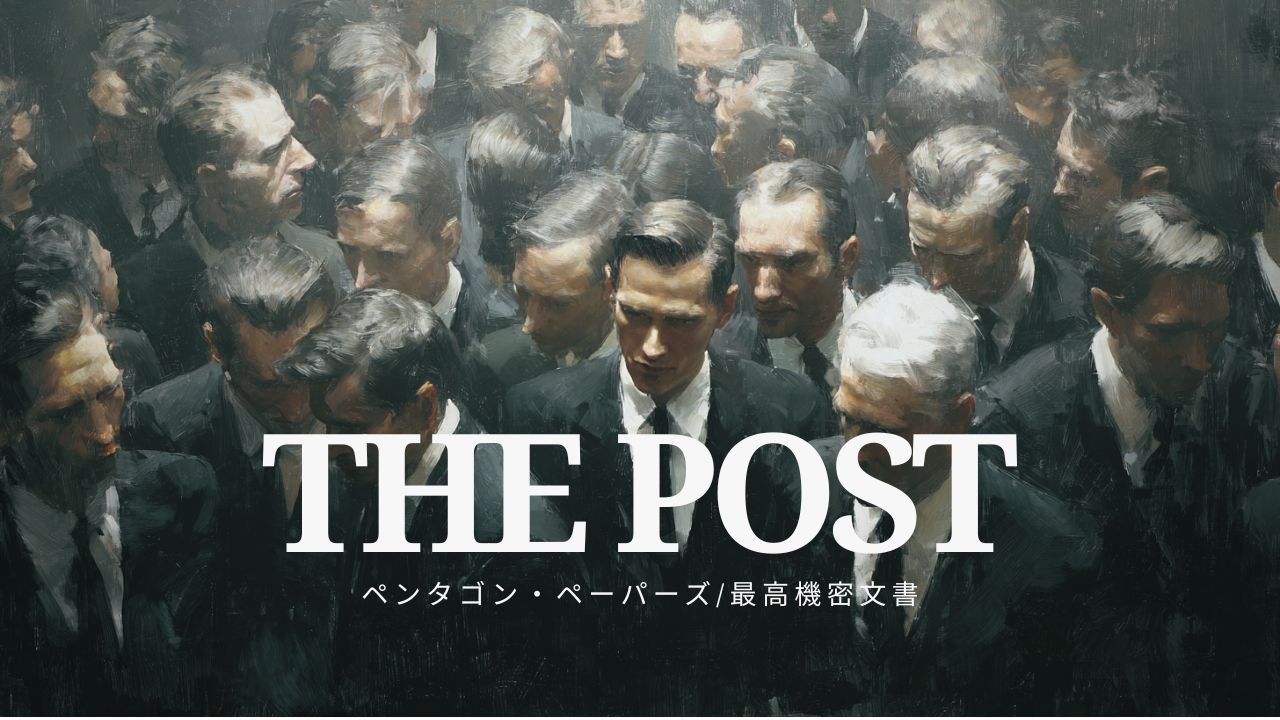
For this day, the film to watch is The Post (2017), directed by Steven Spielberg.
The film is based on the true story of the Washington Post’s 1971 decision to publish the Pentagon Papers — classified government documents revealing that four consecutive U.S. administrations had known the Vietnam War was unwinnable while publicly claiming otherwise. Publisher Katharine Graham (Meryl Streep) and editor Ben Bradlee (Tom Hanks) must decide whether to publish documents the Nixon administration has gone to federal court to suppress. What is at stake is not only their newspaper but their freedom.
The film received Academy Award nominations for Best Picture and Best Actress. It was produced and released in under a year — an unusually rapid turnaround for a Spielberg production.
Basic Information & Synopsis
→ For synopsis and production information, see our Database Article
Director: Steven Spielberg
Year: 2017
Runtime: 116 minutes
Production: Amblin Entertainment, DreamWorks Pictures
Commemorative Day: World Press Freedom Day (May 3)
Background Knowledge
The Historical Background of the Pentagon Papers
The Pentagon Papers (formally: “History of U.S. Decision-Making in Vietnam, 1945–1967”) were commissioned in 1967 by Defense Secretary Robert McNamara. Thirty-six researchers spent three years completing the document — 7,000 pages across 47 volumes, covering four presidential administrations from Truman to Johnson. What it revealed was devastating: the government had known for years that the war was unwinnable, while publicly reporting progress and optimism to the American people and Congress.
Daniel Ellsberg, a defense analyst who had worked on the study, concluded that the continued war would cost thousands more lives for no achievable purpose. In 1971, he gave copies to Neil Sheehan of the New York Times. The resulting prosecution under the Espionage Act was eventually dismissed in 1973, after it emerged that the government had conducted illegal surveillance of Ellsberg.
The Supreme Court Ruling and Its Significance
The 1971 Supreme Court decision that allowed both the Times and the Post to continue publishing is among the most important press freedom rulings in American history. It established that the bar for prior restraint — government action preventing publication before it occurs — is extremely high. Justice Hugo Black wrote that the press’s mission is not to serve governments but to expose government secrets and inform the public. Justice William Douglas emphasized that open debate is the core of democracy.
The ruling has served as legal precedent in subsequent cases including Watergate reporting, criticism of the Iraq War, and the Edward Snowden revelations.
Spielberg, Streep, and Hanks
Spielberg conceived the film in the political atmosphere following the 2016 presidential election and completed production in under a year — unusually fast for a film of this scale. It is his first film centered on newspaper journalism. Note that earlier treatments of the Pentagon Papers story include a 2003 television film and a 2009 documentary; The Post is distinctive in telling the story from the Washington Post’s perspective.
Meryl Streep studied Katharine Graham’s autobiography Personal History in preparation for the role, reconstructing Graham’s speech patterns and gestures with characteristic precision. She received an Academy Award nomination for Best Actress.
Tom Hanks’s Ben Bradlee is the real editor who later oversaw the Post’s Watergate coverage, cementing the paper’s place in American journalism history. Bradlee died in 2014 at ninety-one. He learned before his death that the film was being made and was pleased.
What Makes It Exceptional
Spielberg’s Tense Direction
The film is built almost entirely from conversation and documents — and Spielberg makes it run for 116 minutes without a moment of slack. That is the demonstration of what this kind of direction can do: render complex political and legal material clearly while maintaining tension that never releases.
The pivotal scene — Graham on the telephone, lawyers and editors and board members all present in the room, waiting for her decision — concentrates all of this. The camera stays on her face. The silence before she speaks carries the weight of the entire film. No action sequence. No explosion. Just a woman holding a phone, deciding. Spielberg generates suspense from this with the precision of a thriller director.
The printing press sequence that follows is its counterpart: after Graham says “publish,” the great rotary presses begin to turn, paper feeds through, ink is laid down, sheets are folded, stacked, loaded onto trucks — almost without dialogue. The mechanical reality of journalism, the physical fact of a decision made, rendered in motion and sound. It is classic Spielberg: meaning delivered through image and movement rather than words.
Meryl Streep’s Performance
Streep’s Katharine Graham is the film’s emotional and moral center. Graham is not a simple figure — she has spent eight years establishing her authority as publisher in an industry that did not expect her to succeed, while managing relationships with political figures who were also personal friends, while answering to a board of directors skeptical of the decision she is being asked to make. Streep carries the anxiety, the social conditioning that makes Graham hesitate, and the moral clarity that ultimately breaks through it.
The moment she says “publish” is the film’s climax. Everything before it is accumulation; that word is release. Streep makes the journey to that word feel earned.
Tom Hanks and the Journalist’s Commitment
Hanks’s Bradlee is the steady counterweight — the editor who knows what the story requires and waits for the publisher to reach the same conclusion. His performance does not overreach; it holds the space around Streep’s Graham. The conviction he brings to “this is what journalism is for” provides the moral frame within which Graham’s decision becomes possible.
Related Articles
- The Post Database – Synopsis & Production Details
- Steven Spielberg – Filmmaker Profile
- Meryl Streep – Actor Profile
はじめに
報道の自由と政府の検閲に立ち向かった新聞社の闘いを描いた社会派ドラマ
5月3日は、UNESCO(国際連合教育科学文化機関)により制定された「世界報道自由デー(World Press Freedom Day)」です。この国際デーは、1993年に設立され、報道の自由の重要性を認識し、世界中のメディアが直面する脅威について警鐘を鳴らし、報道の自由を擁護することを目的としています。特に、政府による検閲や圧力、ジャーナリストの身の安全、市民の知る権利、民主主義における報道の役割といった重要な課題について、国際社会が一体となって取り組む必要性を訴えています。
この特別な日に観る作品として、スティーヴン・スピルバーグ監督による2017年の**『ペンタゴン・ペーパーズ/最高機密文書』**(The Post)を推奨します。本作は、1971年にワシントン・ポスト紙がベトナム戦争に関する政府の機密文書「ペンタゴン・ペーパーズ」の報道を決断し、政府の検閲と法的圧力に立ち向かった実話を基にした社会派ドラマです。
メリル・ストリープ演じる発行人キャサリン・グラハムと、トム・ハンクス演じる編集主幹ベン・ブラッドリーの卓越した演技により、報道の自由と国家機密の対立、政府権力に対するメディアの監視機能、市民の知る権利と民主主義の基盤といった、この記念日の理念に深く関わるテーマが緊張感ある演出で描き出されています。
基本情報・あらすじ
→ あらすじや製作情報はデータベース記事へ
監督: スティーヴン・スピルバーグ
製作年: 2017年
上映時間: 116分
制作: アンブリン・エンターテインメント、ドリームワークス・ピクチャーズ
記念日: 世界報道自由デー(5月3日)
予備知識
ペンタゴン・ペーパーズ事件の歴史的背景
ペンタゴン・ペーパーズ(正式名称:「ベトナムにおける政策決定の歴史、1945-1967年」)は、1967年に国防長官ロバート・マクナマラの指示により作成が開始された機密研究です。36名の研究者が3年をかけて完成させたこの文書は、7000ページ、47巻に及ぶ膨大なもので、トルーマン政権から1967年のジョンソン政権まで4代の大統領によるベトナム戦争政策の全貌を記録していました。
文書が明らかにした最も衝撃的な事実は、政府が戦争の勝算がないことを早期から認識していながら、国民と議会に対して楽観的な報告を続けていたことでした。ダニエル・エルズバーグは「このまま戦争が続けば、さらに多くの人命が失われる」という信念のもと、1971年にニューヨーク・タイムズの記者ニール・シーハンに文書を提供しました。この行為によりエルズバーグはエスピオナージ法違反で起訴されましたが、1973年に政府の違法な監視活動が発覚し、起訴は取り下げられました。
最高裁判決の意義
1971年の連邦最高裁判決は、アメリカの報道の自由にとって最も重要な判例の一つとなりました。この事件は「事前抑制の原則的禁止」を確立し、政府が報道機関に対して事前検閲を行うための法的ハードルを極めて高く設定しました。
ヒューゴ・ブラック判事は「報道機関の使命は政府に仕えることではない。政府の秘密を暴き、国民に情報を提供することである」と述べ、ウィリアム・ダグラス判事は「開かれた議論こそが民主主義の核心である」と強調しました。この判決は後のウォーターゲート事件報道、イラク戦争時の政府批判報道、エドワード・スノーデン事件などの法的根拠となっています。
スピルバーグ、ストリープ、ハンクス
監督のスティーヴン・スピルバーグは、2016年の大統領選挙後の政治的雰囲気の中でこの映画を企画し、脚本を受け取ってから約1年というスピードで製作を完了させました。本作は彼にとって初の新聞ジャーナリズムを題材にした作品です。なお、この事件は2003年のテレビ映画や2009年のドキュメンタリーとしても映像化されていますが、本作はワシントン・ポスト側の視点から描いた点に独自性があります。
メリル・ストリープは本作でアカデミー賞主演女優賞にノミネートされています。キャサリン・グラハムという実在の人物を演じるにあたり、グラハムの自伝『パーソナル・ヒストリー』を徹底的に研究し、彼女の話し方や身振りを細部まで再現しました。
トム・ハンクスが演じるベン・ブラッドリーは実在の人物で、後にウォーターゲート事件を報道したワシントン・ポストの編集主幹として歴史に名を残しています。2014年に91歳で逝去する前に本作の製作を知り、喜んでいたと伝えられています。
優れている点
スピルバーグの緊張感ある演出
本作が「会話と書類だらけの映画」でありながら116分を一切弛緩なく見せる——それがスピルバーグの演出力の核心です。複雑な政治的・法的問題を観客にとって理解しやすく描きながら、同時に緊張感を一秒も緩めない。その手腕は、グラハムが電話口で掲載可否を迫られる場面に集約されています。
弁護士、編集者、経営幹部が全員その場にいる中、受話器を握ったまま沈黙するグラハム。カメラは彼女の顔から離れません。台詞ではなく、沈黙と表情で決断の重さを伝えるこの場面は、サスペンス映画のクライマックスと同等の緊張感を持っています。
対照的に印象的なのが、印刷工場のシーンです。グラハムが「掲載する」と決断した後、巨大な輪転機が回り始め、紙が流れ、インクが乗り、折られ、積まれ、トラックに積み込まれていく一連の映像は、ほとんど台詞なしに展開します。報道とは言葉ではなく、物理的な力であるという事実を、機械の轟音と映像だけで伝える——これはスピルバーグにしかできない演出です。
メリル・ストリープの卓越した演技
メリル・ストリープ演じるキャサリン・グラハムの演技は、本作の核心的な魅力です。男性中心の業界で孤軍奮闘する女性経営者の複雑な心境を、繊細かつ力強く表現しています。
特に優れているのは、個人的な不安と社会的責任の間で揺れ動く内面の描写です。8年間の経営経験を積みながらも、取締役会や社交界からの圧力と、報道の自由への信念との間で苦悩する過程は、単なる英雄譚を超えた深い人間ドラマとして描かれています。彼女が受話器を持ったまま一言「掲載する」と言う場面は、映画全体のクライマックスとして機能しています。
トム・ハンクスの編集者としての信念
トム・ハンクス演じるベン・ブラッドリーの演技も本作の重要な見どころです。真実を追求するジャーナリストとしての使命感と、部下を守る責任者としての重圧の両方を自然に表現しています。法的リスクや経営陣からの慎重論に屈することなく、「我々の仕事は真実を報道することだ」という信念を貫く姿勢が、現代のジャーナリストにとっても重要な指針となっています。