
Choose Your Language / 言語を選択:
Introduction
What We Truly Value Only Becomes Clear When We Lose It
May 2 is National Truffle Day in the United States.
Truffles — black truffles, white truffles, truffle oils, and the culture of truffle hunting — are celebrated on this day with special menus at restaurants and gatherings of those who prize what enthusiasts call “the underground jewel.” But a truffle is not only a luxury ingredient. It embodies the particular bond between humans and animals — historically pigs, now more often trained dogs — the mystery of forest and soil, and centuries of food culture. It requires patience, knowledge, and a relationship with the earth that cannot be rushed.
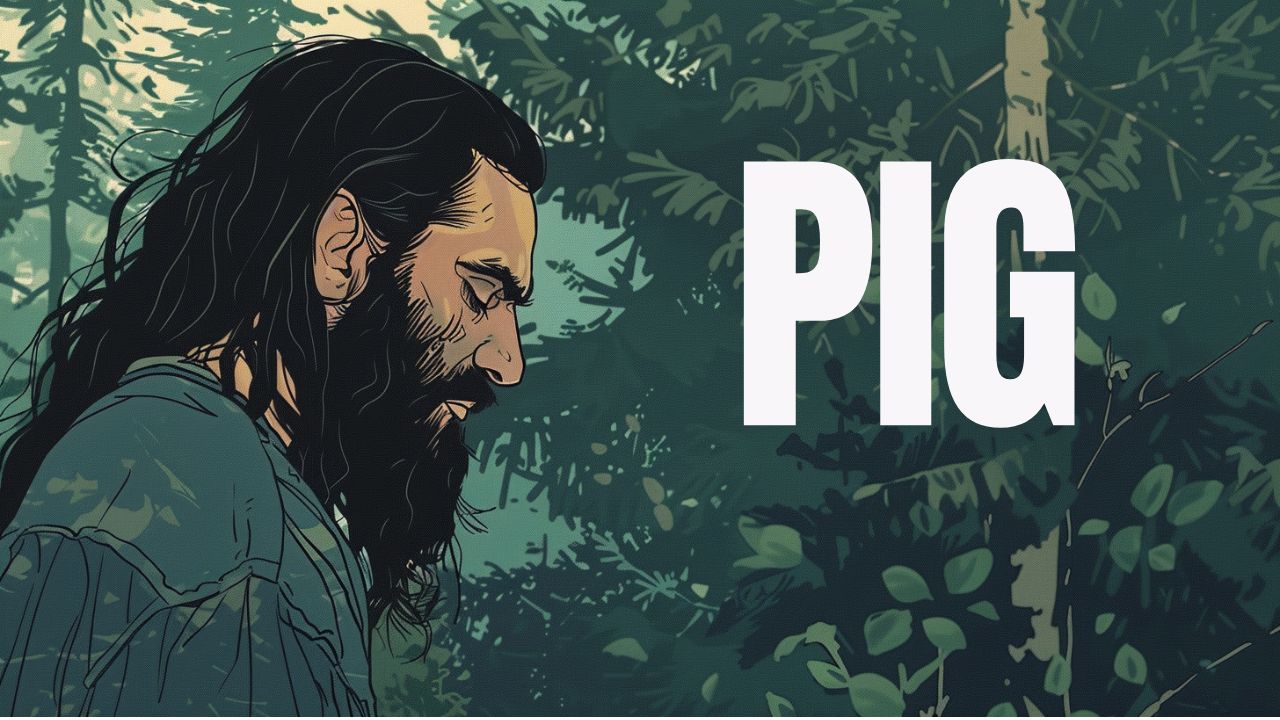
For this day, the film to watch is Pig (2021), directed by Michael Sarnoski.
Rob (Nicolas Cage) lives alone in the Oregon wilderness, foraging for truffles with his pig. When the pig is stolen one night by unknown assailants, Rob returns to Portland for the first time in fifteen years and begins to look for her. This is not the revenge film the premise suggests. There are no gunfights, no car chases, no action sequences. What the film is about — quietly, precisely, over 92 minutes — is grief, memory, and the question of what actually matters.
Nicolas Cage has called this “the film I’m most proud of and my finest performance.” The critics agreed: Rotten Tomatoes 97%, Metacritic 82. The film won the Independent Spirit Award for Best First Screenplay.
Basic Information & Synopsis
→ For synopsis and production information, see our Database Article
Director: Michael Sarnoski
Year: 2021
Runtime: 92 minutes
Production: Acclaim Entertainment, Pulse Films
Commemorative Day: National Truffle Day (May 2)
Background Knowledge
Vanessa Block and Michael Sarnoski
The story was conceived jointly by producer Vanessa Block and director-writer Michael Sarnoski, who was making his feature directorial debut. Block had studied chemistry at Yale and enrolled in a pre-medical program before discovering she wanted to make films. She and Sarnoski had previously collaborated on The Testimony (2015), Block’s short documentary about sexual violence in Congo, which she wrote, produced, and edited — and which reached the final ten of the Academy Award shortlist for Best Documentary Short. Block subsequently founded BlockBox Entertainment and produced Pig, with the story developed jointly and the screenplay written by Sarnoski.
Truffle Hunting in Oregon
Oregon is one of the world’s major truffle-producing regions. The Willamette Valley and the Oregon Coast Range are particularly rich in truffle fungi that grow in symbiosis with the roots of Douglas fir trees. Oregon produces several native species, including the Oregon white truffle (Tuber oregonense), the Oregon black truffle, and the Oregon spring white truffle.
The market value of Oregon truffles has risen sharply in recent years. By 2015, Oregon winter white truffles were selling for $560 per pound — compared to $120 just a few years earlier. Industry analysts have predicted the Oregon truffle trade may eventually rival the wine industry in economic terms.
Historically, truffle hunting used pigs — their sense of smell is acute enough to locate truffles underground, and the animals require no special training. But pigs tend to eat what they find, are difficult to control, and are large and unwieldy in the field. Contemporary truffle hunters now predominantly use trained dogs, particularly the Lagotto Romagnolo, an Italian breed developed for the purpose. Rob’s insistence on working with a pig rather than a dog is a deliberate choice — a traditionalism consistent with everything else about him.
Truffle Poaching — The Real Problem
The underground fighting ring in the film is fiction. But truffle poaching is not. Oregon authorities have documented the presence of armed poachers, territorial disputes, trespassing, and unauthorized harvesting in truffle-producing areas. In 2013, Oregon became the first state to formally regulate truffles as a forest product — harvesters are now required to carry a signed permit from a private land owner or an authorization from a public land management agency.
In Europe, the problem is more severe. In Italy and France, truffle poaching has been linked to car arsons, the poisoning of hunting dogs, threats, and the involvement of organized crime — what some journalists have described as the “truffle mafia.” The film’s underground fight sequences are best understood as a symbolic compression of this industry’s actual violence.
The Film’s Three-Part Structure
Sarnoski has said the three-part structure of the film was inspired by the courses of a meal.
The first section — the forest — is the appetizer: stillness, nature, solitude. The second — the city — is the main course: chaos, confrontation with the past, physical violence. The third — the return — is the dessert: grief, acceptance, silence.
Composer Alexis Grapsas and Philip Klein used acoustic instruments, including a baritone violin, to score Rob’s forest life, transitioning to different sonic textures as he moves through the city’s different strata.
What Makes It Exceptional
Nicolas Cage’s Quiet Performance
Cage won the Academy Award for Best Actor for Leaving Las Vegas, and built a second career in high-energy action films — Face/Off, Con Air, National Treasure. What he shows in Pig is the opposite register. The performance contains none of what critics have labeled “Cage rage” — the shouting, the operatic excess, the baroque commitment to spectacle. Instead: a man who is barely speaking, who is bleeding, who moves through the city as if returning from very far away.
The eyes carry the performance. The intelligence and grief in them are visible in every scene. When Rob does speak, the words are chosen and weighted. Cage has said it is the film he is most proud of, and his finest work. The critical consensus — 97% on Rotten Tomatoes — indicates this was not simply modesty.
The Perfectly Constructed 92 Minutes
For a feature directorial debut, Sarnoski’s control is striking. He eliminated every element that another director might have retained for safety — the action setpiece, the exposition, the cathartic confrontation, the satisfying resolution. What remains is exactly what is needed and nothing more. Every cut, every line, every scene is load-bearing.
The film trusts its audience to do the interpretive work. It does not explain Rob’s past. It does not explain why the pig matters so much. It renders these things in behavior and implication and allows the audience to feel their way toward the meaning. That restraint — the willingness not to deliver what is expected — is what gives the film its unusual weight.
Related Articles
- PIG Database – Synopsis & Production Details
- Michael Sarnoski – Filmmaker Profile
- Nicolas Cage – Actor Profile
はじめに
本当に大切なものは、失って初めてわかる
5月2日は、アメリカのNational Truffle Day(トリュフの日)です。高級食材として知られるトリュフ——黒トリュフ、白トリュフ、そしてそれらを使った料理、トリュフオイル、そしてトリュフハンティングの文化を祝う日として、レストランでは特別メニューが組まれ、食通たちがこの「地下の宝石」を楽しみます。トリュフは単なる食材ではありません。それは、人間と動物(伝統的には豚、現代では訓練された犬)の特別な絆、森と土壌の神秘、そして何世紀にもわたる食文化の歴史を体現しています。
このトリュフの日に観る作品として、マイケル・サルノスキ監督による2021年の**『PIG/ピッグ』**を推奨します。本作は、オレゴン州の森で隠遁生活を送る元トップシェフ、ロブ(ニコラス・ケイジ)と、彼の唯一の家族であるトリュフ豚の物語です。ある夜、何者かによって豚が誘拐されたとき、ロブは15年ぶりにポートランドの街へ戻り、かつての自分と向き合うことを余儀なくされます。
しかしこれは、予告編が示唆するような「ジョン・ウィック」風の復讐劇ではありません。銃撃戦もカーチェイスもありません。代わりに本作が描くのは、喪失、記憶、そして本物の価値とは何かという静かで深い問いです。
ニコラス・ケイジは本作を「自分が出演した映画の中で最も好きな作品であり、最高の演技」と語っています。ロッテントマトで97%、メタクリティックで82点という高評価を獲得し、インディペンデント・スピリット賞の脚本賞を受賞した本作は、トリュフの日に観ることで、食文化、自然との共生、そして人生における本当に大切なものについて、深く考えさせてくれる作品です。
基本情報・あらすじ
→ あらすじや製作情報はデータベース記事へ
監督: マイケル・サルノスキ
製作年: 2021年
上映時間: 92分
制作: Acclaim Entertainment、Pulse Films
記念日: ナショナル・トリュフ・デー(5月2日)
予備知識
VanessaブロックとMichael Sarnoski——異色のコンビ
本作のストーリーは、プロデューサーのヴァネッサ・ブロックと、監督・脚本のマイケル・サルノスキによって共同で創作されました。これがサルノスキの長編監督デビュー作となります。
ヴァネッサ・ブロックはイェール大学で化学を専攻し、医師になるための医学予備課程に在籍していましたが、映画制作に転じました。彼女が書き、プロデュースし、編集した短編ドキュメンタリー『The Testimony』(2015年)は、コンゴにおける性的暴力を題材にした作品で、サルノスキが編集とエグゼクティブプロデューサーとして協力し、アカデミー賞短編ドキュメンタリー部門の最終候補10作品にノミネートされました。
『The Testimony』の後、ブロックはBlockBox Entertainmentを立ち上げ、『PIG』を製作しました。彼女とサルノスキはストーリーを共同で執筆し、サルノスキが脚本を書いて監督しました。
トリュフハンティングとオレゴン州
映画の舞台となるオレゴン州は、実際に世界有数のトリュフ生産地域です。特にウィラメット・バレーとオレゴン海岸山脈は、ダグラス・ファーの木の根と共生するトリュフ菌が豊富に存在します。2015年時点で、オレゴン冬白トリュフの市場価格は1ポンドあたり560ドルに達しました(数年前は120ドルでした)。専門家たちは、オレゴン州のトリュフ産業が最終的にはワイン産業に匹敵する経済貢献をすると予測しています。
歴史的には、トリュフ探しには豚が使われていました。豚の嗅覚は非常に優れており、地中のトリュフを見つけることができます。しかし豚は本能的にトリュフを食べようとし、コントロールが難しいため、現代では訓練された犬が主流となっています。しかし映画の主人公ロブは、伝統的な方法——トリュフ豚——にこだわっています。
トリュフ密猟の現実
映画で描かれる地下格闘技のシーンはフィクションですが、トリュフ密猟は実際に深刻な問題です。オレゴン州では武装した密猟者の存在、縄張り争い、不法侵入が報告されています。2013年の法改正でオレゴン州は初めてトリュフを規制対象の森林産物に指定しました。ヨーロッパではさらに深刻で、イタリアやフランスでは「トリュフマフィア」の存在——車の放火、トリュフ犬への毒殺、組織犯罪の関与——が報告されています。映画の地下格闘技シーンは、こうしたトリュフ業界の「暗い側面」を象徴的に表現したものと考えられます。
映画の構成——三部構成の意味
サルノスキ監督は、映画を三部構成にしたことについて、「コース料理の三皿にインスパイアされた」と語っています。
第一部:森(前菜)——静けさ、自然、孤独。第二部:街(メインディッシュ)——混沌、過去との対峙、暴力。第三部:帰還(デザート)——悲しみ、受容、静寂。
作曲家のアレクシス・グラプサスとフィリップ・クラインは、ロブが異なる「領域」を通過する様子を音楽で表現しました。森の静かな隠遁生活を表現するため、バリトン・バイオリンなどのアコースティック楽器と温かみのある音を使用しています。
優れている点
ニコラス・ケイジの静かな演技
ニコラス・ケイジは、インタビューで『PIG/ピッグ』を「自分が出演した映画の中で最も好きな作品であり、自分の最高の演技」と語っています。
アカデミー賞受賞俳優(『リービング・ラスベガス』)として、そして『フェイス/オフ』『コン・エアー』『ナショナル・トレジャー』などのアクション大作で知られるケイジですが、本作では全く異なる一面を見せています。いつもの「ケイジ・レイジ」——叫び、暴れ、オペラティックな大げさな演技——は一切ありません。代わりに彼が見せるのは、深い悲しみを内に秘めた、静かで抑制された演技です。
血だらけの顔、ぼさぼさの髪と髭、汚れた服——ロブの外見は荒れ果てていますが、彼の目には深い知性と悲しみが宿っています。彼は多くを語りません。しかし彼が話すとき、その言葉には重みがあります。
わずか92分の完璧な構成
初監督作品とは思えないほど、サルノスキの演出は成熟しています。彼は「ハリウッド的な要素」を徹底的に排除しました。
本作の上映時間はわずか92分です。現代の映画が2時間半を超えることも珍しくない中、この簡潔さは際立っています。しかしこの短さは、削りすぎではありません。むしろ、すべてが完璧に配置された俳句のような構成です。無駄なシーンは一つもありません。すべてのカット、すべてのセリフが意味を持っています。
サルノスキは、観客を信頼しています。説明しすぎず、見せすぎず、語りすぎません。観客が自分で考え、感じることを許します。
関連記事
- PIG/ピッグ データベース – あらすじ・製作情報
- マイケル・サルノスキ – 監督プロフィール
- ニコラス・ケイジ – 俳優プロフィール