
Choose Your Language / 言語を選択:
Introduction
A Girl, a Flock of Geese, and the Question of Where We Belong
The second Saturday of May is World Migratory Bird Day.
Led by the Convention on Migratory Species (CMS) and the African-Eurasian Migratory Waterbird Agreement (AEWA), this observance raises awareness of the threats facing migratory birds and calls for international cooperation in their conservation. Migratory birds cross national borders — they cannot be protected by any one country alone.
The 2026 theme is “Every Bird Counts — Your Observations Matter!” It makes a case for citizen science: birdwatchers and local communities recording and sharing what they see, contributing to the research that reveals shifts in population and habitat. An individual notation — “I saw this bird here, on this day” — is a data point that matters.
For this day, the film to watch is Fly Away Home (1996), directed by Carroll Ballard.
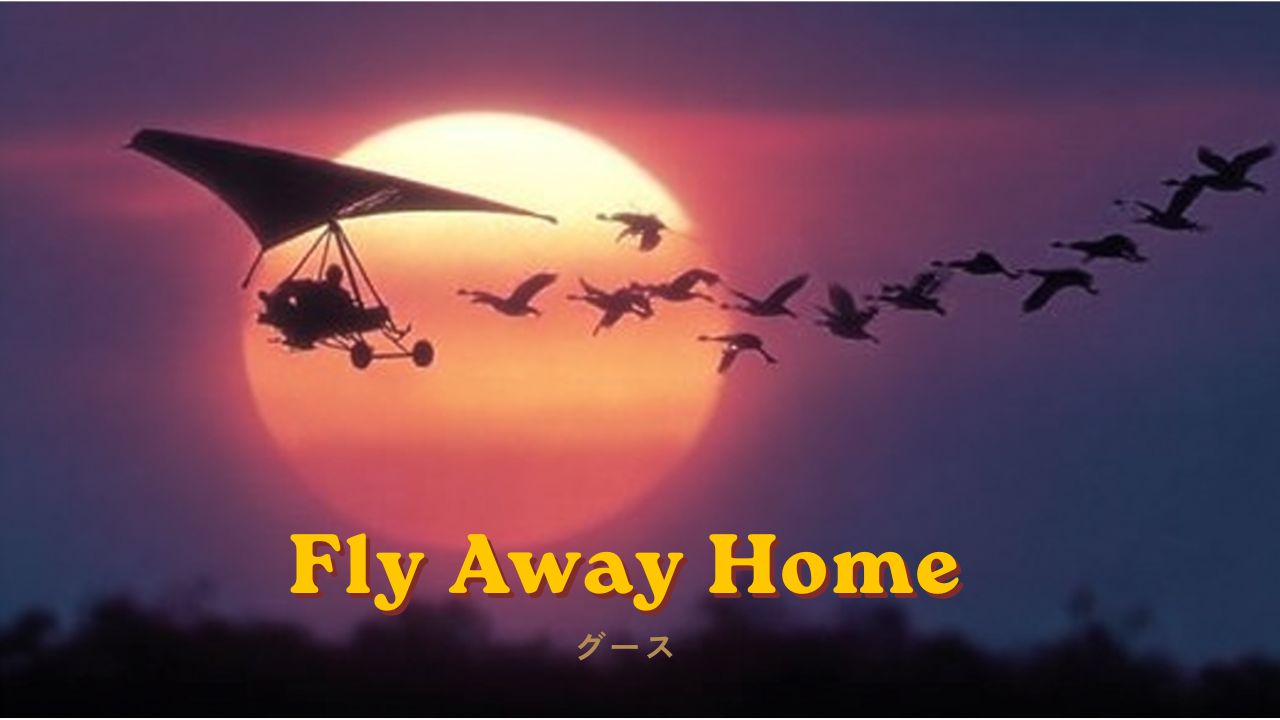
Thirteen-year-old Amy loses her mother in a car accident and is sent to live with her father Thomas in rural Ontario — a father she barely knows. She finds a clutch of Canada Goose eggs and, when they hatch, becomes the first living thing the goslings see. They imprint on her. She becomes their mother. When the local wildlife authorities threaten to clip the birds’ wings, Amy and Thomas devise another plan: they will lead the flock south themselves, by ultralight aircraft, teaching the goslings a migration route they would never have learned in the wild.
The film is based on actual events. From 1986, Canadian sculptor and adventurer Bill Lishman trained Canada Geese to follow his ultralight aircraft. In 1993, Operation Migration successfully led 18 geese from Ontario to Virginia. The following spring, the birds returned to Canada on their own.
Rotten Tomatoes critic score: 88%. The film received an Academy Award nomination for Best Cinematography.
Basic Information & Synopsis
→ For synopsis and production information, see our Database Article
Director: Carroll Ballard
Year: 1996
Runtime: 107 minutes
Production: Columbia Pictures
Commemorative Day: World Migratory Bird Day (Second Saturday of May)
Synopsis: Amy, thirteen, survives a car accident that kills her mother and is sent to rural Ontario to live with her father Thomas, an eccentric inventor and sculptor who has been absent from her life for years. She finds a nest of Canada Goose eggs, hatches them, and becomes the flock’s surrogate mother. When authorities arrive to clip the goslings’ wings — standard practice to prevent unregistered migratory birds from flying — Amy refuses. Thomas proposes a solution: they will build ultralights and lead the geese south to a wildlife sanctuary in North Carolina before winter. The film follows their preparations and the journey itself — across Ontario, over Niagara Falls, through Baltimore, to the coast.
Background Knowledge
Bill Lishman and Operation Migration
The film’s source is Bill Lishman (1939–2017), a Canadian sculptor, photographer, and adventurer. Beginning in 1986, Lishman trained Canada Geese to follow his ultralight aircraft. In 1993, Operation Migration led 18 geese from Ontario to Virginia — the first successful guided migration of its kind. The following spring, the birds returned to Canada without guidance.
The technique developed in Operation Migration was subsequently applied to the conservation of endangered species, including Whooping Cranes — using human-guided flight to teach migration routes to birds raised in captivity, as a tool for rebuilding wild populations.
After filming was completed, Lishman himself led the film’s 60 “actor geese” on a migration to South Carolina.
Carroll Ballard and Caleb Deschanel
Director Carroll Ballard, known for The Black Stallion (1979) and Never Cry Wolf (1983), worked again here with cinematographer Caleb Deschanel, whose photography of natural subjects defined both of those films. Deschanel received an Academy Award nomination for Best Cinematography for Fly Away Home.
Roger Ebert wrote of one sequence: “The shot of towers emerging from the fog over Baltimore, while an office worker watches from a window as the girl and the geese fly past, is worth the price of admission.”
Anna Paquin
Paquin had won the Academy Award for Best Supporting Actress for The Piano two years earlier, at age eleven — the second-youngest winner in the award’s history. In Fly Away Home she plays the lead at thirteen, and received a Critics Choice Award nomination for Best Young Performer.
The Production
The geese in the film were real Canada Geese, trained for the production. Most of the flight sequences were filmed in actual flight, with CGI used minimally. The practical reality of filming alongside trained birds in ultralight aircraft gives the flight sequences a physical quality that digital work has consistently struggled to replicate.
What Makes It Exceptional
Grief and Recovery Told Through the Sky
What separates Fly Away Home from the category of “children’s film with animals” is the precision with which Amy’s story and the geese’s story mirror each other.
Amy has lost her mother. The goslings have no parent. When Amy becomes their mother, something shifts in her: she moves from being someone who needs care to someone who provides it. The migration south is the journey to a destination, and simultaneously Amy’s journey back to herself.
The film does not explain this parallel. It simply shows Amy flying, the geese following, again and again — and trusts the audience to feel it.
Caleb Deschanel’s Cinematography
The film’s visual achievement is making the audience feel what it is to fly. The farm in Ontario from the ultralight’s perspective. Niagara Falls appearing through fog. The flight through the towers of Baltimore. Each sequence reveals a world that is not visible from the ground — the world the geese inhabit.
What does it mean for a migratory bird to cross this landscape twice each year, following a route learned in flight? The film answers that question not in words but in images.
The Father-Daughter Recovery
Thomas is not a simple “good father” figure. He has spent years avoiding Amy and her mother — out of anger, out of fear. A night scene midway through the journey, in which Amy asks why he never came, and Thomas tells the truth for the first time, is the film’s emotional center. The migration is not only Amy and the geese’s journey. It is his as well.
Related Articles
- Fly Away Home Database – Synopsis & Production Details
- Carroll Ballard – Filmmaker Profile
- Anna Paquin – Actor Profile
はじめに
5月9日は、「世界渡り鳥の日(World Migratory Bird Day)」です。
国連の渡り鳥保全条約(CMS)とアフリカ・ユーラシア渡り鳥保全協定(AEWA)が主導するこの記念日は、毎年5月の第2土曜日に開催されます。渡り鳥が直面する脅威への意識を高め、国際的な連携による保全活動を訴えることを目的としています。
2026年のテーマは「Every Bird Counts – Your Observations Matter!(すべての鳥が大切——あなたの観察が重要)」。市民科学——バードウォッチャーや地域の人々が観察データを記録・共有することが、渡り鳥の保全研究にいかに重要かを訴えています。渡り鳥は国境を越えて移動するため、一国だけでは守れません。一人ひとりの「この鳥を見た」という記録が積み重なって、渡り鳥の個体数変化や生息地の危機が見えてきます。
この特別な日に観る作品として、キャロル・バラード監督による1996年のアメリカ映画**『グース』**(原題:Fly Away Home)をお薦めします。
本作は、母親を事故で失った13歳の少女エイミーが、孵化したカナダガンの雛たちを母親代わりとして育て、自らウルトラライト機を操縦して渡りの旅を導くという実話に基づいた物語です。
実際の出来事:1986年からカナダのビル・リッシュマンがカナダガンにウルトラライト機を跟かせる訓練を始め、1993年に「オペレーション・マイグレーション」として初めての誘導移住に成功しました。本作はその経験を基に、父と娘の物語として映画化されています。
Rotten Tomatoesで批評家スコア88%、アカデミー賞撮影賞にノミネートされた本作は、「家族映画」の枠を超えた自然の美しさと、渡り鳥と人間の関係を問う静かな傑作です。
基本情報・あらすじ
→ あらすじや製作情報はデータベース記事へ
監督: キャロル・バラード
製作年: 1996年
上映時間: 107分
制作: コロンビア・ピクチャーズ
記念日: 世界渡り鳥の日(5月第2土曜日)
あらすじ: 交通事故で母を失った13歳のエイミーは、オンタリオ州の田舎に住む父トーマスのもとへ送られます。ほとんど知らない父との生活の中で、エイミーはカナダガンの卵を見つけ、孵化した雛たちに「最初に見たもの」として刷り込まれます。当局が雛の羽をカットしようとする中、トーマスはウルトラライト機を手作りし、自らガンたちを南の野生動物保護区まで先導することを提案します。映画はその準備と、オンタリオからノースカロライナまでの渡りの旅を追います。
予備知識
ビル・リッシュマンと「オペレーション・マイグレーション」
映画の基となったビル・リッシュマン(1939-2017)はカナダの彫刻家・写真家・冒険家です。1986年から自らのウルトラライト機にカナダガンを馴らせる実験を始め、1993年に18羽のガンをオンタリオ州からバージニア州まで誘導することに成功しました。翌春、鳥たちは自力でカナダに戻ってきました。
この「オペレーション・マイグレーション」は、野生動物の移住誘導技術として画期的で、その後ホオジロヅルなど絶滅危惧種の保全に応用されています——人間が渡りのルートを「教える」ことで、個体数を回復させる試みです。撮影終了後、リッシュマン自身が映画に出演した60羽の「俳優ガン」を率いてサウスカロライナまで誘導しています。
カレル・バラード監督の自然映像
監督のキャロル・バラードは『ブラック・スタリオン』(1979年)『野生の叫び声』(1983年)でカレブ・デシャネルと組み、自然を被写体にした映像で知られています。本作でもデシャネルが撮影を担当し、アカデミー賞撮影賞にノミネートされました。
ロジャー・イーバートは「バルチモアの街の霧の中からタワーが現れ、オフィスの窓から少女とガンたちが飛ぶのを見るショットは、一見の価値がある」と書いています。
アンナ・パキンの演技
本作のアンナ・パキンは、2年前の『ピアノ・レッスン』(1993年)でアカデミー賞助演女優賞を受賞しています——11歳でのアカデミー賞受賞は史上2番目の最年少記録でした。本作では13歳で主演を演じ、Critics Choice賞最優秀子役部門にノミネートされています。
実際の撮影
映画に登場するガンたちは実際に訓練されたカナダガンで、劇中のフライトシーンの多くは実際の飛行で撮影されており、CGIは最小限に留められています。
優れている点
喪失と回復を「空」で描く
本作がただの「動物と子どもの映画」ではない理由は、エイミーの物語がガンたちの物語と完全に重なっているからです。
エイミーは母を失いました。ガンの雛たちは親がいません。エイミーが雛たちの「母親」になったことで、彼女自身も誰かを必要とする存在から、誰かを導く存在へと変わっていきます。渡りの旅は「目的地まで連れていく」旅であると同時に、エイミーが自分を取り戻す旅です。
この重なりを、映画は説明しません。ただ、エイミーが空を飛び、ガンたちが後を追う映像が、繰り返し見せられます。
カレブ・デシャネルの撮影——飛ぶことの感覚
本作の映像の核心は「飛ぶことの感覚」を観客に体験させることです。ウルトラライト機の視点から見えるオンタリオの農場、霧の中から現れるナイアガラの滝、バルチモアの高層ビルを抜けるフライト——それぞれが、「地上からは見えない世界」を開示します。
ガンが渡りをするとはどういうことか。広大な空を、季節に従って移動するとはどういうことか——映像を通じて、渡り鳥の視点で世界を見る経験が生まれます。
父と娘の再生
トーマスというキャラクターは単純な「いい父親」ではありません。長年、エイミーと母親を避けていた。それは怒りと恐れからでした。
旅の途中、エイミーが「なぜ会いに来なかったの」と問う夜のシーン——トーマスが初めて本当のことを話す場面が、映画の感情的なクライマックスです。渡りの旅は、エイミーとガンたちだけでなく、トーマスにとっての旅でもありました。
関連記事
- グース データベース – あらすじ・製作情報
- キャロル・バラード – 監督プロフィール
- アンナ・パキン – 俳優プロフィール