
Choose Your Language / 言語を選択:
Introduction
A Boy in Drought-Stricken Malawi Who Built a Wind Turbine From Scratch — A True Story
June 15 is Global Wind Day.
The observance began in Europe in 2007 and has since become an international day dedicated to recognizing the possibilities and importance of wind energy. In Japan, events have been held annually since 2008 to promote awareness of wind power. The day exists to encourage recognition of wind power as a clean and sustainable energy source, and to reaffirm the role of renewable energy in addressing climate change.
Wind power enables electricity generation without dependence on fossil fuels, and contributes significantly to reducing greenhouse gas emissions — which is why it is attracting attention across the world.
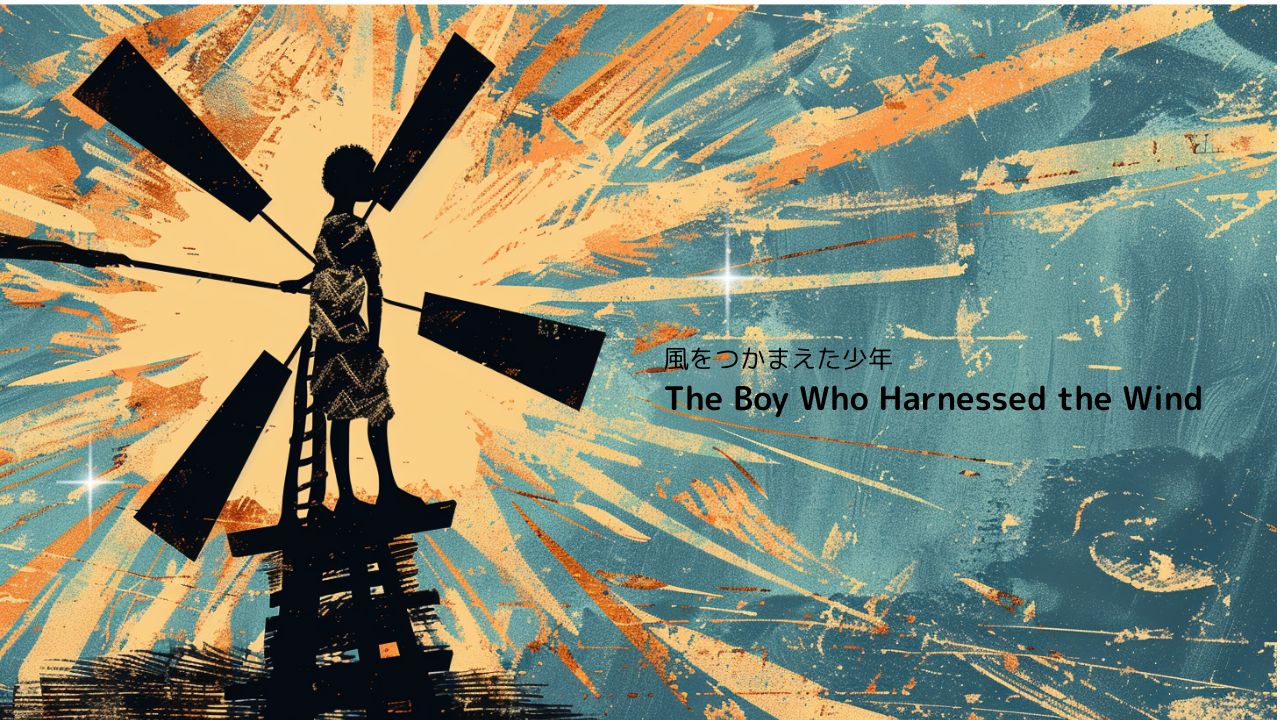
For this day, the film to watch is The Boy Who Harnessed the Wind (2019), directed by and starring Chiwetel Ejiofor.
William Kamkwamba is fourteen years old in 2001 when a severe drought destroys the harvest in his village in Malawi. His family cannot afford school fees; he is expelled. He finds his way into the school library and discovers a book called Using Energy. From the book’s diagrams, he understands how a wind turbine works. From parts scavenged at the local junkyard — bicycle components, scrap metal, a tractor fan blade — he builds one. It pumps water to the fields. The crops grow. The film is the story of how that happened.
Basic Information & Synopsis
→ For synopsis and production information, see our Database Article
Director: Chiwetel Ejiofor
Year: 2019
Runtime: 113 minutes
Production: Netflix, BBC Films
Commemorative Day: Global Wind Day (June 15)
Background Knowledge
William Kamkwamba’s Actual Story
William Kamkwamba was born August 5, 1987, in Kasungu district, Malawi. The wind turbine construction depicted in the film occurred in 2001, when he was fourteen. The actual process was even more iterative than the film shows — his first turbine was five meters tall. He subsequently built a solar-powered water pump (bringing the village its first clean water supply), additional turbines reaching twelve meters, and a turbine in the capital, Lilongwe. In November 2006, a local newspaper article about his work spread through the internet and brought international attention.
His memoir, The Boy Who Harnessed the Wind: Creating Currents of Electricity and Hope (2009), was co-written with journalist Bryan Mealer, who had spent years reporting from conflict zones in Africa and was seeking to tell a story of African ingenuity and hope rather than crisis.
Director Chiwetel Ejiofor’s Vision
Ejiofor is a British-Nigerian actor known internationally for his Academy Award-nominated performance in 12 Years a Slave (2013). This is his feature directorial debut — and he also wrote the screenplay and plays William’s father Trywell.
His stated reason for wanting to make the film: “I didn’t want to make ‘generic Africa’ — there’s no such place. I wanted to show the reality of a specific village in Malawi: the daily life, the intelligence, the creativity, the human relationships.” He was deliberate about avoiding two conventional framings — the fairy-tale Africa of exotic beauty, and the nightmare Africa of poverty and crisis — in favor of a specific, grounded, inhabited place.
He noted that making the film itself mirrored William’s experience: “William didn’t know if he could do it. I didn’t know if I could do it. That connection to the material was always present.”
The Collaboration with Bryan Mealer
Mealer, the memoir’s co-author, had been reporting from Congo and other African conflict zones for years and was exhausted by the obligation to only report disaster. When he encountered the story of William’s wind turbine, he recognized it immediately as the story he had wanted to tell: African ingenuity and self-determination, not African victimhood. The memoir, and by extension the film, was conceived as a corrective to the prevailing narrative.
What Makes It Exceptional
Ejiofor’s Directorial Control and Dignity of Subject
The film’s most important quality is what it refuses to do. Ejiofor avoids the pitfall that Western filmmakers frequently fall into when depicting African poverty — using suffering to generate sympathy in audiences who are positioned as observers of others’ misfortune. Instead, the film places the audience inside the perspective of people with full agency, full intelligence, and full dignity who are dealing with a crisis that is not of their making.
The camera does not position the viewer above or outside the village. It places the viewer in the village. The result is a film in which the Kamkwamba family’s choices, arguments, fears, and love feel immediate rather than illustrative.
Ejiofor’s own performance as Trywell — the father who cannot immediately see what his son sees, who bears the full weight of responsibility for his family’s survival, and who finally makes the decision to trust his son’s vision — is the film’s emotional center. The complexity of his position (not obstruction but exhaustion; not ignorance but legitimate fear) is communicated without simplification.
Maxwell Simba’s Performance
Maxwell Simba, making his film debut at thirteen as William, does not appear to be performing. He is present. The curiosity in his face when he reads the library book, the concentration when he works with the parts, the pain when he and his father clash, the unguarded joy when the turbine moves — all of it reads as lived rather than acted.
The relationship between Simba and Ejiofor as father and son is the film’s structural spine, and it works because both performers hold their characters’ perspectives fully without needing to signal the resolution in advance.
Malawi’s Landscape and Cultural Specificity
Cinematographer Dick Pope (The Illusionist, Mr. Turner) photographs the Malawian landscape with attention and without exoticization. The progression from green fields to drought-brown to green again is the film’s visual arc. The village’s daily life — the architecture, the food preparation, the market, the community meetings — is rendered with specificity rather than generality.
The characters speak primarily in Chichewa (with English subtitles), switching to English in school settings — an accurate reflection of Malawi’s actual linguistic situation that gives the film its cultural authenticity. Antonio Pinto’s score incorporates traditional musical elements without becoming decorative or “exotic.”
Related Articles
- The Boy Who Harnessed the Wind Database – Synopsis & Production Details
- Chiwetel Ejiofor – Filmmaker Profile
はじめに
干ばつに苦しむマラウイの少年が、独学で風力発電を作り上げた実話に基づく感動の物語
6月15日は「Global Wind Day(世界風力の日)」です。この日は2007年に欧州で始まった国際的な記念日で、風力エネルギーの可能性と重要性を世界中で認識し、再生可能エネルギーへの関心を高めることを目的としています。日本でも2008年から毎年イベントが開催され、風力発電の普及啓発活動が行われています。
この記念日は、クリーンで持続可能なエネルギー源としての風力発電の重要性を広く認識し、気候変動対策や環境保全における再生可能エネルギーの役割を再確認することを目的としています。風力発電は化石燃料に依存しない電力供給を可能にし、温室効果ガスの排出削減に大きく貢献する技術として、世界中で注目を集めています。
この特別な日に観るべき作品として、チウェテル・イジョフォー監督・主演による2019年の映画『風をつかまえた少年』(The Boy Who Harnessed the Wind)を強く推奨します。本作は、マラウイの14歳の少年ウィリアム・カムクワンバが、2001年の深刻な干ばつと飢饉の中で、独学で風力発電装置を作り上げ、村に水と希望をもたらした実話を基にした感動的なドラマです。
学費が払えず退学を余儀なくされながらも、図書館で見つけた1冊の本『Using Energy』から風力発電の原理を学び、廃品置き場から集めた自転車のパーツや廃材を使って風車を組み立てたウィリアムの物語は、再生可能エネルギーが持つ真の可能性、教育と知識の力、そして困難に立ち向かう人間の創造性と勇気を美しく描き出しています。
アフリカの最貧国の一つであるマラウイの小さな村で起きたこの奇跡的な物語は、風力発電が単なる先進国の技術ではなく、世界のあらゆる場所で人々の生活を変える力を持つことを証明しています。Global Wind Dayにこの作品を観ることで、再生可能エネルギーの本質的な価値——それは単に環境に優しいというだけでなく、実際に人々の命を救い、未来を切り開く力を持つ——を深く理解することができるでしょう。
基本情報・あらすじ
→ あらすじや製作情報はデータベース記事へ
監督: チウェテル・イジョフォー
製作年: 2019年
上映時間: 113分
制作: Netflix、BBC Films
記念日: 世界風力の日(6月15日)
予備知識
実話の背景:ウィリアム・カムクワンバの実際の人生
映画の主人公ウィリアム・カムクワンバは実在の人物で、1987年8月5日にマラウイのカスング地区で生まれました。映画で描かれた2001年の風車建設は、当時彼が14歳の時の実話です。
実際の風車建設のプロセスは映画よりもさらに試行錯誤に満ちていました。ウィリアムは最初の風車で高さ5メートルのものを建設しましたが、その後、太陽光発電式の水ポンプも作り上げ、村に初めての飲料水供給システムをもたらしました。さらに追加の風車を建設し、最も高いものは12メートルに達しました。2006年11月、地元紙がウィリアムの風車について記事を掲載したことで、彼の物語はインターネットを通じて世界中に広がりました。
作家ブライアン・ミーラーの想い:ポジティブなアフリカの物語を伝えたかった
ウィリアムの自伝の共著者であるブライアン・ミーラーは、もともとコンゴなどアフリカの紛争地や苦境を取材するジャーナリストでした。「戦争、飢饉、貧困」といったネガティブなニュースばかりを報じ続けることに疲れを感じていた彼は、ウィリアムの風車の話を知ったとき「これこそ自分がずっと書きたかった、アフリカの正しい一面を伝える物語だ」と直感しました。彼らはこの本を通じて、「知識と創意工夫」「個人の行動の可能性」「教育の価値」「再生可能エネルギーの力」など、どの国の人にも通じる普遍的なメッセージを伝えたかったのです。
監督チウェテル・イジョフォーの想い:本当にリアルなアフリカの姿を描きたかった
この映画で初監督を務めたチウェテル・イジョフォーは、イギリス出身のナイジェリア系俳優で、『それでも夜は明ける』(2013年)でアカデミー主演男優賞にノミネートされています。
彼がこの作品を監督しようと思った最大の理由は、「”童話のようなアフリカ”でも、”悪夢のようなアフリカ”でもない、ありのままの日常と希望を持つアフリカの村のリアルな姿」を描きたかったからです。「アフリカをひとまとめにして語る”ジェネリックなアフリカ”は存在しない」と強く感じており、マラウイのある村の暮らしのリアリティを、観客に届けることにこだわりました。
また、本作は彼の初監督作であり、「俳優」から「監督」への大きな挑戦でもありました。「この物語は、困難を乗り越えて希望を作るというテーマを持っているが、その映画を作ること自体が逆境に挑むものだった」と語っています。
優れしている点
チウェテル・イジョフォーの監督デビュー作としての完成度
本作の最大の優れた点の一つは、チウェテル・イジョフォーの監督としての卓越した才能です。彼の演出の特徴は、派手な演出を避け、静かで誠実なトーンを維持している点にあります。多くの西洋の映画製作者が陥りがちな、アフリカの貧困を過度に強調して観客の同情を誘う手法を、イジョフォーは意識的に避けています。代わりに、登場人物たちの尊厳、知性、創造性、そして豊かな人間関係を前面に出し、彼らを「助けが必要な犠牲者」ではなく、「自らの運命を切り開く主体的な人々」として描いています。
父親トライウェル役としてのイジョフォー自身の演技も見事です。息子の夢を理解できずに苦悩する父親、家族を養う責任の重圧に押し潰されそうになる男性、そして最終的に息子を信じる決断をする父親——これらの複雑な感情の変化を、イジョフォーは繊細かつ力強く演じています。
マックスウェル・シンバの自然で心を打つ演技
主人公ウィリアムを演じたマックスウェル・シンバの演技は、本作のもう一つの大きな強みです。本作が事実上の映画デビュー作となった当時13歳のシンバは、驚くべき自然さと説得力でウィリアムの知性、好奇心、そして不屈の精神を体現しています。
シンバの演技の素晴らしさは、計算されていない自然さにあります。図書館で本に夢中になる姿、廃品置き場で部品を探す時の集中した眼差し、父親との対立で見せる傷ついた表情、そして風車が動き出した時の純粋な喜び——これらすべてが真実味に溢れています。
マラウイの風景と文化の美しい描写
本作は、マラウイの実際のロケーションで撮影されており、その風景の美しさと文化の真正性が大きな魅力となっています。撮影監督ディック・ポープ(『イリュージョニスト』『ミスター・ターナー』)による撮影は視覚的に素晴らしいものです。乾季のマラウイの広大な空、地平線まで続くトウモロコシ畑——映画の冒頭では緑豊かだった畑が次第に茶色く枯れていく様子が段階的に描かれ、観客は干ばつの恐ろしさを実感します。
登場人物たちは主にチェワ語で会話し(英語字幕付き)、学校では英語が使われるという設定は、マラウイの言語状況を正確に反映しています。アントニオ・ピント作曲のスコアは、アフリカの伝統音楽の要素を取り入れながらも、過度に「エキゾチック」にならず、物語の感情的な深みを支えています。
関連記事
- 風をつかまえた少年 データベース – あらすじ・製作情報
- チウェテル・イジョフォー – 監督プロフィール