
Choose Your Language / 言語を選択:
Introduction
A Painter Who Pursued Light and Color Until His Final Hours
July is World Watercolor Month.
The initiative was launched in 2016 by Charlie O’Shields, founder of the watercolor blog Doodlewash. Its premise is simple: thirty-one paintings in thirty-one days, shared with the world via social media. The project is open to everyone from professionals to complete beginners, and proceeds support the International Child Art Foundation (ICAF) and its work in arts education for children. The month is a celebration of the medium, the act of painting, and the importance of nurturing creative expression.
Watercolor is a medium in which pigment dissolved in water bleeds and layers on paper in ways that are only partially controlled, creating effects that no other medium can quite replicate. Its transparency allows light to pass through it; its inherent unpredictability produces a quality of aliveness that has drawn painters to it for centuries.
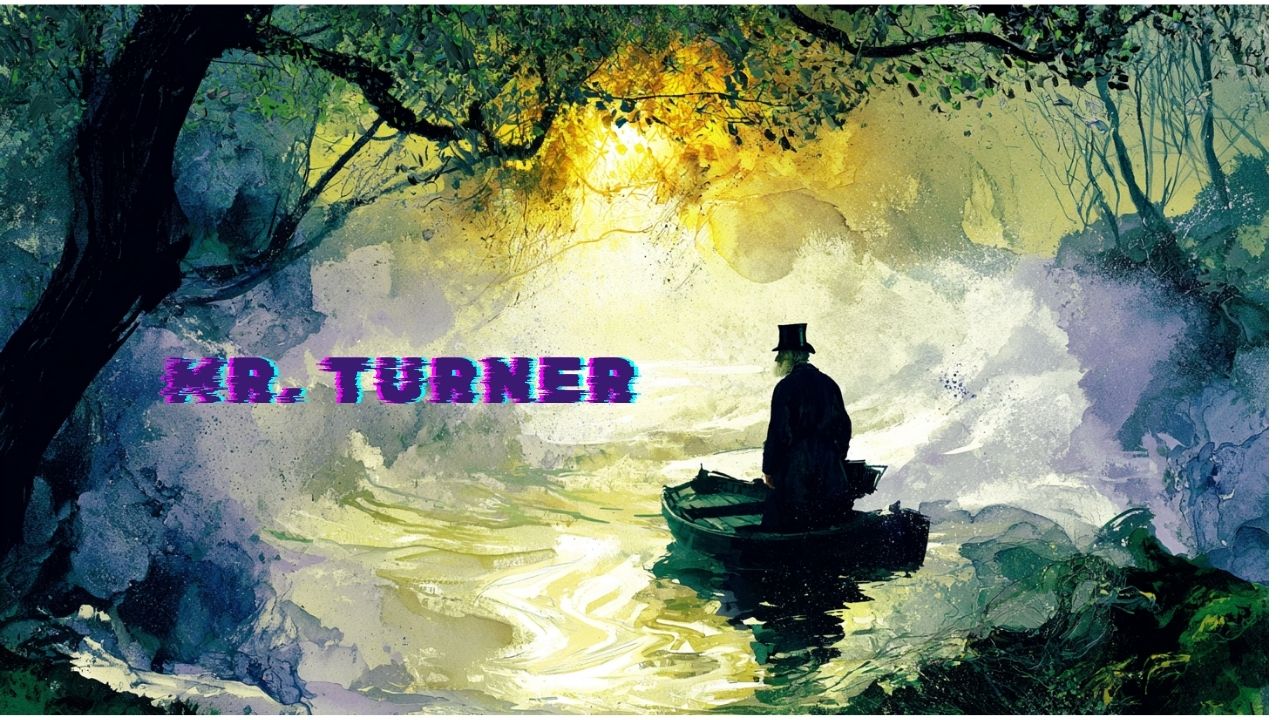
For this month, the film to watch is Mr. Turner (2014), directed by Mike Leigh — a project Leigh spent ten years developing. The film follows the later life of J.M.W. Turner (1775–1851), the British master who devoted his career to capturing the shifting qualities of light and atmosphere. Turner worked in both oil and watercolor throughout his life; his watercolor work in particular is among the most highly regarded in the history of the medium. His late style — in which specific forms dissolve into light and color — was seen by subsequent generations as having anticipated Impressionism, placing him at the opening of the modern era in painting.
The film does not depict Turner’s youthful triumphs. It begins when he is already famous, and it follows the accumulation of years: his father’s death, the complications of human relationships, the changes of his era, a body beginning to give way — and through all of it, a man who continued pursuing light and color until the end. World Watercolor Month is an opportunity to watch what the act of painting can be when it is bound up with a life.
Basic Information & Synopsis
→ For synopsis and production information, see our Database Article
Director: Mike Leigh
Year: 2014
Runtime: 150 minutes
Production: Film4, Focus Features International
Commemorative Month: World Watercolor Month (July)
Synopsis: The film follows Turner across approximately the last twenty-five years of his life. We see him traveling to sketch and paint, moving through the Royal Academy, maintaining an arrangement with his housekeeper-companion Mrs. Booth, failing to maintain a real relationship with his two daughters, receiving John Ruskin’s defence of his later work and other critics’ dismissal of it, and watching the world change around him as the railway age arrives and the old England of his paintings recedes. He grunts. He observes. He paints. The film is less a narrative about events than a sustained experience of a specific person’s presence in the world.
Background Knowledge
J.M.W. Turner
Joseph Mallord William Turner was the preeminent British landscape painter of the Romantic era. The son of a London barber, he showed early talent and was recognized by the Royal Academy while still young. He spent his life painting the sea, the sky, storms, and light — the mutable surfaces of the natural world. His technical command of both oil and atmosphere was unmatched by his contemporaries.
Turner used watercolor throughout his career both as a rapid medium for capturing light and weather on travel and as a medium for pursuing a kind of transparent luminosity that oil could not achieve. His late work — in which representation yields to nearly abstract fields of light and color — was dismissed by some contemporaries as evidence of failing vision or artistic collapse. Later generations understood it differently: as the first sustained attempt in the history of painting to capture light itself rather than what light falls on, and as a direct precursor to Impressionism.
Mike Leigh and “Painting” Daily Life
Director and screenwriter Mike Leigh is known for Secrets & Lies and Vera Drake, among other films. His method characteristically involves extensive improvisational rehearsal, building characters’ inner lives and daily details over months before shooting begins. This film applies that method to a historical figure: rather than dramatizing the major events of Turner’s life, Leigh constructs the texture of the time Turner inhabited — the way a day felt, the way he moved through the world. The result is less a conventional biography than an immersive experience of a specific life.
Timothy Spall’s Preparation
Timothy Spall, known internationally from the Harry Potter series, began learning to paint more than two years before filming started, studying Turner’s technique and developing the physical vocabulary of a painter at work. The scenes in the film in which he handles a brush carry the authority of that preparation. His characterization of Turner — the grunts, the nasal sounds, the sparse speech, the distinctive physical manner — earned him the Best Actor award at the 67th Cannes International Film Festival in 2014.
Cannes and Critical Reception
The film competed at the 2014 Cannes Film Festival, where Spall won Best Actor and cinematographer Dick Pope received the Vulcan Award (Prix Vulcain). Critical reception was exceptionally strong. The cinematography — which invokes Turner’s paintings through its handling of light across landscapes, seascapes, and interiors — was widely praised as one of the film’s defining qualities.
What Makes It Exceptional
Cinematography That Thinks Like Turner’s Paintings
The film’s most immediate quality is its visual language: Dick Pope’s cinematography captures soft coastal light, fog-shrouded landscapes, and the roughness of stormy seas in ways that recall Turner’s own canvases. The audience does not simply learn what Turner saw and painted — they are placed in something close to the position of seeing it themselves. The transitions between landscape footage and Turner’s actual works create a continuity of perception that is the film’s most distinctive achievement.
Timothy Spall’s Physical Performance
Spall’s Turner is laconic, physically distinctive, and largely communicates through grunt and gesture rather than speech. The gap between his social awkwardness and the concentrated passion he brings to painting is the film’s central human revelation. The credibility of his handling of brush and canvas — grounded in years of actual practice — provides a layer of authority that could not have been faked.
The Honesty of a Creative Life’s Light and Shadow
The film does not idealize its subject. Turner is cold toward his daughters, emotionally clumsy in most relationships, and socially eccentric in ways that cost people close to him. But the obsessive attention he brings to observation and to painting borders on something close to compulsion. The film refuses to separate the greatness of the art from the difficulty of the man who made it — and in doing so, it depicts something honest about the relationship between sustained creative work and the kind of solitude and fixation that frequently accompanies it.
Related Articles
- Mr. Turner Database – Synopsis & Production Details
- Mike Leigh – Filmmaker Profile
- Timothy Spall – Actor Profile
はじめに
光と色をひたすら追い求めた、ひとりの画家の後半生
毎年7月は「世界水彩画月間(World Watercolor Month)」です。これは2016年、水彩画ブログ「Doodlewash」の創設者チャーリー・オシールズによって提唱された、比較的新しい国際的なイベントです。「31日間で31枚の水彩画を描く」ことを合言葉に、世界中のアーティストが日々絵筆を取り、その作品をSNSで共有します。プロからはじめたばかりの初心者まで、誰もが参加でき、収益はアート教育を支援する国際児童芸術財団(ICAF)に寄付されます。水彩という画材への愛と、絵を描く喜び、そして子どもたちの創造性を育む芸術教育の大切さを広めることを目的とした、ひと月にわたる祝祭です。
水彩は、水に溶いた絵具が紙の上で滲み、重なり、思いがけない表情を生み出す画材です。光を透かすような透明感と、コントロールしきれない偶然性——その繊細さと自由さが、古くから多くの画家を魅了してきました。
この月間に観る作品として、2014年製作の『ターナー、光に愛を求めて』(Mr. Turner)を取り上げます。マイク・リー監督が構想に10年を費やしたこの伝記映画は、18世紀末から19世紀にかけて活躍したイギリスの巨匠、ジョゼフ・マロード・ウィリアム・ターナー(1775–1851)の後半生を描いた作品です。ターナーは、油彩と水彩の双方で、光と大気の移ろいを画面に捉えようとした画家であり、とりわけ水彩による光の表現は、美術史上きわめて高く評価されています。後世の印象派を先取りしたともいわれる彼の画風は、「目に見えるもの」を超えて、光そのものを描こうとする挑戦でした。
本作が描くのは、若き日の成功譚ではなく、すでに名声を得た画家の、晩年に向かう日々です。父の死、ままならない人間関係、時代の変化、そして衰えゆく身体——そうした人生の只中で、それでも光と色を追い求めることをやめなかった一人の画家の姿を、本作は静かに、そして濃密に映し出します。世界水彩画月間に本作を観ることは、絵を描くという営みが、いかに人の生そのものと分かちがたく結びついているかを見つめ直す機会となります。
基本情報・あらすじ
→ あらすじや製作情報はデータベース記事へ
監督: マイク・リー
製作年: 2014年
上映時間: 150分
制作: Film4、Focus Features International
記念月: 世界水彩画月間(7月)
あらすじ: 映画はターナーの後半生、およそ25年間を追います。スケッチと制作のための旅、王立芸術院での活動、家政婦兼伴侶のブース夫人との関係、二人の娘との不和、ジョン・ラスキンによる擁護と批評家たちからの否定、鉄道時代の到来とともに変わっていく世界——映画は出来事の物語というより、特定の人間がこの世に存在した時間の手触りを体験させることを目的としています。ターナーは唸り、観察し、描く。
予備知識
J.M.W.ターナーという画家
ジョゼフ・マロード・ウィリアム・ターナーは、イギリス・ロマン主義を代表する風景画家です。ロンドンの理髪師の息子として生まれ、早くから才能を発揮して、若くして英国王立芸術院(ロイヤル・アカデミー)に認められました。彼は生涯を通じて、海、空、嵐、光といった自然の諸相を描き続けました。とりわけ、光と大気の効果を画面に捉える手腕において、他の追随を許しませんでした。
ターナーは油彩の大作で知られる一方、水彩においても革新的な仕事を残しました。彼にとって水彩は、旅先で素早く光や天候を写し取るための手段であると同時に、油彩とは異なる透明な光の表現を追求する場でもありました。その晩年の作品では、具体的な形が光と色のなかに溶け込み、ほとんど抽象画のような境地に達しています。この画風は、後の印象派を先取りしたとも評され、近代絵画の扉を開いた一人として位置づけられています。
マイク・リー監督と「日常を描く」手法
監督・脚本を手がけたマイク・リーは、『秘密と嘘』『ヴェラ・ドレイク』などで知られるイギリスの巨匠です。彼の作風の特徴は、登場人物の日常の機微を、即興的なリハーサルを重ねながら丹念に積み上げていく点にあります。本作でも、ターナーの劇的な「事件」よりも、彼が絵を描き、人と関わり、老いていく日々の積み重ねそのものに光が当てられています。通常の伝記映画のように人生を要約するのではなく、ターナーが暮らした時間の手触りを、観客に体験させる作りになっています。
ティモシー・スポールの役作り
主演のティモシー・スポールは、『ハリー・ポッター』シリーズなどで知られる名優です。本作のために、彼は撮影開始の2年以上前から実際に絵を学び、ターナーの絵を描く手つきや身ぶりを習得しました。劇中でスポールが絵筆を走らせる場面は、その鍛錬に裏打ちされた説得力を持っています。唸り、鼻を鳴らし、言葉少なに動き回る——その独特の身体表現によって造形されたターナー像は高く評価され、スポールは第67回カンヌ国際映画祭で男優賞を受賞しました。
カンヌと批評家の絶賛
本作は2014年のカンヌ国際映画祭コンペティション部門に出品され、ティモシー・スポールが男優賞を、撮影監督ディック・ポープがバルカン賞(撮影賞)を受賞しました。批評家からの評価も非常に高く、映画批評集積サイトでも極めて高い支持率を記録しています。ターナーの絵画を思わせる、光に満ちた映像美もまた、本作の大きな魅力として称賛されました。
優れている点
ターナーの絵画のような映像美
本作の最大の魅力は、ターナー自身の絵画を思わせる、光に満ちた映像にあります。撮影監督ディック・ポープは、海辺に射す柔らかな光、霧にかすむ風景、嵐の海の荒々しさを、まるで一枚の絵のように画面に定着させました。観客は、ターナーが何を見て、それをどう絵に変えていったのかを、映像を通して追体験することになります。風景がそのままターナーの作品へと接続していく感覚は、本作ならではの体験です。
ティモシー・スポールの身体的な演技
言葉数の少ないターナーを、スポールは表情と身ぶり、そして唸り声のような発声によって、見事に体現しています。粗野で不器用でありながら、絵に向かうときだけ示される集中と情熱。その落差が、ターナーという人物の複雑さを浮かび上がらせます。実際に絵を学んだ俳優ならではの、絵筆を扱う手つきの確かさも、本作のリアリティを支えています。
創作の「孤独」と「狂気」を描く誠実さ
本作は、画家を美化することなく、その人間的な欠点もふくめて描きます。家族に冷淡で、感情表現が不器用で、社会的にも風変わりなターナー。しかし、彼が自然を観察し、絵を描くときに見せる執念は、ほとんど狂気に近いものです。本作は、優れた芸術が、しばしばこうした孤独や偏執と分かちがたく結びついていることを、誠実に描き出しています。創作という営みの光と影の両方を見つめる、その視線の確かさが、本作を凡庸な伝記映画から隔てています。