
Choose Your Language / 言語を選択:
Introduction
January 1st is designated as “Global Family Day” by the United Nations. This international observance was officially recognized through UN General Assembly Resolution 56/2 in 2001, positioning the first day of the new year as a special day for people worldwide to pledge peace and sharing. Originally begun as “A Day of Peace and Sharing” to celebrate the millennium in 2000, this commemorative day aims to recognize that all humanity is one global family and to promote non-violence and coexistence.
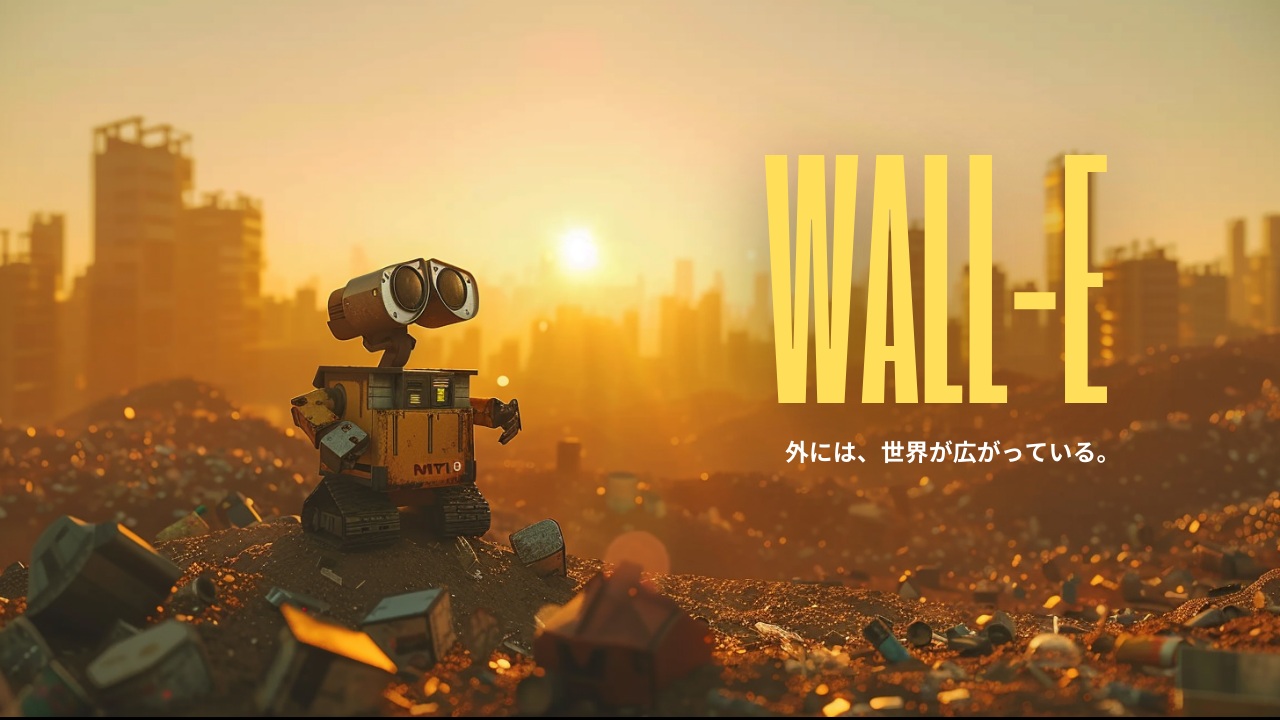
For this special day, I strongly recommend Pixar Animation Studios’ 2008 film WALL-E. Through the story of a small robot left behind on a garbage-covered Earth in the year 2805, this moving science fiction work questions environmental destruction, excessive consumerism, and what humanity should truly value.
Director Andrew Stanton’s depiction of the pure love and devotion of a nearly wordless robot resonates deeply with the ideals of Global Family Day as a story of humanity reclaiming Earth as their “home.” The earnest figure of WALL-E, the sole remaining robot on an Earth abandoned for 700 years, and the hope symbolized by a single small plant deliver a message perfect for the new year: it’s never too late, we can change starting now.
Basic Information & Synopsis
→ For synopsis and production information, see our Database Article
Director: Andrew Stanton
Year: 2008
Runtime: 98 minutes
Studio: Pixar Animation Studios
Commemorative Day: Global Family Day (January 1)
Background Knowledge
From Concept to Reality: A 10-Year Journey Beginning in 1994
Andrew Stanton conceived WALL-E during a 1994 lunch with John Lasseter, Pete Docter, and Joe Ranft. As Toy Story neared completion and they brainstormed ideas for future projects, Stanton asked: “What if mankind had to leave Earth and somebody forgot to turn off the last robot?”
Feeling the simple Robinson Crusoe-like idea of a lonely robot on an uninhabited planet was powerful, Stanton chose the garbage collector setting. The low-status menial work would invite audience sympathy, and the image of piles of compacted trash was visually striking.
Stanton and Docter developed the project for two months in 1995 under the title Trash Planet, but when the story stalled, Docter chose to direct Monsters, Inc. instead. Stanton envisioned plants growing between sidewalks in a devastated world, leading to the idea of WALL-E finding a plant. As a progression from loneliness, the concept of WALL-E falling in love was also developed.
While completing Finding Nemo in 2002, Stanton began writing WALL-E again. Perfecting the credible simulation of underwater physics in Finding Nemo gave him confidence for a space-based film. In late 2003, the first 20 minutes of story reels received approval from Lasseter and Steve Jobs, and development officially began.
WALL-E features minimal dialogue in its opening scenes, with most characters having no voice, communicating through body language and robotic sounds designed by Ben Burtt. The film incorporates various themes including consumerism, corporate dominance, nostalgia, waste management, environmental impact, and obesity and sedentary lifestyles. It was also Pixar’s first animated film to feature live-action characters (Fred Willard as Buy-N-Large CEO).
The Meaning of WALL-E
The protagonist’s name “WALL-E” stands for “Waste Allocation Load Lifter – Earth class.” This indicates he was originally one unit in a mass-produced line of industrial robots, never meant to possess emotions. However, through 700 years of solitary work, WALL-E acquired humanity. His interest in human artifacts and his dreams of romance from watching old movies represent an evolution into a being with not just function, but heart.
What Makes It Exceptional
Masterful Visual Storytelling Without Dialogue and the Silent Film Tradition
The film’s greatest strength is its visual storytelling power that completely captivates audiences despite nearly 30 minutes with almost no dialogue. The sequence of WALL-E alone on a devastated Earth, cleaning garbage, collecting human artifacts, and meeting EVE was created as an homage to silent film masters Buster Keaton and Charlie Chaplin.
Stanton and Pixar initially lacked confidence in featuring a protagonist behaving like Luxo Jr. or R2-D2 in a feature film. However, Stanton felt the “machine with a function” idea was “powerful.” Audiences can project personality onto characters just as they do with babies or pets.
To animate the robot, staff watched Keaton and Chaplin films daily for nearly a year. Stanton stated that Keaton’s “great stone face” gave them the tenacity to animate expressionless characters. He felt that since the arrival of sound, filmmakers had relied too heavily on dialogue to convey exposition.
WALL-E’s large binocular-like eyes were inspired by binoculars Stanton received at a baseball game. Reminded of Keaton, he determined the robot needed neither nose nor mouth, adding zoom lenses to enhance empathy. From Hello, Dolly! which WALL-E repeatedly watches in the film, he learns about “holding hands,” “dancing,” and “love.” Classic human culture being passed to the future through a robot—this expresses the very inheritance of cinematic art itself.
Exquisite Character Design of the Robots
The designs of WALL-E and EVE are contrasting yet beautifully complementary. Stanton stated he wanted WALL-E to be box-shaped and EVE egg-shaped. When Pixar visited recycling stations to study trash compactors, this became inspiration for WALL-E’s body. The tank treads came from someone’s wheelchair that used treads instead of wheels. Animators wanted to give him elbows, but realized this was impractical since he’s only designed to pull trash into his body.
For EVE, Stanton wanted something cutting-edge and asked iPod designer Jonathan Ive to review the design. Ive was very impressed. EVE’s eyes are modeled on Lite-Brite toys, but Pixar chose not to make her overly expressive, as having her eyes change to heart shapes to express love would be too easy. With EVE’s limited design, animators had to treat her like a painting, expressing emotions through body poses. Also, since her floating body resembled aquatic creatures, animators felt she was similar to manatees or narwhals.
AUTO is a conscious homage to HAL 9000 from 2001: A Space Odyssey, reinforced by the use of “The Blue Danube” when Captain McCrea observes daily operations. Hanging from walls and ceilings creates a spider-like intimidating impression. Most of the robot cast was formed through the Build-a-Bot program, combining over 100 different heads, arms, and treads. Human models were based on sea lions’ fatty body types and babies. Filmmakers noticed that baby fat is much firmer than adult fat and incorporated that texture into the film’s characters.
Ben Burtt’s Genius Sound Design
The legendary sound designer Ben Burtt, who created R2-D2’s voice, lightsaber sounds, and Darth Vader’s breathing in Star Wars, crafted the robots’ “voices”—another exceptional element of this film.
Director Stanton envisioned an “R2-D2-like film” from the start and was convinced only Burtt could give emotion and personality to robots with almost no dialogue. To create WALL-E’s voice, Burtt analyzed and processed his own voice by computer, exquisitely blending human and electronic elements.
WALL-E’s movement sounds are also stunning. The slowest speed uses a 1950s Army hand-crank generator, the fastest speed a 1939 biplane inertia starter, and the compacting sound was recorded from an actual car being crushed at a scrapyard. Burtt created 2,400 sounds for WALL-E—more than the approximately 800 sounds in Star Wars: A New Hope or the entire Indiana Jones trilogy combined.
EVE’s voice is electronically processed from Pixar employee Elissa Knight’s voice, cleaning robot M-O’s voice is Burtt’s own voice, and M-O’s cleaning sounds are from Burtt’s electric shaver. Through the combination of these sounds, the robots can express rich emotions even without speaking words.
Related Articles
はじめに
1月1日は、国際連合により制定された「地球家族の日」(Global Family Day)です。この国際デーは、2001年の国連総会決議56/2により正式に認定され、新年の最初の日を世界中の人々が平和と分かち合いを誓う特別な日として位置付けています。元々は2000年のミレニアムを祝う「平和と分かち合いの一日」として始まり、全人類が一つの地球家族であることを認識し、非暴力と共生を促進することを目的とした記念日です。
この特別な日に観る作品として、ピクサー・アニメーション・スタジオが2008年に制作した『ウォーリー』(WALL-E)を強く推奨します。本作は、西暦2805年、ゴミで覆い尽くされた地球に取り残された小さなロボットの物語を通じて、環境破壊、過度の消費主義、そして人類が本当に大切にすべきものは何かを問いかける感動的なSF作品です。
アンドリュー・スタントン監督が描く、言葉をほとんど持たないロボットの純粋な愛と献身は、地球という「家」を取り戻す人類の物語として、地球家族の日の理念と深く結びついています。700年間放置された地球でたった一体残されたロボット・ウォーリーの健気な姿と、一本の小さな植物が象徴する希望は、遅すぎることはない、今から変われるという新年にふさわしいメッセージを私たちに届けてくれます。
基本情報・あらすじ
→ 詳しいあらすじや製作情報はデータベース記事へ
監督: アンドリュー・スタントン
製作年: 2008年
上映時間: 98分
制作スタジオ: ピクサー・アニメーション・スタジオ
記念日: 地球家族の日(1月1日)
予備知識
制作背景:1994年の着想から10年の道のり
アンドリュー・スタントンは1994年、ジョン・ラセター、ピート・ドクター、ジョー・ランフトとの昼食会でウォーリーを思いつきました。『トイ・ストーリー』の完成が近づき、次のプロジェクトのアイデアをブレインストーミングしていたとき、スタントンは「もし人類が地球を去らなければならなくなり、誰かが最後のロボットの電源を切り忘れたらどうなるか?」と尋ねました。
無人惑星にいる孤独なロボットというシンプルなロビンソン・クルーソー風のアイデアが強力だと感じたスタントンは、ゴミ収集家という設定を選びました。地位の低い単純作業のため、観客の同情を誘い、ゴミの塊が積み重なるイメージも印象的だったからです。
スタントンとドクターは1995年に『Trash Planet』というタイトルで2か月間企画しましたが、ストーリー展開に行き詰まり、ドクターは『モンスターズ・インク』の監督を選びました。スタントンは、荒れ果てた世界で歩道の間に生える植物を思い描き、ウォーリーが植物を見つけるアイデアを思いつきました。孤独から抜け出すための進歩として、ウォーリーが恋に落ちることも考案されました。
スタントンは2002年に『ファインディング・ニモ』を完成させながら、再び『ウォーリー』の執筆を始めました。『ファインディング・ニモ』で水中物理学の信憑性あるシミュレーションを完成させたことで、宇宙を舞台にした映画への自信を得ました。2003年後半、最初の20分間のストーリーリールがラセターとスティーブ・ジョブズの承認を得て、正式に開発が開始されました。
『ウォーリー』は、冒頭シーンでセリフが最小限で、登場人物の多くは声を持たず、ベン・バートがデザインしたボディランゲージとロボットの音でコミュニケーションを取ります。消費主義、企業支配、ノスタルジア、廃棄物管理、環境への影響、肥満や座りがちな生活スタイルなど、さまざまなテーマが盛り込まれています。また、ピクサーが実写キャラクター(Buy-N-Large社CEO役のフレッド・ウィラード)を起用した最初のアニメーション映画でもあります。
WALL-Eという名前の意味
主人公の名前「WALL-E」は、「Waste Allocation Load Lifter – Earth class」(廃棄物配分積載機:地球級)の略です。これは彼が本来、大量生産された産業用ロボットの一体であり、感情を持つことなど想定されていなかったことを示しています。しかし700年間の孤独な作業の中で、ウォーリーは人間性を獲得しました。彼が人間の遺物に興味を持ち、古い映画を観て恋を夢見る姿は、機能だけでなく心を持つ存在への進化を表しています。
優れている点
セリフなしで物語る圧巻の映像表現と無声映画の伝統
本作の最大の優れた点は、映画の前半30分間、ほとんど台詞がないにもかかわらず、観客を完全に引き込む映像表現力です。荒廃した地球でウォーリーが一人ゴミを片付け、人間の遺物を集め、EVEと出会うまでの過程は、無声映画時代の巨匠バスター・キートンやチャーリー・チャップリンへのオマージュとして作られました。
スタントンとピクサーは、ルクソーJr.やR2-D2のように振る舞う主人公を長編映画に登場させることに当初は自信がありませんでした。しかしスタントンは「機能を持つ機械」のアイデアを「強力」だと感じました。観客は赤ちゃんやペットのように、キャラクターに個性を投影することができるからです。
ロボットを動かすため、スタッフはキートンとチャップリンの映画をほぼ1年間毎日視聴しました。スタントンはキートンの「偉大な石のような顔」が、表情を変えないキャラクターを動かす粘り強さを与えてくれたと述べています。音声が登場して以来、映画製作者たちは説明を伝えるのにセリフに頼りすぎていると感じたのです。
ウォーリーの大きな双眼鏡のような目は、スタントンが野球観戦中にもらった双眼鏡からヒントを得ました。キートンを思い出し、ロボットには鼻も口も必要ないと判断し、ズームレンズを加えて共感性を高めました。映画の中でウォーリーが繰り返し観る『ハロー・ドーリー!』から、彼は「手を繋ぐこと」「踊ること」「愛すること」を学びます。古典的な人間の文化が、ロボットを通じて未来へと受け継がれていく——これは映画芸術の継承そのものを表現しています。
ロボットたちの精緻なキャラクターデザイン
ウォーリーとEVEのデザインは、対照的でありながら互いを補完し合う見事なものです。スタントンはウォーリーを箱、EVEを卵のような形にしたかったと述べています。ピクサーがリサイクルステーションを訪れた際にゴミ圧縮機を研究したことが、ウォーリーの体のインスピレーションとなりました。戦車の履帯は、誰かが開発した車輪の代わりに履帯を使った車椅子からヒントを得ました。アニメーターたちは彼に肘を付けたかったですが、彼はゴミを体内に引き込むことしかできないようにデザインされているため、これは非現実的だと気づきました。
EVEについて、スタントンは最先端技術のものにしたいと考え、iPodデザイナーのジョナサン・アイブにデザインを検査するよう依頼しました。アイブは非常に感銘を受けました。EVEの目はライトブライトのおもちゃをモデルにしていますが、ピクサーは彼女の目が愛などを表現するためにハート型に変わることが簡単すぎるため、過度に表情豊かにしないことを選択しました。EVEのデザインが限られていたため、アニメーターは彼女を絵のように扱い、体のポーズで感情を表現せざるを得ませんでした。また、浮いている体が水中生物に似ていることから、アニメーターは彼女をマナティやイッカクに似ていると感じました。
AUTOは『2001年宇宙の旅』のHAL 9000への意識的なオマージュであり、マクリー船長が日々の任務を観察するときに『美しく青きドナウ』が使用されていることもそれを裏付けています。壁や天井からぶら下がる様子は、蜘蛛のように威圧的な印象を与えます。ロボットのキャストの大部分はBuild-a-Botプログラムで形成され、異なる頭部、腕部、履帯を100種類以上組み合わせました。人間のモデルは、アシカの脂肪の多い体型と赤ちゃんをモデルにしています。映画製作者は、赤ちゃんの脂肪が大人の脂肪よりもはるかに引き締まっていることに気づき、その質感を映画の登場人物にも取り入れました。
ベン・バートの天才的サウンドデザイン
『スター・ウォーズ』のR2-D2の声、ライトセーバーの音、ダース・ベイダーの呼吸音を生み出した伝説的サウンドデザイナー、ベン・バートが手がけた**ロボットたちの「声」**も、本作の優れた点です。
スタントン監督は当初から「R2-D2のような映画」を構想しており、セリフをほとんど持たないロボットに感情と個性を与えられるのはバートしかいないと確信していました。バートはウォーリーの声を作るために、自分の声をコンピューターで分析・加工し、人間的要素と電子的要素を絶妙にブレンドしました。
ウォーリーの動作音も圧巻です。最も遅い速度は1950年代の陸軍手回し発電機、最も速い速度は1939年製複葉機のイナーシャ・スターター、圧縮音は実際に車がスクラップ場で潰される音を録音したものです。バートは『ウォーリー』のために2,400種類の音を制作しました——これは『スター・ウォーズ 新たなる希望』の約800音、『インディ・ジョーンズ』三部作全体よりも多い数です。
EVEの声はピクサー社員エリッサ・ナイトの声を電子加工したもの、清掃ロボットM-Oの声はバート自身の声で、M-Oの清掃音はバートの電気シェーバーです。これらの音が組み合わさることで、ロボットたちは言葉を話さなくても豊かな感情表現ができるのです。