

Choose Your Language / 言語を選択:
Introduction
208 Seconds That Question the Value of Human Judgment and Experience
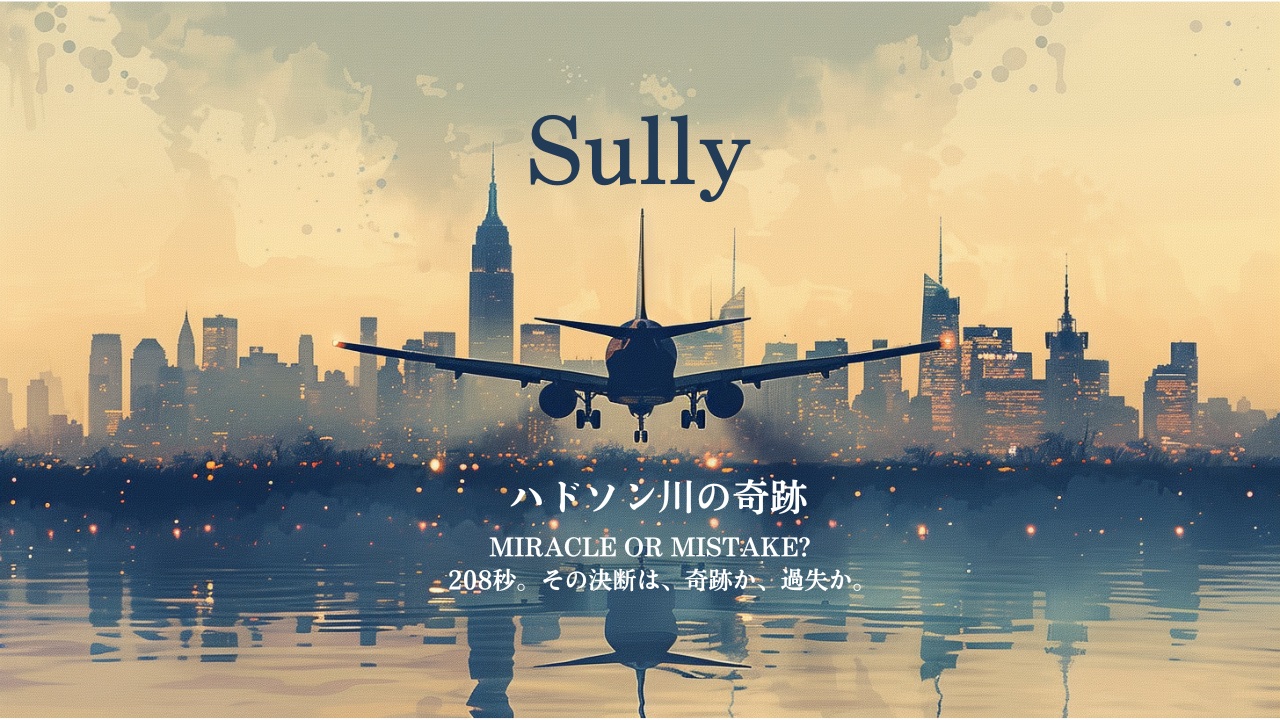
January 15 marks the day in 2009 when US Airways Flight 1549 made an emergency water landing on New York’s Hudson River, with all 155 crew members and passengers miraculously surviving. This event became known worldwide as the “Miracle on the Hudson”—a modern heroic tale where Captain Chesley “Sully” Sullenberger’s calm judgment and exceptional piloting skills, exercised within just 208 seconds after both engines failed merely 100 seconds after takeoff, averted catastrophe.
For this special day, Clint Eastwood’s 2016 film Sully comes highly recommended. Based on the most successful ditching in aviation history, this work depicts human judgment and responsibility in crisis situations, alongside the psychological struggles faced by a person deemed a “hero” after the incident—a moving human drama.
Through Tom Hanks’ portrayal of Captain Sullenberger, the film poses profound questions beyond typical aviation disaster movies. Behind the result of all survivors, the captain was required to prove the validity of his judgment. What emerges through the investigation process is a universal theme: in highly developed technological societies, how much value should we place on human experience and intuition?
Eastwood’s restrained direction and Hanks’ nuanced performance quietly yet powerfully portray the weight of decisions made in just 208 seconds from engine failure to water landing. The film deeply impresses upon audiences that this “miracle” was achieved not by one hero alone, but through the coordinated efforts of cockpit crew, cabin crew, ferry operators, and emergency responders.
Watching this film on January 15 holds significance beyond reflecting on historical events—it offers an opportunity to reaffirm values modern society must reconsider: trust in human potential, respect for professionalism, and the importance of teamwork in crisis.
Basic Information & Synopsis
→ For detailed synopsis and production information, see our Database Article
Director: Clint Eastwood
Year: 2016
Runtime: 96 minutes
Production: Warner Bros., Village Roadshow Pictures, Malpaso Productions
Commemorative Day: Miracle on the Hudson Anniversary (January 15)
Background Knowledge
Captain Chesley Sullenberger: 40 Years of Preparation for 208 Seconds
Chesley “Sully” Sullenberger was born January 23, 1951, in Denison, Texas. He dreamed of becoming pilot from age five. “I never considered a Plan B,” he later stated.
He obtained glider pilot license at 14, soloed at 16, earned private pilot license at 17, and commercial pilot license at 18—all at minimum ages.
In 1969, he entered United States Air Force Academy. Selected for glider program, he became instructor pilot by end of first year. “By age 20, I was flight instructor for both airplanes and gliders. During four years at Air Force Academy, I flew 1,000 hours.” At 1973 graduation, he received “Outstanding Cadet in Airmanship Award” as class “Top Flyer.”
Subsequently assigned to Cold War Europe as F-4 Phantom II fighter pilot. Retired from Air Force with rank of Captain in 1980, transitioning to commercial aviation.
From 1980 to 2010, served with US Airways and predecessor airlines. At time of accident, veteran pilot with 19,663 total flight hours and 4,765 hours on A320.
Particularly notable was his glider piloting experience. Gliders fly without thrust, requiring pilots to intuitively understand aircraft energy management, glide ratios, optimal descent paths. This was precisely the skill needed when piloting an A320 with both engines stopped. “During flight to Hudson River, we were essentially piloting a 75-ton glider,” he stated.
Sullenberger also worked as aviation safety expert. Air Line Pilots Association (ALPA) safety chairman, accident investigator participating in multiple Air Force and NTSB investigations. In 2007, established aviation safety consulting company, developing Crew Resource Management (CRM) courses taught to airline crews.
“My entire life was preparation for that moment”—judgment in just 208 seconds from engine failure was culmination of over 40-year career.
January 15, 2009: Aviation History’s Most Successful Ditching
3:25 PM, January 15, 2009, US Airways Flight 1549 (Airbus A320, 155 aboard) departed New York’s LaGuardia Airport. Destination was Charlotte, North Carolina.
Just 100 seconds after takeoff, flying at approximately 2,818 feet altitude, struck flock of Canada geese. Both engines completely failed—unprecedented emergency. Normal bird strikes typically disable only one engine; simultaneous dual-engine failure extremely rare.
Captain Sullenberger considered returning to nearby airports but judged aircraft altitude already too low, with high possibility of urban crash. Finally decided on Hudson River ditching.
Shortly before 3:31 PM, 208 seconds after bird strike, aircraft magnificently landed on Hudson River. Fourteen NY Waterway ferries rushed to scene, beginning rescue operations within minutes. Despite below-freezing temperatures and 36°F Hudson River water, at 3:55 PM, 24 minutes after ditching, last person rescued—all 155 crew and passengers survived.
This event was reported worldwide as “Miracle on the Hudson,” recorded as aviation history’s most successful ditching accident.
However, story didn’t end there. National Transportation Safety Board (NTSB) initiated thorough investigation, strictly scrutinizing validity of Captain Sullenberger’s judgment. Computer simulations showed landing at nearby airports was possible, requiring captain to prove his decision.
Why Clint Eastwood Made This Film
Personal Experience: 65-Year-Old Crash
Eastwood himself experienced aircraft accident in youth. At 21 during Korean War, drafted as sole passenger on Douglas AD Skyraider off Northern California coast during bad weather. Pilot announced “emergency ditching in shark-infested waters off Point Reyes.”
At 85, Eastwood recalled crash and swim to shore: “We crashed around 4 PM. Could see Marin County coast in distance. Don’t know how far—seemed 50 miles, probably one or two miles. Then darkness fell. Complete night by time we reached shore.”
Natural to consider this experience main reason for making Sully.
Encountering Script: “No Conflict” Preconception
At that time, Eastwood was considering A Star Is Born remake. Considering Bradley Cooper from American Sniper for lead. Then producer Christina Rivera handed him Sully script.
Eastwood recounts: “Christina said ‘Read this,’ so I said, ‘Oh, Hudson story? I’ll read it, but there’s no conflict so won’t film it.’ She said, ‘Won’t say what, but there is conflict.’ So I read it and liked it.”
Producer Allyn Stewart vividly remembers Eastwood’s call: “Clint said ‘Hey, I liked this.’ My heart nearly jumped from chest.”
Suddenly with Eastwood’s participation, Sully became $60 million film at Warner Bros.
Mission to Continue Making “Adult Films for Adults”
Tom Hanks explains: “If you’re in film business, you want different films. Basically, films where adults do adult things in adult situations aren’t known for making big money. Might be good films, but making big money is what everyone seeks.”
Eastwood himself stated: “I want to make films I want to see. But simultaneously feel obligation to keep various stories alive. Comic books are wonderful. I grew up reading comic books, thought they were wonderful, but don’t want to watch such films… I want to make stories. When I directed and starred in Gran Torino, everyone said ‘Dangerous subject!’ I said, ‘Yes, but—someone needs to talk about the PC (politically correct) world we live in.’ It’s wonderful story showing men of certain age can still learn. Such things can happen plenty. Such scripts don’t come often, but when they do, I jump.”
True Theme: Burden and Loneliness of Being Hero
What Eastwood found in Sully wasn’t simple heroic tale. Confusion about being treated as hero, media commotion, anguish of having judgment questioned—this attracted Eastwood.
Film critic Gene Seymour points out: “Sully is film about hero struggling to imagine himself as hero. And all garbage and clutter, praise and skepticism of modern global village obstructs his own view of his accomplishment.”
Eastwood’s Consistent Theme: Individual vs. System
From Dirty Harry series onward, Eastwood’s films consistently depicted bureaucracy as obstacle heroes must overcome. Sully extends this.
Variety critic Owen Gleiberman writes: “What Eastwood most skillfully and personally accomplished (born directly from his right-wing western freedom rider mystique) was reconstructing figure like Sullenberger from hero embodying America’s best to person opposing most dominant currents of our society.”
For Eastwood, Sully isn’t merely hero but countercultural hero—”solid 1950s man who, relying on nothing but himself in emergencies, grew larger than surrounding world.”
Why This Story Matters
Eastwood states: “If film is hour and a half, I didn’t want landing to be just few seconds of that hour and a half. So added dream scenes. To show audience ‘what if’—if he hadn’t done what he did, would have been chaos. If that river hadn’t been there, would have been catastrophe.”
Ultimately, Eastwood’s reasons for making this film were complex. His own aircraft accident experience, interest in script finding “conflict,” mission to continue making stories for adults, and above all, warning about modern society where true professionalism is questioned by bureaucracy and technical judgment—all led the 85-year-old master to this 208-second story from engine failure to ditching.
What Makes It Exceptional
Film Structure: Intersection of Past and Present
Sully‘s greatest characteristic is that actual ditching itself is only few minutes of scenes. Eastwood focused not so much on accident itself but on National Transportation Safety Board investigation Captain Sullenberger faced after accident, and his own internal conflicts.
Film skillfully manipulates chronology, alternately arranging accident day, investigation process, and Sullenberger’s nightmares and recollections, gradually leading audience to truth. Same accident moments depicted multiple times from different perspectives and timings allow audience to understand complexity.
This structure makes film transcend mere disaster panic movie, becoming work provoking deep thought about human judgment and responsibility, value of experience and intuition.
Eastwood’s Minimalism
86-Year-Old Master’s Direction
Particularly excellent in viewing Sully is Clint Eastwood’s directorial minimalism. Eliminating unnecessary emotional manipulation and dramatic staging, simply depicting facts creates effect where story’s essence stands out.
When filming this movie, Eastwood was 85 (86 at release). Yet his direction is filled with maturity and confidence younger directors lack. What to show, what not to show—this choice determines film’s power.
Accident Scene Depiction
Actual ditching scenes depicted several times from multiple perspectives, but all emphasize realism without relying on excessive staging or CG effects.
Particularly cockpit exchanges, accurately reproducing professional aviation terminology and procedures, highlight human ability for calm response in crisis situations.
“What?” “Birds.” “Bird strike. Lost thrust in both engines.”
Everything condensed in this brief exchange.
Use of Sound
Eastwood’s masterful technique of eliminating unnecessary music and sound effects, heightening tension with minimal staging.
Particularly in accident scenes, silence after engine stop and subsequent tense cockpit exchanges effectively expressed through sound’s presence and absence.
Sullenberger later stated: “It was very quiet. Very quiet while co-pilot Jeff Skiles and I worked. We were team. But thrust going to zero from engines was shocking—the silence.”
Film presents this “silence” to audience without filling it with music.
Understated Rescue Scene Depiction
New York citizens, vessels, emergency personnel participating in rescue activities also depicted matter-of-factly without heroizing. Yet precisely this understated depiction has effect of highlighting elements supporting “miracle” of people’s solidarity and responsiveness.
Ferry captains depicted not as specially trained heroes but as ordinary people doing their jobs. “We don’t think. Just react”—these words tell everything.
Dialogue with Real Sully
Film’s end credits show actual Captain Sullenberger and survivors reuniting. Gratitude and solidarity flowing between them is not staged emotion but genuine human bonds.
Through this choice, Eastwood quietly yet powerfully reminds audience “this is true story.”
Related Articles
- Sully Database – Synopsis & Production Details
- Clint Eastwood – Filmmaker Profile
はじめに
208秒の決断が問いかける、人間の判断力と経験の価値
1月15日は、2009年のこの日にUSエアウェイズ1549便がニューヨークのハドソン川に不時着水し、乗員乗客155名全員が奇跡的に生還した日です。この出来事は「ハドソン川の奇跡」(Miracle on the Hudson)と呼ばれ、離陸後わずか100秒で両エンジンが停止し、そこからわずか208秒という極限の時間の中で下されたチェスリー・”サリー”・サレンバーガー機長の冷静な判断と卓越した操縦技術により、大惨事を回避した現代の英雄譚として世界中に知られることとなりました。
この特別な日に観る作品として、クリント・イーストウッド監督による2016年の映画『ハドソン川の奇跡』(原題:Sully)を強く推奨します。本作は、実際に起きた航空史上最も成功した不時着水事故を基に、危機的状況における人間の判断力と責任、そして「英雄」とされる人物が事故後に直面した精神的葛藤を描いた感動的なヒューマンドラマです。
トム・ハンクス演じるサレンバーガー機長の姿を通して、この映画は単なる航空パニック映画を超えた深い問いを投げかけます。全員生還という結果の裏側で、機長は自らの判断の正当性を証明するよう求められます。事故調査の過程で浮かび上がるのは、高度に発達した技術社会において、人間の経験と直感にどれほどの価値を認めるべきかという普遍的なテーマです。
イーストウッド監督の抑制された演出とハンクスの繊細な演技は、エンジン停止から着水までわずか208秒で下した判断の重みを静かに、しかし力強く描き出します。そしてこの「奇跡」が、決して一人の英雄によってではなく、コックピットクルー、客室乗務員、フェリー乗組員、緊急対応者という集団の連携によって成し遂げられたことを、観客に深く印象づけます。
1月15日にこの映画を観ることには、歴史的な出来事を振り返るだけでなく、人間の可能性への信頼、専門性への敬意、そして危機に際してのチームワークの重要性という、現代社会が改めて見つめ直すべき価値観を再確認する意義があるのです。
基本情報・あらすじ
→ 詳しいあらすじや製作情報はデータベース記事へ
監督: クリント・イーストウッド
製作年: 2016年
上映時間: 96分
制作: ワーナー・ブラザース、ヴィレッジ・ロードショー・ピクチャーズ、マルパソ・プロダクションズ
記念日: ハドソン川の奇跡記念日(1月15日)
予備知識
チェスリー・サレンバーガー機長:40年の準備が生んだ208秒
チェスリー・”サリー”・サレンバーガーは、1951年1月23日テキサス州デニソン生まれ。5歳の時から飛行機のパイロットになることを夢見ていました。「プランBは考えたことがありませんでした」と彼は後に語っています。
14歳でグライダーパイロット免許を取得し、16歳で単独飛行、17歳で自家用操縦士免許、18歳で事業用操縦士免許を取得——全て最低年齢での取得でした。
1969年、米国空軍士官学校に入学。グライダープログラムに選ばれ、1年の終わりまでに教官パイロットになります。「20歳までに、私は飛行機とグライダーの両方の飛行教官になっていました。空軍士官学校での4年間で、私は1,000時間飛行しました」。1973年の卒業時、クラスの「トップフライヤー」として「優秀な航空技術士官候補生賞」を受賞しました。
その後、F-4ファントムII戦闘機のパイロットとして冷戦時代のヨーロッパに配属。1980年に空軍を大尉の階級で退役し、民間航空に転身します。
1980年から2010年まで、USエアウェイズとその前身の航空会社で勤務。事故時点で、総飛行時間19,663時間、A320での飛行時間4,765時間という経験を持つベテランパイロットでした。
特筆すべきは、彼のグライダー操縦の経験です。グライダーは推力なしで飛行するため、パイロットは機体のエネルギー管理、滑空比、最適な降下経路を直感的に理解する必要があります。これはまさに、両エンジンが停止したA320を操縦する際に必要なスキルでした。「ハドソン川への飛行中、私たちは本質的に75トンのグライダーを操縦していました」と彼は語っています。
また、サレンバーガーは航空安全の専門家としても活動していました。航空会社パイロット協会(ALPA)の安全委員長、事故調査官として空軍やNTSBの複数の事故調査に参加。2007年には航空安全コンサルティング会社を設立し、クルー・リソース・マネジメント(CRM)のコースを開発して航空会社のクルーに教えていました。
「私の人生全体が、その瞬間のための準備でした」——エンジン停止からわずか208秒での判断は、40年以上のキャリアの集大成だったのです。
2009年1月15日:航空史上最も成功した不時着水
2009年1月15日午後3時25分、ニューヨークのラガーディア空港からUSエアウェイズ1549便(エアバスA320型機、乗員乗客155名)が離陸します。目的地はノースカロライナ州シャーロットでした。
離陸からわずか100秒後、高度約859メートルを飛行中、複数のカナダガンの群れと衝突。両エンジンが完全停止するという前例のない緊急事態に陥ります。通常のバードストライクでは片方のエンジンのみが停止することがほとんどで、両エンジン同時停止は極めて稀でした。
サレンバーガー機長は、近隣の空港への帰還を検討しますが、既に機体の高度が低く、市街地に墜落する可能性が高いと判断。最終的にハドソン川への着水を決断します。
午後3時31分直前、鳥との衝突から208秒後、機体はハドソン川に見事着水。14隻のNY Waterwayフェリーが現場に急行し、数分以内に救助活動を開始します。気温は氷点下、ハドソン川の水温は摂氏2度という極寒の状況でしたが、午後3時55分、着水から24分後に最後の人が救助され、乗員乗客155名全員が生還しました。
この出来事は「ハドソン川の奇跡」として世界中で報道され、航空史上最も成功した不時着水事故として記録されます。
しかし物語はここで終わりませんでした。国家運輸安全委員会(NTSB)による徹底的な調査が開始され、サレンバーガー機長の判断の正当性が厳しく検証されることになります。コンピューターシミュレーションでは近隣の空港への着陸が可能だったという結果が示され、機長は自らの決断を証明するよう求められたのです。
なぜクリント・イーストウッドはこの映画を撮ったのか
個人的な体験:65年前の墜落事故
実は、イーストウッド自身が若き日に航空機事故を経験していました。朝鮮戦争中の21歳、徴兵された彼はダグラス AD雷撃機の唯一の乗客として北カリフォルニア沖を飛行中、悪天候に見舞われます。パイロットは「ポイント・レイズ沖のサメが出没する海域に緊急着水する」と告げました。
85歳になったイーストウッドは、この墜落と岸への泳ぎを振り返ります。「午後4時頃に墜落しました。遠くからマリン郡の海岸が見えました。どのくらい離れていたかわかりません—50マイルに思えましたが、おそらく1、2マイルだったでしょう。そして暗くなりました。岸に着くまでにはすっかり夜になっていました」
この経験が『Sully』を撮る主な理由かもしれない、と考えるのは自然なことです。
脚本との出会い:「対立がない」という先入観
当時、イーストウッドは『スター誕生』のリメイクを検討していました。主演は『アメリカン・スナイパー』のブラッドリー・クーパーを考えていたのです。そんな時、プロデューサーのクリスティーナ・リベラが『Sully』の脚本を手渡しました。
イーストウッドは語ります。「クリスティーナが『これを読んでみて』と言ったので、『ああ、ハドソンの話だね?読むけど、これには対立がないから映画化しない』と言いました。すると彼女は『何かは言わないけど、対立はあるわ』と。それで読んでみたら、気に入ったんです」
プロデューサーのアリン・スチュワートは、イーストウッドからの電話を鮮明に覚えています。「クリントが『ねえ、これ気に入ったよ』って言ったんです。その時、私の心臓は胸から飛び出しそうでした」
突然、イーストウッドが参加したことで、『Sully』はワーナー・ブラザースで6000万ドルの映画になりました。
「大人のための大人の映画」を作り続ける使命感
トム・ハンクスはこう説明します。「映画ビジネスをしているなら、これとは違う映画が欲しいでしょう。基本的に、大人が大人のことを大人の状況で行う映画は、大金を稼ぐことで知られていません。良い映画にはなるかもしれませんが、大金を稼ぐことが皆が探しているものです」
イーストウッド自身も語っています。「私は自分が見たい映画を作りたいと思っています。しかし同時に、様々な物語を生き続けさせる義務があると思います。コミックブックは素晴らしい。私もコミックブックを読んで育ち、素晴らしいと思っていましたが、そういう映画は見たくありません…私は物語を作りたいんです。『グラン・トリノ』を監督・主演した時、みんな『危ない題材だ!』と言いました。私は『そうだよ、でもね—誰かが私たちが生きているPC(政治的に正しい)世界について語る必要があるんだ』と言いました。それは、ある年齢の男性がまだ学ぶことができるということを示す素晴らしい物語です。そういうことがたくさん起こり得ます。そういう脚本はそう多くは来ませんが、来た時には飛びつきます」
真のテーマ:英雄になることの重圧と孤独
イーストウッドが『Sully』に見出したのは、単なる英雄譚ではありませんでした。英雄として扱われることへの戸惑い、メディアの喧騒、そして自分の判断を疑問視される苦悩——これこそがイーストウッドを惹きつけたのです。
映画評論家ジーン・シーモアは指摘します。「『Sully』は、自分を英雄だと想像するのに苦労している英雄についての映画です。そして、現代のグローバル・ビレッジのあらゆるゴミと雑然、賞賛と懐疑主義が、彼の功績に対する自身の見方を妨げているのです」
イーストウッドの一貫したテーマ:個人対システム
『ダーティハリー』シリーズから一貫して、イーストウッドの映画では官僚制度が英雄が克服すべき障害として描かれてきました。『Sully』もその延長線上にあります。
Varietyの評論家オーウェン・グライバーマンは書いています。「イーストウッドが最も巧みに、そして最も個人的に行ったこと(それは彼の右翼的な西部の自由の騎士という神秘性から直接生まれている)は、サレンバーガーのような人物を、アメリカの最良を体現する英雄から、私たちの社会の支配的な潮流のほとんどに対立する人物へと再構成したことです」
イーストウッドにとって、サリーは単なる英雄ではなく、「1950年代の堅実な男性が、緊急時には自分自身以外の何にも頼らないため、周囲の世界よりも大きく成長した」カウンターカルチャーの英雄なのです。
なぜこの物語が重要なのか
イーストウッドは語っています。「私は、映画を1時間半とすると、着陸がその1時間半のわずか数秒にしたくありませんでした。だから夢のシーンを追加しました。もし彼がしたことをしていなかったら、大混乱になっていただろう。あの川がなかったら、大惨事になっていただろう、という『もしも』を観客に見せるためです」
結局のところ、イーストウッドがこの映画を撮った理由は複合的でした。自身の航空機事故の経験、「対立」を見出した脚本への興味、大人のための物語を作り続ける使命感、そして何より、真のプロフェッショナリズムが官僚制度や技術的判断によって疑問視される現代社会への警鐘——これら全てが、85歳の巨匠をこのエンジン停止から着水まで208秒の物語へと導いたのです。
優れている点
映画の構成:過去と現在の交錯
『ハドソン川の奇跡』の最大の特徴は、実際の不時着水自体はわずか数分のシーンでしかないという点です。イーストウッド監督は、事故そのものというよりも、サレンバーガー機長が事故後に直面した国家運輸安全委員会による調査と、彼自身の内面的な葛藤に焦点を当てています。
映画は時系列を巧みに操作し、事故当日、調査の過程、そしてサレンバーガーの悪夢や回想を交互に配置することで、観客を徐々に真実に導いていきます。同じ事故の瞬間が、異なる視点や異なるタイミングで何度も描かれることで、観客はその複雑さを理解していきます。
この構成により、映画は単なる災害パニック映画を超え、人間の判断と責任、経験と直感の価値について深く考えさせる作品となっています。
イーストウッド監督のミニマリズム
86歳の巨匠の演出
『ハドソン川の奇跡』を鑑賞する上で特に優れているのは、クリント・イーストウッド監督の演出におけるミニマリズムです。無駄な感情移入や劇的な演出を極力排し、事実をシンプルに描くことで、かえって物語の本質が際立つ効果を生み出しています。
この映画を撮影したとき、イーストウッドは85歳でした(公開時86歳)。しかし彼の演出は、若い監督にはない成熟と自信に満ちています。何を見せ、何を見せないか—この選択が、映画の力を決定します。
事故シーンの描写
実際の不時着水のシーンは複数の視点から何度か描かれますが、いずれも過剰な演出やCG効果に頼ることなく、リアリティを重視した描写となっています。
特にコックピット内のやりとりは、専門的な航空用語や手順を正確に再現することで、危機的状況での冷静な対応という人間の能力を際立たせています。
「何?」「鳥です」「鳥との衝突。両エンジンの推力を失いました」
この簡潔なやり取りに、全てが凝縮されています。
音の使い方
イーストウッド監督は、無駄な音楽や効果音を排し、必要最小限の演出で緊張感を高める手法も見事です。
特に事故シーンでは、エンジン停止後の静けさと、それに続く緊張感あふれるコックピット内のやり取りが、音の存在と不在によって効果的に表現されています。
サレンバーガーは後にこう語っています。「非常に静かでした。副操縦士ジェフ・スカイルズと私が作業している間、とても静かでした。私たちはチームでした。しかし、エンジンから推力がゼロになるというのは衝撃的でした—沈黙が」
この「沈黙」を、映画は音楽で埋めることなく、そのまま観客に提示します。
救助シーンの淡々とした描写
救助活動に参加したニューヨーク市民や船舶、救急隊員たちの姿も、英雄視することなく淡々と描かれています。しかしその淡々とした描写こそが、人々の連帯と即応性という「奇跡」を支えた要素を浮き彫りにする効果を持っています。
フェリーの船長たちは、特別な訓練を受けたヒーローとして描かれるのではなく、自分の仕事をする普通の人々として描かれます。「我々は考えません。ただ反応するだけです」—この言葉が全てを物語っています。
実際のサリーとの対話
映画のエンドクレジットでは、実際のサレンバーガー機長と生存者たちが再会する様子が映されます。彼らの間に流れる感謝と連帯の感情は、演出された感動ではなく、本物の人間の絆です。
この選択により、イーストウッドは観客に「これは実話だ」ということを静かに、しかし力強く思い出させます。
関連記事
- Sully データベース – あらすじ・製作情報
- クリント・イーストウッド – 監督プロフィール