
Choose Your Language / 言語を選択:
Introduction
Nostalgia for Past and Present’s Value — Life Truth Taught by Magical Midnight
January 30 is “National Escape Day” established in America. This commemorative day was established to recognize importance of temporarily separating from daily life stress and routine, refreshing mind and body. As commemorative day encouraging having time to reflect on oneself away from reality, enriching life through new perspectives and experiences, many Americans enjoy “escape” in various forms: travel, hobbies, meditation.
For this special day, Woody Allen’s 2011 Midnight in Paris is recommended. This work, through ultimate escape experience time-slipping from modern Paris to 1920s golden age, questions longing for past and meaning of living present—intellectual, enchanting fantasy romance.
Story of screenwriter Gil played by Owen Wilson goes beyond mere time travel tale, beautifully depicting universal themes deeply related to Escape Day ideals: nostalgia’s essence, artist self-realization, pursuit of true happiness in life. This work, where Woody Allen’s sophisticated wit fuses with Paris city’s magical beauty, is masterpiece romantically teaching that escape from daily life sometimes brings life-changing awareness.
Basic Information & Synopsis
→ For synopsis and production information, see our Database Article
Director: Woody Allen
Year: 2011
Runtime: 94 minutes
Production: Gravier Productions, Mediapro
Commemorative Day: National Escape Day (January 30)
Background Knowledge
Lost Generation
Film’s central 1920s is era of artists called “Lost Generation.” After World War I, young artists and writers losing conventional values gathered especially in Paris, developing innovative art movements.
Ernest Hemingway, F. Scott Fitzgerald, Gertrude Stein, Ezra Pound—many writers representing 20th century literature were active in Paris during this era. Their creative activities, unrestrained lifestyles, mutual influence relationships occupy extremely important position in literary history.
Film features these real people appearing with historically based character portrayals and relationships, skillfully weaving historical episodes.
Woody Allen’s Love for Paris
Woody Allen, known for New York-set works, made this as one of his “European Trilogy,” filled with deep affection for Paris. Allen himself publicly stating “Paris is world’s most beautiful city,” that feeling expressed throughout imagery.
Cinematography by Darius Khondji captures Paris landmarks—Eiffel Tower, Notre-Dame Cathedral, Seine River, Montmartre—beautifully like paintings, creating work where audience can also experience “escape” to Paris.
Golden Age Thinking
Work’s core theme is phenomenon psychology calls “golden age thinking.” This refers to tendency where people dissatisfied with present idealize certain past era, thinking “if only I was born in that era.”
Woody Allen skillfully depicts this universal human psychology using time slip device. Through nested structure where Gil longs for 1920s, Adriana longs for 1890s, people of that era long for Renaissance, message conveyed: every era has own problems, perfect “golden age” doesn’t exist.
What Makes It Exceptional
Owen Wilson’s Empathy-Inducing Performance
This work’s greatest strength is Owen Wilson’s charming performance as Gil. Wilson, usually known as comedian, delicately plays introspective, dreamy aspiring artist in this work.
Discomfort in real world, excitement and joy in 1920s, love for Adriana, ultimate self-discovery—Wilson naturally expresses these emotional transitions. Through his performance, Gil character is depicted not as mere idealist but “ordinary person dissatisfied with reality” many audiences can empathize with.
Charming Depiction of Real Artists
Depiction of 1920s artists appearing in film is also major charm of this work. Each actor skillfully plays known episodes and personalities of historical figures.
Hemingway played by Corey Stoll, befitting writer known for masculine, direct writing style, speaks in short, powerful words. Fitzgerald played by Tom Hiddleston depicted as glamorous, fragile genius with complex relationship with unrestrained wife Zelda played by Alison Pill. Gertrude Stein played by Kathy Bates radiates presence as literary world’s mother possessing dignity and warmth.
These depictions balance respect for historical figures with humor exquisitely, providing deeper enjoyment for audiences with literary history knowledge.
Paris’s Magical Cinematography
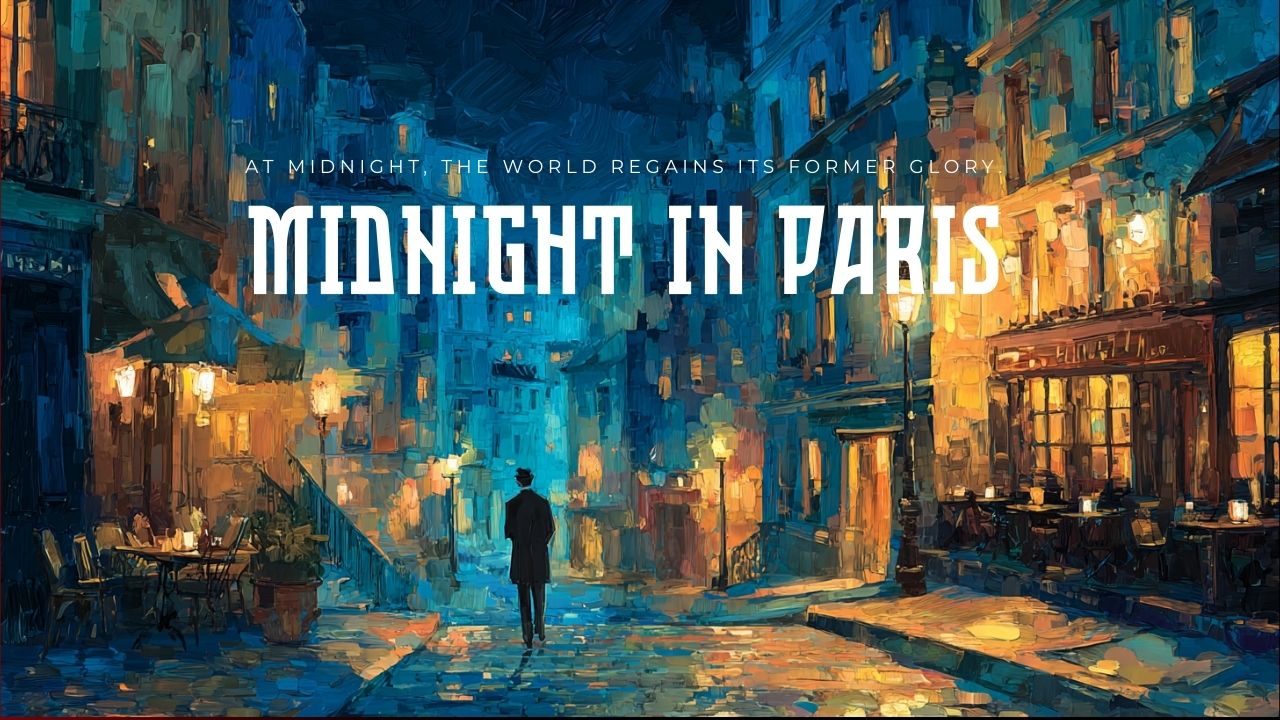
Cinematography by Darius Khondji depicts Paris city as one of leads. Morning Seine River, rain-wet cobblestones, twilight Eiffel Tower, night cafés—all imagery beautifully like postcards, captivating audience.
Particularly noteworthy is 1920s Paris recreation. Costumes, set design, lighting harmonize perfectly, making time slip moments feel visually magical. Contrast between 1920s wrapped in golden lighting and modern era’s cooler tones also effective.
Related Articles
- Midnight in Paris Database – Synopsis & Production Details
- Woody Allen – Filmmaker Profile
はじめに
過去への郷愁と現在の価値――魔法の真夜中が教える人生の真実
1月30日は、アメリカで制定された「全米エスケープの日」(National Escape Day)です。この記念日は、日常生活のストレスやルーティンから一時的に離れ、心身をリフレッシュすることの重要性を認識する日として設けられました。現実から離れて自分自身を見つめ直す時間を持つこと、新しい視点や経験を通じて人生を豊かにすることを奨励する記念日として、多くのアメリカ人が旅行、趣味、瞑想など様々な形で「エスケープ」を楽しみます。
この特別な日に観る作品として、ウディ・アレン監督による2011年の『ミッドナイト・イン・パリ』(Midnight in Paris)を推奨します。本作は、現代のパリから1920年代の黄金時代へタイムスリップするという究極のエスケープ体験を通じて、過去への憧れと現在を生きることの意味を問いかける、知的で魅惑的なファンタジー・ロマンスです。
オーウェン・ウィルソン演じる脚本家ギルの物語は、単なる時間旅行ものを超えて、ノスタルジアの本質、芸術家としての自己実現、人生における真の幸福の追求といった、エスケープの日の理念に深く関わる普遍的なテーマを美しく描き出しています。ウディ・アレンの洗練されたウィットとパリの街の魔法のような美しさが融合した本作は、日常からの逃避が時に人生を変える気づきをもたらすことを、ロマンティックに教えてくれる傑作となっています。
基本情報・あらすじ
→ あらすじや製作情報はデータベース記事へ
監督: ウディ・アレン
製作年: 2011年
上映時間: 94分
制作: グラヴィエ・プロダクションズ、メディアプロ
記念日: 全米エスケープの日(1月30日)
予備知識
ロスト・ジェネレーションとは
映画の中心となる1920年代は、「ロスト・ジェネレーション」と呼ばれる芸術家たちの時代です。第一次世界大戦後、従来の価値観を失った若い芸術家や作家たちが、特にパリに集まり、革新的な芸術運動を展開しました。
アーネスト・ヘミングウェイ、F・スコット・フィッツジェラルド、ガートルード・スタイン、エズラ・パウンドなど、20世紀文学を代表する作家たちの多くがこの時代のパリで活動していました。彼らの創作活動、奔放な生活スタイル、そして相互の影響関係は、文学史において極めて重要な位置を占めています。
映画では、これらの実在の人物たちが、史実に基づいた性格描写や関係性で登場し、歴史的なエピソードが巧みに織り込まれています。
ウディ・アレンのパリへの愛
ニューヨークを舞台にした作品で知られるウディ・アレンですが、本作は彼の「ヨーロッパ三部作」の一つで、パリへの深い愛情が込められています。アレン自身が「パリは世界で最も美しい都市」と公言しており、その思いが映像の隅々に表現されています。
撮影監督ダリウス・コンジの手による映像は、パリの名所――エッフェル塔、ノートルダム大聖堂、セーヌ川、モンマルトル――を絵画のように美しく捉えており、観客もまたパリへの「エスケープ」を体験できる作品となっています。
黄金時代症候群(Golden Age Thinking)
本作の核心的なテーマは、心理学で「黄金時代症候群」と呼ばれる現象です。これは、現在に不満を持つ人々が、過去のある時代を理想化し、「あの時代に生まれていれば」と考える傾向を指します。
ウディ・アレンは、この普遍的な人間心理を、タイムスリップという装置を使って巧妙に描き出しています。ギルが1920年代に憧れ、アドリアナが1890年代に憧れ、さらにその時代の人々がルネサンスに憧れるという入れ子構造により、どの時代にも固有の問題があり、完璧な「黄金時代」など存在しないというメッセージが伝えられます。
優れている点
オーウェン・ウィルソンの共感を呼ぶ演技
本作の最大の優れた点は、オーウェン・ウィルソンのギル役での魅力的な演技です。通常コメディアンとして知られるウィルソンですが、本作では内省的で夢見がちな芸術家志望者を繊細に演じています。
現実世界での居心地の悪さ、1920年代での興奮と喜び、アドリアナへの恋心、そして最終的な自己発見――これらの感情の移り変わりを、ウィルソンは自然体で表現しています。彼の演技により、ギルというキャラクターは単なる理想主義者ではなく、多くの観客が共感できる「現実に満足できない普通の人」として描かれています。
実在の芸術家たちの魅力的な描写
映画に登場する1920年代の芸術家たちの描写も、本作の大きな魅力です。各俳優が、歴史的な人物の知られたエピソードや性格を巧みに演じています。
コリー・ストール演じるヘミングウェイは、男性的で直接的な文体で知られる作家らしく、短く力強い言葉で語ります。トム・ヒドルストン演じるフィッツジェラルドは、華やかで脆い天才として、アリソン・ピル演じる奔放な妻ゼルダとの複雑な関係が描かれます。キャシー・ベイツのガートルード・スタインは、威厳と温かさを併せ持つ文壇の母として存在感を放ちます。
これらの描写は、歴史的人物への敬意とユーモアのバランスが絶妙で、文学史の知識がある観客にはより深い楽しみを提供しています。
パリの魔法的な映像美
ダリウス・コンジによる撮影は、パリという都市を主役の一人として描き出しています。朝のセーヌ川、雨に濡れた石畳、夕暮れのエッフェル塔、夜のカフェ――すべての映像が絵はがきのように美しく、観客を魅了します。
特に注目すべきは、1920年代のパリの再現です。衣装、セットデザイン、照明が完璧に調和し、タイムスリップの瞬間が視覚的にも魔法のように感じられます。黄金色の照明に包まれた1920年代と、よりクールな色調の現代との対比も効果的です。
関連記事
- Midnight in Paris データベース – あらすじ・製作情報
- ウディ・アレン – 監督プロフィール