

Choose Your Language / 言語を選択:
Introduction
Five Years After the Declaration — Until Those Who Raised Ideals Execute One Another
August 26 is the “Anniversary of the Declaration of the Rights of Man.” On this day in 1789, France’s National Constituent Assembly adopted the “Declaration of the Rights of Man and of the Citizen” (the French Declaration of the Rights of Man). Seventeen articles in all. Article 1 begins thus: “Men are born and remain free and equal in rights.” Article 2 laid down that the aim of every political association is the preservation of natural rights. Following it are lined up popular sovereignty, equality before the law, the principle of no punishment without law, freedom of speech, the guarantee of property rights, and more. This document has continued to influence the later constitutions of various countries and the Universal Declaration of Human Rights, and in 2003 it was also registered in UNESCO’s “Memory of the World.”
But what was happening in France five years after this declaration was adopted? In 1794, in Paris, the Revolutionary Tribunal was handing down death sentences almost daily. It is the period called the Reign of Terror. Those executed were not only royalists. The very people who had led the revolution were sent to the guillotine one after another. People who had raised “equality before the law” executed their comrades in trials without evidence. People who had declared “freedom of speech” suppressed critical newspapers. Those who had written the ideals betrayed those ideals.
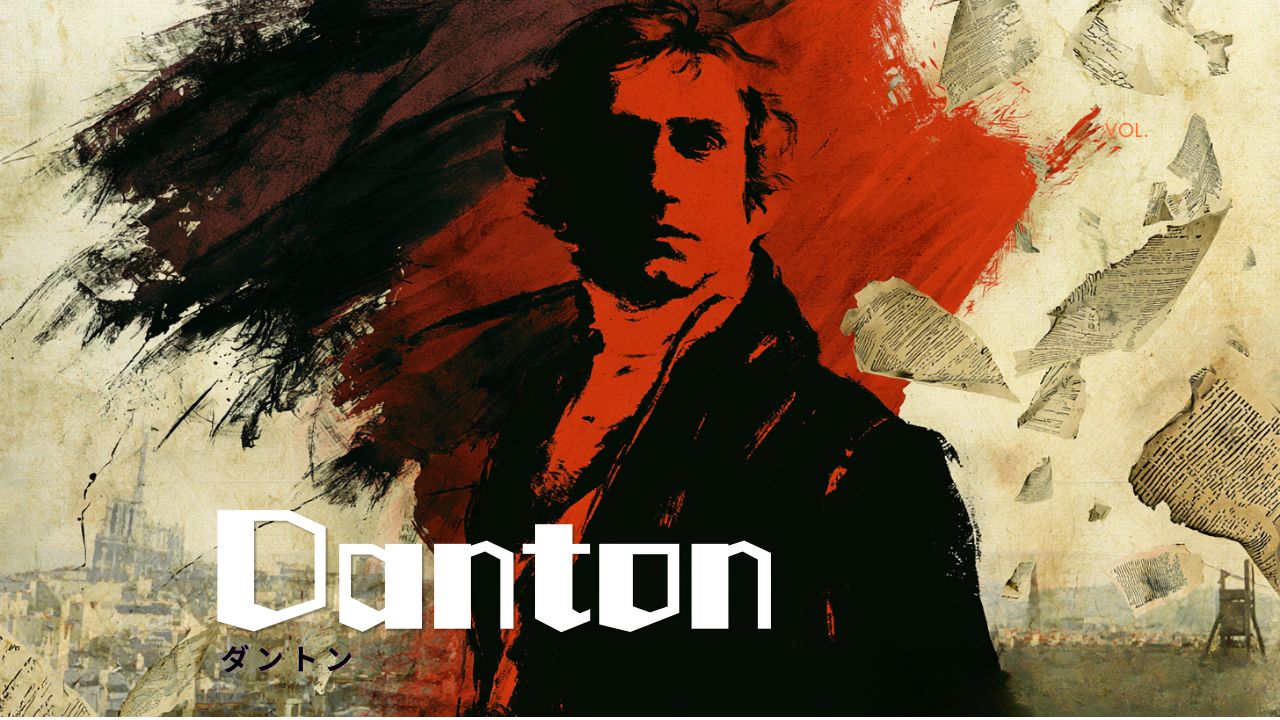
As the film to watch on this day, we recommend Andrzej Wajda’s Danton (1983). It is a work depicting the few weeks from March to April 1794. The revolutionary leader Georges Danton, and Maximilien Robespierre, who led the Committee of Public Safety. The process by which former comrades come decisively into conflict is depicted.
And this work has one more context. The director was Polish, and this work was shot in Paris, as if driven out of Poland under martial law.
Basic Information & Synopsis
→ For synopsis and production information, see our Database Article
Director: Andrzej Wajda
Year: 1983
Runtime: 136 minutes
Production: Les Films du Losange / Gaumont / TF1 Films Production
Commemorative Day: Anniversary of the Declaration of the Rights of Man (August 26)
Background Knowledge
The Source, and Its Inversion
The source of this work is the play The Danton Case (1929) by the Polish writer Stanisława Przybyszewska. This is an important point. Przybyszewska was a communist. And her play depicts Robespierre as a hero. As a person of integrity, without self-interest, who becomes a martyr to the revolution’s ideals. The opposing Danton was positioned as an opportunistic and corrupt politician. This play became an important work for the Polish left of the 1930s.
Wajda inverted this. He had already made changes when he directed the stage version in 1975, but in the 1983 film he places Danton as the protagonist. In other words, this work is an adaptation that turned over the source’s political stance. The French Jean-Claude Carrière (known for Buñuel’s works and others) joined the screenplay, and Agnieszka Holland, who later became a director, also took part.
Martial Law, and the Move of the Production Site
The very course of the production determines this work’s character. In the initial plan, as a Polish-French co-production, the studio shooting was to be done in Poland and the location shooting in France. The project began to move in 1980. It was the period when the Solidarity (Solidarność) movement was surging.
But on December 13, 1981, martial law was declared. A military government under General Jaruzelski was established, and Solidarity was outlawed. Communications were cut off, a curfew was imposed, and activists were detained one after another. Production in Poland became impossible. Wajda moved the entire project to Paris and went to France accompanied by some of the Polish actors. Wojciech Pszoniak, who played Robespierre, was one of them. A director who left his country because of martial law shoots a story of a revolution purging its comrades. This structure was obvious to the audience of the time as well.
Two Languages
The cast was roughly half French and half Polish. And interestingly, the actors each performed in their mother tongue. The French in French, the Poles in Polish. In the finished version it was unified into French by dubbing, but if you watch carefully, the mouth movements of the Polish actors follow the rhythm of Polish. It was also a casting in which the French played the Danton faction and the Poles played the Robespierre faction.
The Backlash in France
This work drew great controversy in France. Its release was in January 1983. It was the period of the Mitterrand Socialist government. Part of the production cost came from the French Ministry of Culture. For that reason, this work had an aspect of being received as a “government-sanctioned anti-revolution film.” From the Socialist left came criticism that it demeaned the tradition of the revolution. From historians too there was the point that the image of Robespierre was simplified. On the other hand, Poland’s Solidarity supporters received it as a story of resistance. The same film was read in France as a work leaning toward the establishment, and in Poland as an anti-establishment work.
The Two Real People
Georges Danton (1759–1794) was a revolutionary of lawyer background. He was one of the leading figures who suspended royal power in the events of August 10, 1792, and served as Minister of Justice. It was also he who proposed the establishment of the Revolutionary Tribunal. Eloquent, sociable, fond of drink and food, he was never free of rumors of money problems. In 1793 he lost his wife and remarried a 16-year-old girl. In the autumn of that year he retired to his home region of Arcis-sur-Aube and left politics for about two months. During that absence, Robespierre and Saint-Just consolidated power. But when he returned to Paris in November of that year, Danton began openly to call for the easing of the Reign of Terror. He became the central figure of the “Indulgents” (Indulgents), who sought to stop excessive executions and steer toward tolerance. This very stance of criticizing the Reign of Terror appeared as a threat to the Robespierre faction and became the decisive reason that drove him to execution.
Maximilien Robespierre (1758–1794) was likewise of lawyer background. Called “the Incorruptible” (l’Incorruptible), he led a frugal life and was untainted by corruption. There was also a period when he opposed the death penalty, but as the revolution advanced, he came to justify rule by terror. On July 27, 1794 (9 Thermidor), less than four months after Danton’s execution, he himself fell from power in a coup and was executed the next day.
Awards
This work won Best Director at France’s César Awards. It also won the British Academy Award for Best Foreign Language Film, the Prix Louis Delluc, and others. The runtime is 136 minutes.
What Makes It Exceptional
That It Did Not Make Robespierre a Monster
The most excellent point of this work is the modeling of Robespierre. He, played by Wojciech Pszoniak, is not a cold-blooded dictator. He is sickly, nervous, and often hesitant. When he signs Danton’s arrest warrant too, he clearly wavers. And he has conviction. The revolution is not yet over. If one relaxes one’s grip now, everything will be lost. So it must be continued. This logic is, in itself, coherent. Good intent and conviction make mass execution possible. This structure, this work shows persuasively.
That It Did Not Make Danton a Saint
The Danton on the other side is not depicted as a person of complete justice either. He speaks loudly, eats a great deal, and tells vulgar jokes. When pressed about money problems, he dodges. And above all, it was he himself who created the Revolutionary Tribunal. By the institution he set up, he is judged. The film does not forget this irony.
The Trial Scene
The courtroom scene is the highlight of this work. Danton overwhelms in his pleading. The gallery is roused, and the crowd takes his side. There the government changes the law. A decree that pleading may be cut off if the defendant disturbs order is passed in the midst of the trial. This actually happened. The pretense of judging by law is maintained by changing the law. The due process laid down by the Declaration of the Rights of Man is thus hollowed out.
The Depiction of the Crowd
In this work, nameless people are repeatedly shown. The line queuing for the bread ration. The crowd watching the execution. The revolution was supposed to be advanced “in the name of the people,” but within the film’s frame, they are often placed in a position of watching the leaders’ struggle from outside. Of course, in the real revolution there were also many phases in which the people actively took part in uprisings and politics. But what this work casts its gaze on is, rather than such scenes of enthusiasm, the scenes where the leadership’s power struggle is brought into close-up. Within that composition, the figures of the city’s people recede into the background. The “people,” who should be the protagonists of the ideal, are set aside in the story’s foreground. That distance is quietly projected.
Related Articles
- Danton Database – Synopsis & Production Details
- Andrzej Wajda – Profile
はじめに
宣言から5年——理念を掲げた者たちが、互いを処刑するまで
8月26日は「人権宣言記念日」です。1789年のこの日、フランスの憲法制定国民議会が「人間および市民の権利の宣言」(フランス人権宣言)を採択しました。全17条。第1条はこう始まります。「人は、自由かつ権利において平等なものとして生まれ、生存する」。第2条は、あらゆる政治的結合の目的が自然権の保全にあると定めました。以下、主権在民、法の下の平等、罪刑法定主義、言論の自由、所有権の保障などが並びます。この文書は、後の各国憲法や世界人権宣言に影響を与え続け、2003年にはユネスコの「世界の記憶」にも登録されています。
しかし、この宣言が採択されてから5年後のフランスで何が起きていたか。1794年、パリでは革命裁判所が連日のように死刑判決を下していました。恐怖政治と呼ばれる時期です。処刑されたのは王党派だけではありません。革命を主導した人々自身が、次々とギロチンにかけられていきました。「法の下の平等」を掲げた人々が、証拠なき裁判で同志を処刑する。「言論の自由」を宣言した人々が、批判的な新聞を弾圧する。理念を書いた者たちが、その理念を裏切る。
この日に観る作品として、アンジェイ・ワイダ監督『ダントン』(1983)を推薦します。1794年3月から4月にかけての数週間を描いた作品です。革命の指導者ジョルジュ・ダントンと、公安委員会を率いるマクシミリアン・ロベスピエール。かつての同志が、決定的に対立していく過程が描かれます。
そして本作には、もう一つの文脈があります。監督はポーランド人で、この作品は戒厳令下のポーランドから追われるようにして、パリで撮影されました。
基本情報・あらすじ
→ あらすじや製作情報はデータベース記事へ
監督: アンジェイ・ワイダ
製作年: 1983年
上映時間: 136分
制作: レ・フィルム・デュ・ロザンジュ/ゴーモン/TF1フィルム・プロダクション
記念日: 人権宣言記念日(8月26日)
予備知識
原作と、その反転
本作の原作は、ポーランドの作家スタニスワヴァ・プシビシェフスカによる戯曲『ダントン事件』(1929年)です。ここが重要な点です。プシビシェフスカは共産主義者でした。そして彼女の戯曲は、ロベスピエールを英雄として描いています。清廉で、私心なく、革命の理想に殉じる人物として。対するダントンは、日和見主義的で腐敗した政治家という位置づけでした。この戯曲は、1930年代ポーランドの左派にとって重要な作品となりました。
ワイダは、これを反転させました。彼は1975年に舞台版を演出した際にも既に手を加えていましたが、1983年の映画では、ダントンを主人公に据えます。つまり本作は、原作の政治的立場をひっくり返した翻案なのです。脚本には、フランスのジャン=クロード・カリエール(ブニュエル作品などで知られる)が加わり、後に監督となるアグニェシュカ・ホランドも参加しています。
戒厳令と、製作地の移動
制作の経緯そのものが、この作品の性格を決定づけています。当初の計画では、ポーランドとフランスの共同製作として、スタジオ撮影はポーランド、ロケはフランスで行う予定でした。企画が動き始めたのは1980年。連帯(ソリダルノシチ)運動が高揚していた時期です。
しかし1981年12月13日、戒厳令が布告されます。ヤルゼルスキ将軍による軍事政権が成立し、連帯は非合法化されました。通信は遮断され、外出禁止令が敷かれ、活動家が拘束されていきます。ポーランドでの製作は不可能になりました。ワイダは企画をまるごとパリへ移し、ポーランド人俳優の一部を伴って渡仏します。ロベスピエールを演じたヴォイチェフ・プショニャクも、その一人でした。戒厳令によって国を出た監督が、革命が同志を粛清する物語を撮る。この構図は、当時の観客にも明白でした。
二つの言語
キャストは、フランス人とポーランド人がほぼ半々でした。そして興味深いことに、俳優たちはそれぞれ母語で演じています。フランス人はフランス語で、ポーランド人はポーランド語で。完成版では吹き替えによってフランス語に統一されましたが、注意して見ると、ポーランド人俳優の口の動きはポーランド語のリズムを追っています。ダントン派をフランス人が、ロベスピエール派をポーランド人が演じるという配役でもありました。
フランスでの反発
本作は、フランスで大きな論争を呼びました。公開は1983年1月。ミッテラン社会党政権の時期です。製作費の一部はフランス文化省から出ていました。そのため、この作品は「政府公認の反革命映画」として受け取られる面がありました。社会党左派からは、革命の伝統を貶めるものだという批判が出ます。歴史家からも、ロベスピエール像が単純化されているという指摘がありました。一方、ポーランドの連帯支持者たちは、これを抵抗の物語として受け取りました。同じ映画が、フランスでは体制寄りの作品として、ポーランドでは反体制の作品として読まれたのです。
実在の二人
ジョルジュ・ダントン(1759-1794)は、弁護士出身の革命家です。1792年の八月十日事件で王権を停止させた立役者の一人であり、司法大臣を務めました。革命裁判所の設置を提案したのも彼です。雄弁で、社交的で、酒と食事を好み、金銭問題の噂も絶えませんでした。1793年に妻を亡くし、16歳の少女と再婚。同年秋には郷里アルシ=シュル=オーブへ引退し、2か月ほど政治を離れています。その不在の間に、ロベスピエールとサン=ジュストが権力を固めました。しかし同年11月にパリへ戻ると、ダントンは恐怖政治の緩和を公然と訴え始めます。行き過ぎた処刑を止め、寛容へと舵を切ることを求める「寛容派(アンデュルジャン)」の中心人物となったのです。この、恐怖政治を批判する姿勢こそが、ロベスピエール派にとって脅威と映り、彼を処刑へと追い込む決定的な理由となりました。
マクシミリアン・ロベスピエール(1758-1794)は、同じく弁護士出身。「清廉の士」(l’Incorruptible)と呼ばれ、質素な生活を送り、汚職とは無縁でした。死刑制度に反対していた時期もありましたが、革命が進むにつれ、恐怖による統治を正当化するようになります。ダントンの処刑から4か月足らずの1794年7月27日(テルミドール9日)、彼自身がクーデターで失脚し、翌日処刑されました。
受賞
本作はフランスのセザール賞で監督賞を受賞しました。また英国アカデミー賞の外国語映画賞、ルイ・デリュック賞なども獲得しています。上映時間は136分です。
優れている点
ロベスピエールを怪物にしなかったこと
本作の最も優れた点は、ロベスピエールの造形です。ヴォイチェフ・プショニャクが演じる彼は、冷血な独裁者ではありません。病弱で、神経質で、しばしば逡巡します。ダントンの逮捕状に署名するときも、明らかに躊躇しています。そして彼には、確信があります。革命はまだ終わっていない。今、手を緩めれば全てが失われる。だから続けなければならない。この論理は、それ自体としては筋が通っています。善意と確信が、大量処刑を可能にする。この構図を、本作は説得的に示しています。
ダントンを聖人にしなかったこと
一方のダントンも、完全な正義の人としては描かれません。彼は大声で話し、大量に食べ、下品な冗談を言います。金銭問題を追及されると、はぐらかします。そして何より、革命裁判所を作ったのは彼自身でした。自分が設置した機関に、自分が裁かれる。この皮肉を、映画は忘れていません。
裁判の場面
法廷の場面は、本作の白眉です。ダントンは弁論で圧倒します。傍聴席が沸き、群衆が味方につきます。そこで政府は、法律を変えます。被告が秩序を乱した場合、弁論を打ち切れるという法令が、裁判の最中に可決されるのです。これは実際に起きたことです。法によって裁くという建前が、法を変えることで維持される。人権宣言が定めた適正手続きが、こうして空洞化していきます。
群衆の描写
本作には、名もなき人々が繰り返し映ります。パンの配給に並ぶ列。処刑を見物する群衆。革命は「人民の名において」進められるものであったはずですが、映画の画面のなかで、彼らはしばしば指導者たちの争いを外から眺める位置に置かれています。もちろん、現実の革命では民衆が蜂起や政治に積極的に加わった局面も数多くありました。ただ本作が視線を注ぐのは、そうした熱狂の場面よりも、指導部の権力闘争がクローズアップされる場面のほうです。その構図のなかで、街の人々の姿は背景へと退いていきます。理念の主役であるはずの「人民」が、物語の前景では脇に置かれている。その距離が、静かに映し出されます。
関連記事
- ダントン データベース – あらすじ・製作情報
- アンジェイ・ワイダ – プロフィール