
Choose Your Language / 言語を選択:
Introduction
Where the Border Between Dream and Reality Dissolves
April 12 is International Lucid Dreaming Day — celebrated every year by dream researchers and lucid dreamers around the world.
The date traces back to the morning of April 12, 1975. At approximately 8 a.m., British psychologist Dr. Keith Hearne sat in his laboratory at the University of Hull, monitoring a sleeping subject named Alan Worsley, a skilled lucid dreamer. Worsley had been instructed to move his eyes in a specific pre-arranged pattern the moment he became aware he was dreaming. When that signal appeared on the EOG (electrooculogram) recording — a clean, regular zigzag cutting through the chaotic noise of the overnight trace — Hearne knew he had witnessed something historic: the first scientifically documented communication from within a dream.
Lucid dreaming refers to the state of becoming aware, while dreaming, that one is dreaming. Unlike ordinary vivid dreams, the dreamer retains conscious self-awareness and may even be able to influence the dream environment. References to the phenomenon date back to Aristotle’s fourth-century BCE text On Dreams, and Tibetan Buddhist “dream yoga” has incorporated related practices for over a millennium. Dutch psychiatrist Frederik van Eeden coined the term “lucid dream” in his 1913 paper A Study of Dreams, laying the groundwork for modern research. Hearne’s 1975 experiment was the first to prove objectively that lucid dreaming is a real, verifiable state of consciousness rather than merely a subjective report. Dream enthusiast Daniel Love later designated April 12 as International Lucid Dreaming Day in honor of that moment.
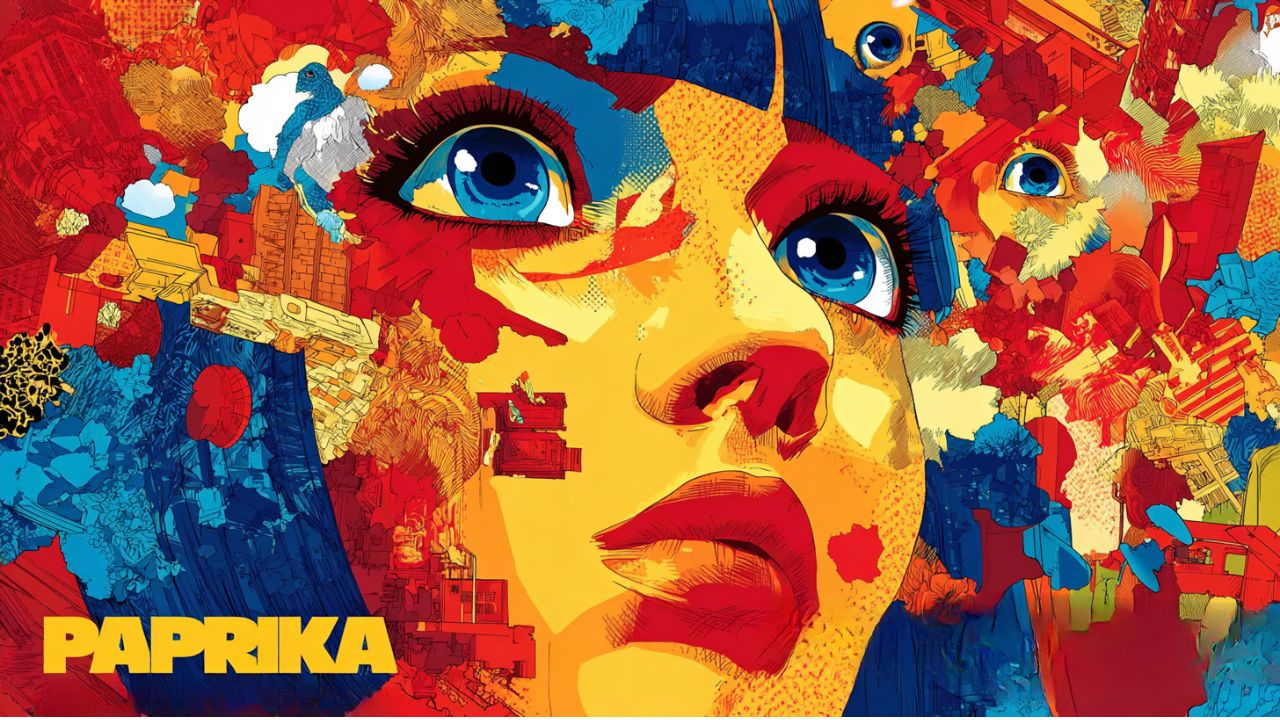
For this day, the film to watch is Paprika (パプリカ), directed by Kon Satoshi in 2006. The story unfolds around a device that allows therapists to enter patients’ dreams — and the chaos that erupts when that device is stolen. Based on Tsutsui Yasutaka’s landmark SF novel, produced by Madhouse with music by Hirasawa Susumu, Paprika is widely recognized as the final masterwork of one of animation’s greatest visionaries, and as a profound influence on Christopher Nolan’s Inception (2010). It is a film that does not explain the dream — it makes you live inside it.
Basic Information & Synopsis
→ For synopsis and production information, see our Database Article
Director: Kon Satoshi
Year: 2006
Runtime: 90 minutes
Production: Madhouse
Commemorative Day: International Lucid Dreaming Day (April 12)
Background Knowledge
Tsutsui Yasutaka’s Original Novel
The source material is the 1993 novel Paprika by Tsutsui Yasutaka, one of Japan’s preeminent masters of SF and avant-garde fiction. Tsutsui is known for works of extreme originality and provocation, and Paprika stands as one of his most visually conceived novels — a torrent of SF, psychological thriller, eroticism, and hallucinatory imagery fused into a single relentless text. After seeing Kon’s adaptation, Tsutsui himself commented that the film was “an achievement” and that it made him reconsider whether Paprika might be his own greatest work.
Kon Satoshi’s Career and the Film’s Place Within It
Kon Satoshi (1963–2010) began his career as a manga artist before transitioning to animation directing. His first three features — Perfect Blue (1997), Millennium Actress (2001), and Tokyo Godfathers (2003) — each explored the blurring of fantasy and reality, the instability of memory and identity, and the porous border between interior and exterior worlds.
Remarkably, Kon had already conceived of adapting Paprika immediately after completing Perfect Blue in 1998. He later described all of his intervening films as “rehearsals” for Paprika. The project was once abandoned after a production company collapsed, but Kon’s established reputation eventually made it possible. He stated that while his previous films used images to tell stories, Paprika reversed that priority: the story existed to introduce the images — to find a way to show the most astonishing visual sequences he could imagine.
Paprika became Kon Satoshi’s final feature film. He died of pancreatic cancer in 2010, at the age of 46. The film stands as the summation of everything he had spent his career building toward.
Production Staff and Cast
Animation production was handled by Madhouse. Character design and animation direction were led by Andō Masashi, who also served as animation director on Studio Ghibli’s Spirited Away — which partly explains why the parade sequence in Paprika carries a visual energy reminiscent of that film. The score was composed by Hirasawa Susumu, an artist known for fusing technology and human emotion into a singular sonic world. His opening track “Byakkoya no Musume” (白虎野の娘) is one of the most precisely matched pairings of music and image in animated cinema. Hayashibara Megumi voiced both Dr. Chiba Atsuko and Paprika, performing two radically contrasting personalities from a single instrument. Author Tsutsui Yasutaka and director Kon Satoshi both appear in cameo roles as bartenders.
Awards and Critical Reception
Paprika was selected for official competition at the 63rd Venice International Film Festival in 2006 and won the Public’s Choice Award at the 35th Festival du Nouveau Cinéma in Montreal. The Hollywood Reporter named it one of the top ten animated films for adult audiences. In January 2026, a 4K remastered version was released theatrically to mark the film’s 20th anniversary.
What Makes It Exceptional
What Only Animation Can Do With Dreams
The greatest achievement of Paprika is its refusal to explain the dream — and its insistence on making the audience experience it instead.
Kon himself articulated the problem precisely: in prose, an author can supplement images with description at any moment; in film, explanation stops the dream’s flow. So the dream sequences in Paprika unfold as pure, uninterrupted visual torrents. A parade of household appliances, Buddhist statues, beckoning cats, frogs, and dolls marching through the streets. Corridors twisting in on themselves. Building walls peeling away like skin. Gravity ignored, time fractured, incompatible images colliding without warning. All of it rendered in hand-drawn animation, with almost no CG — a technical achievement that remains staggering.
Equally crucial is Kon’s editing technique. His “percussive cuts” — transitions between the real world and the dream world that deliberately obscure which is which — force the viewer into the same disorientation that defines lucid dreaming itself. The difficulty of performing a “reality check” (a deliberate act of self-verification used by lucid dreamers to confirm whether they are awake) becomes something the audience physically experiences rather than merely understands.
Hayashibara Megumi’s Dual Performance
Voicing two characters who are, in essence, two faces of the same person is an exceptional challenge. Hayashibara Megumi meets it with complete conviction. Chiba Atsuko — controlled, restrained, professionally masked — and Paprika — open, impulsive, luminously alive — emerge from the same voice as genuinely different people. Kon spoke of casting based on the alignment between a voice actor’s inner life and a character’s inner life. Hayashibara’s distinctive combination of transparency and layered emotional range is what gives the film’s central duality its credibility.
Hirasawa Susumu’s Sound World
Hirasawa Susumu, who debuted with the band P-MODEL, built a career around connecting technology and human emotion in ways that resisted easy categorization. In Paprika, his score does not accompany the dream sequences — it co-creates them. “Byakkoya no Musume” opens the film with an uncanny beauty that perfectly matches Paprika racing through the dreamscape. The parade sequence’s churning, carnivalesque soundtrack fuses with the visual chaos to produce a sensation of simultaneous dread and exhilaration that no image alone could achieve. The ending theme, strange-lyricked and noise-threaded, leaves the viewer in a state between waking and not — which is, of course, exactly where the film wants them.
Related Articles
- Paprika Database – Synopsis & Production Details
- Kon Satoshi – Filmmaker Profile
- Hayashibara Megumi – Actor Profile
はじめに
夢と現実の境界が溶けていく――アニメ映画史に刻まれた今敏の最終到達点
4月12日は、国際的な「明晰夢の日」(International Lucid Dreaming Day)として世界中の夢研究者やルシッドドリーマー(明晰夢実践者)が祝う特別な一日です。この日が選ばれた理由は、1975年4月12日の朝8時頃に遡ります。イギリスの心理学者キース・ハーン博士(Dr. Keith Hearne)が、ハル大学の研究室で熟練した明晰夢実践者であるアラン・ウォーズリー(Alan Worsley)に、夢の中で自覚が生まれた瞬間に眼球を特定の方向に動かすよう事前に取り決め、その信号をEOG(眼球運動記録計)によって記録することに成功したのです。
「突然、2本の眼球運動記録チャンネルの雑然とした波形の中に、規則正しい大きなジグザグが現れた。私は瞬時に覚醒し、夢の中から外の世界へと初めて意図的なシグナルが送られてきたのだと悟った瞬間、最大の興奮を感じた」——博士はその瞬間の感動をこのように記しています。夢という内側の世界から、外の現実世界へ意識が届いた歴史的な瞬間でした。
明晰夢(Lucid Dream)とは、夢を見ている最中に「これは夢だ」と自覚しながら見続ける夢のことを指します。単に鮮明な夢とは異なり、夢の中で意識が覚醒した状態を保ち、ときに夢のストーリーや環境をある程度操作できるとされています。この現象自体の記録は古く、紀元前350年頃のアリストテレスの著作「夢について」にも記述が見られ、チベット仏教の「夢瑜伽」(ドリーム・ヨーガ)の修行として1,000年以上前から実践されてきた歴史もあります。オランダの精神科医フレデリック・ファン・エーデンが1913年の論文「夢の研究」においてこの現象に「明晰夢(Lucid Dream)」という名称を与え、現代に至る研究の礎を築きました。
1975年のハーン博士の実験は、明晰夢が単なる主観的体験ではなく、科学的に検証可能な実在する意識状態であることを初めて客観的に証明した歴史的な出来事でした。この重要な一歩を称えて、夢愛好家のダニエル・ラブ(Daniel Love)が4月12日を国際明晰夢の日と定め、世界中の「夢探検家」たちが毎年この日を祝うようになりました。
そんな明晰夢の日に観る映画として、今敏監督が2006年に手がけた**『パプリカ』**(PAPRIKA)を強く推薦します。他者の夢の中に入り込むことができる未来の装置をめぐって展開するこの物語は、夢と現実の境界がどこにあるのかという根源的な問いを、アニメーションという表現媒体の無限の可能性を使って描ききった傑作です。筒井康隆の長編SF小説を原作に、マッドハウスのアニメーション技術と平沢進の唯一無二の音楽が融合し、今敏監督の集大成ともいうべき映像世界が誕生しました。本作はまた、クリストファー・ノーラン監督の『インセプション』(2010年)に多大な影響を与えたことでも知られる、世界の映画史に刻まれた重要作でもあります。
基本情報・あらすじ
→ あらすじや製作情報はデータベース記事へ
監督: 今敏
製作年: 2006年
上映時間: 90分
制作: マッドハウス
記念日: 国際明晰夢の日(4月12日)
予備知識
筒井康隆の原作小説
原作は、日本を代表するSF・前衛文学の巨匠筒井康隆が1993年に発表した長編SF小説『パプリカ』です。筒井氏は「断筆宣言」でも知られる問題作家として有名ですが、この作品は彼のキャリアの中でも際立って映像的なビジョンを持つ傑作として知られ、SF、心理スリラー、エロティシズム、バッドトリップ的なイメージの奔流が渾然一体となった唯一無二の小説です。映画公開後、原作者の筒井氏自身が「この映画化は快挙です。観て、『パプリカ』が自身の一番の傑作だったのかもしれないと思わされた」とコメントしています。
今敏監督の軌跡と本作の位置づけ
監督の今敏(1963年-2010年)は、漫画家としてデビューした後、アニメーション映画監督に転身しました。『PERFECT BLUE』(1997年)、『千年女優』(2001年)、『東京ゴッドファーザーズ』(2003年)と、いずれも「幻想と現実の境界の揺らぎ」「記憶とアイデンティティの不安定さ」をテーマにした意欲作を発表し続けました。
実は今監督は、デビュー作『PERFECT BLUE』を完成させた直後の1998年の時点ですでに『パプリカ』の構想を持っており、前作群での映像実践はすべて『パプリカ』への助走だったと語っています。出資会社の倒産によって一度企画が流れましたが、その後名声を確立した今監督のもとで満を持して実現しました。
本作は2010年に今監督が46歳の若さで膵臓がんにより急逝したため、今敏の最後の長編劇場作品となりました。彼がそれまで積み上げてきた演出テクニックと映像哲学のすべてが注ぎ込まれた「総決算」であり、彼の言葉を借りれば「以前の作品は『話を語るための画』だったが、今回は『画を紹介するためのストーリー』」——いかに不可思議なビジュアルイメージを見せるかに重点を置いた集大成でした。
制作スタッフとキャスト
アニメーション制作はマッドハウス。キャラクターデザイン・作画監督は安藤雅司が担当しました——彼はジブリの『千と千尋の神隠し』でも作画監督を務めており、本作のパレードシーンが千と千尋の雰囲気に通じるのはそのためです。音楽は独自の音楽世界を築く平沢進が担当し、オープニング曲「白虎野の娘」をはじめとするサウンドトラックは、夢の世界の奇妙さとダイナミズムを完璧に表現しています。
主人公・千葉敦子/パプリカの一人二役を林原めぐみが担当し、クールな研究者と奔放な夢探偵を同一人物として見事に演じ分けました。また原作者の筒井康隆と監督の今敏自身もバーテンダー役でカメオ出演しています。
受賞と評価
2006年の第63回ヴェネツィア国際映画祭コンペティション部門に正式出品されました。第35回モントリオール・ニューシネマフェスティバルではPublic’s Choice Award(観客賞)を受賞し、アメリカの映画業界誌「ハリウッド・リポーター」では「大人が観るべきアニメ映画ベスト10」の8位にも選ばれ、世界的に高い評価を得た作品です。2026年1月には公開20周年を記念した4Kリマスター版がリバイバル上映されました。
優れている点
アニメーションだからこそできる「夢」の映像表現
本作最大の美点は、夢という実体のないものを映像として説得力を持って描き切ったその表現力にあります。今監督が語った通り、「夢の描写において、文章は説明によって随時イメージを補足できるが、映像において説明は夢の流れを止めることに他ならない」——だからこそ本作の夢のシーンは、説明なき映像の奔流として観客の前に展開します。
家電製品、仏像、招き猫、玩具、カエル、人形が一斉に行進するパレードシーン。通路がねじれ、建物の壁が剥がれ落ち、空間が歪んでいく視覚的変容。夢の中だからこそあり得る重力の無視、時間の断絶、異質なイメージの衝突——これらをCGをほぼ使わず手描きアニメーションで表現した技術的達成は驚異的です。実写では絶対に表現できない、アニメーションにしか到達できない映像世界がここにあります。
シーンとシーンの間の「カット」の使い方も革命的です。現実の場面から夢の場面へ、あるいはその逆方向へ移行する際、意図的に境界を曖昧にする今敏独自の編集技法「パーカッシブ・カット」によって、観客自身が「今どちらの世界にいるのか」分からなくなる体験をさせられます。これは明晰夢研究において重要な「現実確認」(リアリティ・チェック)の困難さをそのまま体験させる演出でもあります。
林原めぐみの一人二役という奇跡
千葉敦子とパプリカという対照的な二つのキャラクターを同一の声優が演じるという挑戦において、林原めぐみは並外れた演技を見せています。現実では自分の感情を抑制し、プロフェッショナルとしての仮面をかぶる千葉敦子の冷静で知的な声と、夢の世界で自由奔放に飛び回るパプリカの明るく快活な声は、同一人物の声でありながら全く別の人格を感じさせます。
今監督はキャスティングにおいて「声優の内面とキャラクターの内面の一致」を重視したと語っています。林原の持つ透明感と多層的な感情表現の豊かさが、敦子とパプリカという「表と裏」を持つ主人公の本質を支えています。
平沢進の音楽が生み出す夢の音響空間
音楽担当の平沢進は、P-MODELでデビューし、テクノロジーと人間の感情を結びつける独自の音楽世界を持つアーティストです。本作のオープニング曲「白虎野の娘」は、パプリカが夢の世界を疾走するシーンに完璧に調和した、妖しくも美しい楽曲です。その後に続く曲群も、夢の奇妙さ、高揚感、不安、混沌を音楽だけで表現することに成功しています。
パレードシーンで流れる音楽のざわめくような喧騒感は、視覚的なカオスと完璧に融合し、観客を不安と興奮が入り混じった感覚に誘い込みます。エンディングテーマの摩訶不思議な歌詞とノイズを含んだサウンドは、夢から覚めたような、しかしまだ夢の中にいるような後味を残します。平沢進の音楽なくして本作の夢世界は成立しなかったと言っても過言ではありません。
関連記事
- パプリカ データベース – あらすじ・製作情報
- 今敏 – 監督プロフィール
- 林原めぐみ – 声優プロフィール