
Choose Your Language / 言語を選択:
Introduction
I Want to See the Ocean Before I Die — The Last, Greatest Escape of Two Men Given a Death Sentence
May 27 is National Wear Gray Day.
May is Brain Tumor Awareness Month, and May 27 has been designated by advocacy organizations including Voices Against Brain Cancer as a day to wear gray in recognition of brain tumor patients, their families, and the researchers working on their behalf. The color gray derives from the brain’s gray matter, and serves as the awareness symbol for brain tumors.
More than 1.3 million people in the United States are currently living with a primary brain tumor. Brain tumors are the second most common childhood cancer after leukemia, and the difficulty of treatment and uncertainty of prognosis make them one of the most serious diagnoses a person can receive. Wearing gray is a small but meaningful act of solidarity with people living inside that reality.
For this day, the film to watch is Knockin’ on Heaven’s Door (1997), directed by Thomas Jahn.
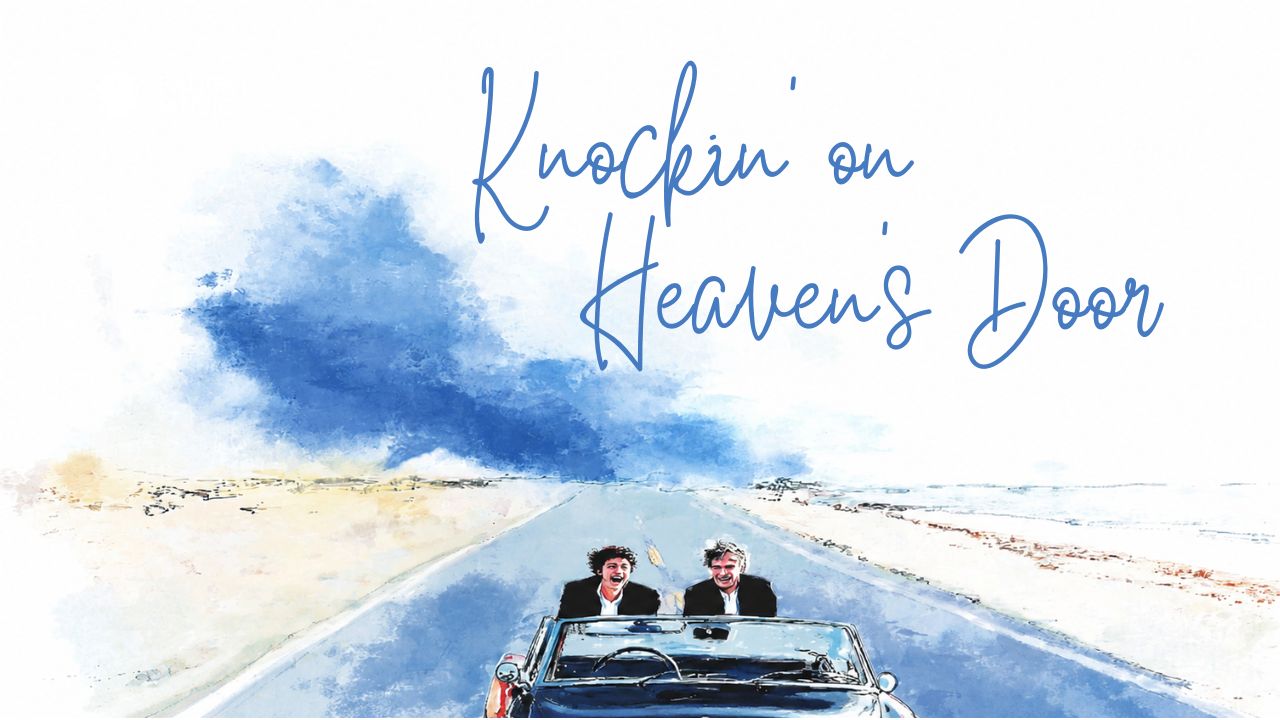
Martin has a brain tumor. Rudi has bone cancer. They are assigned to the same hospital room and learn on the same evening that neither of them has long to live. That night, drunk on tequila they have convinced a nurse to bring them, they discover that neither has ever seen the ocean. The next morning, they steal a Mercedes belonging to two small-time gangsters — who, as it happens, has a large sum of money in the trunk — and head for the coast.
The film was the highest-grossing German domestic production of 1997 and subsequently acquired a devoted cult following in Russia and the former Soviet states. Its title comes from a Bob Dylan song. It runs 86 minutes.
Basic Information & Synopsis
→ For synopsis and production information, see our Database Article
Director: Thomas Jahn
Year: 1997
Runtime: 86 minutes
Production: Rosch Film
Commemorative Day: National Wear Gray Day / Brain Tumor Awareness Month (May 27)
Background Knowledge
Till Schweiger and German Cinema
The lead and producer Till Schweiger won the Silver St. George for Best Actor at the Moscow International Film Festival for this role. The screenplay was co-written by Thomas Jahn and Schweiger. The film was made on a budget of approximately 3.5 million Deutschmarks (roughly $2 million USD) and grossed approximately $21 million in Germany alone and $23.8 million worldwide — an exceptional return on investment driven by the universality of its premise and the chemistry between its two leads.
Tarantino’s Influence and the German Road Movie
The film absorbs the influence of Quentin Tarantino — the blend of violence and comedy, the non-linear storytelling — and combines it with the German road movie tradition. The structure of fugitives on the run resonates with earlier German films including Burning Life (1994). But the frame that distinguishes Knockin’ on Heaven’s Door from its influences is the mortality at its center: the chase matters because every hour of freedom is an hour these two men would not otherwise have had.
Bob Dylan and the Title
The title comes from Bob Dylan’s 1973 song “Knockin’ on Heaven’s Door,” written for the Sam Peckinpah film Pat Garrett and Billy the Kid. The image of someone standing at heaven’s door — alive enough to knock, close enough to hear the answer — maps directly onto the situation of the two protagonists. The film’s soundtrack uses a cover version by the German rock band Selig; the singer’s husky, emotionally raw delivery became iconic in Germany and inseparable from the film’s final sequences.
The Cult Following — Especially in Russia
Beyond its German success, the film acquired a cult following in Russia and the former Soviet states under the Russian title Достучаться до небес (“To Knock on Heaven”). The theme of friendship and freedom in the face of death found a particular resonance in the post-Soviet cultural context. A Japanese remake, Heaven’s Door (2009), directed by Michael Arias and starring Tomoya Nagase and Mayuko Fukuda, altered the pairing to an adult man and a fourteen-year-old girl with terminal cancer — a substantially different relationship, though the basic structure of stealing a car and heading for the sea was preserved.
A British film with a similar premise — Hawks (1988), directed by Robert Ellis Miller, starring Timothy Dalton — depicts two men with terminal cancer breaking out of a hospital to travel to Amsterdam.
What Makes It Exceptional
The Courage to Treat Death as Comedy
The film’s most distinctive quality is its decision to carry a story about brain tumors and terminal cancer in the form of a crime comedy. It does not try to make the audience cry. It does not adopt the posture of a film that wants to be moving. It simply shows two men using the time left to them at full speed, and lets the audience laugh.
This is not a trivialization of the disease. It is closer to its opposite: a quiet insistence that patients are not obligated to spend their remaining time in grief and regret, and that the desire to run toward something rather than sit waiting for the end is a legitimate, even admirable form of response.
The Chemistry Between Schweiger and Liefers
Martin — played by Schweiger — is cool, quiet, and controlled. Rudi — played by Jan Josef Liefers — is voluble, emotional, and openly terrified. They should not work as a pair. They do. The friendship that develops between them is conveyed entirely through behavior and tone; the film never explains it or sentimentalizes it. It simply accumulates, scene by scene, until it is undeniable.
Related Articles
- Knockin’ on Heaven’s Door Database – Synopsis & Production Details
- Thomas Jahn – Filmmaker Profile
- Till Schweiger – Actor Profile
はじめに
死ぬ前に海を見たい——余命宣告された二人の、最後で最高の逃走劇
5月27日は「ナショナル・ウェア・グレイ・デー(National Wear Gray Day)」です。
5月は脳腫瘍啓発月間(Brain Tumor Awareness Month)であり、その月間の中でも特に5月27日は、グレイを身につけることで脳腫瘍への認識を高め、患者・家族・研究者への連帯を示す日として、Voices Against Brain Cancerなどの啓発団体によって定められています。グレイという色は脳の灰白質(グレイ・マター)に由来しており、脳腫瘍啓発のシンボルカラーです。
アメリカでは現在、130万人以上が原発性脳腫瘍とともに生きています。脳腫瘍は小児がんでは白血病に次いで多く、治療の困難さと予後の不確かさから、患者と家族に深刻な影響をもたらします。グレイを着ることは、その現実を社会が直視するための、小さくも意味のある行動です。
この5月27日に観る作品として、1997年公開のドイツ映画『ノッキン・オン・ヘブンズ・ドア』(Knockin’ on Heaven’s Door、トーマス・ヤーン監督)をお薦めします。
脳腫瘍と骨肉腫で余命わずかと告げられた二人の男が、病院を抜け出し、盗んだ車で海を目指す——本作はその一言で語り尽くせる、シンプルで純粋な物語です。死を前にした人間が「それでも何かをしたい」と動き出す姿を、笑いと哀愁を交えながら描いたこのドイツのロードムービーは、1997年にドイツで最も興行収入の高い自国映画となり、その後ロシアをはじめとする旧ソ連圏で熱狂的なカルト的支持を獲得しました。ボブ・ディランの名曲を冠したそのタイトルが示す通り、これは死の入り口に立った人間の、ぎりぎりの生の讃歌です。
基本情報・あらすじ
→ あらすじや製作情報はデータベース記事へ
監督: トーマス・ヤーン
製作年: 1997年
上映時間: 86分
制作: Rosch Film
記念日: ナショナル・ウェア・グレイ・デー / 脳腫瘍啓発月間(5月27日)
予備知識
ティル・シュバイガーとドイツ映画
主演・製作のティル・シュバイガーは、本作でモスクワ国際映画祭最優秀男優賞(シルバー・セント・ジョージ賞)を受賞しました。脚本はトーマス・ヤーンとシュバイガーの共同執筆で、シュバイガーは製作にも名を連ねています。
本作は1997年のドイツ映画として最高の興行収入を記録し、ドイツ国内だけで約2100万ドル、全世界で約2380万ドルを稼ぎました。製作費は350万ドイツマルク(約200万ドル)という低予算でありながら、これだけの成功を収めたのは、物語の普遍性と二人の主演の化学反応によるものです。
タランティーノの影響とドイツのロードムービー
本作はクエンティン・タランティーノ的なバイオレンスとユーモアのブレンド、非線形的な語り口への影響を受けながら、それをドイツのロードムービーの伝統と組み合わせた作品です。追われる者たちの逃走劇という構造は、1994年のドイツ映画『バーニング・ライフ』などの先行作とも共鳴しています。
ボブ・ディランと曲名の意味
タイトルはボブ・ディランの1973年の名曲「Knockin’ on Heaven’s Door」(映画『ビリー・ザ・キッド』のサウンドトラックとして書かれた曲)から取られています。「天国の扉を叩いている」という歌詞が、余命わずかな二人の旅に完璧に重なります。映画のサウンドトラックにはドイツのロックバンド「ゼーリグ(Selig)」による見事なカバーバージョンが使用されており、特に終盤の場面での効果は圧倒的です。ハスキーでエモーショナルなゼーリグの歌声はドイツ国内でもヒットし、この映画の代名詞となりました。
カルト的支持——特にロシアで
本作はドイツでのヒットにとどまらず、ロシアをはじめとする旧ソ連圏でカルト的な地位を獲得しました。ロシア語タイトル「Достучаться до небес(天国の扉を叩け)」の名で知られ、「死を前にした二人の友情と自由」というテーマがポスト・ソ連の社会的文脈の中で特別な共鳴を持ったとされています。ロシアでのリメイクは制作されていませんが、今もロシアで熱狂的なファンを持つカルト映画として語り継がれています。
2009年には日本版リメイク『ヘブンズ・ドア』(監督:マイケル・アリアス、音楽:Plaid)が公開されています。主演は長瀬智也と福田麻由子。原作との最大の違いは主人公の組み合わせで、同じ病室に入院した成人男性二人という設定から、手術不可能な脳腫瘍を持つ28歳の元整備士・青山正人(長瀬智也)と、癌で死期が迫っている14歳の少女・白石晴美(福田麻由子)という年齢と性別を超えた組み合わせに変えられています。ヤクザの車を盗んで海を目指すという基本構造は踏襲しつつ、まったく異なる関係性の物語として再解釈されています。
なお、同様の筋書きを持つ先行作品として、1988年のイギリス映画『ホークス』(ロバート・エリス・ミラー監督、ティモシー・ダルトン主演)があります。末期癌の二人の男が病院を抜け出してアムステルダムを目指す物語で、Wikipediaも「同様の筋書き」として本作との関連を指摘しています。
優れている点
「死」をコメディとして扱う勇気
本作の最も際立った優れた点は、脳腫瘍・末期がんという深刻なテーマを、クライム・コメディのジャンルに乗せて描き切った点です。泣かせようとしない。感動させようと構えない。ただ、二人の男が残り少ない時間を全力で使って走り続ける様子を、笑いながら見せる。
この「笑いで包む」手法は、脳腫瘍という病の重さを軽く扱っているのではありません。むしろ逆です——患者がすべての時間を悲しみと後悔に費やす義務はないという、静かな主張がそこにあります。
ティル・シュバイガーとヤン・ヨーゼフ・リーファースの化学反応
クールで無口なマルティン(シュバイガー)と、おしゃべりで感情豊かなルーディ(リーファース)——対照的な二人の関係性が、映画の感情的な核を形成しています。お互いを深く知る時間は残されていないはずなのに、いつの間にか友人以上の何かになっていく。その過程が説明なしに伝わるのは、二人の演技の力によるものです。