
Profile | プロフィール
Born / 生年月日 October 26, 1972 | 1972年10月26日 Near Winchester, Hampshire, England | イングランド・ハンプシャー州ウィンチェスター近郊
Age / 年齢 52 years old (as of 2025) | 52歳(2025年時点)
Occupation / 職業 Film Director, Screenwriter, Producer 映画監督、脚本家、プロデューサー
Nationality / 国籍 British | イギリス
Company / 制作会社 Picture Farm (film collective, co-founder / 共同設立者)
Spouse / 配偶者 Erica Beeney — filmmaker and screenwriter (frequent collaborator) 映画監督・脚本家(共同執筆者)
Biography | 経歴
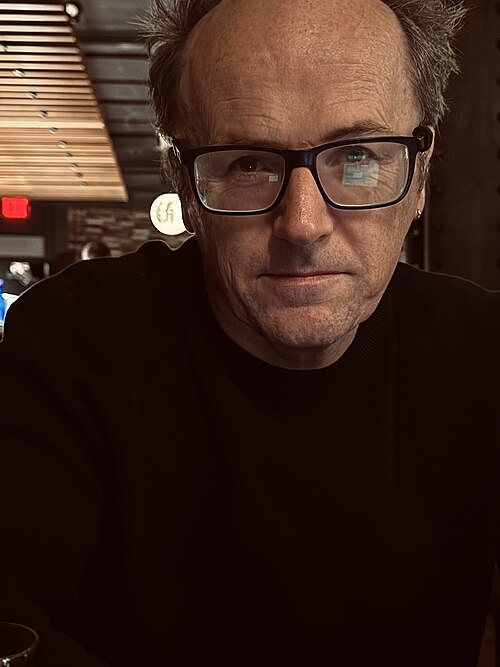
[English] Rupert Wyatt is a British filmmaker, screenwriter, and producer who, in the space of his first two features, made one of the most striking genre transitions in contemporary Hollywood: from an intimate, critically acclaimed British indie prison thriller (The Escapist, 2008, Sundance) to a $93 million blockbuster franchise reboot (Rise of the Planet of the Apes, 2011, $481 million worldwide) whose specific achievement—the creation of an emotionally coherent origin story for a franchise that had previously operated as pure spectacle—demonstrated a quality of character-centered storytelling intelligence that the science fiction blockbuster format rarely produces. The specific formulation of the Rise critical consensus captures the achievement precisely: “Led by Rupert Wyatt’s stylish direction, some impressive special effects, and a mesmerizing performance by Andy Serkis, Rise of the Planet of the Apes breathes unlikely new life into a long-running franchise.”
Born near Winchester in Hampshire, Wyatt was educated at the Dragon School, Oxford, and Winchester College—a formation that preceded his development as a filmmaker by some years. At sixteen, his first film won the BBC Showreel 88 competition, an early public recognition of a filmmaking instinct that had already established itself independently of formal training. He subsequently studied film in Paris, working as a screenwriter for French producers Claudie Ossard (the producer of Amélie) and Jean-Pierre Ramsay (the producer of Total Eclipse), before moving to New York, where he spent five years writing and developing features for production companies including Shooting Gallery and Miramax while supporting himself with work as a bike courier and painter. During this period he co-founded Picture Farm, the London- and New York-based film collective that has produced numerous shorts, documentaries, and features, including Dark Days (2000, Marc Singer’s documentary about homeless people living in the New York subway tunnels, which won the Audience Award at Sundance) and Fishing Without Nets (2014, which also won the Sundance Audience Award in the short film category). The Picture Farm formation—producing work in New York’s independent film ecology while writing studio screenplays—gave Wyatt the specific combination of low-budget creative freedom and genre-industry professional experience that the Escapist-to-Rise transition required.
The Escapist (2008)—co-written and directed by Wyatt, produced through Picture Farm on a budget of approximately $5 million, shot at Kilmainham Gaol in Dublin, starring Brian Cox as a lifer orchestrating a break to reach his dying daughter, with a supporting cast including Damian Lewis, Joseph Fiennes, Dominic Cooper, and Seu Jorge—premiered at the Sundance Film Festival in January 2008, received strong critical praise for its claustrophobic tension, nonlinear storytelling structure, and ensemble characterization, and was nominated for eight international film awards (winning two, including a British Independent Film Award for Best Director). The film announced a filmmaker with a specific set of formal instincts: the ability to build genuine emotional stakes within severe physical constraint, to use a genre framework (prison escape thriller) as the vehicle for character study rather than spectacle, and to extract maximum performance from an ensemble cast through economy of narrative means.
In March 2010, Wyatt was selected to direct Rise of the Planet of the Apes—a reboot of the 1968 franchise, written by Rick Jaffa and Amanda Silver, following Caesar (Andy Serkis, performing entirely in motion capture), a chimpanzee given advanced intelligence through a drug originally developed to treat Alzheimer’s disease, who eventually leads an ape uprising against humanity. The film’s specific creative premise—which Wyatt articulated directly: “We are, first and foremost, an origin story. We’re not so much trying to wipe the slate clean, but to lay a foundation from which other films can come that will ultimately lead to the original Planet of the Apes (1968), which is 3,000 years away”—placed the responsibility for the film’s success entirely on the quality of the audience’s emotional identification with Caesar, and the specific achievement of the film is the sustained maintenance of that identification across a narrative that requires the audience to experience the world from the perspective of a non-human creature whose intelligence and suffering are communicated entirely through performance and visual storytelling rather than dialogue. Wyatt has described the moral architecture of the film’s ape-human conflict with precision: “It’s very easy to do that, in one respect, because they’re the oppressed, they’re the incarcerated, they’re the underdogs. We bring about our own demise, in a way, through our own hubris… This film is less about the conflict between humans and apes. It’s how these apes rise up to be in a position to find a freedom, to find a place where they can evolve themselves.” The film grossed $481 million worldwide and opened a franchise whose subsequent entries (Dawn of the Planet of the Apes, 2014; War for the Planet of the Apes, 2017; Kingdom of the Planet of the Apes, 2024) have all maintained the character-centered approach that Wyatt’s film established. He declined to direct the sequel himself, expressing concern that the May 2014 release date would not allow sufficient production time.
The Gambler (2014)—a Paramount Pictures production starring Mark Wahlberg as Jim Bennett, a literature professor whose compulsive gambling has placed him in catastrophic debt to multiple criminal creditors, with a cast including John Goodman, Brie Larson, and Jessica Lange, written by William Monahan (who won the Academy Award for The Departed)—was Wyatt’s third feature and his second studio production: a character study built around a self-destructive protagonist whose specific quality of intelligence and self-awareness makes him both fully comprehensible and impossible to sympathize with in the conventional sense. The film received mixed reviews and moderate commercial performance ($34 million worldwide on a $25 million budget), but demonstrated Wyatt’s capacity for character-driven storytelling in a contemporary urban setting distinct from the genre frameworks of his first two films.
Captive State (2019)—a Focus Features science fiction thriller co-written with his wife Erica Beeney, set in a Chicago neighborhood nine years after an alien occupation, following both the human collaborators with the extraterrestrial rulers and the resistance movement working against them, starring John Goodman, Ashton Sanders, Jonathan Majors, and Vera Farmiga—was Wyatt’s most formally ambitious and most narratively complex film to date: a science fiction procedural that deliberately withheld the conventional satisfactions of the alien invasion genre in favor of a sustained examination of the social and political dynamics of occupation, collaboration, and resistance. The film was commercially unsuccessful ($8.8 million worldwide, below its estimated production cost), but received praise from critics who recognized its thematic seriousness and formal ambition.
His most recent and most turbulent production is Desert Warrior (2025)—a $150 million historical action epic set in 7th-century Arabia, shot between September 2021 and February 2022 in Neom, Saudi Arabia (the largest production ever to film in that country), starring Anthony Mackie, Aiysha Hart, Sharlto Copley, and Ben Kingsley. The film follows Princess Hind’s resistance against the Sasanian Emperor Kisra’s attempt to take her as a concubine, culminating in the Battle of Ze Qar. The post-production history is extensive: after a screen test revealed audience disconnect, new MBC management removed Wyatt from the project in April 2023; editor Kelley Dixon (Black Panther: Wakanda Forever) was brought in to recut the film; Wyatt eventually returned and his cut premiered at the Zurich Film Festival on September 28, 2025, where it received mixed reviews praising the production values and location photography while noting narrative and character deficiencies. It was acquired for US distribution by Vertical and opened theatrically on April 24, 2026. Wyatt has spoken directly about the experience: “There was a desire to start to change the movie. I was sidelined.”
[日本語] ルパート・ワイアットは、最初の2本の長編映画で現代ハリウッドにおける最も際立ったジャンル転換の一つを果たしたイギリスの映画監督・脚本家・プロデューサーである——インティメートなイギリス独立映画のプリズン・スリラー(『脱獄犯』、2008年、サンダンス)から9,300万ドルのブロックバスター・フランチャイズ・リブート(『猿の惑星:創世記(ジェネシス)』、2011年、全世界4億8,100万ドル)へ。このリブートの特定の達成——単なるスペクタクルとして機能してきたフランチャイズに感情的に一貫した起源物語を創造すること——は、SF大作映画フォーマットが稀にしか生み出さないキャラクター中心のストーリーテリング知性を実証した。
1972年10月26日、ハンプシャー州ウィンチェスター近郊生まれ。ドラゴン・スクール(オックスフォード)とウィンチェスター・カレッジで教育を受けた。16歳でBBCショーリール88コンペティションに自作映画で優勝。その後パリで映画を学び、『アメリ』のプロデューサーのクロディー・オサール等のフランス映画プロデューサーのために脚本を執筆後、ニューヨークに移りシューティング・ギャラリーやミラマックス向けに脚本開発を行いながら、ニューヨーク・ロンドンの映画コレクティブPicture Farmを共同設立した(サンダンス観客賞受賞のDark Days 2000年・Fishing Without Nets 2014年を製作)。
脱獄犯→猿の惑星という転換:低予算の密室スリラーから大作フランチャイズへというワイアットの転換は、最初の作品で実証したキャラクター中心のストーリーテリング能力を大型予算の題材に応用するというハリウッドの典型的な発見パターンの最も印象的な実例の一つである。彼のリブートが確立したシーザーの感情的物語のアプローチは、後継の3作品(ドーン・ウォー・キングダム)全てに維持された。
最新作と製作上の困難:Desert Warrior(2025年)はサウジアラビアで撮影された1億5,000万ドルの歴史的叙事詩——プロデューサーとの創作的対立によりワイアットが一時的に外された後に復帰し、ツーリッヒ国際映画祭でのプレミアの後、2026年4月24日に米国で劇場公開された。
Filmography | 監督作品
Feature Films as Director / 主要長編監督作品
|
Year / 年 |
Title (English / Japanese) / 作品名 |
Stars / 主演 |
Awards / Note |
|---|---|---|---|
|
2008 |
The Escapist / 脱獄犯 |
Brian Cox / Damian Lewis / Joseph Fiennes / Dominic Cooper / Seu Jorge |
サンダンス映画祭プレミア 🏆 / British Independent Film Award Best Director 🏆(ノミネート含む) / 8つの国際映画賞ノミネート・2賞受賞 / 予算約500万ドル / ダブリン・キルメイナム刑務所撮影 / 非線形構造 |
|
2011 |
Andy Serkis (Caesar) / James Franco / Freida Pinto / John Lithgow / Brian Cox / Tom Felton |
Rotten Tomatoes 82% / RT批評家総意「ルパート・ワイアットのスタイリッシュな演出、アンディ・サーキスの催眠的な演技が長年のフランチャイズに新たな命を吹き込む」/ 9,300万ドルの予算 / 猿の惑星シリーズの完全リブート / モーションキャプチャー革命 / 以後のシリーズ全作のキャラクター中心アプローチの確立 / 続編監督はスケジュール問題で辞退 |
|
|
2014 |
The Gambler / ギャンブラー |
Mark Wahlberg / John Goodman / Brie Larson / Jessica Lange |
Paramount Pictures / William Monahan脚本(アカデミー賞脚本賞受賞歴あり)/ 強迫的ギャンブル依存の文学教授 / 批評混在 |
|
2019 |
Captive State |
John Goodman / Ashton Sanders / Jonathan Majors / Vera Farmiga |
Focus Features / 妻Erica Beeneyとの共同脚本 / 宇宙人占領下の9年後のシカゴ / 批評的に評価・商業的失敗 / Majors・Sandersのブレイク前の重要作 |
|
2025 |
Desert Warrior |
Anthony Mackie / Aiysha Hart / Sharlto Copley / Ben Kingsley / Ghassan Massoud |
製作費1億5,000万ドル / サウジアラビア史上最大規模の映画製作 / 2021年9月〜2022年2月撮影(Neom, Saudi Arabia)/ ツーリッヒ国際映画祭ガラ・プレミア 2025年9月28日 🏆 / 米国公開2026年4月24日(Vertical配給)/ 7世紀アラビアの歴史叙事詩 / 長期にわたる製作上の困難を経て完成 |
Television / テレビ(主要作品)
|
Year / 年 |
Title / 作品名 |
Network |
Note |
|---|---|---|---|
|
2014 |
TURN: Washington’s Spies |
AMC |
パイロット監督 / アメリカ独立戦争期のスパイドラマ(4シーズン継続) |
|
2015–2016 |
The Exorcist (pilot) |
Fox |
パイロット監督 / ホラー・ドラマ |
|
2021 |
The Mosquito Coast |
Apple TV+ |
第1・2話監督 / エグゼクティブプロデューサー / Justin Theroux主演 / Paul Theroux小説原作 |
As Producer / プロデューサーとして(Picture Farm)
|
Project |
Note |
|---|---|
|
Dark Days (2000) |
Marc Singer監督 / Sundance Film Festival Audience Award 🏆 / ニューヨーク地下トンネルに住む人々のドキュメンタリー |
|
Fishing Without Nets (2014) |
Sundance Film Festival Audience Award 🏆 |
Awards & Recognition | 受賞歴
British Independent Film Awards / 英国独立映画賞
- Nominated / ノミネート — Best Director, Best Film — The Escapist (2008) 🌟
Early Recognition / 初期評価
- BBC Showreel 88 Competition Winner — age 16 / 16歳で受賞 🏆
Critical Recognition | 批評的評価
- RT Critics Consensus (Rise of the Planet of the Apes): “Breathes unlikely new life into a long-running franchise” / 「長年のフランチャイズに新たな命を吹き込む」
- Sundance Film Festival premiere — The Escapist (2008) 🏆
Box Office Summary | 主要作品興行収入
|
Title / 作品名 |
Year / 年 |
Worldwide Gross / 全世界興行収入 |
|---|---|---|
|
Rise of the Planet of the Apes |
2011 |
$481 million |
|
The Gambler |
2014 |
$34 million |
|
Captive State |
2019 |
$8.8 million |