
Choose Your Language / 言語を選択:
Introduction
Whose Idea Is It? — On the Boundary Between Creation and Ownership
April 26 is World Intellectual Property Day.
Established by the World Intellectual Property Organization (WIPO) in 2000, the day marks April 26, 1970 — the date WIPO’s founding convention entered into force — and exists to deepen public understanding of how intellectual property rights, including patents, copyright, trademarks, and designs, support innovation and creativity.
“Whose idea is it?” There is no question that cuts more directly to the heart of intellectual property law. The person who brought the concept. The person who wrote the code. How the rights to something built collaboratively should be divided. Whether combining existing elements into something new constitutes originality or imitation — in the digital age, these questions have become more complex than they have ever been.
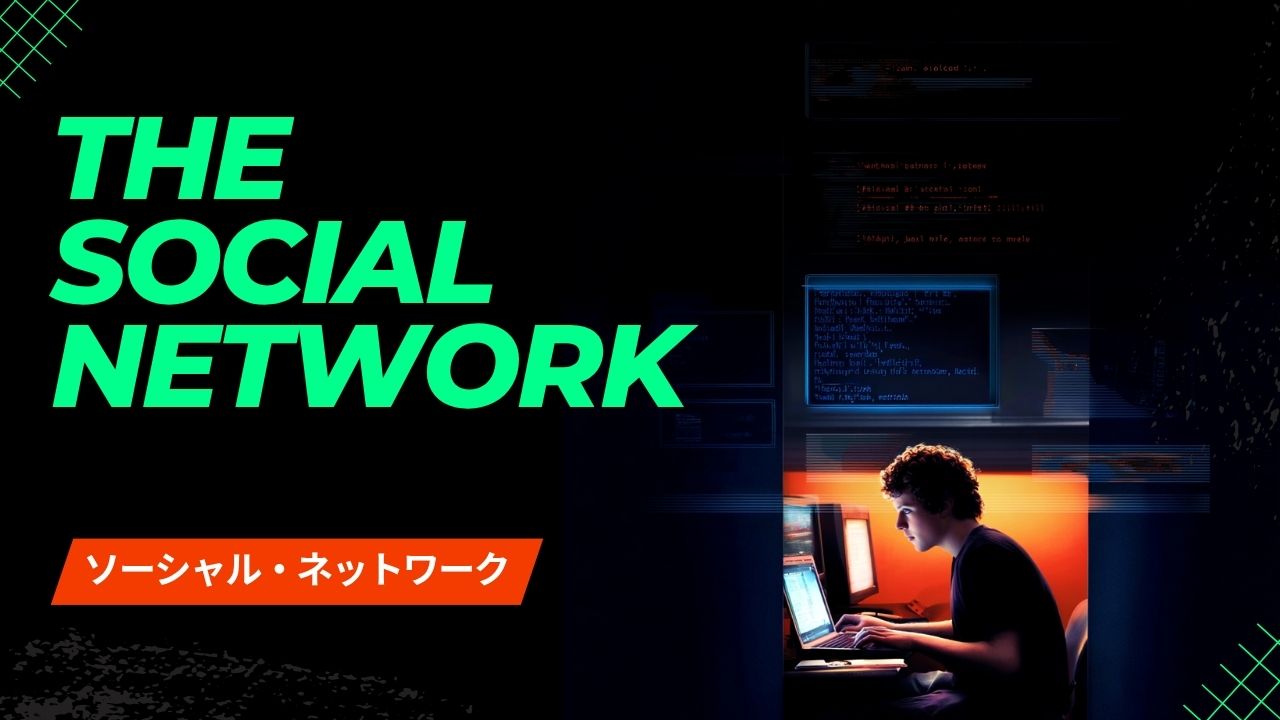
For this day, the film to watch is The Social Network (2010), directed by David Fincher.
The film follows the creation of Facebook through the lens of the legal disputes that followed: a lawsuit from the Winklevoss twins, who claim their concept was stolen; a lawsuit from co-founder Eduardo Saverin, who claims his equity was diluted without justification. Multiple parties, multiple accounts of the same events, and no version of the truth that is entirely comfortable. The film does not resolve these disputes. It shows you what is at stake in them — and asks you to sit with the discomfort.
On a budget of approximately $40 million, the film grossed around $225 million worldwide. It won Academy Awards for Best Adapted Screenplay, Best Original Score, and Best Film Editing, and received nominations for Best Picture, Best Director, and Best Actor. It won the Golden Globe for Best Motion Picture (Drama), Best Director, Best Screenplay, and Best Original Score. Its Rotten Tomatoes score remains at 96%.
Basic Information & Synopsis
→ For synopsis and production information, see our Database Article
Director: David Fincher
Year: 2010
Runtime: 120 minutes
Production: Columbia Pictures, Scott Rudin Productions
Commemorative Day: World Intellectual Property Day (April 26)
Background Knowledge
The Source Material and Fincher’s Motivation
The film is adapted from Ben Mezrich’s The Accidental Billionaires, drawn primarily from interviews with Eduardo Saverin. Director David Fincher (b. 1962), known for Se7en, Fight Club, and Zodiac, had not previously directed a film based on real events. He has said his reason for taking the project was not particular interest in Mark Zuckerberg — it was the screenplay. “I read Aaron Sorkin’s script and I was blown away.” Fincher has also described understanding Mark’s behavior by analogy to directing: “What Mark does is what a filmmaker does every day — you nurture something and you protect it. You have to hurt people to do that sometimes. That’s what responsibility looks like.”
Aaron Sorkin’s screenplay won the Academy Award for Best Adapted Screenplay. Sorkin read the script aloud in one hour and fifty-nine minutes; Fincher used that reading pace as the target runtime. A 162-page script compressed into two hours produces the film’s relentless velocity.
Facebook’s Technical Innovation
Facebook’s innovation in 2004 was less about the technology itself than about its design philosophy. Where MySpace and Friendster had heavy, unpolished interfaces, Facebook offered a clean UI and fast performance. Most significant was the decision to require real names. Where earlier social networks operated under pseudonymity, Facebook built its network on verified identity — a design choice that became foundational to how social platforms were subsequently conceived.
The programming language Mark used to build Facebook — PHP — is notable for how it embeds into HTML and how easily it connects to databases, making complex web applications achievable at the individual level. The rapid coding sequences in the film reflect the actual culture of early-2000s web development with reasonable fidelity.
The Internet Environment of 2004
Broadband was in its early expansion phase. YouTube did not exist yet. Twitter did not exist. University campus networks represented some of the most advanced digital infrastructure available. Facebook’s strategy — launching at elite universities, where technical literacy was high and social networks were dense, and expanding outward from there — was precisely calibrated to this environment. The platform launch logic that every major consumer technology company now uses has its origin in this model.
What Makes It Exceptional
Jesse Eisenberg’s Performance
Eisenberg’s Mark Zuckerberg is the film’s most demanding achievement. The character requires technical precision and social inaccessibility — and the film does not make either of these traits simple, sympathetic, or cartoonish. Eisenberg holds the complexity without explaining it.
He has described the experience: “This character is overtly uncaring, and that felt most real to me. I almost never get to play a character who doesn’t care what others think — so that was incredibly liberating. There was a sense that I didn’t have to worry about the audience, and The Social Network was the greatest relief I’ve felt doing a film.” The liberation of playing someone indifferent to approval — and doing so within a film whose entire subject is the human cost of that indifference — is part of what gives the performance its unusual quality.
David Fincher’s Precise Direction and the Depiction of Programmer Culture
Fincher’s direction captures programmer culture with genuine accuracy: the late-night coding sessions, the energy drinks and pizza, the casual dress, the free-flowing office atmosphere. These are not set dressing; they reflect how early tech companies actually operated.
Fincher is known for averaging fifty to one hundred takes per scene. Andrew Garfield has described the effect: “Repetition makes it physical — you stop thinking, you just face the other person. Like repeating a word until it loses meaning — you lose yourself. That’s what Fincher wants.” The filmmaker’s obsession with the exact frame parallels the programmer’s obsession with the exact line of code. Both appear in this film, and their resemblance is not accidental.
Aaron Sorkin’s Screenplay
Sorkin’s screenplay manages to embed legal and technical argument inside dialogue that moves fast enough to feel like action. Intellectual property law — the fact that ideas themselves are not protected, only their specific expression — is the film’s central argument, and it is delivered through confrontation and wit rather than explanation.
The screenplay’s structural decision — two simultaneous depositions, intercut with the events under dispute — means that the same scenes are seen from different perspectives without resolution. The film asks the audience to hold multiple accounts of the same events simultaneously, which is precisely what intellectual property litigation asks of a court.
Trent Reznor and Atticus Ross’s Score
Reznor and Ross’s score — Reznor’s first film work — won both the Golden Globe and the Academy Award for Best Original Score. The music is electronic, ambient, and perpetually unresolved. It sounds like the interior of a server farm or a mind that cannot stop processing. From the White Stripes’ “Ball and Biscuit” at the opening to the Beatles’ “Baby You’re a Rich Man” at the close, the licensed music frames the story’s arc with an irony the score itself maintains throughout.
Related Articles
- The Social Network Database – Synopsis & Production Details
- David Fincher – Filmmaker Profile
- Jesse Eisenberg – Actor Profile
はじめに
アイデアは誰のものか——世界知的所有権デーに問う、創造と所有の境界線
4月26日は、「世界知的所有権デー(World Intellectual Property Day)」です。
世界知的所有権機関(WIPO)が2000年に制定したこの記念日は、特許・著作権・商標・意匠などの知的財産権が、イノベーションと創造性の促進においていかに重要な役割を果たしているかについて、理解を深めることを目的としています。4月26日という日付は、WIPOの設立条約が発効した1970年4月26日に由来します。
「アイデアは誰のものか」——この問いほど、知的財産権の本質を鋭く突いた問いはありません。一つのコンセプトを持ちかけた者と、それを実際にコードとして実現した者。協力して作り上げたものの権利はどう分配されるか。既存の概念を組み合わせて新しいものを生み出した場合、それは独創か模倣か——現代のデジタル社会において、これらの問いはかつてないほど複雑になっています。
この特別な日に観る作品として、デヴィッド・フィンチャー監督による2010年の映画**『ソーシャル・ネットワーク』**(The Social Network)をお薦めします。
本作は、Facebook創設者マーク・ザッカーバーグを主人公に、世界最大のSNSプラットフォームが誕生する過程を描いた作品ですが、その核心にあるのは知的財産をめぐる法廷闘争と人間関係の破綻です。「アイデアを盗まれた」と訴える双子の実業家、「株式を不当に希薄化された」と訴える共同創業者——複数の訴訟が絡み合うこの物語は、世界知的所有権デーが問う「創造の権利はいかに守られるべきか」というテーマを、リアルな実話を通じて体験させてくれます。
製作費約4000万ドルに対し全世界興収約2億2500万ドル。アカデミー賞では脚色賞・作曲賞・編集賞の3部門を受賞し、作品賞・監督賞・主演男優賞にもノミネート。ゴールデングローブ賞では作品賞・監督賞・脚本賞・作曲賞の4部門を制し、Rotten Tomatoesでの批評家支持率は96%という驚異的な数字を現在も維持している、現代映画の傑作です。
基本情報・あらすじ
→ あらすじや製作情報はデータベース記事へ
監督: デヴィッド・フィンチャー
製作年: 2010年
上映時間: 120分
制作: コロンビア・ピクチャーズ、スコット・ルーディン・プロダクションズ
記念日: 世界知的所有権デー(4月26日)
予備知識
原作とデヴィッド・フィンチャーの動機
映画の原作となったのは、ベン・メズリック著『Facebook 世界最大のSNSでビル・ゲイツに迫る男』(原題:The Accidental Billionaires)で、主にエドゥアルド・サヴェリンへの取材を中心に構成されています。
監督のデヴィッド・フィンチャー(1962年〜)は『セブン』『ファイト・クラブ』『ゾディアック』で知られる映像作家で、本作が初の実話ベース作品でした。この映画を引き受けた動機は「マーク・ザッカーバーグへの関心」ではなく「素晴らしい脚本を読んだから」——アーロン・ソーキンの脚本に惹かれたと語っています。フィンチャーはマークの行動原理を監督業と重ね合わせて理解していました。「マークがやっていることは映画監督が毎日やっていることと同じ——何かを育て、それを守る。そのために人を傷つけなければならないこともある。それが責任というものだ」と語っています。
脚本のアーロン・ソーキンは複雑な法廷劇と技術的説明を一般観客にも理解できる形で提示しながら、ドラマティックな展開を維持した脚本で2011年アカデミー脚色賞を受賞。早口での掛け合いと知的な会話は、天才プログラマーたちの頭脳戦を効果的に表現しており、ソーキンの代表作となりました。ソーキンは脚本を1時間59分で読み終え、フィンチャーはその読み上げのテンポをそのまま映画の尺にしました——162ページの脚本を2時間に収めるという制約が、映画全体のスピード感を生んでいます。
Facebookの技術的革新性
2004年当時のSNSとしてのFacebookの革新性は、技術そのものよりも設計思想にありました。既存のMySpaceやFriendsterが重く洗練されていないUIだったのに対し、Facebookはクリーンなインターフェースと高速な処理を実現しました。特に重要なのは「実名制」の採用です。従来の匿名制SNSとは異なり、実名と顔写真で信頼性の高いネットワークを構築するというコンセプトは、後のSNSプラットフォーム設計思想の基礎となっています。
マークがFacebookの開発に使用したPHP言語は、HTMLに埋め込める簡易性とデータベース連携の容易さにより、個人レベルでも複雑なウェブアプリケーションが開発可能な言語です。映画で描かれる高速コーディングは、2000年代のウェブ開発の実態をリアルに反映しています。
2000年代のインターネット環境
2004年当時のインターネット環境は現在とは大きく異なっていました。ブロードバンドの普及初期で、YouTubeもTwitterもまだ存在せず、大学のキャンパスネットワークが最先端のデジタル環境でした。この時代背景により、大学生をターゲットにして技術リテラシーの高い環境から段階的に拡張していくFacebookの戦略は極めて効果的でした。現在のプラットフォーム展開戦略の原型がここにあります。
優れている点
ジェシー・アイゼンバーグの天才プログラマー役での印象的な演技
ジェシー・アイゼンバーグのマーク・ザッカーバーグ役での演技は、本作最大の優れた点です。天才的な頭脳と社会性の欠如、創造への情熱と人間関係の不器用さという複雑なキャラクターを、ステレオタイプに陥ることなく多面的に演じています。
特に印象的なのは、プログラミング中の集中状態の表現です。コードを書く際の没頭感、アルゴリズムを考案する際の思考過程、技術的問題を解決する際の喜びといった、プログラマー特有の心理状態を見事に表現しています。法廷での受け答えでも、技術者らしい論理的思考と感情的理解の欠如を巧妙に演じ分けています。
アイゼンバーグ自身も役作りについて興味深い証言をしています。「このキャラクターはあからさまに無神経で、それが一番リアルに感じられた。無神経な役を演じる機会は滅多にないから、すごく新鮮でワクワクした。観客のことを気にする必要がないような気がして、『ソーシャル・ネットワーク』は今まで映画で感じた最大の安堵だった」と語っています。「無神経さ」を演じることの解放感——この発言は、マークというキャラクターの本質を体現した演技がいかに俳優にとっても特別な体験だったかを物語っています。
デヴィッド・フィンチャーの精密な演出とプログラマー文化の描写
デヴィッド・フィンチャーの演出は、プログラマー文化の特徴を正確に描写している点で特筆されます。深夜のコーディング、エナジードリンクとピザでの食事、カジュアルな服装、オフィスでの自由な雰囲気といった要素は、実際のIT企業の文化を反映しています。
フィンチャーは一シーンに平均50〜100テイクを重ねることで知られる完璧主義の映像作家です。アンドリュー・ガーフィールドはこの手法について「何度も繰り返すことで体に染み込み、考えなくてよくなり、相手役と向き合うだけになる。言葉を繰り返すと意味を失うように、自分を失う——それこそフィンチャーが求めているものだ」と語っています。コードの一行に執着するプログラマーの姿と、映像の一コマに執着する監督の姿が、本作では奇妙に重なります。
アーロン・ソーキンの切れ味鋭い脚本
アーロン・ソーキンの脚本は、複雑な法廷劇と技術的説明を見事に両立させています。専門的なプログラミング用語や法律用語を、一般観客にも理解できる形で提示しながら、ドラマティックな展開を維持しています。特に早口での掛け合いと知的な会話は、天才プログラマーたちの頭脳戦を効果的に表現しており、技術者コミュニティの文化的特徴も的確に描写しています。ソーキンは脚本を1時間59分で読み終え、フィンチャーはその読み上げのテンポをそのまま映画の尺にしました——162ページの脚本を2時間に収めるという制約が、映画全体のスピード感を生んでいます。
トレント・レズナーとアッティカス・ロスの革新的音楽
トレント・レズナーとアッティカス・ロスが手がけたサウンドトラックも、本作の重要な優れた点です。デジタル時代の不安と孤独を表現した革新的な音楽として高く評価されました。
映画冒頭のホワイト・ストライプス「ボール・アンド・ビスケット」から、エンディングのビートルズ「ベイビー、ユーアー・ア・リッチ・マン」まで、音楽は物語の感情的な流れを効果的に支えています。レズナーとロスのオリジナル楽曲は2011年のゴールデングローブ賞とアカデミー賞で最優秀作曲賞を受賞し、映画音楽史に新たな地平を開いた功績として認められています。レズナーにとってこれが初の映画音楽作品でした。