
Choose Your Language / 言語を選択:
Introduction
Eleven Assaults, Seventy-Two Hours of Hell — What the Unnamed Soldiers Left Behind
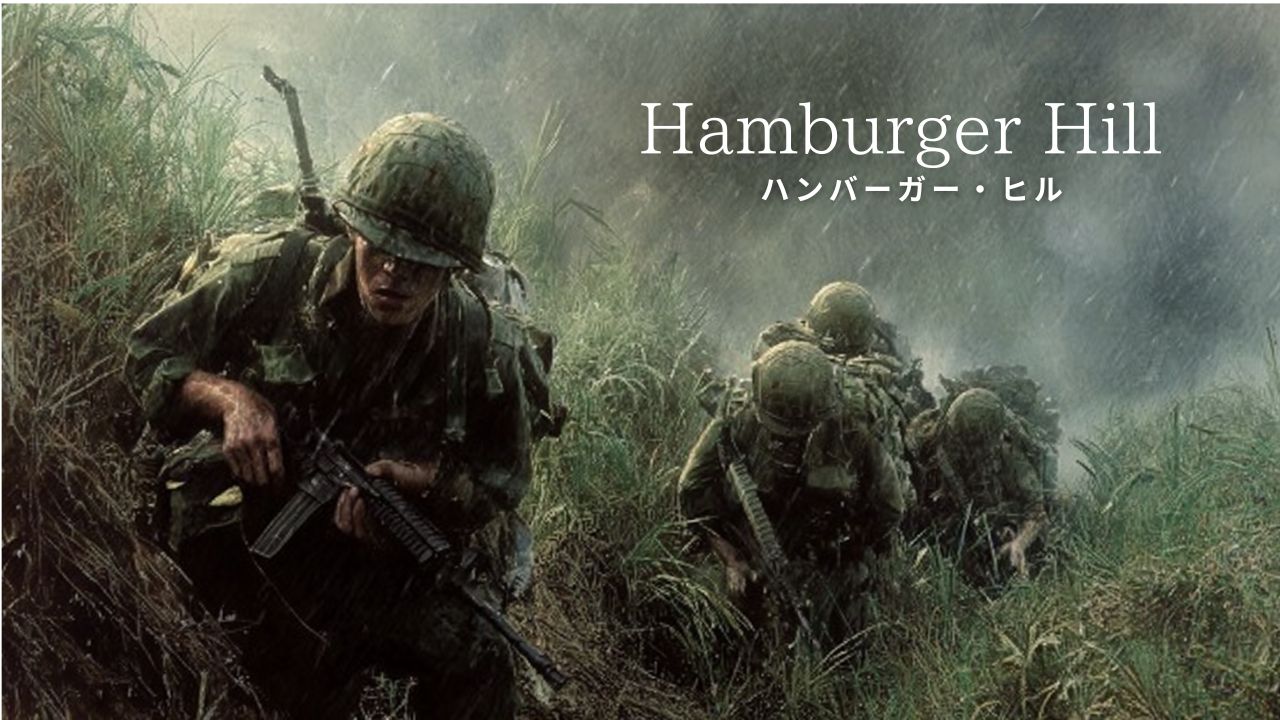
Between May 10 and 20, 1969, on a ridgeline in the mountains of central Vietnam near the Laotian border, soldiers of the U.S. Army’s 101st Airborne Division and the North Vietnamese Army fought one of the most contested engagements of the war.
The hill was designated “Hill 937” on military maps. The soldiers who fought there gave it a different name: Hamburger Hill. The name referred to the way the fighting ground men up — like a meat grinder. It became one of the most recognized phrases of the Vietnam War, a shorthand for the conflict’s cruelty and futility.
Ten days. Eleven assaults. Seventy-two Americans killed, 372 wounded. Estimated North Vietnamese dead: more than 600. Weeks after the battle ended, the U.S. Army abandoned the hill. The ground for which so much had been paid was determined to have no strategic value.
The film that depicts this battle is Hamburger Hill (1987), directed by John Irvin.
Made at the same time as Platoon and Full Metal Jacket, and far less famous than either, the film has nonetheless been described by veterans and critics as one of the most honest Vietnam War films ever made. Rotten Tomatoes critic score: 100%.
Basic Information & Synopsis
→ For synopsis and production information, see our Database Article
Director: John Irvin
Year: 1987
Runtime: 110 minutes
Production: RKO Pictures, Marcia Nasatir Productions
Commemorative Date: Anniversary of the Battle of Hamburger Hill (May 10–20, 1969)
Background Knowledge
Five Years of Research
Screenwriter James Carabatsos served with the 1st Cavalry Division in Vietnam in 1968–69 and spent five years researching the Battle of Hamburger Hill, interviewing soldiers who had participated in the actual fighting. The film’s realism is rooted in this research.
Producer Marcia Nasatir had a son who had served in combat in Vietnam — one of the reasons she committed to making the film.
The Context — “Platoon,” “Full Metal Jacket,” and a Film That Came First
When Platoon was released in 1986 and sparked a wave of Vietnam War films, Hamburger Hill was a project that had already been developed. Irvin has said in interviews that had Paramount been more willing to proceed when the script was first submitted, the film might have been released before Platoon or Full Metal Jacket. Stanley Kubrick’s insistence on releasing Full Metal Jacket first is also cited as a factor in the delay.
In terms of recognition, the film remains far behind its contemporaries. In terms of fidelity to the experience of soldiers in the field, veterans have consistently placed it first.
The Cast
Don Cheadle — later known internationally for his role as War Machine in the Iron Man series — appears in one of his earliest film roles. Dylan McDermott makes his film debut. Director John Irvin had made a documentary in Vietnam in 1969 and brought firsthand knowledge of the country and its landscape to the production.
What Makes It Exceptional
The Honesty of Not Knowing Why
Where Platoon structured its story around a conflict between good and evil within the American military, Hamburger Hill removes political or moral framing almost entirely. The New York Times observed: “The film makes no attempt to place its characters and events in a larger context… It might have been made a week after the operation ended, which is both its strength and its limitation.”
In the film, a soldier named Frantz says: “The NVA we’re fighting are better off than we are. At least they know why they’re fighting.” The line is the film’s thesis. It is not a heroic war film. It is not an anti-war film. It is an account of what it was like to be there, narrated from inside the experience without the benefit of hindsight or argument.
Absolute Focus on the Platoon
The film never leaves the perspective of the platoon. No generals appear with tactical explanations. No politicians provide context. No large strategic picture is drawn. There are a dozen soldiers, a hill they are ordered to take, and the time it takes to take it.
This constriction is precisely what veterans have identified as the most accurate quality of the film. The soldier in the field does not know why this particular hill is being attacked, what the adjacent unit is doing, or what the overall campaign plan requires. He knows the man next to him and the ground in front of him. The film replicates that field of vision exactly.
The Accumulation of Assault
The repeated assault sequences do not become repetitive. They become heavier. With each climb, the soldiers move more slowly, speak less, look different. The physical and psychological cost of the fighting accumulates visibly in the actors’ bodies and faces. The film uses the repetition structurally — what begins as an action sequence ends as an experience of attrition. This is what the word “consumption” means in the context of war, rendered in motion.
Related Articles
- Hamburger Hill Database – Synopsis & Production Details
- John Irvin – Filmmaker Profile
- Don Cheadle – Actor Profile
はじめに
11回の突撃、72時間の地獄——名もなき兵士たちが残したもの
1969年5月10日から20日にかけて、ベトナム中部のラオス国境近く、標高937メートルの山の尾根で、アメリカ陸軍第101空挺師団の兵士たちと北ベトナム軍の間で激しい戦闘が繰り広げられました。
この山は地図上では「937高地」と呼ばれていましたが、兵士たちはいつしか別の名前で呼ぶようになります——「ハンバーガー・ヒル(Hamburger Hill)」。肉挽き機のように兵士たちを消耗させるこの山の名前は、ベトナム戦争の残酷さと無意味さを象徴する言葉として、歴史に刻まれることになりました。
10日間で11回の突撃。アメリカ軍は72名が戦死、372名が負傷しました。北ベトナム軍の推定死者は600名以上。そして戦闘終了からわずか数週間後、アメリカ軍はこの山を放棄しました。あれだけの犠牲を払って占領した高地を、戦略的価値がないとして。
この悲劇的な戦闘を描いた映画が、ジョン・アーヴィン監督による1987年のアメリカ映画**『ハンバーガー・ヒル』**(Hamburger Hill)です。
本作は、「プラトーン」「フルメタル・ジャケット」と同時期に作られながら、それらほど知名度が高くありません。しかし「一個小隊の兵士たちに完全に焦点を当てた、最もリアルなベトナム戦争映画の一つ」として、当時の兵士たちや批評家から高い評価を受けています。Rotten Tomatoesで批評家スコア100%という数字が、その評価を示しています。
基本情報・あらすじ
→ あらすじや製作情報はデータベース記事へ
監督: ジョン・アーヴィン
製作年: 1987年
上映時間: 110分
制作: RKOピクチャーズ、マーシャ・ナサティール・プロダクションズ
記念日: ハンバーガー・ヒルの戦い(1969年5月10〜20日)
予備知識
実話に基づく脚本——5年間のリサーチ
脚本家のジェームズ・カラバトソスは1968年から1969年にかけて第1騎兵師団に所属してベトナムに従軍した後、ハンバーガーヒルの戦いを調査し、実際に戦闘に参加した兵士にインタビューするために5年間を費やしました。本作のリアリティは、この徹底したリサーチに基づいています。
プロデューサーのマーシャ・ナサティールには、ベトナム戦争で実際に兵士として戦った息子がいました。それが彼女がこの映画を作ろうと思った理由の一つです。
「プラトーン」「フルメタル・ジャケット」との関係
1986年に「プラトーン」が公開されてベトナム戦争映画ブームが起きる中、本作はパラマウントに当初売り込んだ際に見送られています。監督のジョン・アーヴィンは「パラマウントがもう少し大胆だったら、『ハンバーガー・ヒル』は『プラトーン』や『フルメタル・ジャケット』よりも先に公開されていたかもしれない」と2021年のインタビューで語っています。
知名度では「プラトーン」に大きく劣りますが、「一個小隊の視点からの戦争」という点では本作の方がより徹底しており、実際に戦場にいた兵士たちから「最もリアルなベトナム戦争映画」として評価されています。
キャスト——若き日のドン・チードル
本作にはドン・チードル(後の『アイアンマン』シリーズのローディ役)が出演しており、これが彼の映画出演初期の作品の一つです。ディラン・マクダーモットにとっては映画デビュー作となりました。監督のジョン・アーヴィンは1969年にベトナムでドキュメンタリーを制作しており、現地の感覚を持つ映画人として本作を撮っています。
優れている点
「なぜ戦っているか分からない」という正直さ
「プラトーン」がアメリカ軍内部の善悪の対立を描いたのに対し、本作は政治的なメッセージを排除しています。ニューヨーク・タイムズは「この映画は登場人物や出来事をより大きな枠組みの中に置こうとしない。想起させる作戦の終了から1週間後に作られた可能性があり、それが強みにも弱みにもなり得る」と評しました。
映画の中でフランツが言います——「戦っている北ベトナム軍の方がまだマシだ。少なくとも彼らは、なぜ戦っているか知っている」。この言葉が、本作の正直さを体現しています。英雄譚でも反戦映画でもなく、ただ「そこにいた人間の話」として描く誠実さが、本作の核心です。
小隊という「小さな世界」への徹底した集中
本作は一個小隊の視点から一切外れません。政治家も司令官も、大きな戦略も出てきません。ただ、この山を何度も登り、何度も撃退され、仲間を失い続ける十数人の兵士たちだけがいます。
この「小ささ」こそが、戦争の実態に最も近いと多くのベトナム帰還兵が証言しています。戦場にいる兵士は、なぜこの丘を攻めるのかを知りません。隣の部隊が何をしているかも知りません。ただ、目の前の任務と、隣の戦友だけがいる。
突撃シーンのリアリティ
同じ山に何度も突撃するシーンは、繰り返しの中で単調になることなく、むしろ回を重ねるごとに疲労と絶望が積み重なっていきます。兵士たちの動きが少しずつ鈍くなり、言葉が少なくなり、目の光が変わっていく——その変化が、戦争の消耗を体感させます。
関連記事
- ハンバーガー・ヒル データベース – あらすじ・製作情報
- ジョン・アーヴィン – 監督プロフィール
- ドン・チードル – 俳優プロフィール