
Choose Your Language / 言語を選択:
Introduction
Silicon Valley Insiders Expose the Terrifying Truth About Social Media
May 17 is World Telecommunication and Information Society Day.
The date marks the signing of the first International Telegraph Convention in Paris on May 17, 1865, which established what became the International Telecommunication Union (ITU). The day exists to raise awareness of the possibilities that the internet and information and communication technologies (ICT) offer society, and to promote efforts to bridge the digital divide.
If this day celebrates the progress of technology, the film recommended for it asks what that technology can become when it goes wrong.
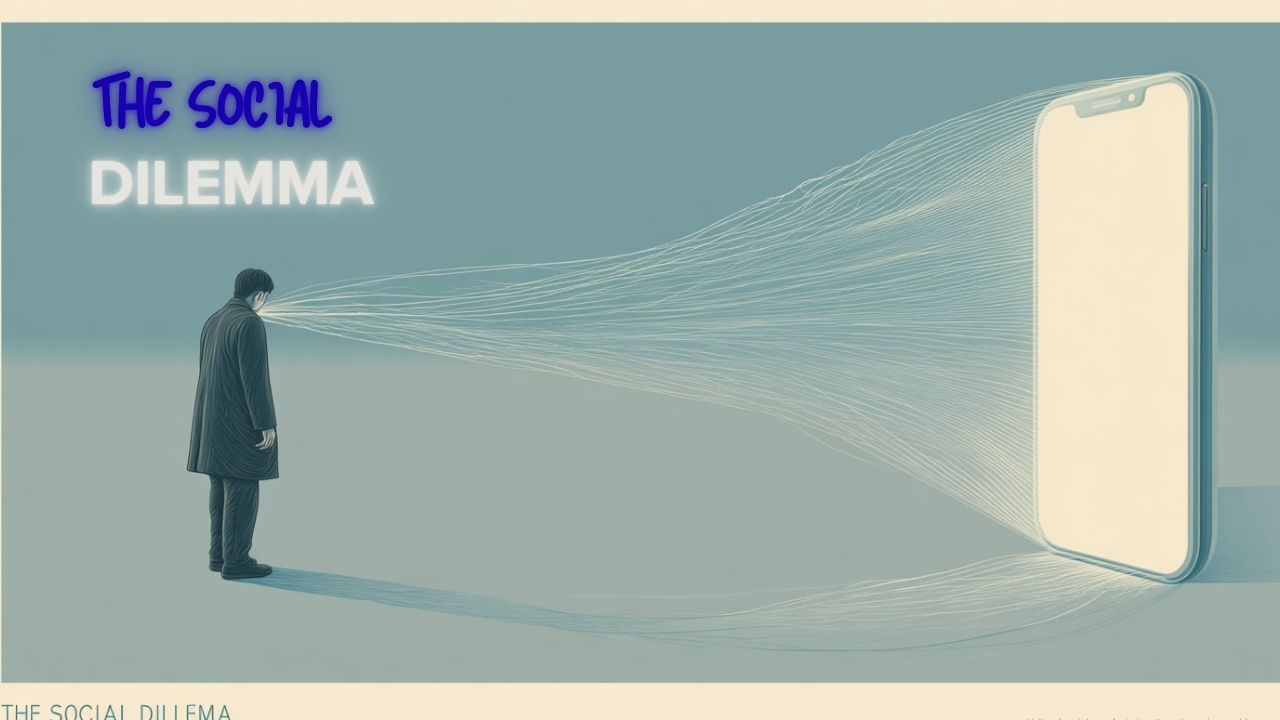
For this day, the film to watch is The Social Dilemma (2020), directed by Jeff Orlowski.
Former executives and engineers from Facebook, Google, Twitter, Instagram, and other major platforms appear on camera to describe the dangers of the systems they built. The “Like” button. Infinite scroll. Recommendation algorithms. The people who designed these features are the ones testifying here. Their words are not criticism from the outside. They are confession from within.
Rotten Tomatoes critic score: 85%. The film was distributed by Netflix to more than 190 countries; within 28 days of release, 38 million households had watched it. Many viewers reported deleting or restricting their social media accounts afterward.
Basic Information & Synopsis
→ For synopsis and production information, see our Database Article
Director: Jeff Orlowski
Year: 2020
Runtime: 94 minutes
Production: Exposure Labs
Commemorative Day: World Telecommunication and Information Society Day (May 17)
Background Knowledge
Jeff Orlowski’s Perspective
Director Jeff Orlowski is known for environmental documentaries — Chasing Ice (2012), which recorded the retreat of glaciers, and Chasing Coral (2017), which documented coral reef bleaching. His reason for making this film: “I saw a direct analogy between the threat technology platforms pose to humanity and climate change.” Before making the film, he was an active Facebook user. He no longer uses it.
The Concept of “Surveillance Capitalism”
The title’s central concept was developed by Harvard Business School professor Shoshana Zuboff, who coined the term in 2014 and elaborated it in her 2019 book The Age of Surveillance Capitalism. The business model she describes works as follows: user behavioral data is collected at massive scale; AI and machine learning use that data to predict future behavior; those predictions are sold to advertisers. The user is not the customer. The user’s attention and behavior are the product being sold.
Tristan Harris and the Center for Humane Technology
The film’s central witness is Tristan Harris, former Design Ethicist at Google. In 2018, he co-founded the Center for Humane Technology, which advocates for more ethical technology design and engages in policy work. The film functions in part as a vehicle for the Center’s message — a fact the film does not fully disclose, which critics have noted.
What Makes It Exceptional
The Weight of Insider Testimony
The film’s most important quality is that the people speaking are not technology’s critics. They are its architects. The specific features they discuss — the Like button, infinite scroll, recommendation systems — were designed by the people testifying about their effects.
Justin Rosenstein, who created the Like button, discusses its unintended consequences. Aza Raskin, who invented infinite scroll, expresses regret. When these people describe what they built and what it has become, the testimony carries a weight that external criticism cannot replicate. The tone is not anger. It is closer to contrition — the acknowledgment that something began with good intentions and produced outcomes they did not intend and do not endorse. That honesty is what elevates the film from critique to moral statement.
Making the Invisible Visible
Surveillance capitalism, AI algorithms, recommendation systems — these are technically complex concepts. The film presents them in forms a general audience can grasp intuitively. The fictional dramatization of a family and the personification of algorithms as three figures controlling a user’s feed have been criticized as oversimplifications. They function, nonetheless, as a technique for making structural processes that are deliberately invisible into something that can be seen and understood.
Evidence Alongside Testimony
The film does not rely solely on emotional appeal. MIT research showing that false information spreads six times faster than true information on social media platforms is cited. Jonathan Haidt’s research documenting the increase in suicide rates and self-harm among adolescent girls since 2011 is presented. These data points give the testimony objective grounding — and raise the stakes of the argument from preference to public health.
Related Articles
- The Social Dilemma Database – Synopsis & Production Details
- Jeff Orlowski – Filmmaker Profile
はじめに
シリコンバレーの技術者たちが告発する、SNSの恐るべき真実
5月17日は、「世界電気通信・情報社会デー(World Telecommunication and Information Society Day)」です。
1865年5月17日、パリで最初の国際電信条約が調印され、国際電気通信連合(ITU)が設立されたことを記念するこの記念日は、インターネットや情報通信技術(ICT)が社会にもたらす可能性への認識を高め、デジタル・デバイド(情報格差)を埋める方法を見出すことを目的としています。
この特別な日に観る作品として、ジェフ・オーロウスキー監督による2020年のドキュメンタリー『監視資本主義:デジタル社会がもたらす光と影』(原題:The Social Dilemma)をお薦めします。
本作は、FacebookやGoogle、Twitter、Instagramなどの元幹部や技術者たちが、自らが作り上げたテクノロジーの危険性を告発するドキュメンタリーです。「いいね!」ボタン、無限スクロール、レコメンデーションアルゴリズム——それらを設計した当人たちが証言します。彼らの言葉は批判ではなく、懺悔です。
世界電気通信・情報社会デーが技術の進歩を祝う日であるなら、本作はその技術がどう悪用されうるかを問い直す映画です。この対比こそが、今日この映画を観る意味です。
Rotten Tomatoesで批評家スコア85%。Netflixで190カ国以上に配信され、公開後28日間で3800万世帯が視聴。多くの視聴者がSNSのアカウントを削除・制限したと報告されています。
基本情報・あらすじ
→ あらすじや製作情報はデータベース記事へ
監督: ジェフ・オーロウスキー
製作年: 2020年
上映時間: 94分
制作: Exposure Labs
記念日: 世界電気通信・情報社会デー(5月17日)
予備知識
ジェフ・オーロウスキー監督の視点
本作の監督ジェフ・オーロウスキーは、環境ドキュメンタリーで知られる映画作家です。氷河の融解を記録した『チェイシング・アイス』(2012年)、サンゴ礁の白化現象を追った『チェイシング・コーラル』(2017年)で評価を確立しました。
本作に取り組んだ動機について、オーロウスキーは語っています——「気候変動と同様に、テクノロジープラットフォームが人類にもたらす脅威の間に、直接的な類似性を見た」。本作の制作前は熱心なFacebookユーザーだった彼は、今は使っていません。
「監視資本主義」という概念
タイトルにある「監視資本主義(Surveillance Capitalism)」は、ハーバード・ビジネススクールのショシャナ・ズボフ教授が2014年に提唱した概念です。2019年の著書『監視資本主義の時代』で詳細に分析されています。
ズボフによれば、このビジネスモデルはユーザーの行動データを大規模に収集し、AIと機械学習で未来の行動を予測し、その予測を広告主に販売するという構造で成立しています。ユーザーは顧客ではなく、製品です——あなたの注意と行動が商品として取引されています。
トリスタン・ハリスとCenter for Humane Technology
映画の中心的な証言者であるトリスタン・ハリスは、元Googleのデザイン倫理学者です。2018年に「Center for Humane Technology(人間的テクノロジーセンター)」を共同設立し、より倫理的なテクノロジーデザインの推進と政策提言を行っています。本作は実質的に、彼らのメッセージを広める媒体でもあります。
優れている点
内部告発者の重み——作った本人たちが語る
本作の最も優れた点は、業界の内部者が自ら証言していることです。登場するのは、テクノロジーを憎む人々ではありません。世界で最も影響力のあるプラットフォームで、最も重要な機能を設計した人々です。
「いいね!」ボタンを作ったジャスティン・ローゼンスタインが、その機能の問題点を語るとき、それは推測ではありません。無限スクロールを発明したアザ・ラスキンが後悔を表明するとき、その重さは本物です。彼らの証言には懺悔の重みがあります——善意で始め、世界をより良くしようとしたが、意図しない結果を生み出してしまったという。この誠実さが、本作を単なる批判から、道徳的訴えに変えています。
複雑な仕組みをわかりやすく見せる演出
監視資本主義、AIアルゴリズム、推薦システムの仕組み——これらは高度に技術的な概念ですが、本作は一般の視聴者が直感的に理解できる形で提示しています。架空の家族を描いたドラマパートと、アルゴリズムを擬人化した3体のAIの描写は「単純化しすぎ」という批判もありますが、見えないものを可視化するための選択として機能しています。
データによる裏付け
感情に訴えるだけでなく、科学的な根拠も提示しています。MITの研究では偽情報が真実より6倍速く拡散することが示されており、ジョナサン・ハイトの研究は2011年以降の10代の少女における自殺率と自傷行為の急増を記録しています。これらのデータが、証言者たちの言葉に客観的な重みを与えています。
関連記事
- 監視資本主義 データベース – あらすじ・製作情報
- ジェフ・オーロウスキー – 監督プロフィール