
Choose Your Language / 言語を選択:
Introduction
Operation Dynamo — The Evacuation That Changed the War
May 26 is the anniversary of the launch of Operation Dynamo in 1940.
Operation Dynamo was the large-scale Allied evacuation carried out from May 26 to June 4, 1940, during the Battle of Dunkirk, planned by Royal Navy Vice Admiral Bertram Ramsay. German forces had launched their western offensive on May 10, 1940. Through the Manstein Plan — armored divisions cutting through the Ardennes, which the French had considered impassable — the Wehrmacht swept to the English Channel and trapped the British Expeditionary Force, Belgian forces, and elements of the French army against the coast at Dunkirk.
British high command initially estimated they could rescue at most 45,000 men over two days before German forces closed off the beach. What happened instead: over nine days, 860 vessels were assembled, and 338,226 men were evacuated — 192,226 British and approximately 139,000 French.
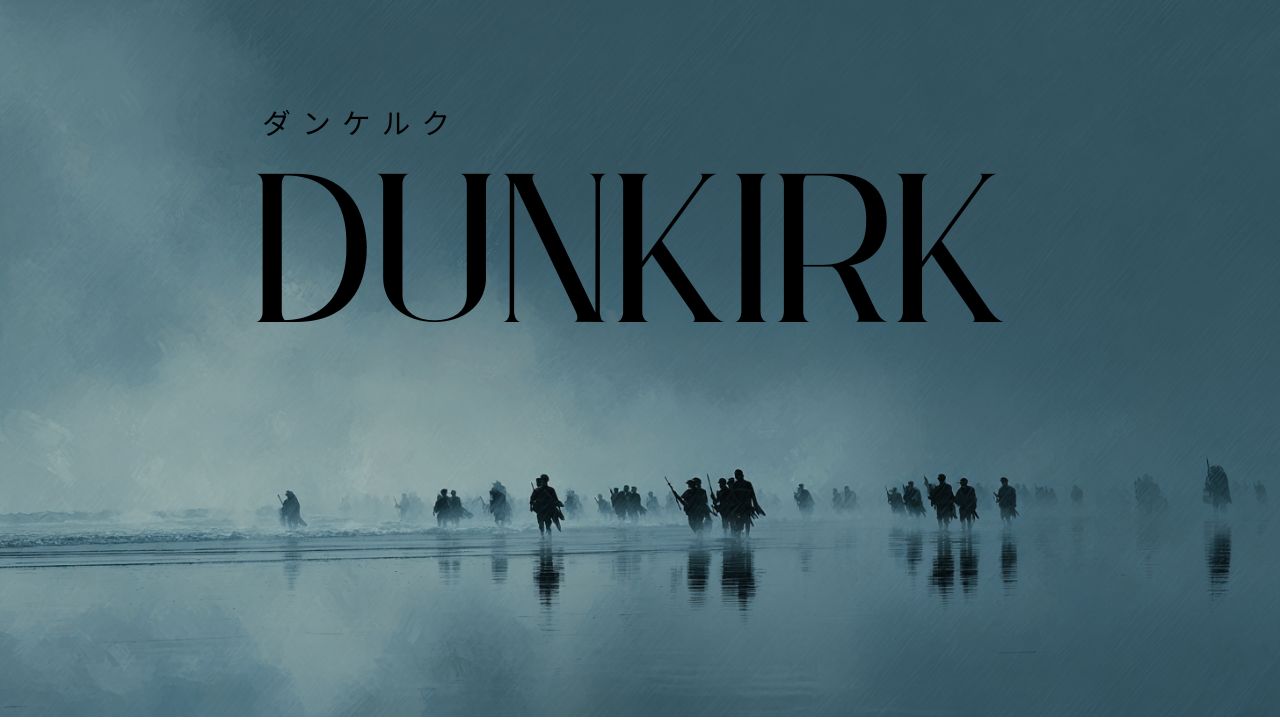
For this day, the film to watch is Dunkirk (2017), directed by Christopher Nolan.
The film depicts the evacuation from three perspectives — land, sea, and air — with the immersive, documentary-like quality of a film committed to showing rather than explaining. It received eight Academy Award nominations, winning for Best Film Editing, Best Sound Editing, and Best Sound Mixing. Rotten Tomatoes critic score: 92%. Critics described it as Nolan’s masterpiece and one of the greatest war films ever made.
Basic Information & Synopsis
→ For synopsis and production information, see our Database Article
Director: Christopher Nolan
Year: 2017
Runtime: 106 minutes
Production: Warner Bros. Pictures, Syncopy
Commemorative Date: Launch of Operation Dynamo (May 26, 1940)
Background Knowledge
Why 338,000 Men Were Stranded on a Beach — The Manstein Plan
On May 10, 1940, Germany launched its western offensive. Contrary to Allied expectations, armored divisions moved through the Ardennes — terrain French commanders had assessed as impassable to tanks — and swept to the English Channel, cutting behind the Allied main force. By May 21, the BEF, Belgian forces, and three French armies were encircled and driven to the coast at Dunkirk, which possessed the longest beach in Europe and was the only place large enough to gather such numbers.
BEF Commander Lord Gort had already concluded by May 19 that evacuation across the Channel was the only viable option and had begun planning the retreat.
The “Halt Order” — History’s Turning Point
On May 23, German Army Group A commander von Rundstedt ordered a halt to the armored advance. Hitler confirmed the order on May 24. Reasons included concern about exposed flanks, supply issues, the unsuitability of the marshy terrain around Dunkirk for tanks, and confidence that the Luftwaffe could finish the job. The order was lifted on May 26 — but the two-day pause gave Allied forces critical time to construct defensive perimeters. Guderian later called it “one of the greatest blunders of the western campaign.” Rundstedt called it “one of the great turning points of the war.”
Nine Days of Operation Dynamo
On the first day of the operation, May 27, only 7,669 men were evacuated. The original plan anticipated 45,000 over two days before German forces closed the corridor. Instead, over nine days, 338,226 men were rescued.
Large ships could not approach the shallow beach; soldiers waded chest-deep into the water and waited for hours to be transferred to small vessels. Approximately 800 civilian craft — fishing boats, pleasure cruisers, yachts, motor launches — were mobilized with their civilian owners and crews, ferrying men from the shore to the larger ships offshore. These were the “Little Ships.”
Nolan’s Preparation and Directorial Philosophy
Nolan began developing the film in the mid-1990s. While sailing the English Channel with Emma Thomas (who would become his wife and producer), he retraced the route taken by the Little Ships during the evacuation. He deliberately delayed production until he had accumulated sufficient experience directing large-scale action films, finally writing the 76-page screenplay in 2015 — approximately half the length of a typical Nolan script, and the shortest of his career.
His central principle: “I was not interested in who they were. I was interested in whether they could escape.” Accordingly, character backstory is conveyed through no dialogue at all; German forces are almost never shown, and the few German soldiers visible are deliberately kept out of focus — to reflect the veterans’ accounts of how fragmentary their contact with the enemy actually was. Scenes of Churchill or generals in operations rooms were deliberately excluded. “I didn’t want to go deeply into the political dimensions of the situation.”
In preparation, Nolan showed his core crew eleven films — only two of which were war films (The Battle of Algiers and Chariots of Fire). The other nine, including Alien and Speed, were chosen to demonstrate how suspense is constructed across genres.
The Cast
Nolan cast deliberately young and largely unknown actors to reflect the actual age and inexperience of the soldiers involved. Harry Styles was selected from hundreds of auditions for having “a face of the period” — Nolan was unaware of his fame as a musician. Tom Hardy (Farrier), Mark Rylance (Dawson), Cillian Murphy (a shell-shocked officer), and Kenneth Branagh (Commander Bolton) provide the more experienced presences.
What Makes It Exceptional
Immersion — The Tension That Sound and Image Create
The film’s most distinctive quality is the experience of being placed in the event without preparation. Dialogue is reduced to a minimum; there is no background explanation; the audience enters the same state of not-knowing as the characters. This is not a film about Dunkirk. It is, as nearly as cinema can make it, the experience of being at Dunkirk.
The immersion is engineered through sound. Hans Zimmer’s score uses the Shepard tone — an acoustic illusion that creates the perception of a sound rising endlessly without ever reaching a higher pitch. The audience is subjected to unrelenting, subconscious tension throughout. Layered beneath it is a heartbeat synthesized from Nolan’s own pocket watch. The combination makes the film function as a single sustained object of dread.
Explosive sound effects were recorded using actual explosives. The Stuka dive-bomber’s siren could not be sourced from existing recordings, which were too degraded for use; instead, the sound was rebuilt from scratch in a desert location using an actual siren, drawing on eyewitness accounts and 1930s recordings as inspiration. Bomb impacts are engineered so the pitch rises as the explosion approaches the listener — consistent with physical reality. The result, combined with the score, is that sitting in front of the screen produces a physical sensation of presence.
The Non-Linear Structure as Meaning
The three timeframes — one week, one day, one hour — running in parallel are not a formal experiment. For the soldiers on the beach, one week is an eternity. For the pilot, one hour is everything. The experience of time differs radically based on circumstance. The structure enacts this rather than describing it.
The Commitment to the Real
The film used CGI minimally. Shooting began on the actual beach at Dunkirk. Real ships, real aircraft. Approximately 60 vessels were assembled; more than 20 were actual Little Ships that participated in the 1940 evacuation, operated by their owners. The Spitfires used were real aircraft borrowed from the Imperial War Museum; IMAX cameras were mounted on the aircraft in flight. An estimated 75% of all footage was shot in IMAX — the highest proportion in Nolan’s career.
Period-appropriate uniform fabric no longer exists; the costumes were manufactured from scratch in Pakistan and aged over three weeks. Sand was imported from Dunkirk. Six thousand extras were deployed. Cardboard silhouettes of soldiers were used to create the impression of a mass army — a practical solution that is simultaneously anti-CGI in principle. The physical accumulation of these choices is what gives the film its capacity to produce the feeling of presence.
Related Articles
- Dunkirk Database – Synopsis & Production Details
- Christopher Nolan – Filmmaker Profile
- Mark Rylance – Actor Profile
はじめに
ダイナモ作戦——戦争を変えた撤退作戦
5月26日は、1940年のダイナモ作戦(Operation Dynamo)が発動された日です。
ダイナモ作戦は、第二次世界大戦のダンケルクの戦いにおいて、1940年5月26日から6月4日にかけて行われた連合軍の大規模撤退作戦で、イギリス海軍中将バートラム・ラムゼーが計画しました。
ドイツ軍は1940年5月10日に西方への侵攻を開始し、電撃戦によってフランス軍とイギリス軍を中心とした連合軍主力の後方を突破、ドーバー海峡まで駆け抜けてこれらを包囲し、ダンケルクへ追い詰めました。当初、イギリス大本営は「救い出せるのは良くて2日間で4万人程度」と絶望的な予測を立てていました。
しかし結果は、誰もが想像しなかったものになります。9日間で860隻の船舶が急遽手配され、338,226名の兵(イギリス軍192,226名、フランス軍139,000名)をダンケルクから救出しました。
この5月26日に観る作品として、クリストファー・ノーラン監督による2017年の映画**『ダンケルク』**(Dunkirk)をお薦めします。
本作は、陸・海・空という3つの視点から、この9日間の撤退作戦を描いたドキュメンタリーのような没入感を持つ戦争映画です。アカデミー賞8部門ノミネート(うち音響編集賞・音響混合賞・編集賞の3部門を受賞)、Rotten Tomatoesで批評家スコア92%を獲得し、多くの批評家から「ノーラン最高傑作」「史上最高の戦争映画の一つ」と評された作品です。
基本情報・あらすじ
→ あらすじや製作情報はデータベース記事へ
監督: クリストファー・ノーラン
製作年: 2017年
上映時間: 106分
制作: ワーナー・ブラザース・ピクチャーズ、Syncopy
記念日: ダイナモ作戦発動記念日(1940年5月26日)
予備知識
なぜ34万人が浜辺に孤立したのか——マンシュタイン計画
1940年5月10日、ドイツ軍は電撃戦を開始しました。従来の予測に反して装甲部隊がアルデンヌの森を突破し(マンシュタイン計画)、フランス軍の側面を突いて英仏海峡まで一気に駆け抜けました。フランス軍はアルデンヌを「戦車が通れない地形」と判断して手薄にしていたため、この奇襲は壊滅的な打撃を与えました。5月21日までにドイツ軍は英国遠征軍(BEF)・ベルギー軍・フランス三個軍を北フランス海岸に封じ込め、ダンケルクへ追い詰めました。
BEF司令官ゴート将軍は5月19日の時点で「海峡を渡る撤退が最善策」と判断し、ダンケルクへの後退計画を立て始めました。ダンケルクはヨーロッパ最長の砂浜を持ち、大人数が集結できる唯一の地でした。
「停止命令」という歴史の転換点
作戦発動の直前、5月23日にドイツ陸軍集団A司令官ルントシュテットが装甲部隊への停止命令を出し、ヒトラーが翌24日にこれを承認しました。理由は側面の脆弱性、補給の問題、ダンケルク周辺の湿地が戦車に不向きなこと、そしてゲーリングのルフトバッフェに仕上げを任せるという判断でした。
この命令は26日に解除されましたが、2日間の「空白」が連合軍に防衛陣地を構築する時間を与えました。後にグデーリアンはこれを「西部戦線における最大のドイツの失策の一つ」と評し、ルントシュテットは「戦争の大きな転換点の一つ」と呼びました。
ダイナモ作戦の9日間
作戦初日の5月27日に救出されたのはわずか7,669人で、当初の計画では「2日間で4万5000人を救出し、その後はドイツ軍に遮断される」と見込まれていました。しかし9日間で338,226名が救出され、その内訳はイギリス軍192,226名、フランス軍139,000名でした。
大型艦船は浅瀬に近づけず、兵士は肩まで水に浸かって時間待ちをしながら小型船に乗り移りました。「リトル・シップス(小型民間船)」と呼ばれる漁船・遊覧船・ヨットなど約800隻が民間人のオーナーごと動員され、兵士を浜辺から大型船まで運び続けました。
ノーランの制作背景と演出哲学
ノーランがこの映画の構想を練り始めたのは1990年代半ばです。当時、後に妻となるエマ・トーマスとイギリス海峡をヨットで渡り、ダンケルク撤退で小型ボートが辿った航路を実際に辿ったことが出発点でした。しかし大規模アクション映画の演出経験を十分に積むまで製作開始を意図的に延期し、最終的に2015年に76ページの脚本を書き上げました。これはノーランの通常の脚本の約半分という短さで、彼のキャリアで最も短い脚本でした。
演出の核心は「登場人物の背景をセリフで語らず、サスペンスを映像と音楽で作る」ことでした。「私が興味を持ったのは彼らが誰かではなく、脱出できるかどうかという一点だった」と語っています。この方針から映画ではドイツ軍の姿がほとんど映らず、浜辺の兵士を捕虜にするドイツ兵も意図的にピンぼけで撮影されています——「敵との接触が極めて断片的だった」という兵士の実体験を映像で表現するためです。またチャーチルや将軍たちが作戦室で議論するシーンも意図的に省かれました。「状況の政治的な側面に深入りしたくなかった」という理由からです。
ノーランは撮影準備としてクルーの主要メンバーに11本の映画を見せましたが、そのうち戦争映画はわずか2本(『アルジェの戦い』と『炎のランナー』)でした。他の9本は『エイリアン』『スピード』など、ジャンルを問わず「サスペンスの作り方」を示す映画でした。歴史顧問のジョシュア・レヴィンと共に退役軍人へのインタビューを行い、「絶望して海に歩いて入っていった兵士たち」の証言を脚本に取り込んでいます。
キャスト
ノーランは実際の撤退で兵士がいかに若く経験の浅い者たちだったかを踏まえ、意図的に若手・無名の俳優をキャスティングしました。ハリー・スタイルズは歌手としての名声をノーランが知らないまま、「時代に合った顔」として数百人のオーディションから選ばれています。トム・ハーディ(ファリア)、マーク・ライランス(ドーソン)、キリアン・マーフィー(精神的ショック状態の将校)、ケネス・ブラナー(ボルトン司令官)が脇を固めます。
優れている点
没入感という体験——映像と音が作る緊張
本作の最も卓越した点は、観客を戦場に「放り込む」没入感です。セリフは極限まで削られ、背景説明もなく、観客は登場人物と同じように「何が起きているかわからない」状態で物語に入ります。
この没入感を支えているのが音楽と音響設計です。ハンス・ジマーはシェパード・トーン——物理的に「永遠に上昇し続ける」という錯覚を生む音響技術——を全編にわたって用いています。観客は意識しないまま持続的な緊張感を強制されます。さらにノーラン自身の懐中時計の音を元に合成された心拍音が重なり、映画全体を一つの緊張の塊として機能させています。
音響の設計も卓越しています。爆発音は「実際に爆発物を使って録音」し、スツーカ急降下爆撃機のサイレン音は、現存する録音が古すぎて使用不可だったため、当時の目撃者の証言と1930年代の録音をインスピレーションに、砂漠で実際のサイレンを使って一から再収録・再構築しました。爆弾の音は着弾に近づくほど音程が上がるよう設計されており、現実の物理と一致しています。これらが合わさることで、スクリーンの前に座りながら「そこにいる」感覚が生まれます。
非線形構造という意味
3つの時間軸——1週間・1日・1時間——が並行して進む構造は、単なる映像的工夫ではありません。浜辺の兵士には1週間が永遠のように感じられ、パイロットには1時間が全てです。時間の体験が立場によって異なるという事実が、構造そのものによって表現されています。
実物へのこだわりが生む圧倒的なリアリティ
本作の没入感の根拠は、徹底した「本物」へのこだわりにあります。CGIを最小限に抑え、実際のダンケルクの浜辺で撮影を開始し、実物の船・本物の航空機を使うことで、スクリーンに映るものが「作り物ではない」という確信を観客に与えます。
船舶は約60隻が調達され、そのうち20隻以上が1940年の撤退で実際に使用された「リトル・シップス」でオーナーが操船して参加しました。スピットファイアは帝国戦争博物館から借りた実機が使われ、IMAXカメラが飛行中の戦闘機に搭載されました。全フッテージの推定75%がIMAX形式という、ノーランのキャリアで最大の比率です。
制服は1940年当時の素材が現存しないためパキスタンの工場でゼロから製造し、3週間かけて使い込まれた質感に仕上げました。砂さえもダンケルクから持ち込み、6000人のエキストラが動員されました。段ボール製のシルエット人形で大軍の幻を作り出すという逆転の発想も、CGIに頼らないという方針の産物です。これだけの手間をかけたからこそ、観客は画面の前で「そこにいる」感覚を得ることができます。
関連記事
- ダンケルク データベース – あらすじ・製作情報
- クリストファー・ノーラン – 監督プロフィール
- マーク・ライランス – 俳優プロフィール