
Basic Info / 基本情報
|
Item |
English / 日本語 |
|---|---|
|
Director |
Andrzej Wajda / アンジェイ・ワイダ |
|
Year |
1983 |
|
Running Time |
136 min (2h 16m) |
|
Genre |
Historical Drama / 歴史ドラマ |
|
Rating |
PG (US) / — |
|
Production |
Les Films du Losange, Gaumont, TF1 Films, Film Polski and others |
|
Distribution |
Gaumont (France) / Herald Ace(ヘラルド・エース)(Japan) |
Synopsis / あらすじ
English (Short Synopsis)
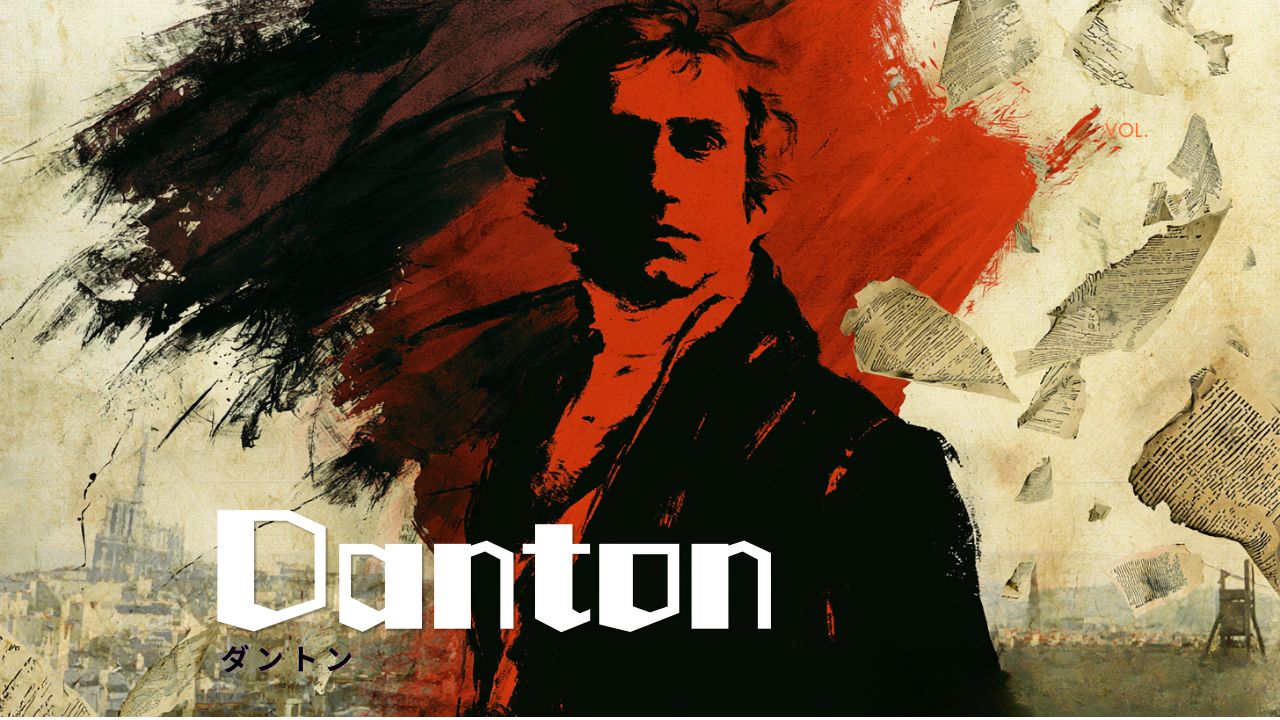
Danton is a powerful, intimate historical drama about the ideological and personal collision of two revolutionary leaders at the height of the French Revolution’s Reign of Terror. It is 1793–94, and the young French Republic, born of revolution, is consuming its own. Georges Danton (Gérard Depardieu) — the earthy, charismatic, larger-than-life tribune of the people, once a driving force of the Revolution — returns to Paris from the countryside, determined to halt the escalating bloodshed of the Terror and to challenge the man now directing it. That man is his former friend and ally, Maximilien Robespierre (Wojciech Pszoniak) — austere, incorruptible, and coldly committed to revolutionary purity at any cost. As the two men, once brothers-in-arms, are driven into irreconcilable opposition, their struggle becomes a duel of words, wills, and philosophies: humane pragmatism against ideological absolutism, the appetite for life against the machinery of virtue and terror. Robespierre and the Committee of Public Safety, fearing Danton’s popularity, move to arrest him and his allies and place them before the Revolutionary Tribunal — a trial whose outcome is grimly foreordained. Directed by the great Polish filmmaker Andrzej Wajda and adapted from Stanisława Przybyszewska’s play, and led by a titanic performance from Gérard Depardieu, Danton is a gripping, meticulously mounted meditation on revolution, power, and the way idealism curdles into tyranny.
日本語(あらすじ)
『ダントン』は、フランス革命の恐怖政治が頂点に達したさなか、二人の革命指導者の、思想的かつ個人的な衝突を描いた、力強く、親密な歴史ドラマです。1793年から94年。革命によって生まれた若きフランス共和国は、いまや自らを喰らい始めていました。ジョルジュ・ダントン(ジェラール・ドパルデュー)——豪放で、カリスマ性にあふれ、桁外れの人間的魅力を持つ人民の弁士であり、かつては革命の原動力だった男——は、田舎からパリへと戻ってきます。エスカレートする恐怖政治の流血を食い止め、いまやそれを指揮する男に、異を唱えるためでした。その男とは、かつての友であり盟友であった、マクシミリアン・ロベスピエール(ヴォイチェフ・プショニャック)——禁欲的で、清廉潔白、そして、いかなる犠牲を払ってでも革命の純粋さを貫こうとする、冷徹な人物です。かつて戦友だった二人は、相容れない対立へと追いやられ、その闘いは、言葉と、意志と、哲学の決闘となっていきます——人間味あふれる現実主義と、思想的な絶対主義。生への渇望と、「美徳」と恐怖の機構。ダントンの人望を恐れたロベスピエールと公安委員会は、彼とその仲間たちを逮捕し、革命裁判所の法廷に引き出そうとします——その結末が、暗く定められた裁判へと。ポーランドの巨匠アンジェイ・ワイダが監督し、スタニスワヴァ・プシビシェフスカの戯曲を映画化し、ジェラール・ドパルデューの雄大な演技に牽引された『ダントン』は、革命と、権力と、そして理想主義が専制へと変質していくさまをめぐる、緊迫感みなぎる、緻密に作り込まれた省察です。
Cast & Crew / キャスト&スタッフ
|
Role / 役割 |
Name / 名前 |
|---|---|
|
Director / 監督 |
Andrzej Wajda / アンジェイ・ワイダ |
|
Screenplay / 脚本 |
Jean-Claude Carrière, Andrzej Wajda, Agnieszka Holland, Bolesław Michałek, Jacek Gąsiorowski / ジャン=クロード・カリエール、アンジェイ・ワイダ、アニエシュカ・ホランドほか |
|
Based on / 原作 |
Stanisława Przybyszewska, The Danton Case (play) / スタニスワヴァ・プシビシェフスカ『ダントン事件』(戯曲) |
|
Producer / 製作 |
Margaret Ménégoz / マルガレート・メネゴス |
|
Cinematography / 撮影 |
Igor Luther / イゴール・ルター |
|
Music / 音楽 |
Jean Prodromidès / ジャン・プロドロミデス |
|
Georges Danton / ジョルジュ・ダントン |
Gérard Depardieu / ジェラール・ドパルデュー |
|
Maximilien Robespierre / ロベスピエール |
Wojciech Pszoniak / ヴォイチェフ・プショニャック |
|
Camille Desmoulins / カミーユ・デムーラン |
Patrice Chéreau / パトリス・シェロー |
|
Éléonore Duplay / エレオノール・デュプレ |
Angela Winkler / アンゲラ・ヴィンクラー |
|
Louison Danton / ルイゾン・ダントン |
Anne Alvaro / アンヌ・アルヴァロ |
Additional Information / 追加情報
Awards / 受賞
- César Awards (8th, 1983) / 第8回セザール賞: Best Director (Andrzej Wajda); 5 nominations total, including Best Film, Best Actor (Gérard Depardieu), Best Adaptation, and Best Sound / 監督賞(アンジェイ・ワイダ)受賞、作品賞・主演男優賞(ジェラール・ドパルデュー)・脚色賞・音響賞を含む計5部門ノミネート
- Louis Delluc Prize (1982) / ルイ・デリュック賞: Winner / 受賞
- BAFTA Awards / 英国アカデミー賞: Best Film Not in the English Language / 非英語作品賞
- French Syndicate of Cinema Critics / フランス映画批評家組合賞: Best Film / 作品賞
Critical Reception / 批評
Danton was met with strong critical acclaim and is widely regarded as one of the greatest films ever made about the French Revolution. Critics praised Andrzej Wajda’s meticulous, atmospheric, and grimly powerful evocation of revolutionary Paris, and above all the two central performances — Gérard Depardieu’s charismatic, full-blooded, life-loving Danton set against Wojciech Pszoniak’s chilling, austere Robespierre. Roger Ebert awarded the film four stars, calling it a marvelous meditation on the tension between personal loyalty and ideological commitment. The film was noted for its focus on language and moral argument, building to Danton’s electrifying self-defense before the Revolutionary Tribunal. It also generated debate: many read it as a pointed allegory for contemporary Poland — where the Solidarity movement was being suppressed under martial law as the film was made — and some French commentators objected to its sympathetic framing of Danton against Robespierre. Its reputation as a masterwork of political cinema has only grown with time. / 『ダントン』は高い批評的称賛を受け、フランス革命を描いた映画として、史上最も優れた作品の一つと広く見なされています。批評家は、革命下のパリを、緻密に、雰囲気豊かに、そして陰鬱な力強さをもって喚起したアンジェイ・ワイダの手腕、そして何より、二人の中心的な演技——カリスマ性にあふれ、血気盛んで、生を愛するジェラール・ドパルデューのダントンと、それに対置される、ぞっとするほど禁欲的なヴォイチェフ・プショニャックのロベスピエール——を称賛しました。ロジャー・イーバートは本作に四つ星を与え、個人的な忠誠と、思想的な信念とのあいだの緊張をめぐる、見事な省察だと評しています。本作は、言葉と、道徳的な議論に焦点を当て、革命裁判所でのダントンの、痺れるような自己弁護へと高まっていく点でも特筆されました。同時に、本作は議論も呼びました。多くの人が、これを同時代のポーランド——本作が作られたまさにそのとき、「連帯(ソリダルノシチ)」運動が戒厳令下で弾圧されていました——への、鋭い寓意として読み取り、また一部のフランスの論者は、ロベスピエールに対してダントンを共感的に描いた枠組みに、異を唱えました。政治映画の傑作としての本作の評価は、時とともに高まる一方です。
Box Office / 興行収入
- Box Office / 興行収入: 約1,040万ドル
Production Note / 製作についての付記
Danton was adapted from The Danton Case, a 1929 play by the Polish writer Stanisława Przybyszewska, which director Andrzej Wajda had previously staged in the theatre. The film was commissioned by France’s Gaumont and originally intended to be shot in Poland; however, when the independent trade-union movement Solidarity was suppressed and martial law was declared in Poland in December 1981, the production was relocated to France. This historical backdrop gave the film an unmistakable contemporary resonance: Wajda, a leading figure of Polish cinema and a supporter of Solidarity, framed the story of a revolution devouring its own as a reflection on power, dissent, and authoritarianism in his own time. Wajda cast Gérard Depardieu — whom he felt embodied Danton on sight — in the title role, while the Polish actor Wojciech Pszoniak, who had played Robespierre in Wajda’s stage productions, took that part; the mixed French and Polish cast (with the Polish actors largely dubbed) subtly underscored the film’s two worlds. Notably, the great French theatre and film director Patrice Chéreau appears as the doomed journalist Camille Desmoulins. In Japan, the film opened in February 1984 at Tokyo’s Iwanami Hall. / 『ダントン』は、ポーランドの作家スタニスワヴァ・プシビシェフスカによる1929年の戯曲『ダントン事件』を映画化したもので、監督のアンジェイ・ワイダは、かつてこれを舞台で演出したこともありました。本作はフランスのゴーモン社の委託作品で、当初はポーランドで撮影される予定でした。しかし、独立自主管理労働組合「連帯(ソリダルノシチ)」が弾圧され、1981年12月にポーランドで戒厳令が施行されたため、製作はフランスへと移されます。この歴史的な背景が、本作に、紛れもない同時代的な響きを与えました。ポーランド映画界を代表する存在であり、「連帯」の支持者でもあったワイダは、革命が自らを喰らっていく物語を、自らの時代における、権力、異論、そして権威主義についての省察として、描いたのです。ワイダは、一目見てダントンそのものだと感じたというジェラール・ドパルデューをタイトルロールに起用し、ロベスピエール役には、ワイダの舞台版で同役を演じたポーランド人俳優ヴォイチェフ・プショニャックを据えました。フランスとポーランドの混成キャスト(ポーランド人俳優の多くは吹き替え)が、本作の描く「二つの世界」を、それとなく際立たせています。特筆すべきは、フランス演劇・映画の巨匠パトリス・シェローが、悲運のジャーナリスト、カミーユ・デムーラン役で出演していることです。日本では、1984年2月に東京の岩波ホールで公開されました。
Distribution / 公開・配信
- France Release / フランス公開: January 12, 1983 / 1983年1月12日
- Japan Release / 日本公開: February 11, 1984 (Iwanami Hall, Tokyo) / 1984年2月11日(岩波ホール)
- Setting / 舞台: Paris, France, 1793–1794 (the Reign of Terror) / フランス・パリ(1793〜1794年、恐怖政治期)
- Countries / 製作国: France, Poland, West Germany / フランス・ポーランド・西ドイツ
- Language / 言語: French / フランス語
- Streaming (Japan) / 配信: 各種プラットフォームで配信・レンタル・購入
Related Review / 関連レビュー
🔗 English Review
[Anniversary of the Declaration of the Rights of Man] Five Years After the Declaration — Until Those Who Raised Ideals Execute One Another
🔗 日本語レビュー
【人権宣言記念日】宣言から5年——理念を掲げた者たちが、互いを処刑するまで