
Choose Your Language / 言語を選択:
Introduction
Homeland Stolen by War — Two Boys’ Witnessed History Fragments
February 7 is “Northern Territories Day.” On this day in 1855, Treaty of Shimoda concluded between Japan and Russia, internationally establishing Northern Territories as Japanese territory. In 1981, Japanese government designated this day as “Northern Territories Day,” day for deepening understanding of Northern Territories issue.
For this day with complex history, Mizuho Nishikubo’s 2014 animated film Giovanni’s Island addressed.
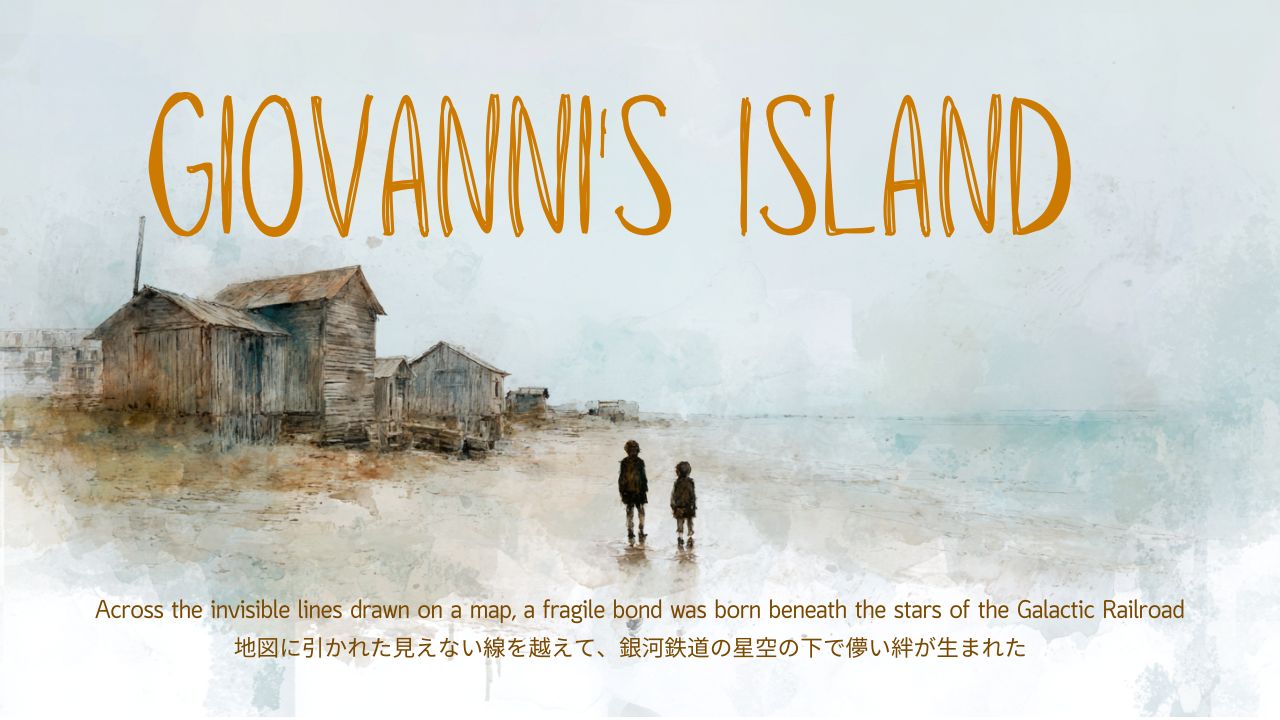
This work, set on Shikotan Island—one of Northern Territories—immediately after 1945 war end, depicts from perspective of two young brothers—10-year-old Junpei and 7-year-old Kanta—Soviet military advance, coexistence with islanders, final forced evacuation. Weaving Kenji Miyazawa’s Night on the Galactic Railroad as motif, beautifully yet poignantly depicts children’s story victimized by war.
Not political propaganda but viewing history from individual human perspective—Giovanni’s Island is rare work honestly depicting pain of people robbed of homeland by war, friendship torn apart by borders, transcending ideology.
Watching this film on Northern Territories Day, beyond political assertions or abstract territorial issue discussions, provides opportunity to know concrete lives of people who lived there.
Basic Information & Synopsis
→ For synopsis and production information, see our Database Article
Director: Mizuho Nishikubo
Year: 2014
Runtime: 102 minutes
Production: Production I.G
Commemorative Day: Northern Territories Day (February 7)
Background Knowledge
Why This Film Made — Production Background and Motivation
This work planned as 50th anniversary commemorative work of Japan Music Entertainment Industry Association.
Production motivation:
Association’s theme: “What social contribution can association make toward 21st century?” Answer chosen: creating work conveying war and history to next generation.
Official site carries copy: “We have things we must not forget.” This shows intention to convey Northern Territories issue—ongoing historical challenge—not as political assertion but as concrete lives of people who lived there.
Story Based on True Events:
Protagonist Junpei modeled on real former islander Hiroshi Tokuno (from Shikotan Island). Tokuno currently active as “storyteller,” film reflects his experiences and other former islanders’ testimonies.
Five years spent on conception, staff repeatedly traveled to Sakhalin for research.
Why Animation:
Initially, this work planned as live-action film. However, due to production constraints including Shikotan Island currently being Russian territory, created in animation format.
Director Mizuho Nishikubo wanted to depict history not “showing” but “feeling” form. Animation expression method suited emphasizing children’s perspective and emotions, reaching wide generations.
Neutral Perspective:
Nishikubo strongly conscious of not making this work political propaganda. Russian-side people also depicted as individuals, aimed to depict postwar situation not as ideology but human drama.
This attitude makes this work not mere “Northern Territories return” assertion film but universal anti-war, human love story.
Northern Territories Issue Overview
Northern Territories refers collectively to Habomai Islands, Shikotan Island, Kunashiri Island, Etorofu Island located northeast of Hokkaido.
Historical Background:
- 1855: Treaty of Shimoda established border between Etorofu Island and Urup Island
- 1875: Treaty of Saint Petersburg made entire Kuril Islands Japanese territory
- 1905: Treaty of Portsmouth made southern half of Sakhalin also Japanese territory
- August 9, 1945: Soviet Union broke Soviet-Japanese Neutrality Pact, entered war against Japan
- August 15, 1945: Japan surrendered
- August-September 1945: Soviet military occupied Kuril Islands and South Sakhalin
- 1947: Forced evacuation of Japanese islanders
- Present: Russia continues effective control
Japan’s position: Northern Four Islands (Habomai, Shikotan, Kunashiri, Etorofu) are Japan’s inherent territory, demanding return.
Russia’s position: Legally acquired territory as World War II result, no return obligation.
About Shikotan Island
Shikotan Island is second smallest island among Northern Four Islands (area approximately 253 km²).
Prewar situation:
- Population: approximately 1,000 households, approximately 3,000 people
- Main industry: Fishing (kelp, crab, salmon/trout)
- Schools, post offices, shrines existed
- Japanese resided for several hundred years
After 1945:
- Soviet military occupation
- All Japanese islanders forcibly evacuated by 1947
- Currently approximately 3,000 Russians reside
Forced Evacuation Reality
In 1947, Soviet authorities ordered forced evacuation of all Japanese islanders (approximately 17,000 people) on Northern Four Islands including Shikotan Island.
Conditions:
- Luggage allowed: approximately 16kg per person
- Abandoning all homes, land, fishing equipment
- Leaving livestock
- Midwinter (February-March) evacuation
Many islanders relocated to various Hokkaido locations like Sapporo and Nemuro, had to rebuild lives from zero. Pain of losing homeland still inherited by former islanders and their descendants.
What Makes It Exceptional
Night on the Galactic Railroad — Poetic World Forming Work’s Core
One of this work’s finest points: weaving Kenji Miyazawa’s Night on the Galactic Railroad throughout entire work, giving story deep poetic dimension.
Night on the Galactic Railroad:
Fantastic story where boy Giovanni and best friend Campanella ride train running through galaxy. Campanella leaves train midway—actually had drowned. Giovanni continues journey alone, eventually returns to reality.
Miyazawa-esque Message — Loss and Life Affirmation:
Island evacuation means kind of “death”—death of homeland life. But simultaneously, it’s also beginning of journey toward new life. Just as Kanta rides galactic railroad becoming star, Junpei also begins walking new life embracing memories.
Final scene shows dancing spirits under starry sky. Kanta there, Tanya there. They didn’t disappear but continue existing eternally in different form—this is Miyazawa-esque life-death view, hope this work presents.
Night on the Galactic Railroad scenes use fantastic visual expression, reality and story boundaries becoming ambiguous. This visual poetry gives work depth, transcending mere historical drama, becoming universal loss and rebirth story.
Related Articles
- Giovanni’s Island Database – Synopsis & Production Details
- Mizuho Nishikubo – Filmmaker Profile
はじめに
戦争が奪った故郷、二人の少年が見た歴史の断片
2月7日は、「北方領土の日」です。1855年のこの日、日本とロシアの間で日露和親条約が締結され、北方領土が日本の領土として国際的に確定しました。1981年、日本政府はこの日を「北方領土の日」と定め、北方領土問題への理解を深める日としています。
この複雑な歴史を持つ日に観るべき作品として、西久保瑞穂監督による2014年のアニメーション映画『ジョバンニの島』を取り上げます。
本作は、1945年の終戦直後、北方領土の一つである色丹島を舞台に、二人の幼い兄弟——10歳の純平と7歳のかんた——の視点から、ソ連軍の進駐、島民との共存、そして最終的な強制退去までを描いた作品です。宮沢賢治の『銀河鉄道の夜』をモチーフに織り込みながら、戦争の犠牲となった子供たちの物語を、美しく、そして切なく描き出しています。
政治的なプロパガンダではなく、一人の人間の視点から歴史を見つめる——『ジョバンニの島』は、イデオロギーを超えて、戦争によって故郷を奪われた人々の痛みと、国境によって引き裂かれた友情を誠実に描いた稀有な作品です。
北方領土の日にこの映画を観ることで、政治的主張や領土問題という抽象的な議論を超えて、そこで暮らしていた人々の具体的な人生を知る機会としたいと思います。
基本情報・あらすじ
→ あらすじや製作情報はデータベース記事へ
監督: 西久保瑞穂
製作年: 2014年
上映時間: 102分
制作: プロダクション I.G
記念日: 北方領土の日(2月7日)
予備知識
なぜこの映画が作られたのか——制作背景と動機
本作は、日本音楽事業者協会(音事協)の創立50周年記念作品として企画されました。
制作の動機:
協会が掲げたテーマは「21世紀に向けて、音事協ができる社会貢献とは何か」。その答えとして選ばれたのが、戦争や歴史を次世代に伝える作品を作ることでした。
公式サイトには「私たちには、忘れてはいけないことがある」というコピーが掲げられています。これは、北方領土問題という継続中の歴史的課題を、政治的主張ではなく、そこで暮らしていた人々の具体的な人生として伝えようとする意図を示しています。
実話に基づく物語:
主人公・純平のモデルは、実在の元島民・得能宏さん(色丹島出身)です。得能さんは現在も「語り部」として活動しており、映画には彼の経験と他の元島民の証言が反映されています。
構想に5年の歳月がかけられ、スタッフは何度も樺太へ取材に赴きました。
なぜアニメーションなのか:
当初、本作は実写映画として企画されました。しかし、色丹島が現在ロシア領であることなど制作上の制約から、アニメーション形式で作られることになりました。
監督の西久保瑞穂は、歴史を「見せる」のではなく「感じる」形で描きたいと考えました。アニメーションという表現方法は、子供の視点や感情を強調し、幅広い世代に届けるのに適していました。
中立的な視点:
西久保監督は、本作を政治的プロパガンダにしないことを強く意識しました。ロシア側の人々も個人として描き、イデオロギーではなく人間ドラマとして戦後の状況を描くことが目指されました。
この姿勢が、本作を単なる「北方領土返還」の主張映画ではなく、普遍的な反戦・人間愛の物語にしています。
北方領土問題の概要
北方領土とは、北海道の北東に位置する歯舞群島、色丹島、国後島、択捉島の総称です。
歴史的経緯:
- 1855年:日露和親条約で、国境が択捉島とウルップ島の間と確定
- 1875年:樺太・千島交換条約で、千島列島全体が日本領に
- 1905年:ポーツマス条約で、樺太の南半分も日本領に
- 1945年8月9日:ソ連が日ソ中立条約を破棄し対日参戦
- 1945年8月15日:日本降伏
- 1945年8-9月:ソ連軍が千島列島と南樺太を占領
- 1947年:日本人島民の強制退去
- 現在:ロシアが実効支配を継続
日本の立場:北方四島(歯舞、色丹、国後、択捉)は日本固有の領土であり、返還を求める。
ロシアの立場:第二次世界大戦の結果として合法的に取得した領土であり、返還の義務はない。
色丹島について
色丹島(しこたんとう)は、北方四島の中では二番目に小さい島です(面積約253km²)。
戦前の状況:
- 人口:約1,000世帯、約3,000人
- 主な産業:漁業(コンブ、カニ、サケ・マス)
- 学校、郵便局、神社などが存在
- 日本人が数百年にわたり居住
1945年以降:
- ソ連軍の占領
- 1947年までに全日本人島民が強制退去
- 現在はロシア人約3,000人が居住
強制退去の実態
1947年、ソ連当局は色丹島を含む北方四島の全日本人島民(約17,000人)に強制退去を命じました。
条件:
- 持ち出せる荷物:一人あたり約16kg
- 家、土地、漁具などすべて放棄
- 家畜も置いていく
- 真冬(2-3月)の退去
多くの島民は、札幌や根室など北海道各地に移住し、ゼロから生活を再建しなければなりませんでした。故郷を奪われた痛みは、今も元島民とその子孫に受け継がれています。
優れている点
『銀河鉄道の夜』——作品の核となる詩的世界
本作の最も優れた点の一つは、宮沢賢治の『銀河鉄道の夜』を作品全体に織り込むことで、物語に深い詩的次元を与えていることです。
『銀河鉄道の夜』とは:
少年ジョバンニと親友カンパネルラが、銀河を走る列車に乗って旅をする幻想的な物語。カンパネルラは途中で列車を降ります——実は溺死していたのです。ジョバンニは一人で旅を続け、やがて現実に戻ります。
宮沢賢治的メッセージ——喪失と生の肯定:
島からの退去は、一種の「死」——故郷という生活の死——を意味します。しかし同時に、それは新しい生への旅の始まりでもあります。寛太が銀河鉄道に乗って星になるように、純平もまた、記憶を抱えて新しい人生を歩き始めるのです。
最終場面で、星空の下で踊る霊たちの姿が現れます。寛太も、ターニャも、そこにいます。彼らは消えたのではなく、別の形で永遠に存在し続ける——これが賢治的な死生観であり、本作が提示する希望です。
『銀河鉄道の夜』のシーンでは、幻想的な映像表現が使われ、現実と物語の境界が曖昧になります。この視覚的な詩情が、作品に深みを与え、単なる歴史ドラマを超え、普遍的な喪失と再生の物語となっています。
関連記事
- ジョバンニの島 データベース – あらすじ・製作情報
- 西久保瑞穂 – 監督プロフィール