
Choose Your Language / 言語を選択:
Introduction
A Moving Drama Depicting Mandela’s Great Achievement of Changing a Nation Through the Power of Reconciliation and Unity, and the Potential of Sport for Social Transformation
July 18 is Nelson Mandela International Day (Mandela Day), established by the United Nations.
This international day falls on the birthday of Nelson Mandela, the South African statesman who devoted himself to the abolition of apartheid, and, after his 67 years of public service, it calls on people around the world to carry out at least 67 minutes of community service. It was officially created by the UN General Assembly following the Mandela Day campaign begun in 2009 by the Nelson Mandela Foundation and the AIDS-awareness organization 46664.
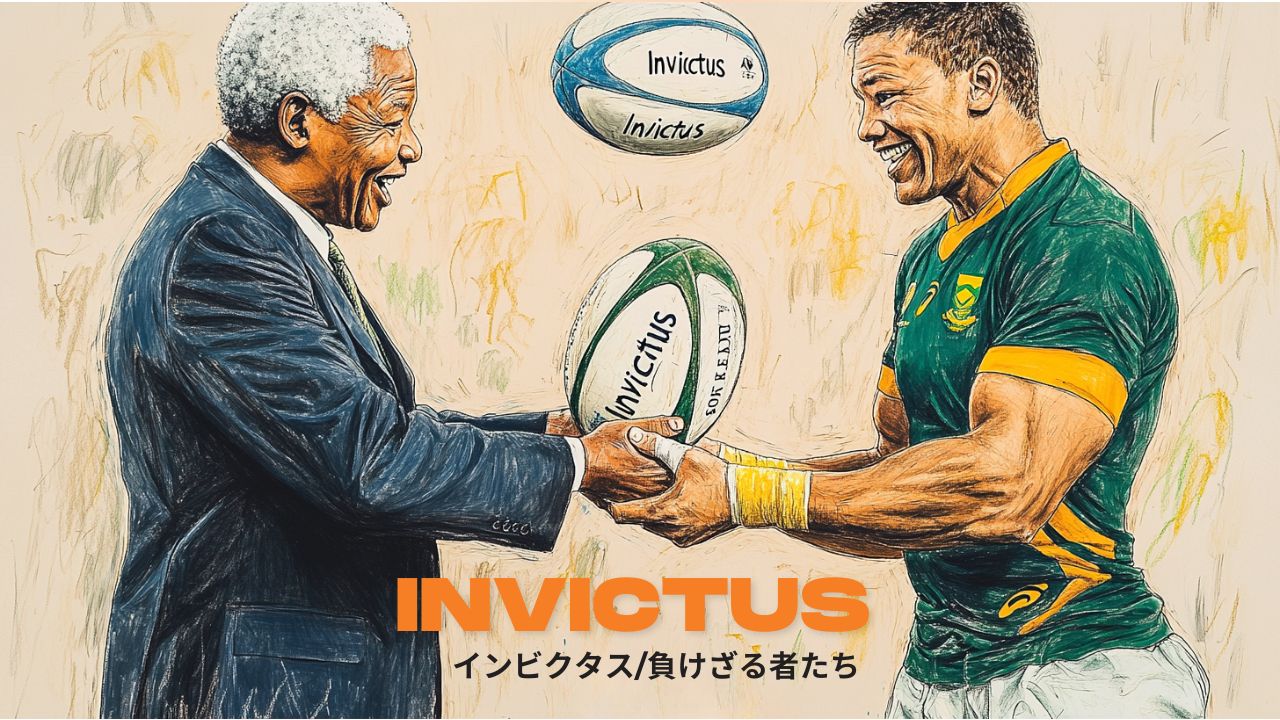
For this special day, we strongly recommend Clint Eastwood’s 2009 film Invictus. Set at the 1995 Rugby World Cup, this moving drama depicts the true story of how President Mandela supported South Africa’s national team in an effort to bring about national unity.
The story of Mandela, played by Morgan Freeman, and François Pienaar, the captain of the South African national rugby team, played by Matt Damon, goes beyond a mere sports film, powerfully depicting themes deeply connected to the ideals of Mandela Day: the spirit of reconciliation and tolerance, the responsibility and mission of a leader, the power of sport for social integration, and the potential for the actions of an individual to change society. The true story, re-created through Eastwood’s mature direction, becomes the finest opportunity to deeply understand Mandela’s great character and the spirit of the “67 minutes of service” that he embodied.
Basic Information & Synopsis
→ For synopsis and production information, see our Database Article
Director: Clint Eastwood
Year: 2009
Runtime: 134 minutes
Production: Warner Bros.
Commemorative Day: Nelson Mandela International Day (July 18)
Synopsis: In 1994, Nelson Mandela becomes South Africa’s first Black president, inheriting a nation still deeply divided by the wounds of apartheid. Seeking a way to unite Black and white citizens who remain wary of one another, Mandela turns to an unlikely instrument: the Springboks, the national rugby team long seen as a symbol of white Afrikaner culture and scorned by the Black majority. With the 1995 Rugby World Cup to be held on home soil, Mandela reaches out to team captain François Pienaar, sharing his vision of how the team might carry the hopes of the whole country. As the underdog Springboks advance improbably toward the final, a nation begins, cautiously, to come together.
Background Knowledge
The Life and Political Philosophy of Nelson Mandela
Nelson Rolihlahla Mandela (1918–2013) was a political leader who devoted his life to the abolition of apartheid in South Africa.
In his youth, he joined the African National Congress (ANC) in 1944 and led the resistance movement against apartheid, which was enacted into law in 1948. Though he adhered to nonviolence at first, he stepped toward armed struggle as government repression intensified.
Arrested in 1962 and sentenced to life imprisonment at the Rivonia Trial in 1964, Mandela spent the following 27 years in prison. Of these, about 18 years were at Robben Island Prison, the next roughly 6 years at Pollsmoor Prison, and the final year or so at Victor Verster Prison. Even in harsh conditions he continued to study, working toward a Bachelor of Laws (LLB) degree, and he kept his spiritual strength by holding the poem “Invictus” as a support for his heart.
In 1994, at the age of 75, Mandela became South Africa’s first Black president. He established the Truth and Reconciliation Commission, seeking to overcome past human-rights violations not through retaliation but through forgiveness and reconciliation. He devoted himself to correcting economic disparity and to social integration, holding up as a national vision the ideal of the “Rainbow Nation” championed by Archbishop Desmond Tutu.
The Apartheid System and South African Society
Apartheid (the policy of separation) was a policy of racial segregation implemented in South Africa from 1948 to 1994. White people, who made up only about one-tenth of the population, governed the Black population — which made up about eight-tenths — as well as Coloured (mixed-race) and Indian residents, defining residential areas, education systems, and occupational restrictions by race in law, and completely prohibiting Black political participation.
As a result, while white people monopolized the prosperous urban areas and farmland, Black people were segregated into poor “homelands” (bantustans); disparities in education, medical care, and infrastructure widened, and the separation of families and the destruction of cultural identity advanced.
From the 1960s, economic sanctions by the international community began, and in the world of sport South Africa was barred from participating in international competitions. The 1995 Rugby World Cup was the first large-scale international event South Africa hosted after those sanctions were lifted.
The Historical Background of the 1995 Rugby World Cup
This tournament was South Africa’s first major international sporting event after democratization, and an important opportunity to show the world its return to the international community and the legitimacy of the new government. It was also the stage for a return to international competition, forbidden during the apartheid era.
Rugby was traditionally regarded as a symbol of Afrikaner (Dutch-descended white) culture, while in Black communities soccer commanded overwhelming popularity. The Springboks were mostly made up of white players, at the time languished low in the world rankings, and carried a lack of practical match experience owing to the ban on international appearances. Even within the country, they had won almost no support from anyone but white people.
That such a team should overturn expectations to reach the final, and win the home-hosted World Cup by defeating New Zealand 15–12, became a feat that endures in South African sports history.
The Literary and Historical Significance of the Poem “Invictus”
“Invictus” is a poem written in 1875 by the English poet William Ernest Henley (1849–1903). A work born of Henley’s own experience of having a leg amputated due to tubercular illness, its title means “the unconquered” or “the undefeated” in Latin. It is known as a representative piece expressing the spiritual strength of the Victorian era.
For Mandela, this poem was a spiritual pillar that supported him through 27 years of prison life. He is said to have shared it with other political prisoners to encourage them as well. The lines “I am the master of my fate, I am the captain of my soul” are especially famous, and remain cherished around the world today as words beloved by people facing hardship.
What Makes It Exceptional
Morgan Freeman’s Overwhelming Performance as Mandela
The film’s greatest strength is the perfection of Morgan Freeman’s performance as Mandela. Beyond outward resemblance, he splendidly embodies Mandela’s dignity, warmth, intelligence, and indomitable spirit.
Especially striking is his re-creation of the distinctive accent and slow manner of speaking that characterized Mandela’s speech. Freeman observed Mandela over many years and studied his manner of speaking, delivering a performance based on accumulated understanding. In fact, Mandela himself publicly said that Morgan Freeman was the only one who could play him. Mandela’s many-sided character — his consideration for the white bodyguards, his humility at his first meeting with Pienaar, the forcefulness of his addresses to the nation — is splendidly expressed.
Clint Eastwood’s Dignified Direction
Eastwood’s direction, without falling into political propaganda, maintains the universality of a human drama. Though the subject carries a complex historical background, it is structured as a story into which viewers can easily project their emotions.
Especially superb is the way it depicts the positions of both white and Black fairly. While depicting the anxiety and fear of white people as understandable, it does not make light of the anger and disappointment of Black people either. Eastwood, while showing that reconciliation is not a simple process, gives viewers hope for its possibility.
A Screenplay Structure That Makes the Most of the Weight of a True Story
Anthony Peckham’s screenplay, based on John Carlin’s nonfiction book Playing the Enemy, makes the most of the weight the true story holds. While respecting historical fact, it forms a clever structure that never lacks cinematic excitement.
Especially excellent is the way it depicts the change of all of South Africa around the axis of the relationship between Mandela and Pienaar. By overlaying a personal friendship with national reconciliation, it expresses a great historical change as a close-to-home, easily understandable story.
Related Articles
- Invictus Database – Synopsis & Production Details
- Clint Eastwood – Filmmaker Profile
- Morgan Freeman – Actor Profile
はじめに
和解と団結の力で国家を変えたマンデラの偉業と、スポーツが持つ社会変革の可能性を描いた感動的なドラマ
7月18日は、国際連合により制定された「ネルソン・マンデラ国際デー」(マンデラデー)です。この国際デーは、アパルトヘイト撤廃に尽力した南アフリカ共和国の政治家ネルソン・マンデラの誕生日にあたり、彼の67年間にわたる社会奉仕の歩みにちなんで、少なくとも67分間の社会奉仕活動を行うよう、世界中の人々に呼びかけています。2009年にネルソン・マンデラ財団とエイズ啓発団体46664が始めたマンデラ・デー・キャンペーンを受けて、国連総会で正式に創設されました。
この特別な日に観るべき作品として、クリント・イーストウッド監督による2009年の『インビクタス/負けざる者たち』(Invictus)を強く推奨します。本作は、1995年のラグビーワールドカップを舞台に、マンデラ大統領が南アフリカ代表チームを支援して国家統合を図った実話を描いた、感動的なドラマです。
モーガン・フリーマン演じるマンデラと、マット・デイモン演じるラグビー南アフリカ代表キャプテン、フランソワ・ピナールの物語は、単なるスポーツ映画を超えて、和解と寛容の精神、指導者としての責任と使命、スポーツによる社会統合の力、個人の行動が社会を変える可能性といった、マンデラデーの理念に深く関わるテーマを力強く描き出しています。イーストウッドの円熟した演出により再現された実話は、マンデラの偉大な人格と、彼が体現した「67分間の奉仕」の精神を深く理解する、最高の機会となっています。
基本情報・あらすじ
→ あらすじや製作情報はデータベース記事へ
監督: クリント・イーストウッド
製作年: 2009年
上映時間: 134分
制作: ワーナー・ブラザース
記念日: ネルソン・マンデラ国際デー(7月18日)
あらすじ: 1994年、ネルソン・マンデラは南アフリカ初の黒人大統領に就任し、アパルトヘイトの傷が今なお深く残る、分断された国家を引き継ぎます。互いに警戒し合う黒人と白人の国民を一つにする道を模索するマンデラは、思いがけない手段に目を向けます——長らくアフリカーナー白人文化の象徴とされ、黒人の多くから軽蔑されてきた、ラグビー代表チーム「スプリングボクス」です。1995年のラグビーワールドカップが地元開催されるのを前に、マンデラはキャプテンのフランソワ・ピナールに歩み寄り、このチームが国全体の希望を背負いうるというビジョンを分かち合います。弱小と見られていたスプリングボクスが決勝へと勝ち進んでいくなかで、国はおずおずと、一つにまとまり始めます。
予備知識
ネルソン・マンデラの生涯と政治哲学
ネルソン・ロリフラフラ・マンデラ(1918-2013)は、南アフリカのアパルトヘイト撤廃に生涯を捧げた政治指導者です。
若き日の彼は、1944年にアフリカ民族会議(ANC)に加わり、1948年に法制化されたアパルトヘイトへの抵抗運動を指導しました。当初は非暴力主義を貫いていましたが、政府の弾圧が激化するなかで、武装闘争へと踏み出していきます。
1962年に逮捕され、1964年のリボニア裁判で終身刑の判決を受けたマンデラは、以後27年間を獄中で過ごしました。そのうち約18年間をロベン島監獄で、続く約6年間をポルスムーア刑務所で、そして最後の1年あまりをヴィクター・フルステル刑務所で過ごしています。過酷な環境のなかでも彼は学習を続け、法学士(LLB)の学位取得に取り組み、詩「インビクタス」を心の支えとして、精神的な強さを保ち続けました。
1994年、75歳で南アフリカ初の黒人大統領に就任したマンデラは、真実和解委員会を設立し、過去の人権侵害を、報復ではなく赦しと和解によって乗り越えようとしました。経済格差の是正と社会統合に力を注ぎ、デズモンド・ツツ大主教が唱えた「虹の国(Rainbow Nation)」の理想を、国家のビジョンとして掲げていきました。
アパルトヘイト体制と南アフリカ社会
アパルトヘイト(分離政策)は、1948年から1994年まで南アフリカで実施された、人種隔離政策です。人口の約1割にすぎない白人が、約8割を占める黒人や、カラード(混血)、インド系住民を統治し、人種別の居住区域・教育制度・職業制限を法律で定め、黒人の政治参加を完全に禁じていました。
その結果、白人が豊かな都市部と農地を独占する一方、黒人は貧しい「ホームランド」(バンツースタン)に隔離され、教育・医療・インフラの格差が広がり、家族の分離や文化的アイデンティティの破壊が進みました。
1960年代からは国際社会による経済制裁が始まり、スポーツ界でも南アフリカの国際大会参加が禁止されます。1995年のラグビーワールドカップは、その制裁が解かれたのちに南アフリカが迎えた、最初の大規模国際大会でした。
1995年ラグビーワールドカップの歴史的背景
この大会は、南アフリカにとって民主化後初の大型国際スポーツイベントであり、国際社会への復帰と新政権の正統性を世界に示す、重要な機会でした。アパルトヘイト時代に禁じられていた国際競技への、復帰の舞台でもあったのです。
ラグビーは、伝統的にアフリカーナー(オランダ系白人)文化の象徴とされ、黒人コミュニティではサッカーが圧倒的な人気を誇っていました。スプリングボクスは白人選手が大部分を占め、当時は世界ランキングでも下位に低迷し、国際大会出場禁止による実戦経験の不足も抱えていました。国内でも、白人以外からの支持はほとんど得られていない状況だったのです。
そんなチームが予想を覆して決勝に進み、地元開催のワールドカップでニュージーランドを15-12で破って優勝したことは、南アフリカのスポーツ史に残る快挙となりました。
詩「インビクタス」の文学的・歴史的意義
「インビクタス」は、イギリスの詩人ウィリアム・アーネスト・ヘンリー(1849-1903)が1875年に書いた詩です。ヘンリー自身が結核性の病で片脚の切断を余儀なくされた体験から生まれた作品で、題名はラテン語で「征服されざる者」「不屈の者」を意味します。ヴィクトリア朝時代の、精神的な強さを表現した代表的な一篇として知られています。
マンデラにとって、この詩は27年間の獄中生活を支える精神的な柱でした。彼はこの詩を、ほかの政治囚たちにも伝えて励ましたといいます。とりわけ「私は我が運命の主人、我が魂の船長なり」という一節は有名で、困難に立ち向かう人々の愛読する言葉として、今日でも世界中で親しまれています。
優れている点
モーガン・フリーマンの圧倒的なマンデラ演技
本作の最大の優れた点は、モーガン・フリーマンによるマンデラの演技の完璧さです。外見的な類似性だけでなく、マンデラの持つ威厳、温かさ、知性、そして不屈の精神を、見事に体現しています。
特に印象的なのは、マンデラの話し方の特徴である独特のアクセントと、ゆっくりとした語り口の再現です。フリーマンは長年にわたってマンデラを観察し、その話し方を研究してきており、蓄積された理解に基づいた演技を披露しています。実際、マンデラ自身が「自分を演じることができるのはモーガン・フリーマンだけ」と公言していたほどでした。白人の護衛隊員への配慮、ピナールとの初対面での謙虚さ、国民に向けた演説での力強さなど、マンデラの多面的な人格が、見事に表現されています。
クリント・イーストウッドの品格ある演出
イーストウッドの演出は、政治的なプロパガンダに陥ることなく、人間ドラマとしての普遍性を保っています。複雑な歴史的背景を持つ題材でありながら、観客が感情移入しやすい物語として構成されています。
特に秀逸なのは、白人と黒人双方の立場を公平に描いている点です。白人の不安や恐怖も理解できるものとして描く一方で、黒人の怒りや失望も軽視しません。イーストウッドは、和解が簡単なプロセスではないことを示しながらも、それが可能であることへの希望を、観客に与えています。
実話の重みを活かした脚本構成
アンソニー・ペッカムの脚本は、ジョン・カーリンのノンフィクション『Playing the Enemy』を原作に、実話の持つ重みを最大限に活かしています。歴史的事実を尊重しながらも、映画的な盛り上がりを欠くことのない、巧妙な構成となっています。
特に優れているのは、マンデラとピナールの関係性を軸に、南アフリカ全体の変化を描き出した点です。個人的な友情と国家的な和解を重ね合わせることで、大きな歴史的変化を、身近で理解しやすい物語として表現しています。