
Choose Your Language / 言語を選択:
Introduction
The Freedom the Highway Promised — And the Question of Whose Freedom It Was
June 29 is the anniversary of the Federal-Aid Highway Act of 1956.
On this day in 1956, President Dwight Eisenhower signed the act into law, launching the construction of the approximately 41,000-mile Interstate Highway System. It was the largest public works project in American history at the time, and it fundamentally reshaped the structure of American society.
One thing worth knowing: this law did not invent the American road. Highways had already existed across the country — federal road aid acts in 1916 and 1921, and the 1926 establishment of a numbered national highway system, had already built a patchwork of rural two-lane roads and multi-lane motorways. But these followed no unified national standard. What the 1956 act set in motion was different: the federal government would fund 90% of construction costs for a single, unified, entirely auto-only highway network spanning the continent.
What this law produced was not merely a road network. It was the physical foundation of an American ideal: the freedom of movement. People could now drive across the continent freely; suburbs emerged as a new way of life; car-centered culture flourished. The highway became a symbol of American freedom and American vastness itself.
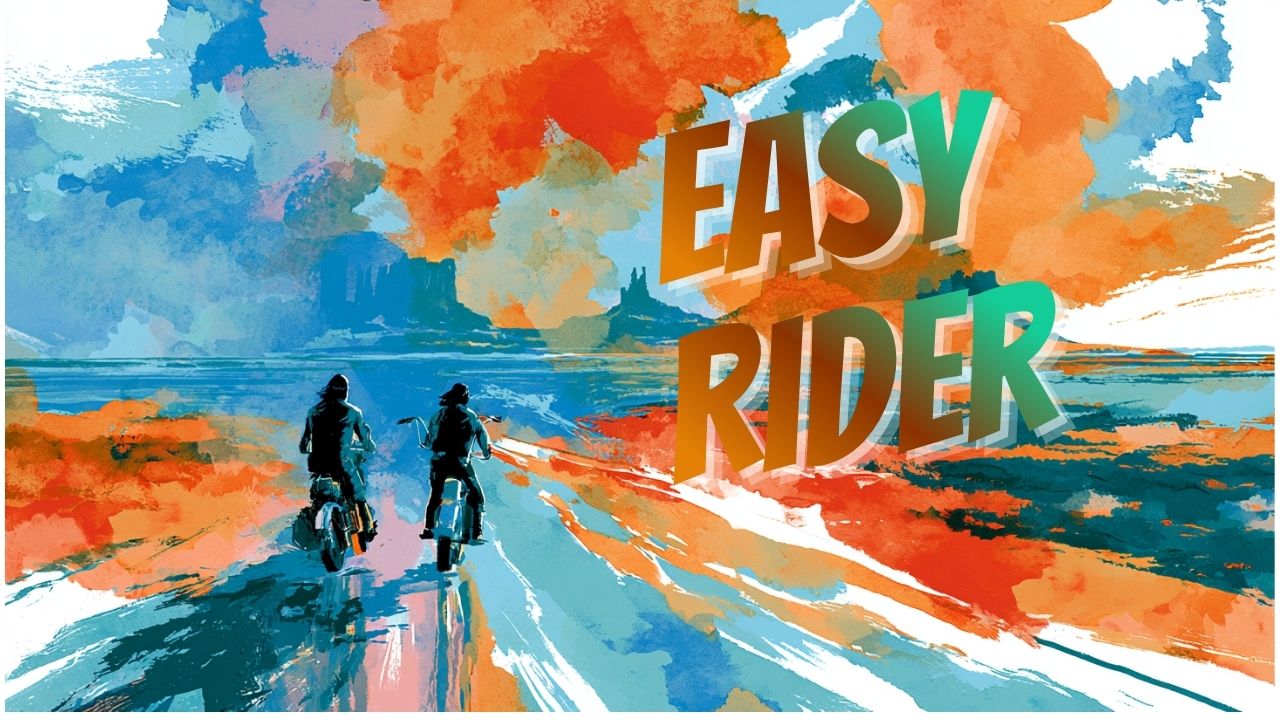
For this day, the film to watch is Easy Rider (1969). Directed by Dennis Hopper and starring Peter Fonda, the film follows two young men riding motorcycles across the American South — a road movie regarded as a landmark of New Hollywood cinema. Set on the very highways the Interstate Act built, in search of freedom, the film is one of the most iconic embodiments of the ideal that highway promised.
The film vividly captures the exhilaration of the open road. But it also looks unflinchingly at the reality that freedom was placed within. The Interstate Highway Act’s ideal — that everyone could move freely — shaped the America that followed. But watching this film, a quieter question rises: who was that freedom actually open to? Watching this film on the anniversary of the Interstate Highway Act is an opportunity to reconsider what the highway’s promised freedom actually was, and whose it actually was.
Basic Information & Synopsis
→ For synopsis and production information, see our Database Article
Director: Dennis Hopper
Year: 1969
Runtime: 95 minutes
Production: Pando Company, Raybert Productions
Commemorative Day: Federal-Aid Highway Act of 1956 Anniversary (June 29)
Synopsis: Wyatt and Billy, two bikers, sell a large quantity of cocaine and set out on their motorcycles from Los Angeles toward New Orleans, intending to reach Mardi Gras. Along the way they pass through small towns, encounter a hippie commune, are jailed briefly on a minor charge, and meet a hard-drinking small-town lawyer named George Hanson, who joins them for part of the journey. As they travel deeper into the South, the open-road freedom of the film’s first half gives way to escalating hostility from the people they encounter — culminating in a tragedy that exposes the limits of the freedom they believed the road offered.
Background Knowledge
The Dawn of New Hollywood Cinema
Easy Rider was made on a budget of just $300,000–$400,000 and grossed an estimated $60 million worldwide — a result that shocked Hollywood. Unlike the conventional studio-controlled entertainment of the era, the film depicted the sensibility and reality of a younger generation with raw, unpolished honesty, and is credited with launching the movement known as New Hollywood (American New Cinema). It became a turning point that led major studios to entrust younger filmmakers with creative freedom. The film won the Award for Best First Work at the 1969 Cannes Film Festival.
A Journey Filmed Without a Script
The production carries numerous anecdotes that reflect its improvisational spirit. The film began shooting with almost no completed screenplay — only a rough outline and the two protagonists’ names. Much of the dialogue was generated on the spot. The names themselves were drawn from Western legend: Wyatt from Sheriff Wyatt Earp, Billy from outlaw Billy the Kid — a deliberate signal that the film was conceived as a modern Western.
The film’s iconic motorcycle — the stars-and-stripes “Captain America” chopper — was designed and built by two Black motorcycle builders, Cliff Vaughs and Ben Hardy, drawing on the chopper style popular among Black riders of the era. Vaughs in particular had been involved in the civil rights movement in the early 1960s and had personally toured the South on a chopper, an experience that included nearly being shot at by a camouflaged hunter in a pickup truck — an episode that resonates, in some way, with the film’s tragic ending. Neither Vaughs’s nor Hardy’s name appeared in the film’s credits.
Difficulties During Filming
Production was far from smooth. Hopper repeatedly clashed with others over creative control on set, and the early location shooting in New Orleans descended into chaos. Learning from this, the crew reorganized with a more professional production team before tackling the main road journey. Much of the film was shot using only natural light, with Hopper declaring “God is the best gaffer,” determined to capture the American landscape in its actual light. In the Louisiana diner scene, local residents appear as themselves — and Hopper reportedly fed them the suggestion that the three protagonists “killed a girl on the edge of town” in order to provoke sharper, more hostile reactions from them.
From 220 Minutes to 96 — A Difficult Edit
The film also went through a difficult editing process. Hopper’s initial cut reportedly ran 220 minutes. Henry Jaglom was ultimately given editing responsibilities and shaped it into the 96-minute version known today. The longer cut is said to have included an opening sequence of the two men performing in a stunt show in Los Angeles and an elaborate police helicopter chase, among other scenes no longer visible. The film’s stripped-down, fragmentary editing style itself came to reflect the countercultural sensibility of its era. The famous closing campfire scene was reportedly shot in a rush after the crew realized, following the wrap party, that they had forgotten to film it.
From Rip Torn to Jack Nicholson
The role of lawyer George Hanson was originally intended for a different actor: Rip Torn, a friend of screenwriter Terry Southern. But during a discussion about the role, Hopper began talking about Southern “rednecks,” which offended the Texas-born Torn, and the two nearly came to blows. Torn withdrew from the project as a result, and Jack Nicholson was cast in his place. This casting change ultimately became the turning point that propelled Nicholson to stardom.
The Late 1960s Context
The film was released in 1969, a period of profound upheaval in the United States: the anti-Vietnam War movement, the civil rights movement, and a counterculture challenging established values were colliding fiercely with traditional American society. Long hair and a hippie lifestyle symbolized freedom to the younger generation, while to conservative segments of society, they represented a threat to social order. The intolerance the two protagonists encounter is grounded in this historical conflict.
What Makes It Exceptional
The Sense of Liberation Created by Highway and Music
One of the film’s greatest pleasures is the overwhelming sense of liberation produced by combining footage of America’s vast highways with rock music. Cinematographer László Kovács’s sweeping images of the landscape, paired with songs including Steppenwolf’s “Born to Be Wild,” allow the audience to directly feel the exhilaration of freedom of movement. Telling the story through music and image in this way was genuinely innovative for its time. The music licensing alone reportedly cost approximately $1 million — roughly three times the film’s production budget.
A Hymn to Freedom That Also Critiques It
The film’s strength lies in holding two things simultaneously: a soaring celebration of freedom, and a clear-eyed look at the reality that freedom existed within. The contrast between the liberated, joyful journey of the film’s first half and the intolerant reality of its second half elevates the film beyond a simple youth anthem into a sharp critique of American society. This double vision — depicting both the ideal and the reality — is what has given the film its lasting depth.
Jack Nicholson’s Striking Presence
Jack Nicholson’s performance as lawyer George Hanson is the film’s standout. A man who exists within mainstream society yet cannot fit comfortably within it, drawn to the two riders’ freedom and ultimately giving voice to what that freedom means — through this character, the film’s theme finds clear articulation. Nicholson’s George functions as a bridge between the audience and the young men seeking freedom, connecting their journey to the broader society around them. For this performance, he received an Academy Award nomination for Best Supporting Actor — his first Oscar nomination, in a career that would go on to become the most nominated of any male actor in Academy history.
Related Articles
- Easy Rider Database – Synopsis & Production Details
- Dennis Hopper – Filmmaker Profile
- Jack Nicholson – Actor Profile
はじめに
ハイウェイが約束した「移動の自由」と、その自由が誰のものだったのかという問い
6月29日は、アメリカで「連邦補助高速道路法(Federal-Aid Highway Act of 1956)」が成立した日です。1956年のこの日、ドワイト・アイゼンハワー大統領がこの法律に署名し、全長約4万1千マイルに及ぶ「州間高速道路網(インターステート・ハイウェイ・システム)」の建設が始まりました。これは当時のアメリカ史上最大の公共事業であり、その後のアメリカ社会のあり方を根底から変えた、歴史的な出来事でした。
ここで一つ、知っておきたいことがあります。この法律は、「アメリカに初めて道路を作った」ものではありません。それ以前にも、幹線道路は各地に存在していました。1916年や1921年の連邦道路援助法を経て、1926年には全国に番号を振った幹線道路網(U.S. Numbered Highways)も整えられ、田舎の二車線道路から多車線の自動車専用道路まで、さまざまな道がすでにありました。しかし、それらは州ごとに規格がばらばらで、全国を一貫した基準で結ぶものではありませんでした。1956年のこの法律が始動させたのは、連邦が建設費の9割を負担し、全国を統一規格で貫く、すべて自動車専用の巨大な高速道路網だったのです。
この法律がもたらしたのは、単なる道路網ではありません。それは「移動の自由」という、アメリカ的な理想の物質的な基盤でした。人々は車を駆って大陸を自由に横断できるようになり、郊外という新しい生活圏が生まれ、自動車を中心とした文化が花開きました。ハイウェイは、アメリカという国の「自由」と「広大さ」を象徴する存在となったのです。
この日に観る作品として、1969年公開の**『イージー・ライダー(Easy Rider)』**を取り上げます。デニス・ホッパー監督、ピーター・フォンダ主演による本作は、二人の若者がバイクでアメリカ南部を横断するロードムービーであり、アメリカン・ニューシネマの金字塔として知られます。ハイウェイを舞台に「自由」を求めて旅する本作は、州間高速道路法が約束した「移動の自由」という理想を、最も象徴的に体現した映画の一つです。
本作は、ハイウェイを駆け抜ける解放感を鮮やかに描く一方で、その自由がどんな現実のなかに置かれていたのかをも見つめた作品です。州間高速道路法が掲げた「誰もが自由に移動できる」という理想は、その後のアメリカを形づくりました。しかし本作を観ていくと、その自由が、いったい誰に向けて開かれたものだったのかという問いが、静かに立ち上がってきます。州間高速道路法成立の日に本作を観ることは、ハイウェイが約束した自由とは何だったのか、そしてそれは誰のものだったのかを、改めて問い直す機会となります。
基本情報・あらすじ
→ あらすじや製作情報はデータベース記事へ
監督: デニス・ホッパー
製作年: 1969年
上映時間: 95分
制作: Pando Company、Raybert Productions
記念日: 連邦補助高速道路法成立記念日(6月29日)
あらすじ: ワイアットとビリーという二人のバイカーが、大量のコカインを売った金を手に、ロサンゼルスからマルディグラを目指してバイクで南部へ旅立ちます。途中、小さな町々を通り過ぎ、ヒッピーのコミューンに立ち寄り、軽微な容疑で短期間投獄され、やがて田舎町の酒好きの弁護士ジョージ・ハンソンと出会い、彼は二人の旅に同行することになります。南部へと深く進むにつれ、映画前半の解放感に満ちた旅は、彼らが出会う人々からの敵意の高まりへと変わっていき——その先に、彼らが信じていた自由の限界を暴く悲劇が待っています。
予備知識
アメリカン・ニューシネマの幕開け
『イージー・ライダー』は、わずか30万〜40万ドルという低予算で製作されながら、全世界で6千万ドルともいわれる興行収入を上げ、ハリウッドに衝撃を与えた作品です。スタジオの管理下にある従来の娯楽映画とは異なり、若い世代の感性と現実を、荒削りながら生々しく描いたこの作品は、「アメリカン・ニューシネマ」と呼ばれる新しい映画運動の幕開けを告げました。大手スタジオが、若い作り手たちに自由な製作を委ねるきっかけともなった、映画史的に重要な一作です。1969年のカンヌ国際映画祭では、新人監督賞を受賞しています。
脚本なしで撮られた旅
本作の製作背景には、その自由な精神を物語る逸話が数多くあります。そもそも本作は、きちんとした脚本がほとんどないまま撮影に入りました。あったのは、物語の大まかな筋立てと、主人公二人の名前だけ。多くの台詞は、その場の即興で生み出されました。主人公の名は、西部劇の伝説的な人物にちなんでいます。ワイアットは保安官ワイアット・アープから、ビリーは無法者ビリー・ザ・キッドから取られました。本作が「現代の西部劇」として構想されたことを示す、象徴的な命名です。
また、本作の象徴であるバイク——星条旗の「キャプテン・アメリカ号」——をデザインし、製作したのは、クリフ・ヴォーンとベン・ハーディという二人の黒人のバイク製作者でした。当時の黒人ライダーのあいだで流行していたチョッパーのスタイルが、この象徴的なマシンの原型になっているのです。とりわけクリフ・ヴォーンは、1960年代前半に公民権運動に関わりながら、自らチョッパーで南部を旅し、ピックアップトラックに乗ったカモ猟師に銃で撃たれかけるという経験をしていました。本作の結末の悲劇は、彼自身のこうした実体験とも、どこかで響き合っています。ただし、ヴォーンとハーディの名は、本編のクレジットには記されませんでした。
撮影をめぐる困難
撮影は、決して順調ではありませんでした。ホッパーは現場で主導権をめぐって衝突を繰り返し、ニューオーリンズでの先行撮影は混乱を極めました。その反省から、二人は改めてきちんとした撮影クルーを編成し直して、旅の本編に臨んでいます。撮影の多くは、人工的な照明を使わず、自然光のもとで行われました。ホッパーは「神こそ最高の照明技師だ」と語り、アメリカの大地をありのままの光で捉えることにこだわったのです。ルイジアナの食堂の場面では、地元の人々がそのまま出演しており、ホッパーは彼らからより辛辣な言葉を引き出すため、「あの三人は町外れで娘を殺した連中だ」と吹き込んだという逸話も残っています。
220分から96分へ——編集という難産
本作は、編集の段階でも難産でした。ホッパーが当初提案した編集版は、なんと220分にも及んだといいます。最終的に、ヘンリー・ジャグロムが編集を任され、96分という現在の形にまとめ上げました。当初の長い版には、二人がロサンゼルスでスタント・ショーに出演する冒頭部分や、警察とヘリコプターによる派手な追跡劇など、現在は見られない多くの場面が含まれていたとされます。削ぎ落とされ、断片的につながれた本作の編集スタイルそのものが、当時のカウンターカルチャーの感性を映し出すものとなりました。なお、有名な結末の焚き火の場面は、撮影の打ち上げパーティーの後になって撮り忘れに気づき、慌てて撮影されたものだといいます。
リップ・トーンからジャック・ニコルソンへ
弁護士ジョージ役には、当初、別の俳優が予定されていました。脚本に関わったテリー・サザーンの友人で、俳優のリップ・トーンです。しかし、役について話し合う席で、ホッパーが南部の「田舎者(レッドネック)」について語り出したことに、テキサス出身のトーンが気分を害し、二人は一触即発の事態に。これがもとでトーンは降板し、代わりにジャック・ニコルソンが起用されました。結果として、この配役が、ニコルソンをスターダムへと押し上げる転機となったのです。
1960年代末という時代
本作が公開された1969年は、アメリカが深く揺れていた時代でした。ベトナム戦争への反戦運動、公民権運動、そして既成の価値観に異を唱えるカウンターカルチャーが、伝統的なアメリカ社会と激しくぶつかり合っていました。長髪やヒッピー的な生き方は、若い世代にとっては自由の象徴でしたが、保守的な層にとっては社会秩序を脅かす存在でした。本作が描く二人の若者への不寛容は、こうした時代の対立を背景としています。
優れている点
ハイウェイと音楽が生む解放感
本作の大きな魅力は、アメリカの広大な風景を貫くハイウェイの映像と、それに重なるロック音楽が生み出す、圧倒的な解放感です。撮影監督ラズロ・コヴァックスが捉えた雄大な大地と、ステッペンウルフの「ワイルドで行こう(Born to Be Wild)」をはじめとする楽曲が一体となり、移動の自由がもたらす高揚感を、観客に直接体感させます。物語を音楽と映像で語るこの手法は、当時としては斬新なものでした。なお、これらの楽曲の使用料には、撮影費用の約三倍にあたる100万ドルが投じられたといわれます。
自由への賛歌と、その批評の両立
本作の優れた点は、自由を高らかに賛美する一方で、その自由が置かれた現実を冷徹に見つめている点にあります。前半の解放感あふれる旅の描写と、後半の不寛容な現実との対比によって、本作は単なる青春賛歌にとどまらず、アメリカ社会への鋭い批評へと深まっていきます。理想と現実の両面を描く、この複眼的な構造が、本作に長く語り継がれる深みを与えています。
ジャック・ニコルソンの鮮烈な存在感
弁護士ジョージを演じたジャック・ニコルソンの演技は、本作の白眉です。社会の主流にいながらそこになじめない男が、二人の自由に惹かれ、そして自由を語る言葉を残す——この人物の存在によって、本作のテーマは明確な言葉を得ます。ニコルソンが演じるジョージは、観客にとって、自由を求める若者たちと社会とをつなぐ橋渡しの役割を果たしています。この演技で、彼はアカデミー助演男優賞にノミネートされました——これが彼にとって生涯初のオスカーノミネートであり、その後男優として史上最多のノミネート数を記録するキャリアの出発点となりました。
関連記事
- イージー・ライダー データベース – あらすじ・製作情報
- デニス・ホッパー – 監督プロフィール
- ジャック・ニコルソン – 俳優プロフィール