
Choose Your Language / 言語を選択:
Introduction
The Wisdom of Mountain and Forest Gods — Reverence for Nature and the Art of Coexistence
May 22 is the International Day for Biological Diversity, established by the United Nations.
The day was created to mark the adoption of the Convention on Biological Diversity in 1992, and to promote understanding of, and action to protect, the diversity of life on Earth. The 2026 theme is “Acting locally for global impact” — a reminder that the planetary crisis of biodiversity loss is not an abstract global problem but a consequence of what happens, place by place, in each specific ecosystem.
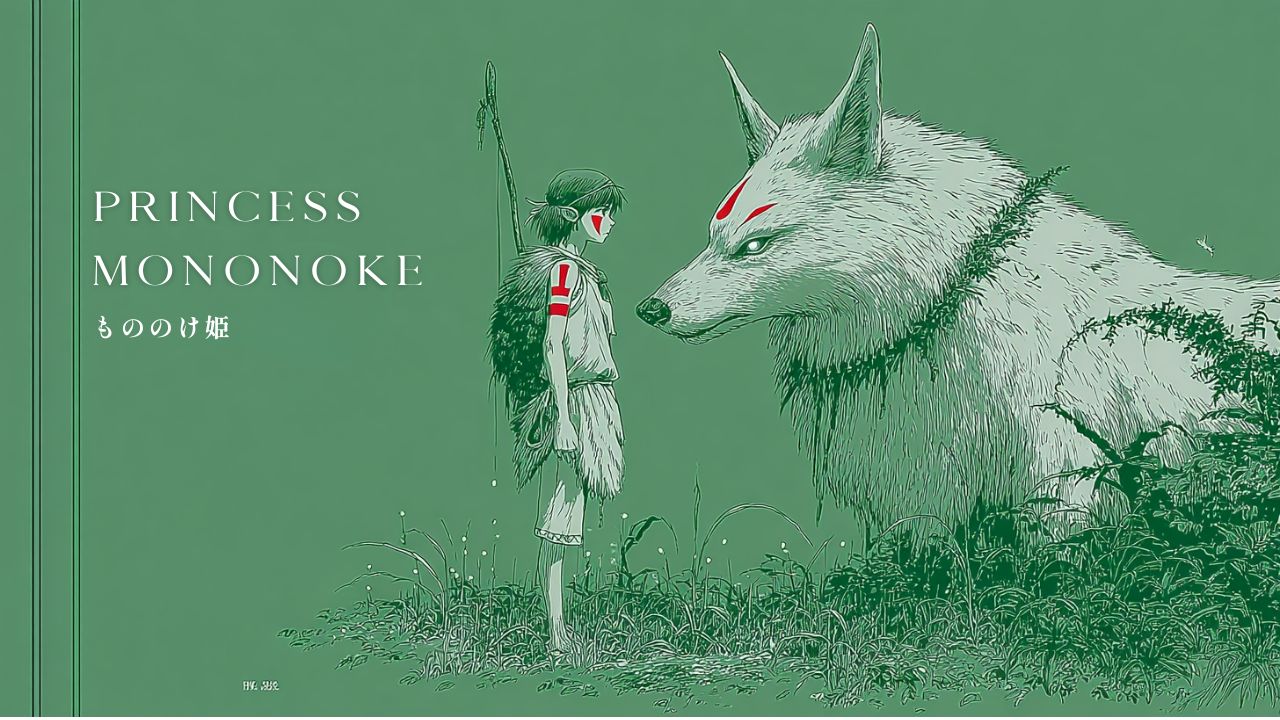
For this day, the film to watch is Princess Mononoke (もののけ姫, 1997), directed by Hayao Miyazaki.
The story is set in a single mountain, a single forest, a single ironworks settlement in late Muromachi-period Japan. It is a local story — and it is a precise model of the global one. The forest is cut down. The gods grow angry. The ecological network breaks apart. What happens here happens everywhere; what is lost here cannot be recovered anywhere. Miyazaki’s film makes that argument without stating it, through images of a world in which nature is not backdrop but participant.
Basic Information & Synopsis
→ For synopsis and production information, see our Database Article
Director: Hayao Miyazaki
Year: 1997
Runtime: 134 minutes
Production: Studio Ghibli
Commemorative Day: International Day for Biological Diversity (May 22)
Background Knowledge
Japanese Mountain Worship and the Technology of the Muromachi Period
The film draws on actual Japanese traditions of mountain and forest reverence — the belief that mountains and forests are sacred spaces inhabited by gods. Deer have been considered divine messengers at many Shinto shrines; boars have been understood as manifestations of mountain gods. The film’s spiritual architecture is grounded in this real tradition.
The late Muromachi period (late 15th to early 16th century) was a time of significant technological development in Japan. Agricultural improvements and population growth drove forest clearance; ironmaking (tatara smelting) in mountain regions intensified, consuming large quantities of charcoal and requiring extensive deforestation. The guns Lady Eboshi and her community use represent the arrival of new weapons technology — a real development of the period, symbolizing the moment when human technological capability began to shift the balance of power between humans and the natural world in ways that had not previously been possible.
Miyazaki’s Environmental Vision
Miyazaki has consistently made the relationship between humans and nature the central preoccupation of his work. In Princess Mononoke, he deliberately refused the easy moral framework of “nature = good, civilization = bad,” insisting instead on the complexity of both positions. Lady Eboshi is the film’s most productively ambiguous figure: she destroys the forest and shelters the sick and the socially excluded. San is raised by wolves and cannot fully live in either world.
The film was made in the 1990s as environmental issues were achieving global salience — deforestation, atmospheric pollution, the loss of biodiversity — and the concept of sustainable development was entering mainstream discourse. Princess Mononoke engages with these concerns through Japanese historical myth rather than contemporary polemic, which has allowed it to remain relevant across decades.
The film is recognized as having elevated the critical standing of animation — establishing it as a form that could be analyzed seriously by scholars and critics, not only consumed by fans. It appears in Steven Schneider’s 1001 Movies You Must See Before You Die.
What Makes It Exceptional
The Overwhelming Beauty and Mystery of the Natural World
The film’s most immediate achievement is visual: the forest of the Deer God, rendered by Miyazaki and art director Nizō Yamamoto, is among the most persuasive depictions of the sacred in contemporary visual art. Each tree, each patch of moss, each movement of water and light is given specific attention. The result is not decoration but argument: this place is alive, and its aliveness is of a kind that makes destruction irreversible.
The Deer God — a deer by day, a vast luminous figure by night — carries the film’s central ambiguity. It gives life and takes it with equal dispassion. The forest’s power is not gentle; it is simply indifferent to human preferences in a way that makes those preferences seem small.
The Loss of Intelligence as the Form Biodiversity Loss Takes
The film’s deepest and most original insight is the depiction of what happens to the forest gods as the ecosystem contracts. The boar gods — once beings with language and knowledge and complex relationships — have already begun to lose their capacity for speech by the time the film opens. Okkoto, the great boar, cannot communicate with San or the wolves. The destruction of the forest is also the destruction of the intelligence that inhabited it.
This is a more precise description of what biodiversity loss actually means than the usual framing of “species extinction.” When an ecological network is damaged, the relationships and accumulated wisdom distributed through that network are also lost. The 2026 theme — “Acting locally for global impact” — is, among other things, a call to prevent this dissolution from happening, one specific place at a time.
Complex Characters Without Simple Moral Positions
No figure in the film is positioned as simply right or simply wrong. Lady Eboshi provides safety and dignity to people society has discarded — lepers, former brothel workers — through the same industrial activity that is destroying the forest. Ashitaka, the film’s closest approximation of a protagonist, cannot choose between the human world and the natural world and refuses to pretend the choice is simple.
This refusal to resolve the conflict into a lesson is what gives the film its lasting difficulty. It presents the problem as it actually exists — not as a failure of understanding that better education would solve, but as a structural conflict with real costs on all sides.
Related Articles
- Princess Mononoke Database – Synopsis & Production Details
- Hayao Miyazaki – Filmmaker Profile
はじめに
山と森の神々が教える自然への畏敬と共生の知恵
5月22日は、国連が制定した「生物多様性の日(International Day for Biological Diversity)」です。
1992年の生物多様性条約の採択を記念して制定されたこの日は、地球上の生命の多様性への理解を深め、その保護と持続可能な利用を促すことを目的としています。2026年のテーマは「Acting locally for global impact(地域の一歩が、世界を動かす)」——地球規模の環境問題は遠い話ではなく、一つひとつの地域で起きていることの積み重ねによって動いている、という視点が今年のメッセージです。
この特別な日に観る作品として、宮崎駿監督による1997年のアニメーション映画『もののけ姫』を推奨します。本作は、室町時代後期の日本を舞台に、人間と自然の関係を壮大に描いたスタジオジブリの代表作です。
物語の舞台は、一つの山、一つの森、一つのタタラ場です。そこで起きていることは、グローバルな環境問題の縮図です。森が切り開かれ、神々が怒り、生態系が崩壊していく——このローカルな物語が、生物多様性の喪失という人類共通の課題と深く重なり合っています。シシ神の森をはじめとする豊かな自然描写と、そこに宿る神々の存在は、自然への畏敬と感謝の気持ちを呼び起こし、現代の環境問題について深く考えさせる感動的な傑作となっています。
基本情報・あらすじ
→ あらすじや製作情報はデータベース記事へ
監督: 宮崎駿
製作年: 1997年
上映時間: 134分
制作: スタジオジブリ
記念日: 生物多様性の日(5月22日)
予備知識
日本の山岳信仰と室町時代の技術革新
『もののけ姫』の背景には、古代日本の山岳信仰と森の神々への信仰があります。日本では古来より、山や森は神々の住む聖域として崇められてきました。シシ神や山犬、猪神などは、実際の山岳信仰における山の神、森の神の概念に基づいています。特に、鹿は春日大社をはじめ多くの神社で神の使いとされ、猪は山の神の化身として信仰されてきました。
映画の舞台となる室町時代後期(15世紀末〜16世紀初頭)は、日本における技術革新の時代でした。農業技術の発達と人口増加により森林開発が進み、山間部での鉄生産(たたら製鉄)も盛んになりました。たたら製鉄の技術向上により、農具や武器の生産が飛躍的に向上しましたが、製鉄には大量の木炭が必要で、山林の伐採が広範囲に行われました。
エボシたちが使用する石火矢は、中国から伝わった初期の小型大砲に近い重兵器で、この時代の技術革新を象徴しています。人間の技術力の向上は、自然に対する影響力の増大を意味し、かつて神聖視されていた森の優位性を覆し、神々と人間の力関係に変化をもたらしました。
宮崎駿の自然観と環境意識
宮崎駿監督は一貫して自然と人間の関係をテーマにした作品を制作してきました。『もののけ姫』は、特に環境破壊と人間の文明発展の矛盾を正面から取り上げた作品です。宮崎監督は、単純な「自然=善、文明=悪」という二元論を避け、両者の複雑な関係を描くことを意図していました。
映画制作当時の1990年代は、地球環境問題が世界的に注目され始めた時期でもありました。森林破壊、大気汚染、生物多様性の損失などの問題が深刻化し、持続可能な発展の概念が議論されるようになりました。『もののけ姫』は、こうした現代的な環境意識を、日本の歴史と神話的世界観の中で表現した作品と言えます。
本作は、アニメの立ち位置をただファンが消費するものから、学者や批評家たちが批評するに値する「芸術」へと変える礎を築いた作品として広く認められています。また、日本のアニメーション映画が国際的に大きな注目を浴びるきっかけとなった作品でもあり、スティーヴン・シュナイダーの『死ぬまでに観たい映画1001本』にも掲載されるなど、映画史における重要な作品として評価されています。
優れている点
自然描写の圧倒的な美しさと神秘性
本作の最大の優れた点は、シシ神の森をはじめとする自然描写の圧倒的な美しさと神秘性です。宮崎駿監督と美術監督の山本二三による背景美術は、日本の原風景としての森や山の美しさを極限まで表現しています。木々の一本一本、苔の質感、水の流れ、光の射し込み方まで、細部にわたって丁寧に描かれた自然は、観客に山と森の神聖さを実感させます。
特にシシ神の登場シーンでは、森が持つ生命力と神秘性が視覚的に表現されており、古代日本人が感じていた自然への畏敬の念を現代の観客にも伝えています。昼は鹿の姿で、夜は巨大なディダラボッチの姿になるシシ神の描写は、自然の持つ二面性——恵みをもたらす優しさと、時として人間を圧倒する力強さを象徴しています。
複雑で多面的なキャラクター造形
映画の登場人物は、単純な善悪では分けられない複雑さを持っています。エボシ御前は森を破壊する「悪役」として描かれる一方で、社会から排除された人々を受け入れる慈愛深い指導者としても描かれています。サンは人間への憎しみを抱きながらも、純粋な心を持った少女でもあります。アシタカも完璧な英雄ではなく、呪いに苦しみ、時として怒りに支配される人間として描かれています。
このような多面的なキャラクター造形により、観客は登場人物の誰かに完全に感情移入するのではなく、それぞれの立場や動機を理解しながら物語を追うことになります。これは、自然と人間の関係についても同様で、単純な答えのない複雑な問題として提示されています。
「知性の喪失」として描かれる生物多様性崩壊の恐怖
本作が最も深く、そして優れているのは、森が破壊されるにつれて、高い知性と言語を持っていた神々——猪神や山犬——が、言葉を失い狂暴な獣へと変質していくプロセスを描いている点です。
乙事主をはじめとする猪神たちは、森の縮小とともにすでに言葉を失い、サンや山犬たちとさえ対話ができなくなっています。生態系のネットワークが壊れることは、そこに宿っていた知恵や均衡が失われることでもある——この視点は、生物多様性の喪失を単なる「種の絶滅」ではなく、自然が持つ複雑な秩序の崩壊として捉えることを促します。2026年のテーマ「地域の一歩が世界を動かす」は、こうした崩壊を一つひとつの地域から食い止めることへの呼びかけでもあります。
関連記事
- もののけ姫 データベース – あらすじ・製作情報
- 宮崎駿 – 監督プロフィール