
Choose Your Language / 言語を選択:
Introduction
On January 7, 1782, the Bank of North America opened in Philadelphia. This was a historical moment as America’s first chartered commercial bank, tasked with stabilizing currency during the chaos of the Revolutionary War and building the new nation’s financial foundation. Established under Robert Morris’s leadership, this bank was born bearing the “blood-stained mission” of war financing. Commemorating this day that became the foundation of America’s financial system, I introduce Spike Lee’s masterpiece Inside Man (2006), which sharply depicts both light and darkness of banking institutions.
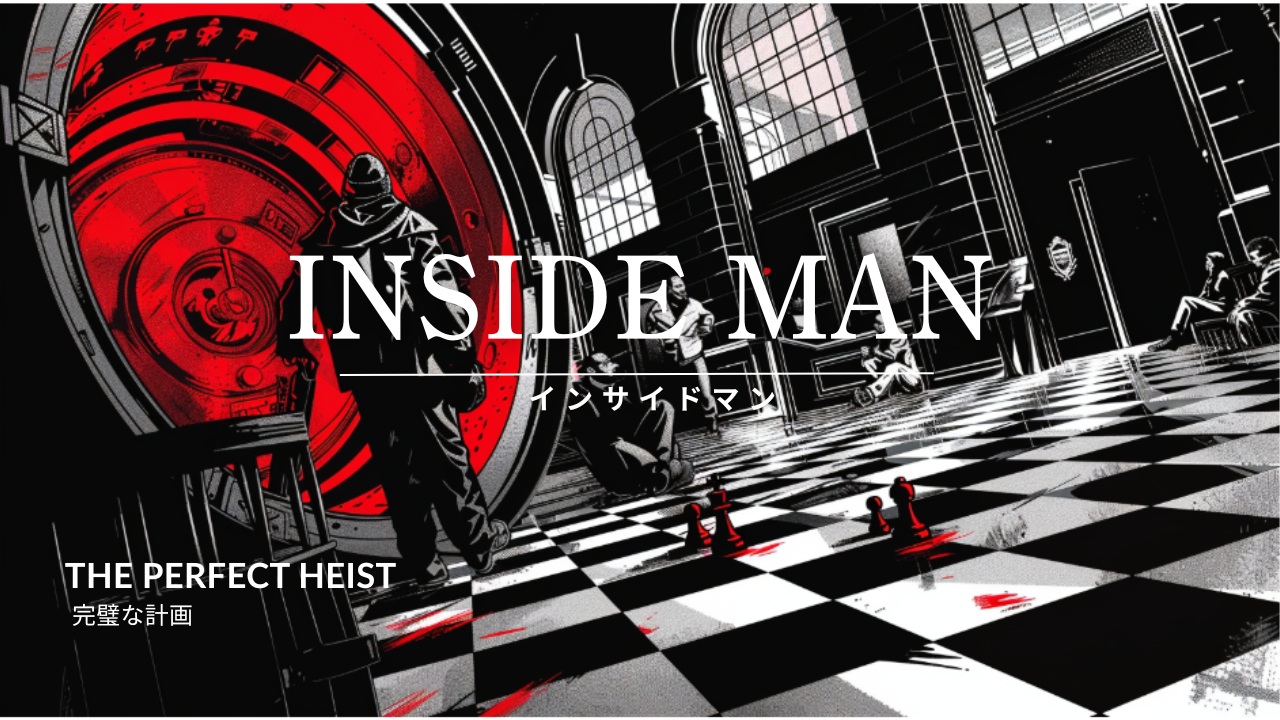
Inside Man is a bank heist film set at a Manhattan branch on Wall Street. But this is not merely a crime thriller. On the surface, it depicts a perfect bank robbery plan and the battle of wits with a sharp detective confronting it, but beneath lies an accusation against dark history that financial institutions have concealed. Just as the Bank of North America was associated with Revolutionary War “blood,” aren’t modern banks also built upon “blood-stained pasts”? Spike Lee poses this heavy question beneath entertainment’s guise.
Earning $184.4 million worldwide box office against a $45 million budget, becoming Spike Lee’s greatest commercial success, the film was also highly praised critically. It achieved 86% approval on Rotten Tomatoes, and the American Film Institute selected it as one of 2006’s top 10 films. The tense psychological warfare woven by the stellar cast of Denzel Washington, Clive Owen, Jodie Foster, and Christopher Plummer, cinematographer Matthew Libatique’s visual mastery, and Terence Blanchard’s jazz score captivate audiences to the end.
Released 224 years after the Bank of North America’s establishment, this film brilliantly highlights banking’s inherent contradiction—while supporting social stability, it can also become a hotbed of injustice and corruption. Watching this intelligent, provocative work on January 7th provides an excellent opportunity to consider the financial system’s history and present.
Basic Information & Synopsis
→ For detailed synopsis and production information, see our Database Article
Director: Spike Lee
Year: 2006
Runtime: 129 minutes
Studio: Universal Pictures, Imagine Entertainment
Commemorative Day: First US Commercial Bank Anniversary (January 7)
Background Knowledge
Script Genesis and Production History
Screenwriter Russell Gewirtz was a former lawyer, and Inside Man was his first original screenplay. He conceived the story while traveling several countries and refined the script over 5 years. The completed 2002 script was purchased by Universal Pictures and Imagine Entertainment, initially planned for direction by Imagine co-founder Ron Howard.
However, when Howard declined due to Russell Crowe requesting him to direct Cinderella Man (2005), Imagine’s other partner Brian Grazer began seeking a new director. After Howard’s departure, Menno Meyjes and Terry George worked on the script, with George particularly adding elements of Nazi Germany and diamond rings.
Ultimately, Grazer approached Spike Lee, whom he had long wanted to collaborate with. Lee himself already knew Gewirtz’s script, stating: “I liked the script and really wanted to do it. Sidney Lumet’s Dog Day Afternoon (1975) is one of my favorite films, and this story is a modern version of such films.”
Connection to Dog Day Afternoon
Spike Lee’s mentioned Dog Day Afternoon (1975) is Sidney Lumet’s masterpiece based on an actual bank robbery. Al Pacino’s protagonist Sonny robs a Brooklyn bank to fund his lover’s sex change operation, but the plan fails, developing into a hostage situation. This film depicted human motivations behind bank robbery and how media and crowds transform incidents into “spectacle.”
Inside Man pays clear homage to Dog Day Afternoon. In fact, Marcia Jean Kurtz, who played a hostage in Dog Day Afternoon, appears in Inside Man as hostage Miriam Douglas. Furthermore, Lionel Pina, who played the pizza delivery man in Dog Day Afternoon, appears in Inside Man as the police officer delivering pizza to the bank entrance. These are “Easter eggs” (hidden details) for film fans.
However, both works’ approaches contrast. Dog Day Afternoon’s protagonist Sonny is an inexperienced, emotional robber, while Inside Man’s Dalton Russell is calm, calculating, controlling everything. Lee inverted Dog Day Afternoon’s chaotic human drama, reconstructing it as an intellectual puzzle.
What Makes It Exceptional
Clever Script Structure
Russell Gewirtz’s screenplay skillfully interweaves multiple timelines. The film alternates between real-time depiction during the incident and post-incident police interrogation scenes of hostages. This structure allows audiences to gradually understand “what happened.” The composition constantly stimulates curiosity to prevent audience satisfaction, effectively using red herrings (misdirection), with everything revealed in a surprising manner at the end.
Outstanding Cast
Denzel Washington plays Detective Keith Frazier as someone bearing the burden of corruption allegations yet confronting the case with sharp insight and wit. His characteristic speech rhythm and cadence, and laughter are fully displayed, with critics praising this as one of his most compelling performances.
Clive Owen’s Dalton Russell is one of the 21st century’s coolest bank robber characters. His calm, calculating demeanor constantly controlling situations creates vivid contrast with the chaotic police side. Despite wearing a mask, Owen expresses the character’s intelligence and confidence through voice tone and body movement alone.
Jodie Foster’s Madeline White radiates commanding presence. As New York power broker manipulating the mayor, threatening Frazier, and dealing with Russell as equal, she embodies the “white-collar criminal” operating outside law. Foster herself stated great joy in playing this character possessing quiet authority and psychological insight.
Christopher Plummer’s Arthur Case leaves intense impression despite brief screen time. The moment he hears bank robbery news, almost imperceptible changes occur in his expression and atmosphere, conveying his understanding of what it means. This subtle performance has been praised as worthy of study as acting textbook.
Terence Blanchard’s Music
Jazz musician and trumpet player Terence Blanchard’s film score marked his 11th collaboration with Lee. Blanchard’s tense jazz score musically expresses New York City’s pulse and the film’s intellectual game.
Opening credits feature “Chaiyya Chaiyya” composed by A. R. Rahman and used in 1998 Hindi film Dil Se.. This choice symbolizes New York’s multiculturalism. End credits use remix version “Chaiyya, Chaiyya Bollywood Joint” with Panjabi MC’s rap lyrics, singing themes of “people from different backgrounds uniting to survive.”
- Inside Man Database – Synopsis & Production Details
- Spike Lee – Filmmaker Profile
- Clive Owen – Actor Profile
はじめに
1782年1月7日、フィラデルフィアでBank of North America(北米銀行)が開業しました。これは米国初の商業銀行として認可された歴史的瞬間であり、独立戦争の混乱期に通貨を安定させ、新生国家の財政基盤を築く役割を担いました。ロバート・モリス(Robert Morris)の主導により設立されたこの銀行は、戦争資金の調達という「血塗られた使命」を背負って誕生しました。その後の米国金融システムの礎となったこの日を記念し、銀行という制度の光と闇を鋭く描いた傑作、スパイク・リー監督の『インサイド・マン』(2006年)を紹介します。
『インサイド・マン』は、ウォール街のマンハッタン支店を舞台にした銀行強盗映画です。しかしこれは単なる犯罪スリラーではありません。表面的には完璧な銀行強盗計画と、それに対峙する敏腕刑事との知恵比べが描かれますが、その奥には、金融機関が隠蔽してきた暗い歴史への告発が潜んでいます。Bank of North Americaが独立戦争という「血」と関連していたように、現代の銀行もまた「血塗られた過去」の上に築かれているのではないか——スパイク・リーは、エンターテインメントの装いの下に、この重い問いを投げかけます。
製作費4,500万ドルに対し、全世界興行収入1億8,440万ドルを記録し、スパイク・リー監督作品として最大の興行的成功を収めた本作は、批評的にも高く評価されました。Rotten Tomatoesでは86%の支持率を獲得し、American Film Instituteは2006年のトップ10映画の一つに選出しています。デンゼル・ワシントン、クライヴ・オーウェン、ジョディ・フォスター、クリストファー・プラマーという豪華キャストが織りなす緊張感あふれる心理戦、撮影監督マシュー・リバティーク(Matthew Libatique)による視覚的な巧みさ、そしてテレンス・ブランチャード(Terence Blanchard)のジャズスコアが、観客を最後まで惹きつけます。
Bank of North Americaの設立から224年後に公開されたこの映画は、銀行という制度が孕む矛盾——社会の安定を支える一方で、不正義や腐敗の温床ともなりうるという二面性——を見事に浮き彫りにしています。1月7日という記念日に、この知的で刺激的な作品を観ることは、金融システムの歴史と現在を考える格好の機会となるでしょう。
基本情報・あらすじ
→ 詳しいあらすじや製作情報はデータベース記事へ
監督: スパイク・リー
製作年: 2006年
上映時間: 129分
制作スタジオ: ユニバーサル・ピクチャーズ、イマジン・エンターテインメント
記念日: 米国初の商業銀行記念日(1月7日)
予備知識
脚本の誕生と製作経緯
脚本家ラッセル・ゲヴィルツ(Russell Gewirtz)は元弁護士で、『インサイド・マン』が初めてのオリジナル脚本でした。彼は数カ国を旅行中にこの物語の着想を得て、5年間かけて脚本を練り上げました。2002年に完成した脚本は、ユニバーサル・ピクチャーズとイマジン・エンターテインメントによって買い取られ、当初はイマジン共同創設者のロン・ハワード(Ron Howard)が監督する予定でした。
しかしハワードが『シンデレラマン』(2005年)の監督をラッセル・クロウに依頼されて辞退したため、イマジンのもう一人のパートナーであるブライアン・グレイザー(Brian Grazer)が新しい監督を探し始めました。ハワードの辞退後、メノ・メイエス(Menno Meyjes)とテリー・ジョージ(Terry George)が脚本に手を加え、特にジョージがナチス・ドイツとダイヤモンドの指輪という要素を追加しました。
最終的にグレイザーは、以前から協力したいと考えていたスパイク・リーに白羽の矢を立てました。リー自身もゲヴィルツの脚本をすでに知っており、「脚本が気に入り、本当にやりたかった。シドニー・ルメット監督の『狼たちの午後』(1975年)は私の大好きな映画の一つで、この物語はそのような映画の現代版だ」と語っています。
『狼たちの午後』との関連
スパイク・リーが言及した『狼たちの午後』(Dog Day Afternoon, 1975年)は、実際の銀行強盗事件を基にしたシドニー・ルメット監督の傑作です。アル・パチーノ演じる主人公ソニーが、恋人の性転換手術の資金を得るためにブルックリンの銀行を襲いますが、計画は失敗し人質事件へと発展します。この映画は、銀行強盗という犯罪行為の背後にある人間的な動機と、メディアと群衆が事件を「スペクタクル」に変えていく様子を描きました。
『インサイド・マン』は、『狼たちの午後』に明確なオマージュを捧げています。実際、『狼たちの午後』で人質役を演じたマーシャ・ジーン・カーツ(Marcia Jean Kurtz)が、『インサイド・マン』でも人質のミリアム・ダグラス役で出演しています。さらに、『狼たちの午後』でピザ配達人役だったライオネル・ピナ(Lionel Pina)も、『インサイド・マン』でピザを銀行の入口に届ける警察官役で出演しています。これらは映画ファンへの「イースターエッグ」(隠された小ネタ)です。
ただし、両作品のアプローチは対照的です。『狼たちの午後』の主人公ソニーは経験不足で感情的な強盗犯ですが、『インサイド・マン』のダルトン・ラッセルは冷静で計算高く、すべてをコントロールします。リーは『狼たちの午後』の混沌とした人間ドラマを反転させ、知的なパズルとして再構築したのです。
優れている点
巧妙な脚本構成
ラッセル・ゲヴィルツの脚本は、複数の時間軸を巧みに織り交ぜています。映画は、事件発生中のリアルタイムの描写と、事件後の警察による人質尋問シーンを交互に見せます。この構造により、観客は「何が起きたのか」を徐々に理解していきます。観客が満足してしまわないよう、常に好奇心を刺激し続ける構成になっており、レッドヘリング(ミスリード)を効果的に使いながら、最後にすべてが驚くべき方法で明らかになります。
卓越した演技陣
デンゼル・ワシントンは、キース・フレイジャー刑事を、汚職疑惑という重荷を背負いながらも、鋭い洞察力と機知で事件に立ち向かう人物として演じています。彼の特徴的な話し方のリズムとカデンツ、そして笑い方が全開で発揮されており、批評家たちは本作を彼の最も魅力的な演技の一つと評価しています。
クライヴ・オーウェンのダルトン・ラッセルは、21世紀の銀行強盗として最もクールなキャラクターの一つです。冷静で計算高く、常に状況をコントロールしている彼の佇まいは、混沌とした警察側と鮮やかな対比を成しています。マスク越しでありながら、オーウェンは声のトーンと身体の動きだけで、キャラクターの知性と自信を表現しています。
ジョディ・フォスターのマデリーン・ホワイトは、映画を支配するような存在感を放っています。ニューヨークの権力ブローカーとして、市長を操り、フレイジャーを脅し、ラッセルと対等に渡り合う彼女は、法の外で動く「ホワイトカラー犯罪者」の典型です。フォスター自身も、静かな権威と心理的な洞察力を持つこのキャラクターを演じることに大きな喜びを感じたと語っています。
クリストファー・プラマーのアーサー・ケースは、わずかな出番ながら強烈な印象を残します。銀行強盗のニュースを聞いた瞬間、彼の表情と雰囲気にほとんど気づかないほどの変化が生じ、それが何を意味するのかを彼が理解したことが伝わります。この微妙な演技は、演技の教科書として研究する価値があると評されています。
テレンス・ブランチャードの音楽
ジャズミュージシャンでトランペット奏者のテレンス・ブランチャード(Terence Blanchard)が作曲した映画音楽は、リーとの11度目のコラボレーションとなりました。ブランチャードの緊張感のあるジャズスコアは、ニューヨークという都市の鼓動と、映画の知的なゲームを音楽的に表現しています。
オープニングクレジットでは、A・R・ラーマン(A. R. Rahman)が作曲し、1998年のヒンディー語映画『Dil Se..』で使用された「Chaiyya Chaiyya」が流れます。この曲の選択は、ニューヨークの多文化性を象徴しています。エンドクレジットでは、パンジャビMC(Panjabi MC)のラップ歌詞を加えたリミックス版「Chaiyya, Chaiyya Bollywood Joint」が使用され、「生き残るために異なる背景を持つ人々が団結する」というテーマを歌っています。
関連記事
- Inside Man データベース – あらすじ・製作情報
- スパイク・リー – 監督プロフィール
- クライヴ・オーウェン – 俳優プロフィール