
Choose Your Language / 言語を選択:
Introduction
January 11th marks the day in 1964 when U.S. Surgeon General Luther Terry released the landmark report “Smoking and Health: Report of the Advisory Committee to the Surgeon General.” This report officially concluded that tobacco causes lung cancer, chronic bronchitis, emphysema, and heart disease, significantly shifting American public health policy.
The report analyzed over 7,000 scientific papers and declared “cigarette smoking is a health hazard of sufficient importance to warrant appropriate remedial action.” The announcement was made on Saturday—to minimize stock market impact—and reported nationwide in Sunday newspapers. This became one of 1964’s top news stories, leading to series of regulatory policies including 1965 Federal Cigarette Labeling and Advertising Act (mandating warning labels) and 1969 Public Health Cigarette Smoking Act (banning TV/radio advertising).
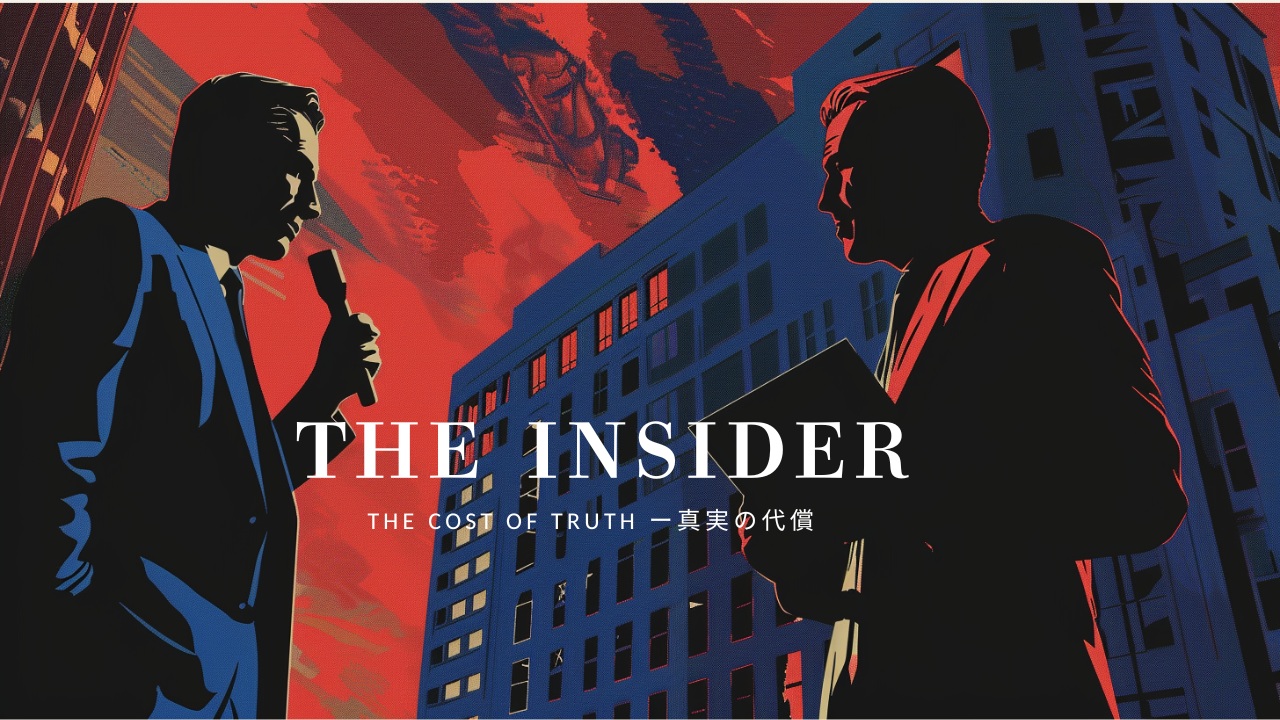
However, I strongly recommend watching Michael Mann’s 1999 film The Insider to commemorate this day. Because despite 1964 report’s official declaration “tobacco is harmful,” tobacco companies continued concealing even more serious truths for 32 years afterward.
While 1964 report declared “tobacco increases lung cancer risk,” tobacco companies continued claiming “smoking is personal choice.” But what former Brown & Williamson Vice President Jeffrey Wigand exposed in 1996 was shocking fact: tobacco companies knew nicotine’s addictiveness yet intentionally manipulated nicotine levels to chemically addict smokers.
This film is masterpiece depicting true story of whistleblower Wigand and CBS ’60 Minutes’ producer Lowell Bergman battling massive tobacco industry and media organization prioritizing corporate interests. Russell Crowe and Al Pacino’s overwhelming performances, Michael Mann’s tension-filled direction, and universal theme “cost of telling truth” elevate this beyond mere documentary into heart-moving suspense.
Watching this film on Surgeon General’s Cigarette Warning Anniversary reminds us that 1964’s declaration was beginning, and battle to reveal truth continues today.
Basic Information & Synopsis
→ For detailed synopsis and production information, see our Database Article
Director: Michael Mann
Year: 1999
Runtime: 157 minutes
Production: Touchstone Pictures, Forward Pass Pictures
Commemorative Day: Surgeon General’s Cigarette Warning Anniversary (January 11)
Background Knowledge
1964 Surgeon General’s Report—And Subsequent Concealment
On January 11, 1964, Surgeon General Luther Terry released advisory committee report established at President John F. Kennedy’s request. Report involved meetings with over 150 consultants from November 1962 to January 1964, analyzing over 7,000 scientific papers on smoking and health.
Report’s main conclusions:
- Cigarette smoking is cause of male lung cancer and laryngeal cancer
- Cigarette smoking is probable cause of female lung cancer
- Cigarette smoking is most important cause of chronic bronchitis
- Male smokers have higher coronary disease mortality than non-smokers
Report was intentionally released on Saturday—to prevent stock market crash like when mouse experiment results were announced in December 1953.
The December 1953 mouse experiment was groundbreaking research by Washington University School of Medicine’s Ernest Wynder, Evarts Graham, Adele Croninger. They collected tobacco tar using “smoking apparatus,” dissolved it in acetone, applied it to mice backs three times weekly. Within one year of experiment start, 59% of 81 mice developed papilloma, 44.4% developed squamous cell carcinoma.
This experiment was first laboratory confirmation of smoking-lung cancer connection. Dr. Graham stated in Time magazine November 30, 1953: “This conclusively shows there is something in tobacco smoke that causes cancer. This is no longer merely possibility. Our experiments proved it beyond doubt.”
This announcement severely shocked stock market, tobacco stocks plummeted. The 1964 Surgeon General report’s Saturday release was lesson learned from this experience.
Report made newspaper front pages, became top TV news story.
However, report had important limitation. Regarding nicotine addiction, committee argued “tobacco habit should be characterized as habituation, not addiction.” This was because nicotine addiction wasn’t fully understood yet, and disagreement existed over “addiction” definition.
Furthermore, committee members were selected excluding people tobacco companies had veto power over, half smokers, half non-smokers. And people who publicly stated tobacco was harmful couldn’t participate in committee. Committee was, so to speak, “innocent jury.”
Tobacco companies’ response was swift and cunning. They didn’t deny report, instead continued claiming “scientific debate continues” and “smoking is personal choice.” Behind scenes, they continued chemical manipulation to maximize nicotine addiction.
Jeffrey Wigand—Whistleblower’s Background
Jeffrey Stephen Wigand (born December 17, 1942) was born in New York City, raised in Bronx and Pleasant Valley. After brief military service in Vietnam, earned master’s and doctorate in biochemistry from University at Buffalo.
Before working at Brown & Williamson, Wigand worked at healthcare companies including Pfizer, Johnson & Johnson. His ideal was Johnson & Johnson CEO James Burke. Burke, when some Tylenol products found contaminated with poison in 1982, recalled all Tylenol nationwide and developed safety caps.
Wigand joined Brown & Williamson as R&D Vice President in January 1989. His mission was developing “safer cigarettes.” But what company actually wanted was chemical manipulation increasing nicotine addiction.
On March 24, 1993, Wigand was fired. According to him, he was fired as whistleblower for reporting use of additives containing coumarin, carcinogenic substance.
Lowell Bergman—Journalist’s Mission
Lowell Bergman is legendary producer of CBS ’60 Minutes.’ He teamed with Mike Wallace on many important investigative reports. Bergman’s philosophy was straightforward: report truth. At any cost.
Bergman portrayed by Al Pacino in film is persistent, stubborn, idealistic. He visits Wigand repeatedly to persuade him, promises protecting his family, and ultimately when CBS refuses broadcast, leaks to New York Times to expose truth.
However, some controversy exists about actual Bergman. According to Brill’s Content article, film portrays Bergman overly heroically; Mike Wallace had more fighting spirit, Don Hewitt wasn’t succumbing to corporate pressure but powerless. Also, Wall Street Journal reporting was independent, not manipulated by Bergman.
Nevertheless, essence film depicts—journalists fighting for truth, corporate interests attempting to suppress truth—is fact.
Source Article—Marie Brenner’s “The Man Who Knew Too Much”
Film is based on influential article “The Man Who Knew Too Much” written by journalist Marie Brenner in Vanity Fair’s May 1996 issue.
Marie Brenner (born December 15, 1949) is prominent American investigative journalist, longtime Vanity Fair correspondent. Earned BFA from University of Texas at Austin, MFA from NYU Film School.
Brenner became first female baseball columnist covering American League at Boston Herald in 1979, traveling with Boston Red Sox. Worked as New York magazine editor 1980-1984, covering Prince Charles and Princess Diana’s Royal Wedding. Joined Vanity Fair as correspondent in 1984, became New Yorker staff writer in 1992, returned to Vanity Fair as special correspondent in 1995.
“The Man Who Knew Too Much” reporting took several months. Brenner interviewed Wigand and Bergman repeatedly, investigated CBS internal events in detail. Her article vividly depicted tobacco industry concealment, CBS succumbing to corporate pressure, and Wigand’s personal sacrifice.
This article was filmed as The Insider in 1999, earning 7 Academy Award nominations. Brenner’s investigative journalism continued; in 2012 she wrote “Marie Colvin’s Private War” about war correspondent Marie Colvin, also filmed as A Private War (2018, starring Rosamund Pike).
Also in 1997, she wrote “American Nightmare: The Ballad of Richard Jewell” about security guard Richard Jewell, falsely suspected after being praised as hero in 1996 Atlanta Olympics bombing, filmed as Richard Jewell (2019) by Clint Eastwood.
What Makes It Exceptional
Russell Crowe’s Overwhelming Performance—Whistleblower’s Anguish
Russell Crowe portrays Jeffrey Wigand not as perfect hero but as flawed ordinary human. Wigand is stubborn, unfriendly, sometimes unpleasant. But he’s torn between conscience and family, anguished.
Crowe gained weight for role, thinned hair, perfectly recreated Wigand’s distinctive speech patterns. His performance is internal, delicate, painfully real.
One most impressive scenes is Wigand handling daughter’s asthma attack. He calmly, efficiently, lovingly provides emergency care while explaining situation to daughter. This scene shows Wigand loves family above all, how tragic losing family by telling truth is.
Crowe earned Academy Award Best Actor nomination for this role (though lost, won next year for Gladiator).
Michael Mann’s Direction—Quiet Tension
Michael Mann transformed The Insider’s “quiet war” of legal battles and corporate conspiracy into breathtaking suspense. He builds tension using long takes, natural light, minimal music.
Cinematographer Dante Spinotti used 35mm film creating documentary-style realism. Lighting is natural, camerawork restrained. Music is meditative score by Lisa Gerrard and Peter Gabriel, adding depth to scenes.
One most impressive visual moments is Wigand looking up at Brown & Williamson building. Building is dark, only legal department on 10th floor brightly lit. “Up there, they’re screwing my life,” Wigand mutters. This scene perfectly visually expresses individual vs giant corporation structure.
Script—Complex Ethical Dilemma
Eric Roth and Michael Mann’s script transcends simple good vs evil story. Wigand isn’t perfect hero. He originally worked at tobacco company, answered ad “recruiting scientists without conscience.” Bergman is also accused of manipulating Wigand, exposing him to danger.
CBS executives aren’t simple villains either. They faced reality of billion-dollar litigation risk and sale to Westinghouse.
Film raises ethical dilemma: “Telling truth is right, but who pays the cost?” Wigand lost family. Bergman lost part of career. But their actions ultimately led to protecting public health.
The Significance of 157 Minutes—Sustained Tension Without a Single Wasted Moment
The Insider runs 157 minutes, yet Michael Mann’s direction ensures not a single moment feels unnecessary. This is thriller where “single phone call” becomes edge-of-your-seat suspense.
Mann transforms seemingly mundane scenes into gripping drama. Wigand checking mailbox becomes terrifying. Bergman making phone calls becomes intense negotiation. Hotel room conversation becomes psychological warfare.
Most remarkable is how Mann makes “talking” thrilling. No car chases, no explosions, no gunfights—yet audience remains captivated for 157 minutes. The weapon isn’t gun but information. The battlefield isn’t street but boardroom, newsroom, courtroom.
Phone conversation between Bergman and CBS legal department becomes as tense as any action sequence. Wigand’s deposition testimony becomes as dramatic as courtroom climax. These are moments where words carry life-or-death weight.
Mann proves that true suspense comes not from explosions but from stakes. When everything—family, career, truth, justice—hangs in balance, even “Hello” on phone becomes loaded with tension.
For action film fans skeptical of “quiet suspense,” The Insider demonstrates that sometimes most thrilling battles are fought with words, not weapons. 157 minutes fly by because every moment matters.
Related Articles
- The Insider Database – Synopsis & Production Details
- Michael Mann – Filmmaker Profile
はじめに
1月11日は、1964年にアメリカ公衆衛生総監ルーサー・テリーが画期的な報告書『喫煙と健康:公衆衛生総監諮問委員会報告書』を発表した日です。この報告書は、たばこが肺がん、慢性気管支炎、肺気腫、心臓病の原因であると公式に結論づけ、アメリカの公衆衛生政策を大きく転換させました。
報告書は7,000以上の科学論文を分析し、「たばこ喫煙は、適切な是正措置を講じるに足る重大な健康被害である」と宣言しました。発表は土曜日に行われ——株式市場への影響を最小限にするため——翌日の日曜日の新聞で全米に報道されました。これは1964年のトップニュースの一つとなり、1965年の連邦たばこ表示広告法(警告ラベル義務化)、1969年の公衆衛生たばこ喫煙法(テレビ・ラジオ広告禁止)など、一連の規制政策につながりました。
しかし、この記念日に観るべき作品として、マイケル・マン監督が1999年に制作した『インサイダー』(The Insider)を強く推奨します。なぜなら、1964年の報告書が「たばこは有害」と公式宣言したにもかかわらず、たばこ会社はその後32年間、さらに深刻な真実を隠蔽し続けていたからです。
1964年の報告書は「たばこは肺がんのリスクを高める」と宣言しましたが、たばこ会社は「喫煙は個人の選択だ」と主張し続けました。しかし、1996年にブラウン&ウィリアムソン社の元副社長ジェフリー・ワイガンドが暴露したのは、たばこ会社がニコチンの依存性を知りながら、意図的にニコチンレベルを操作して、喫煙者を化学的に依存させていたという衝撃的な事実でした。
この映画は、内部告発者ワイガンドと、CBS『60ミニッツ』のプロデューサー、ローウェル・バーグマンが、巨大なたばこ産業と、企業利益を優先するメディア組織と戦った実話を描いた傑作です。ラッセル・クロウとアル・パチーノの圧倒的な演技、マイケル・マンの緊張感溢れる演出、そして「真実を語ることの代償」という普遍的なテーマが、この映画を単なるドキュメンタリー的作品以上の、心を揺さぶるサスペンスに昇華させています。
公衆衛生総監たばこ有害宣言記念日にこの映画を観ることは、1964年の宣言が始まりであり、真実を明らかにするための戦いは今も続いていることを思い起こさせてくれるでしょう。
基本情報・あらすじ
→ 詳しいあらすじや製作情報はデータベース記事へ
監督: マイケル・マン
製作年: 1999年
上映時間: 157分
制作: タッチストーン・ピクチャーズ、フォワード・パス・ピクチャーズ
記念日: 米国公衆衛生局長官のタバコ有害宣言記念日(1月11日)
予備知識
1964年公衆衛生総監報告書——そしてその後の隠蔽
1964年1月11日、公衆衛生総監ルーサー・テリー博士は、ジョン・F・ケネディ大統領の要請で設立された諮問委員会の報告書を発表しました。報告書は、1962年11月から1964年1月まで150人以上のコンサルタントとの会議を重ね、喫煙と健康に関する7,000以上の科学論文を分析しました。
報告書の主な結論:
- たばこ喫煙は、男性の肺がんおよび喉頭がんの原因である
- たばこ喫煙は、女性の肺がんの原因である可能性が高い
- たばこ喫煙は、慢性気管支炎の最も重要な原因である
- 男性喫煙者は、非喫煙者よりも冠動脈疾患による死亡率が高い
報告書は、意図的に土曜日に発表されました——1953年12月にマウス実験の結果が発表されたときのような株式市場の暴落を防ぐためです。
1953年12月のマウス実験とは、ワシントン大学医学部のアーネスト・ワインダー、エバーツ・グラハム、アデル・クロニンジャーによる画期的な研究でした。彼らは、「喫煙装置」を使ってたばこのタールを収集し、アセトンに溶かして、週3回マウスの背中に塗布しました。実験開始から1年以内に、81匹のマウスのうち59%が乳頭腫を発症し、44.4%が皮膚の扁平上皮がんを発症しました。
この実験は、喫煙と肺がんの関連を実験室で初めて確認したものでした。グラハム博士は1953年11月30日のタイム誌で「これは、たばこの煙の中に、がんを引き起こす何かがあることを決定的に示しています。これはもはや単なる可能性ではありません。私たちの実験は、疑いなくそれを証明しました」と述べました。
この発表は、株式市場に大きな衝撃を与え、たばこ株が急落しました。1964年の公衆衛生総監報告書の発表が土曜日に行われたのは、この経験から学んだ教訓でした。
報告書は、新聞の一面を飾り、テレビニュースのトップストーリーとなりました。
しかし、報告書には重要な限界がありました。ニコチンの依存性について、委員会は「たばこの習慣は、依存症(addiction)ではなく、習慣化(habituation)と特徴づけるべきだ」と主張しました。これは、ニコチンの依存性がまだ完全には理解されていなかったこと、そして「依存症」の定義をめぐる意見の相違があったためです。
さらに、委員会のメンバーは、たばこ会社が拒否権を持つ人物を除外して選ばれ、半数は喫煙者、半数は非喫煙者でした。そして、すでに公にたばこが有害だと述べていた人物は委員会に参加できませんでした。委員会は、いわば「無垢な陪審員」でした。
たばこ会社の反応は素早く、そして狡猾でした。彼らは、報告書を否定せず、代わりに「科学的論争はまだ続いている」「喫煙は個人の選択だ」と主張し続けました。そして、その裏で、ニコチンの依存性を最大化するための化学操作を続けていたのです。
ジェフリー・ワイガンド——内部告発者の経歴
ジェフリー・スティーブン・ワイガンド(1942年12月17日生まれ)は、ニューヨーク市で生まれ、ブロンクスとプレザント・バレーで育ちました。ベトナムでの短期間の軍務の後、バッファロー大学で生化学の修士号と博士号を取得しました。
ブラウン&ウィリアムソンで働く前、ワイガンドはファイザー、ジョンソン・エンド・ジョンソンなどの医療関連企業で働いていました。彼の理想は、ジョンソン・エンド・ジョンソンのCEOジェームズ・バークでした。バークは、1982年にタイレノールの一部が毒物混入されたことが判明したとき、全米のすべてのタイレノール製品を店舗から回収し、安全キャップを開発した人物です。
ワイガンドは1989年1月にブラウン&ウィリアムソンの研究開発部門副社長として入社しました。彼の使命は、「より安全なたばこ」を開発することでした。しかし、会社が実際に求めていたのは、ニコチンの依存性を高める化学操作でした。
1993年3月24日、ワイガンドは解雇されました。彼によれば、クマリン(coumarin)という発がん性物質を含む添加物を使用していることを報告したため、内部告発者として解雇されたとのことです。
ローウェル・バーグマン——ジャーナリストの使命
ローウェル・バーグマンは、CBS『60ミニッツ』の伝説的なプロデューサーです。彼は、マイク・ウォレスと組んで、多くの重要な調査報道を手がけてきました。バーグマンの哲学は単純明快でした:真実を報道すること。どんな代償を払っても。
映画でアル・パチーノが演じるバーグマンは、粘り強く、頑固で、理想主義的です。彼は、ワイガンドを説得するために何度も訪問し、彼の家族を守ることを約束し、そして最終的に、CBSが放送を拒否したとき、ニューヨーク・タイムズにリークすることで、真実を世に出しました。
しかし、実際のバーグマンについては、いくつかの論争があります。ブリルズ・コンテント誌の記事によれば、映画はバーグマンを過度に英雄的に描いており、マイク・ウォレスはもっと闘志があり、ドン・ヒューイットは企業圧力に屈したのではなく無力だった、とのことです。また、ウォール・ストリート・ジャーナルの報道は、バーグマンが操作したものではなく独立したものでした。
とはいえ、映画が描く本質——ジャーナリストが真実のために戦い、企業利益が真実を抑圧しようとした——は事実です。
原作記事——マリー・ブレナー『知りすぎていた男』
映画は、ジャーナリストのマリー・ブレナーが1996年5月号のヴァニティ・フェア誌に執筆した『知りすぎていた男』(The Man Who Knew Too Much)という影響力のある記事に基づいています。
マリー・ブレナー(1949年12月15日生まれ)は、アメリカの著名な調査報道ジャーナリストで、ヴァニティ・フェア誌の特派員として長年活躍しています。テキサス大学オースティン校で美術学士号、ニューヨーク大学映画学校で修士号を取得しました。
ブレナーは、1979年にボストン・ヘラルド紙でアメリカンリーグを担当する初の女性野球コラムニストとなり、ボストン・レッドソックスと共に遠征しました。1980年から1984年まで『ニューヨーク』誌の編集者として働き、チャールズ皇太子とダイアナ妃のロイヤル・ウェディングを取材しました。1984年にヴァニティ・フェアに特派員として参加し、1992年にニューヨーカー誌のスタッフライターとなりましたが、1995年にヴァニティ・フェアに特別寄稿者として復帰しました。
『知りすぎていた男』の取材には数ヶ月を要しました。ブレナーは、ワイガンドとバーグマンに何度もインタビューし、CBS内部の出来事を詳細に調査しました。彼女の記事は、たばこ産業の隠蔽、CBSの企業圧力への屈服、そしてワイガンドの個人的な犠牲を鮮明に描き出しました。
この記事は、1999年に『インサイダー』として映画化され、アカデミー賞7部門にノミネートされました。ブレナーの調査報道ジャーナリズムは、その後も続き、2012年には戦場ジャーナリスト、マリー・コルヴィンについての記事『マリー・コルヴィンの個人的な戦争』を執筆し、これも2018年に映画『プライベート・ウォー』(ロザムンド・パイク主演)として映画化されました。
また、1997年には、1996年のアトランタオリンピック爆破事件で英雄として称賛された後、誤って容疑者とされた警備員リチャード・ジュエルについての記事『アメリカの悲劇:リチャード・ジュエルのバラード』を執筆し、これも2019年にクリント・イーストウッド監督によって『リチャード・ジュエル』として映画化されました。
優れている点
ラッセル・クロウの圧倒的な演技——内部告発者の苦悩
ラッセル・クロウは、ジェフリー・ワイガンドを、完璧な英雄としてではなく、欠点だらけの普通の人間として演じています。ワイガンドは、頑固で、不愛想で、時に不快です。しかし、彼は良心と家族の間で引き裂かれ、苦悩します。
クロウは、役作りのために体重を増やし、髪を薄くし、ワイガンドの独特な話し方を完璧に再現しました。彼の演技は、内面的で、繊細で、そして痛々しいほどリアルです。
最も印象的なシーンの一つは、ワイガンドが娘の喘息発作に対処するシーンです。彼は冷静に、効率的に、愛情を持って応急処置を施しながら、娘に状況を説明します。このシーンは、ワイガンドが何よりも家族を愛していること、そして彼が真実を語ることで家族を失うことがどれほど悲劇的かを示しています。
クロウは、この役でアカデミー賞主演男優賞にノミネートされました(受賞は逃しましたが、翌年『グラディエーター』で受賞)。
マイケル・マンの演出——静かな緊張感
マイケル・マンは、『インサイダー』を、法廷闘争と企業の陰謀という「静かな戦争」を、息をのむようなサスペンスに変えました。彼は、長いテイク、自然光、そして最小限の音楽を使って、緊張感を構築します。
撮影監督ダンテ・スピノッティは、35mmフィルムを使用し、ドキュメンタリー風の現実感を作り出しました。照明は自然で、カメラワークは控えめです。音楽は、リサ・ジェラルドとピーター・ゲイブリエルの瞑想的なスコアで、シーンに深みを加えます。
最も印象的な視覚的瞬間の一つは、ワイガンドがブラウン&ウィリアムソンのビルを見上げるシーンです。ビルは暗く、10階の法務部だけが明るく照らされています。「あそこで、彼らは私の人生をめちゃくちゃにしている」とワイガンドはつぶやきます。このシーンは、個人vs巨大企業という構図を視覚的に完璧に表現しています。
脚本——複雑な倫理的ジレンマ
エリック・ロスとマイケル・マンの脚本は、単純な善vs悪の物語を超えています。ワイガンドは完璧な英雄ではありません。彼は、元々たばこ会社で働き、「良心のない科学者募集」という広告に応えた人物です。バーグマンも、ワイガンドを操作し、彼を危険に晒したと非難されます。
CBS経営陣も、単純な悪役ではありません。彼らは、数十億ドルの訴訟リスクと、ウェスティングハウスへの売却という現実的な問題に直面していました。
映画は、「真実を語ることは正しいが、その代償は誰が払うのか?」という倫理的ジレンマを提起します。ワイガンドは家族を失いました。バーグマンはキャリアの一部を失いました。しかし、彼らの行動は、最終的に公衆衛生を守ることにつながりました。
157分という長さの意義——一瞬も無駄のない緊張感の持続
『インサイダー』は157分の長尺ですが、マイケル・マンの演出によって、一瞬も不要と感じさせない作品です。これは、「電話一本」が手に汗握るサスペンスになるスリラーです。
マンは、一見平凡なシーンを緊迫したドラマに変えます。ワイガンドが郵便受けをチェックするシーンが恐怖になります。バーグマンが電話をかけるシーンが激しい交渉になります。ホテルの部屋での会話が心理戦になります。
最も注目すべきは、マンが「会話」をスリリングにすることです。カーチェイスも、爆発も、銃撃戦もありません——しかし観客は157分間、釘付けになります。武器は銃ではなく情報です。戦場は路上ではなく、役員室、ニュースルーム、法廷です。
バーグマンとCBS法務部の電話でのやり取りは、どんなアクションシーンにも匹敵する緊張感があります。ワイガンドの証言録取は、法廷のクライマックスと同じくらいドラマティックです。これらは、言葉が生死の重みを持つ瞬間です。
マンは証明しています:真のサスペンスは爆発からではなく、賭けられているものから生まれると。すべて——家族、キャリア、真実、正義——が天秤にかかっているとき、電話での「もしもし」さえも緊張に満ちたものになります。
「静かなサスペンス」に懐疑的なアクション映画ファンにとって、『インサイダー』は証明しています:時に最もスリリングな戦いは、武器ではなく言葉で戦われることを。157分はあっという間です——すべての瞬間が重要だからです。
関連記事
- The Insider データベース – あらすじ・製作情報
- マイケル・マン – 監督プロフィール