
Basic Info / 基本情報
|
English |
日本語 |
|---|---|
|
Director |
Hayao Miyazaki / 宮崎駿 |
|
Year |
1997 |
|
Running Time |
134 min (2h 14m) |
|
Genre |
Animated Fantasy / アニメーション・ファンタジー |
|
Production |
Studio Ghibli / スタジオジブリ |
|
Box Office |
¥11.3 billion (Japan 1998) / $231.3 million (Worldwide cumulative as of 2026) |
Synopsis / あらすじ
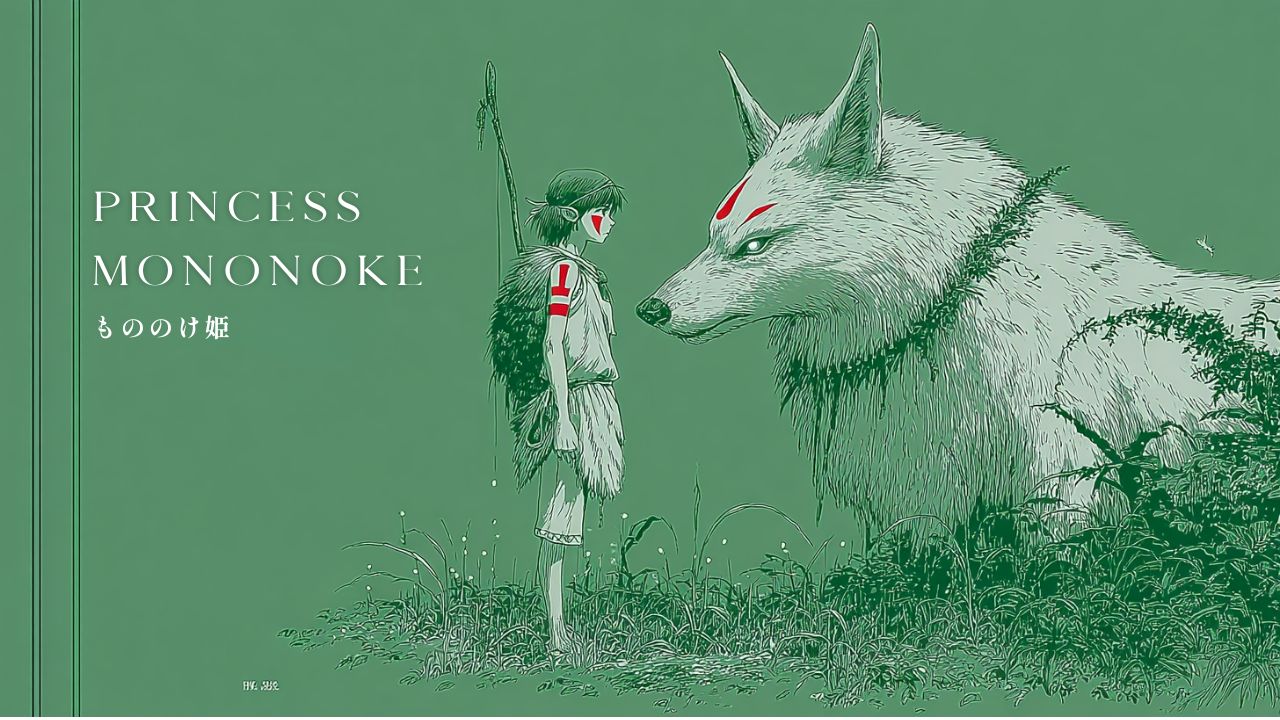
[English] Ashitaka, a young prince of the Emishi people, is struck by a dying boar god’s curse while defending his village—a deadly affliction that forces him to travel west to find its origin and a potential remedy. His journey leads him to Irontown, an industrial settlement run by Lady Eboshi, who is cutting down the ancient forest to mine iron and forge advanced firearms. There, he encounters San, a young woman raised by wolves who fights alongside the furious forest gods to halt the human encroachment. Caught between the expanding ironworks and the increasingly desperate spirits of the wild, Ashitaka strives to find a path of coexistence, seeking to see the conflict with “eyes unclouded by hate.” Overseeing this volatile balance is the Deer God, the forest’s supreme guardian who holds absolute dominion over life and death.
[日本語訳] エミシの村の若き王子アシタカは、故郷を守る戦いの最中、死にゆく猪神から致命的な呪いを受けてしまいます。その呪いを解く手がかりを求め、遥か西へと旅立った彼は、エボシ御前が統治する要塞のような製鉄集落「タタラ場」へと辿り着きます。そこでは、鉄を護り武器を作るために原生林を切り開く人間たちと、聖域を守るために激しい逆襲を試みる山犬の娘サン、そして森の神々との壮絶な戦いが繰り広げられていました。急速に拡大する産業と、追い詰められて狂暴化する大自然の狭間で、アシタカは双方に破滅をもたらす憎しみの連鎖を断ち切るため、「曇りなき眼で見定め」る道を模索します。生と死のすべてを司る森の主シシ神が、その調停の行方を静かに見つめています。
Cast & Crew / スタッフ・出演
|
Role |
English |
日本語 |
|---|---|---|
|
Director / 監督 |
Hayao Miyazaki |
宮崎駿 |
|
Screenplay / 脚本 |
Hayao Miyazaki |
宮崎駿 |
|
Producer / プロデューサー |
Toshio Suzuki |
鈴木敏夫 |
|
Cinematography / 撮影 |
Atsushi Okui |
奥井敦 |
|
Music / 音楽 |
Joe Hisaishi |
久石譲 |
|
Editing / 編集 |
Takeshi Seyama |
瀬山武司 |
|
Distribution / 配給 |
Toho (Japan), Miramax / Disney (International) |
東宝(日本)、ミラマックス/ディズニー(国際) |
|
Voice Cast / 声の出演 |
Yôji Matsuda (Ashitaka) |
松田洋治(アシタカ) |
|
Yuriko Ishida (San / Princess Mononoke) |
石田ゆり子(サン/もののけ姫) |
|
|
Yûko Tanaka (Lady Eboshi) |
田中裕子(エボシ御前) |
|
|
Kaoru Kobayashi (Jigo) |
小林薫(ジコ坊) |
|
|
Masahiko Nishimura (Kohroku) |
西村雅彦(甲六) |
|
|
Tsunehiko Kamijô (Gonza) |
上條恒彦(ゴンザ) |
|
|
Sumi Shimamoto (Toki) |
島本須美(トキ) |
|
|
Akira Nagoya (Okkoto) |
名古屋章(乙事主) |
|
|
Mitsuko Mori (Hii-sama) |
森光子(ヒイ様) |
|
|
Akihiro Miwa (Moro no Kimi) |
美輪明宏(モロの君) |
Additional Information / 追加情報
Awards / 受賞歴
- Japan Academy Film Prize / 日本アカデミー賞 (1998) – 1 win:
- Picture of the Year(優秀作品賞) – WON
- Mainichi Film Awards / 毎日映画コンクール (1998) – 3 wins:
- Best Film – WON
- Best Animation Film – WON
- Japanese Movie Fans’ Choice – WON
- Kinema Junpo (1997):批評家選出ランキング2位、読者選出1位・読者選出最優秀監督賞(宮崎駿)
- Japan Media Arts Festival / 日本メディア芸術祭 第1回 (1997) – 1 win:
- Grand Prize in Animation – WON
- Japan Record Awards / 日本レコード大賞 (1997) – 2 wins:
- Best Composer – WON(久石譲)
- Best Album Production – WON(もののけ姫サウンドトラック)
- Annie Awards (2000) – 1 nomination:
- Outstanding Individual Achievement for Directing – nomination (Hayao Miyazaki)
- Saturn Awards (2001) – 1 win:
- Best Home Video Release – WON
- 日本アカデミー賞外国語映画賞選考: 第70回アカデミー賞の外国語映画賞に日本代表として出品されたが、ノミネートには至らなかった
- 興行記録: 公開から約1年半で国内観客動員1420万人超、国内興収¥113億を達成し当時の日本映画歴代最高記録を樹立(後に『千と千尋の神隠し』に更新)
Critical Reception / 批評的評価
- Rotten Tomatoes: 93% (Critics), 96% (Audience)
- Metacritic: 76/100
- IMDb: 8.3/10
- 公開時に日本映画の歴代最高興行収入を更新し、ジブリ——そして宮崎駿——の国際的な映画作家としての地位を決定的に確立した
- 西洋の映画批評の文脈では、ディズニーのアニメーション映画との比較で語られることが多かったが、本作が問う道徳的複雑さはその比較を無効にするものと広く認識された
- 「エボシ御前が悪役ではない」という映画の根本的な選択——自然の敵でありながら、ハンセン病患者や遊女を受け入れた解放者でもある——が批評的に最も論じられた点
- 久石譲のスコアは映画の壮大さと細部の感情を同時に支えるものとして高く評価された
- 国際版の英語吹き替えはミラマックスがニール・ゲイマンの脚色で制作——ビリー・クラダップ(アシタカ)、クレア・デインズ(サン)、ミニー・ドライヴァー(エボシ)、ビリー・ボブ・ソーントン(ジコ坊)、ジレイン・アンダーソン(モロ)らが参加。米国の劇場公開では$230万の興収にとどまった
- ハーヴェイ・ワインスタインはクエンティン・タランティーノに脚色を打診、タランティーノがゲイマンを推薦したとされる——ゲイマンは雨に濡れる石のシーンを見て「これまで見たことのないものだ、本物の映画制作だ」と出演を決意した
- 2025年3月のIMAX再上映(4Kリマスター版)で北米興収$680万を追加記録、世界累計$2313万(2026年2月時点)
- Sight & Sound: “One of the greatest animated films — and simply one of the greatest films — ever made”
- The New York Times: “As visually breathtaking as any movie ever made”
- Roger Ebert.com: ★★★★ “A great achievement… It respects its audience and tells a story of consequence”
- The Guardian: ★★★★★ “A masterpiece of world cinema”
- 環境倫理・先住民族の権利・産業化と自然保護をめぐる議論において最も頻繁に引用されるアニメーション映画
Box Office Performance / 興行成績
- Japan Domestic (1998): ¥11.3 billion(国内観客動員約1420万人——日本の人口の約10分の1)
- US Box Office: $2.3 million(1999年米国公開、ミラマックスによる限定公開)
- Worldwide Cumulative (2026年2月): $231.3 million(劇場・ホームメディア累計)
- Production Budget: ¥2.35 billion(当時の日本アニメ史上最高製作費)
- 公開: 1997年7月12日(日本)、1998年2月(ベルリン映画祭)、1999年10月(米国劇場公開)
- Performance Analysis:
- 公開1週間で100万人動員・¥15億の興収——「もののけ現象」と報道された
- 日本の国内興収記録を更新し続け、公開から約1年半でE.T.の記録を破って日本映画歴代1位に
- 宣伝費は製作費を上回る¥26億以上——当時の日本映画史上最大の広告キャンペーン
- 2025年IMAX再上映(4K)で北米$680万を追加記録
Related Review / 関連レビュー
🔗 English Review
・[International Day for Biological Diversity] The Wisdom of Mountain and Forest Gods—Reverence for Nature and the Art of Coexistence
🔗 日本語レビュー
・【生物多様性の日】山と森の神々が教える自然への畏敬と共生の知恵