
Choose Your Language / 言語を選択:
Introduction
Badly Is Fine — a Life of Poetry That Begins with Just Trying to Write
August 18 is designated in the English-speaking world as “Bad Poetry Day.” It is a commemorative day full of playfulness, one for setting aside for a moment the pressure to write good poetry and daring to write bad poetry — and thoroughly bad poetry at that — and enjoy it. The origin of this day is not clear, but the theory that it was conceived by Tom and Ruth Roy of Wellcat Holidays, who have created many unique commemorative days, is known. It is a relaxed day, on which a joking way of spending it is proposed — as revenge for having been made to read “good poems” at school, friends write terrible poems for one another and send them off to their old teachers.
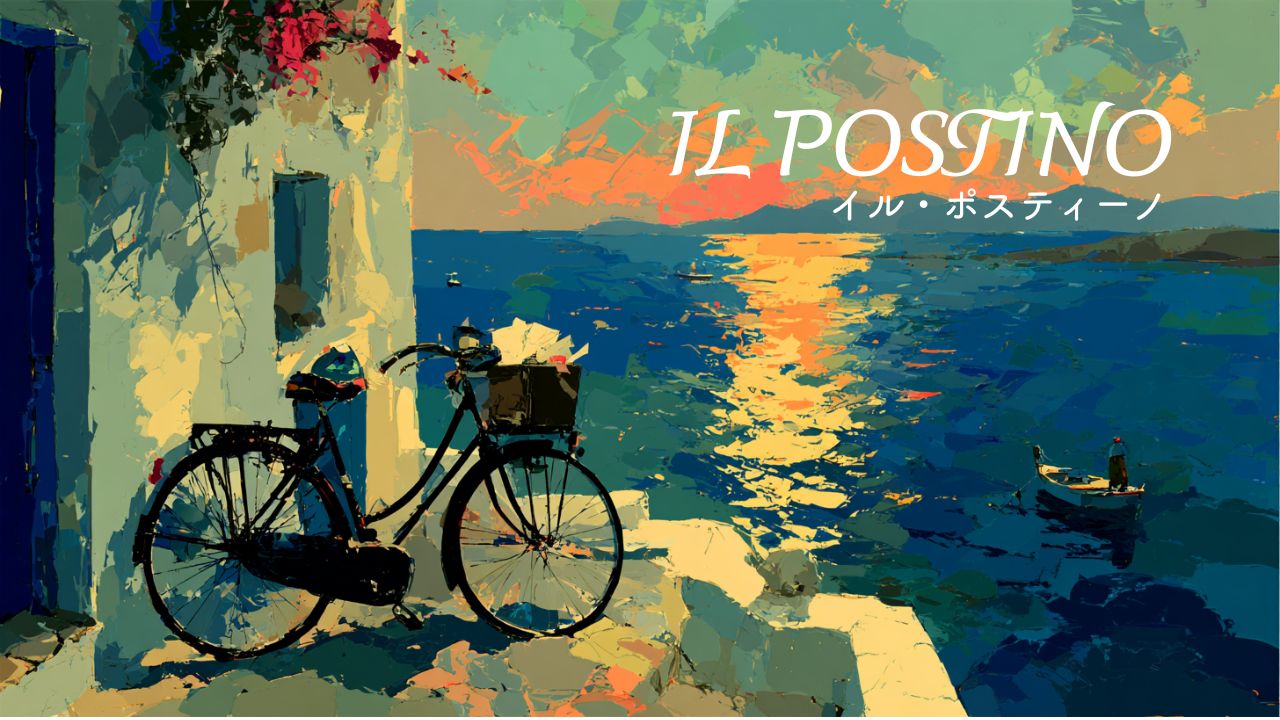
What we would like to introduce on this day is the 1994 Italian film Il Postino. This work by director Michael Radford may, at first glance, seem to be a film of beautiful, refined poetry — the very opposite of “Bad Poetry Day.” But the road that this film’s protagonist Mario travels is precisely what teaches us the preciousness of “just trying to write, badly is fine.”
The protagonist of the story is an ordinary young man of an island who, though he can barely read letters, has never in his life had any connection with poetry. He meets a world-famous great poet and, imitating what he sees, haltingly begins his own attempts at poetry. That first step was by no means skillful. Even so, he rolls words around in his clumsy way, wrings out metaphors, and struggles to set his love upon poetry. The spirit of “Bad Poetry Day” lies in not seeking perfection but first trying to express. Mario’s steps are that spirit itself.
Please savor this work — the last film of lead actor Massimo Troisi and a nominee in five Academy Award categories — on this very day of “you don’t have to write well.”
Basic Information & Synopsis
→ For synopsis and production information, see our Database Article
Director: Michael Radford
Year: 1994
Runtime: 108 minutes
Production: Cecchi Gori Group / Miramax
Commemorative Day: Bad Poetry Day (August 18)
Background Knowledge
The Real Poet Pablo Neruda
Pablo Neruda (1904–1973), an important character in the film, was a real poet representative of Chile, and also a diplomat and politician. His real name was Ricardo Eliécer Neftalí Reyes Basoalto. The name “Pablo Neruda” was originally a pen name. To avoid conflict with a family that did not look kindly on his poetry, he took it after the Czech poet Jan Neruda, and later, in 1946, changed to this name legally as well.
His style was truly wide-ranging, from passionate love poems to political poems calling for social change, and he is known worldwide especially for the love-poem collection of his youth, Twenty Love Poems and a Song of Despair, and the epic The Heights of Macchu Picchu. In 1971, his poetic work, which vividly drew the fate and dreams of a continent, was recognized, and he won the Nobel Prize in Literature.
Neruda was, at the same time as a poet, an ardent political activist belonging to the Communist Party of Chile. The point that his aesthetic sense as a poet and his political convictions were inseparably linked is important in considering the film’s theme as well. And for political reasons, he lived a life of exile, moving from place to place across Europe into the early 1950s. This experience is the underlay for the film’s setting (more on this below).
The Source Book and the Course of the Adaptation
The film is based on the Chilean writer Antonio Skármeta’s novel Ardiente Paciencia (Burning Patience). The original was set in Chile’s Isla Negra (the village where Neruda actually lived) in the early 1970s. The adaptation began when Massimo Troisi himself was moved by the original and purchased the film rights, wanting by all means to make it into a film. Impressed by Michael Radford’s past work, he brought the screenplay to him, and in the process of the two rewriting it entirely, they moved the setting from 1970s Chile to 1950s Italy. The setting of the protagonist Mario was also changed from the original’s teenage young man to an older man, on the premise that Troisi himself would play him. In other words, this film was a work born precisely of Troisi’s passion.
The Historical Neruda, and the Film’s Invention
The real Neruda’s exile was more dramatic than the film. In 1948, Neruda, then a senator, was driven from his seat and had a warrant issued for his arrest for having sharply criticized President González Videla, who oppressed workers. After nearly a year in hiding, he escaped to Argentina, crossing the Andes on horseback. At this time he is said to have borrowed the passport of his friend, the Guatemalan writer Miguel Ángel Asturias, and, passing himself off as another person, crossed to Europe. It is related that the painter Pablo Picasso exerted himself for his entry into France.
And in 1952, Neruda actually stayed on the island of Capri in Italy. Through the kindness of the historian Edwin Cerio, he was invited to a residence along the Via Tragara. In his days on this island, he completed the poem collection The Captain’s Verses, dedicated to his lover Matilde Urrutia. This experience of exile, wrapped in sea and sunlight, is the source of the film’s inspiration.
However, the “friendship with the island’s private postman” depicted in the film is, itself, an invention. The original author Skármeta wrote the novel on the basis of his own experience of visiting Neruda at Isla Negra in Chile, and it is thought that the emotional exchange between the poet and an ordinary person had, to some degree, the backing of real feeling. Knowing this making-up, in which historical fact and invention melt together, deepens the flavor of the film all the more.
The Political Background of 1950s Italy
In the film’s middle section, the conflict is depicted between Cosimo, a Christian Democrat-aligned notable who dominates the island, and Mario, who has come to support the Communist Party under Neruda’s influence. Behind this was the political situation particular to Italy at the time. Under the Cold War in the 1950s, the Italian Communist Party (PCI) boasted strong power as one of the largest communist parties in Western Europe, especially in central Italy’s “red belt” (Emilia-Romagna, Tuscany, Umbria, and so on). Owing also to its activity in the anti-fascist Resistance movement, it gathered broad support from workers, farmers, and intellectuals.
Politically, however, by an implicit principle called “conventio ad excludendum (the agreement to exclude),” the Communist Party was consistently shut out of coalition governments. The United States showed strong wariness at one of the leading parties being the Communist Party despite Italy being a NATO member, and the anti-communist Christian Democrats, who held power for a long time, went on excluding it. Thus the Communist Party was placed in the delicate position of being deeply supported socially yet regarded as dangerous in national politics. All the more, they poured their strength into the field of local self-government and solidified their support base. The island election depicted in the film, and the ordinary people’s resistance there, are a small cross-section reflecting this state of the times.
Massimo Troisi, a Last Film Staked on His Life
Massimo Troisi (1953–1994, died at 41), who played the protagonist Mario, was an actor, screenwriter, and director representative of Italy. Born in San Giorgio a Cremano near Naples, he was a person who built his career as a comedian. Troisi had been suffering from serious heart disease from before the start of shooting, and doctors had strongly recommended emergency surgery. But because this film was a dream project for him, knowing his condition would worsen, he postponed the surgery and poured all his strength into the shooting. And, tragically, just 12 hours after the completion of shooting, he departed this world from a heart attack. Il Postino became his last film, and his all-out performance, staked literally on his life, makes the film’s emotion deeper still. The role of Mario, who stakes his life on poetry, and the figure of Troisi, who devoted the last of his acting life, overlap inseparably.
What Makes It Exceptional
A Gentle Gaze That Affirms Clumsiness
The beauty of this film lies not so much in the refined words of poetry themselves as in that warm gaze, watching one man who clumsily draws near to poetry. Mario fails, too. He ends up stealing another’s poem and is admonished. Even so, the film does not make him a laughingstock. Rather, it depicts his figure struggling with words in his clumsy way as something irreplaceable. Mario’s retort, “Poetry belongs to those who need it,” was a poetics that this unlearned man reached — simple yet striking to the core. This work teaches us that the joy of touching poetry lies at a place beyond skillful and unskillful.
The Deepening of a Relationship, Woven by Two Performances
The depiction of Mario and Neruda’s relationship, through the performances of Massimo Troisi and Philippe Noiret, is also splendid. The process by which a relationship that began from simple curiosity about a celebrity deepens in time into that of teacher and pupil, and finally into a friendship of equals, is depicted with a natural persuasiveness that excludes exaggerated direction. The pure curiosity, the bewilderment, and the joy of discovering words of Mario, played by Troisi, seize the viewer’s heart and do not let go. Director Michael Radford carefully scoops up these subtleties of the two men’s hearts with quiet, restrained direction.
The Power of the Music
The film music was handled by Luis Bacalov, who won the Academy Award for Best Original Score. Argentine-born and having spent most of his career in Italy, Bacalov produced a lyrical score weaving elements of the tango of his homeland Argentina into a Mediterranean instrumentation centered on accordion and bandoneon. By the method of varying one main theme in various instrumentations, it weaves a simple yet profound emotion. Here is a lyricism particular to Italian cinema, akin also to Ennio Morricone’s Cinema Paradiso and Nicola Piovani’s Life Is Beautiful. In the poetry scenes, this music gently supports and sets off the lingering resonance of the words.
A Setting That Gained Universality, and the Visual Beauty of the Islands
The film was shot on several islands of southern Italy, centered on Procida Island in the Bay of Naples, including Salina and Pantelleria off Sicily (many of the interior scenes are at the Cinecittà studios in Rome). Neruda’s house, Mario’s dwelling, and the impressive Pollara beach are on Salina. The steep scenery particular to volcanic islands and the deep blue sea of the Mediterranean function, beyond mere backdrop, as characters of the story itself. The islands that became filming locations also became tourist destinations visited by people from all over the world through the film’s success.
That the setting of the original was moved from 1970s Chile to a 1950s Italian island also gave the work great meaning. By departing somewhat from the Chile-specific political background the original carried, the ties of region and era thin, and the universal human themes of the power of poetry, the beauty of love, and the value of friendship come to the fore. Thus this work became one that strikes the hearts of audiences worldwide, beyond differences of language and culture.
Related Articles
- Il Postino Database – Synopsis & Production Details
- Michael Radford – Profile
- Massimo Troisi – Profile
はじめに
下手でいい、まず書いてみることから始まる詩の人生
8月18日は、英語圏で「Bad Poetry Day(下手な詩の日/悪詩の日)」とされています。上手な詩を書かなければというプレッシャーをいったん脇に置き、あえて下手な詩を、それも思い切り下手な詩を書いて楽しもうという、遊び心にあふれた記念日です。この日の由来ははっきりしませんが、ユニークな記念日を数多く生み出してきたウェルキャット・ホリデーズのトム&ルース・ロイ夫妻の考案とする説が知られています。かつて学校で「良い詩」を読まされた仕返しに、友人同士でひどい詩を書き合って昔の先生に送りつける——そんな冗談めかした過ごし方が提案されている、肩の力の抜けた日なのです。
この日にご紹介したいのが、1994年公開のイタリア映画『イル・ポスティーノ』(原題:Il Postino)です。マイケル・ラドフォード監督によるこの作品は、一見すると「下手な詩の日」とは正反対の、美しく洗練された詩の映画に思えるかもしれません。しかし、この映画の主人公マリオが辿る道こそ、まさに「下手でいいから、まず書いてみる」ことの尊さを教えてくれるのです。
物語の主人公は、文字はかろうじて読めるものの、詩など生まれてこのかた縁のなかった、島の平凡な青年です。彼は世界的な大詩人に出会い、見よう見まねで、たどたどしく詩の真似事を始めます。その最初の一歩は、決して上手なものではありませんでした。それでも彼は、下手なりに言葉を転がし、隠喩をひねり出し、恋心を詩にのせようともがきます。「下手な詩の日」の精神とは、完璧を求めず、まず表現してみることにあります。マリオの歩みは、その精神そのものなのです。
主演のマッシモ・トロイージの遺作となり、アカデミー賞5部門にノミネートされたこの作品を、「上手に書かなくてもいい」というこの日にこそ、ぜひ味わってみてください。
基本情報・あらすじ
→ あらすじや製作情報はデータベース記事へ
監督: マイケル・ラドフォード
製作年: 1994年
上映時間: 108分
制作: チェッキ・ゴーリ・グループ/ミラマックス
記念日: Bad Poetry Day(8月18日)
予備知識
実在の詩人パブロ・ネルーダ
映画の重要な登場人物であるパブロ・ネルーダ(1904-1973)は、チリを代表する実在の詩人であり、外交官・政治家でもありました。本名はリカルド・エリエセル・ネフタリ・レジェス・バソアルト。「パブロ・ネルーダ」という名は、もともとは筆名です。詩作を快く思わない家族との衝突を避けるため、チェコの詩人ヤン・ネルーダにちなんで名乗ったもので、後の1946年には法的にもこの名へと改めました。
情熱的な恋愛詩から社会変革を訴える政治的な詩まで、その作風は実に幅広く、とりわけ若き日の恋愛詩集『二十の愛の詩と一つの絶望の歌』や、叙事詩『マチュピチュの高み』などで世界的に知られています。1971年には、一つの大陸の運命と夢をみずみずしく描き出した詩業が評価され、ノーベル文学賞を受賞しました。
ネルーダは詩人であると同時に、チリ共産党に属する熱心な政治活動家でもありました。詩人としての美意識と政治的な信念が分かちがたく結びついていた点は、映画の主題を考えるうえでも重要です。そして彼は政治的な理由から、1950年代初頭にかけてヨーロッパ各地を転々とする亡命生活を送ります。この体験が、映画の設定の下敷きになっています(詳しくは後述します)。
原作と映画化の経緯
映画は、チリの作家アントニオ・スカルメタの小説『燃える忍耐』(原題:Ardiente Paciencia)を原作としています。原作は1970年代初頭のチリのイスラ・ネグラ(ネルーダが実際に住んでいた村)を舞台にしていました。映画化は、マッシモ・トロイージ自身が原作に感動し、どうしても映画にしたいと映画化権を購入したことから始まります。彼はマイケル・ラドフォードの過去作に感銘を受けて脚本を持ち込み、二人で全面的に書き直す過程で、舞台を1970年代のチリから1950年代のイタリアへと移しました。また主人公マリオの設定も、原作の10代の青年から、トロイージ自身が演じることを前提とした年長の男へと変更されています。つまりこの映画は、まさにトロイージの情熱が生んだ作品でした。
史実のネルーダと、映画の創作
実在のネルーダの亡命は、映画以上に劇的なものでした。1948年、上院議員だったネルーダは、労働者を弾圧するゴンサレス・ビデラ大統領を痛烈に批判したことから議席を追われ、逮捕状を出されます。一年近い潜伏の末、彼は馬でアンデス山脈を越えてアルゼンチンへ脱出しました。このとき友人であるグアテマラの作家ミゲル・アンヘル・アストゥリアスのパスポートを借り、別人になりすましてヨーロッパへ渡ったといいます。フランス入国にあたっては、画家パブロ・ピカソが尽力したと伝えられています。
そして1952年、ネルーダは実際にイタリアのカプリ島に滞在しました。歴史家エドウィン・セリオの厚意で、ヴィア・トラガラ沿いの邸宅に招かれたのです。この島での日々に、彼は恋人マチルデ・ウルティアに捧げる詩集『船長の詩』を書き上げました。海と陽光に包まれたこの亡命体験こそ、映画の着想の源になっています。
ただし、映画で描かれる「島の専属郵便配達員との友情」そのものは、創作です。原作者スカルメタは、チリのイスラ・ネグラでネルーダのもとを訪ねた自身の体験を下敷きに小説を書いており、詩人と庶民の心の交流には、ある程度の実感の裏づけがあったと考えられます。史実と創作が溶け合うこの成り立ちを知っておくと、映画の味わいはいっそう深まります。
1950年代イタリアの政治的背景
映画の中盤では、島を牛耳る民主党系の有力者コジモと、ネルーダの影響で共産党を支持するようになったマリオの対立が描かれます。この背景には、当時のイタリア特有の政治状況がありました。冷戦下の1950年代、イタリア共産党(PCI)は西ヨーロッパ最大級の共産党として、特に中部イタリアの「赤いベルト」(エミリア・ロマーニャ、トスカーナ、ウンブリアなど)で強い勢力を誇っていました。反ファシズムのレジスタンス運動での活躍もあって、労働者や農民、知識人から広い支持を集めていたのです。
しかし政治的には、「conventio ad excludendum(排除の合意)」と呼ばれる暗黙の原則により、共産党は連立政権から一貫して締め出されていました。NATO加盟国でありながら有力な政党の一つが共産党であることに、アメリカは強い警戒を示し、長く政権を担った反共のキリスト教民主党もこれを排除し続けます。こうして共産党は、社会的には根強く支持されながらも、国政では危険視されるという微妙な立場に置かれていました。その分、彼らは地方自治の現場に力を注いで支持基盤を固めていきます。映画に描かれる島の選挙と、そこでの庶民の抵抗は、こうした時代状況を映す小さな一断面なのです。
マッシモ・トロイージ、命をかけた遺作
主人公マリオを演じたマッシモ・トロイージ(1953-1994、享年41歳)は、イタリアを代表する俳優・脚本家・監督でした。ナポリ近郊のサン・ジョルジョ・ア・クレマーノに生まれた彼は、コメディアンとしてキャリアを築いた人物です。トロイージは撮影開始前から深刻な心臓病を患っており、医師からは緊急手術を強く勧められていました。しかし、この映画が彼にとって夢のプロジェクトであったため、体調の悪化を承知で手術を延期し、撮影に全力を注ぎます。そして悲劇的なことに、撮影完了からわずか12時間後、彼は心臓発作でこの世を去りました。『イル・ポスティーノ』は彼の遺作となり、文字通り命をかけた渾身の演技が、作品の感動を一層深いものにしています。詩に人生を賭けるマリオという役柄と、俳優人生の最後を捧げたトロイージの姿は、分かちがたく重なり合っています。
優れている点
拙さを肯定する、優しいまなざし
この映画の美しさは、洗練された詩の言葉そのものよりも、詩に不器用に近づいていく一人の男を見つめる、その温かなまなざしにあります。マリオは失敗もします。人の詩を盗んでしまい、たしなめられもします。それでも映画は、彼を笑いものにはしません。むしろ、拙いなりに言葉と格闘するその姿を、かけがえのないものとして描きます。「詩は、それを必要とする人のものだ」というマリオの反論は、無学な彼が到達した、素朴でありながら核心を突いた詩論でした。上手下手を超えたところに、詩に触れる歓びがあることを、この作品は教えてくれます。
二人の演技が紡ぐ、関係の深まり
マッシモ・トロイージとフィリップ・ノワレの演技による、マリオとネルーダの関係の描写も見事です。当初は有名人への素朴な好奇心から始まった間柄が、やがて師弟の関係へ、そして最後には対等な友情へと深まっていく過程が、大げさな演出を排した自然な説得力で描かれます。トロイージ演じるマリオの、純朴な好奇心、とまどい、そして言葉を発見していく喜びは、観る者の心を掴んで離しません。マイケル・ラドフォード監督は、こうした二人の心の機微を、静かで抑制の効いた演出で丁寧にすくい上げています。
音楽の力
映画音楽はルイス・バカロフが担当し、アカデミー賞作曲賞を受賞しました。アルゼンチン生まれでキャリアの大半をイタリアで過ごしたバカロフは、アコーディオンやバンドネオンを中心とした地中海的な楽器編成に、故郷アルゼンチンのタンゴの要素を織り交ぜた、抒情的なスコアを生み出しました。一つのメインテーマをさまざまな編成で変奏する手法によって、シンプルでありながら奥深い感動を紡ぎ出しています。エンニオ・モリコーネの『ニュー・シネマ・パラダイス』やニコラ・ピオヴァーニの『ライフ・イズ・ビューティフル』にも通じる、イタリア映画ならではの叙情がここにはあります。詩の場面では、この音楽が言葉の余韻をそっと支え、際立たせています。
普遍性を得た舞台設定と、島の映像美
映画は、ナポリ湾のプロチダ島を中心に、シチリア沖のサリーナ島やパンテッレリア島など、南イタリアの複数の島で撮影されました(屋内シーンの多くはローマのチネチッタ撮影所です)。ネルーダの家やマリオの住まい、印象的なポッラーラ浜はサリーナ島にあります。火山島特有の切り立った風景と地中海の深く青い海は、単なる背景を超えて、物語そのものの登場人物のように機能しています。ロケ地となった島々は、映画の成功によって世界中から人が訪れる観光地にもなりました。
原作の舞台を1970年代のチリから1950年代イタリアの島へ移したことも、作品に大きな意味を与えました。原作が抱えていたチリ特有の政治的背景からいくぶん離れることで、地域や時代のしがらみが薄れ、詩の力、愛の美しさ、友情の価値という人類共通のテーマが前面に浮かび上がります。こうして本作は、言語や文化の違いを超えて世界中の観客の心を打つ作品となりました。
関連記事
- イル・ポスティーノ データベース – あらすじ・製作情報
- マイケル・ラドフォード – プロフィール
- マッシモ・トロイージ – プロフィール