
Choose Your Language / 言語を選択:
Introduction
A Man Who Has Given His Entire Life to a Single Pursuit
June 18 is International Sushi Day.
The observance began in 2009, proposed by American sushi enthusiasts on Facebook and spread worldwide through social media — a grassroots celebration rather than a United Nations convention. Today it has become a day when sushi lovers around the world eat sushi and reflect on the cultural depth behind it.
Sushi’s origins lie in a method of preserving fish by fermenting it with rice, known as narezushi. During the Edo period, the form of sushi we recognize today — vinegared rice topped with fresh seafood, shaped by hand — emerged as quick food served at street stalls in Edo (present-day Tokyo), accessible to ordinary people. Over centuries, it developed into one of Japan’s defining food cultures, now loved worldwide: a form that embodies freshness, balance, visual beauty, and an absolute commitment to detail that makes it as much art as food.
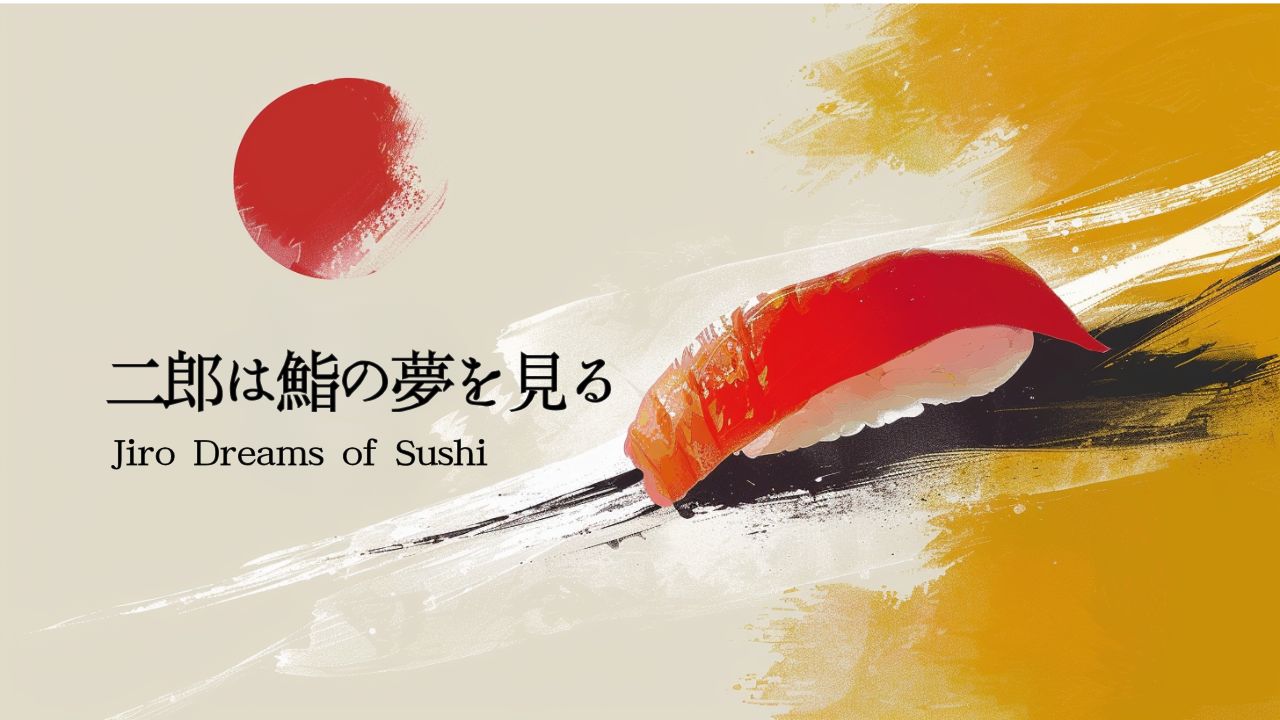
For this day, the film to watch is Jiro Dreams of Sushi (2011), directed by David Gelb.
Sukiyabashi Jiro is a ten-seat sushi restaurant in the basement of a building in Ginza, Tokyo. Its owner and itamae is Jiro Ono, who was 85 at the time of filming. The Michelin Guide awarded Sukiyabashi Jiro three stars — the first time in history that a restaurant of this kind and scale received the guide’s highest rating. Jiro has been called the greatest sushi chef in the world. The film watches him work. It asks what it means to give a life to one thing.
Basic Information & Synopsis
→ For synopsis and production information, see our Database Article
Director: David Gelb
Year: 2011
Runtime: 81 minutes
Production: Magnolia Pictures
Commemorative Day: International Sushi Day (June 18)
Synopsis: There is almost no plot. The film spends 81 minutes inside Sukiyabashi Jiro, watching Jiro work, listening to his philosophy, observing his two sons, speaking with his suppliers, and following the process by which extraordinary sushi is made every day. Yoshikazu, the elder son who works beside his father, will inherit the restaurant. The film is also about what it means to follow a father who has defined perfection so completely that catching up with him may be impossible.
Background Knowledge
David Gelb and the Starting Point of the Film
Director David Gelb, then a young American filmmaker, was working in Japan when he first encountered Sukiyabashi Jiro. He had gone for lunch; he left having decided this was the film he needed to make. He spent several months filming in the restaurant, developing a working relationship with Jiro and his family before the camera was ever present during service.
Three Michelin Stars for a Counter With Ten Seats
The Michelin Guide’s standards require a restaurant to merit a special trip to its location. Sukiyabashi Jiro — no tables, no kitchen in the conventional sense, no appetizers, no desserts beyond a small piece of fruit, ten seats, a meal that costs a minimum of 30,000 yen and lasts approximately 30 minutes — received three stars in the 2008 Tokyo Michelin Guide. The contrast between the restaurant’s scale and the rating’s prestige is itself an argument about what “best” means. It is not about size or elaborateness. It is about doing one thing so completely that nothing more needs to be added.
Jiro’s Philosophy — The Shokunin Spirit
Jiro has described his philosophy in terms that have become widely quoted: “Once you decide on your occupation, you must immerse yourself in your work. You have to fall in love with your work. Never complain about your job. You must dedicate your life to mastering your skill. That’s the secret of success, and is the key to being regarded honorably.”
This disposition is captured in the Japanese concept of shokunin — a craftsperson who has committed entirely to the mastery of their trade. The shokunin does not experience this commitment as a sacrifice; it is the form of life they have chosen. Jiro still dreams of sushi, the film’s title tells us: even in sleep, the work continues.
The Succession Question
The film’s human complication is the question of Yoshikazu, the elder son. He has spent his entire adult life working beside his father, learning an art that takes decades to approach mastery. He will inherit Sukiyabashi Jiro. But what does it mean to inherit the restaurant of someone who has defined the ceiling of the craft? The younger son, Takashi, has opened his own restaurant in Roppongi — technically the same menu, technically the same training — and yet there is only one original.
What Makes It Exceptional
The Beauty of the Sushi Itself
The film’s visual achievement begins with Philip Storey’s macro cinematography of the sushi — close-up work that renders the texture, color, and composition of each piece with the quality of still photography. The rice glows. The cuts of fish have the weight and translucency of living material. Food cinema has rarely produced images this precise and this beautiful. Before the film addresses philosophy, technique, or succession, it earns the audience’s attention by making the subject look like what it actually is: something extraordinary.
A Life as a Form of Artistic Statement
What the film constructs, slowly and without dramatizing, is a portrait of a man for whom there is no separation between living and working. Jiro does not have a hobby; he is not particularly interested in leisure. He takes the same train to work every day. He takes the same walk. He has been refining the same process for decades. The film presents this not as tragedy or eccentricity but as a form of completeness — a life that has found its shape.
This quality is why the film speaks to audiences far beyond those interested in sushi or Japanese food culture. The question it asks — what does it mean to commit fully to something? — is universal.
What It Costs the People Around Him
The film does not avoid the cost of Jiro’s single-mindedness. He was absent for his children’s childhoods, working. Yoshikazu’s life has been shaped by the necessity of following a father who may be impossible to follow. The film holds these facts alongside its admiration for what Jiro has achieved, without resolving the tension between them.
Related Articles
- Jiro Dreams of Sushi Database – Synopsis & Production Details
- David Gelb – Filmmaker Profile
はじめに
一つのことに、人生のすべてを捧げた男
6月18日は「国際寿司の日(International Sushi Day)」です。これは2009年、寿司の魅力をより多くの人に広めたいと願ったアメリカの愛好家によってフェイスブック上で提唱され、ソーシャルメディアを通じて世界中に広まった記念日です。国連や公的機関が定めた条約由来の記念日とは異なり、寿司を愛する人々の草の根の発信から生まれた、比較的新しい国際デーです。今では世界各地の寿司店や食愛好家が、この日に寿司を味わい、その文化的背景に思いを馳せる日として定着しています。
寿司の起源は、もともと魚を米とともに発酵させて保存する「なれずし」にさかのぼります。やがて江戸時代の江戸(現在の東京)で、酢飯の上に新鮮な魚介をのせて握る「握り寿司」が生まれ、屋台で供される手軽な食べ物として広まりました。それが時を経て洗練され、今日では日本を代表する食文化として、世界中で愛される料理へと発展しています。寿司は単なる食事ではなく、新鮮さ、均衡、盛り付けの美しさ、そして細部への徹底したこだわりを体現する、職人の技の結晶でもあります。
この日に観る作品として、2011年公開のドキュメンタリー**『二郎は鮨の夢を見る』**(Jiro Dreams of Sushi)を取り上げます。デヴィッド・ゲルブ監督によるこの作品は、東京・銀座の地下にある10席だけの寿司店「すきやばし次郎」を営む、当時85歳の寿司職人・小野二郎の日常を追ったものです。世界最高の寿司職人とも称される一人の男が、生涯をかけて「より良い寿司」を握り続ける姿を、静かな筆致で見つめています。
本作が描くのは、寿司という料理そのものの魅力にとどまりません。一つの仕事に人生のすべてを注ぐとはどういうことか、そして親から子へ受け継がれていく技と看板の重みとは何か——国際寿司の日に本作を観ることは、一貫(ひとかん)の寿司の背後にある、途方もない職人の営みと人生を見つめ直す機会となります。
基本情報・あらすじ
→ あらすじや製作情報はデータベース記事へ
監督: デヴィッド・ゲルブ
製作年: 2011年
上映時間: 81分
制作: マグノリア・ピクチャーズ
記念日: 国際寿司の日(6月18日)
あらすじ: ほとんどプロットはありません。81分間、映画はすきやばし次郎の中に座り込み、二郎が仕事をする様子を見守り、その哲学に耳を傾け、二人の息子を観察し、仕入れ業者と対話し、毎日卓越した寿司が作られていく過程を追います。長男の禎一は父の傍らで働き、やがてこの店を継ぐ立場にあります。映画はそのことの意味——完璧を定義しきった父を引き継ぐとはどういうことか——についても静かに問います。
予備知識
デヴィッド・ゲルブ監督と、映画の出発点
当時若いアメリカ人映画監督だったデヴィッド・ゲルブは、日本で仕事をしていた際にすきやばし次郎に初めて訪れました。昼食を食べに入った彼が、店を出る頃には「これを映画にしなければならない」と決意していたといいます。実際の撮影に先立ち、彼は数ヶ月をかけて二郎と家族との関係を築き、カメラが営業中に入る前に信頼を培いました。
ミシュラン三つ星と、10席という逆説
ミシュランの基準では、三つ星はその店のために特別な旅行をする価値があることを意味します。すきやばし次郎は——テーブルなし、前菜なし、デザートは小さな果物のみ、10席、最低3万円のコース、食事時間は約30分——という業態でありながら、2008年のミシュランガイド東京で三つ星を獲得しました。この規模と格付けの落差は、「最高」とは何かについての一つの答えです。大きさでも豪華さでもない。一つのことを、これ以上何も付け加えられないほど完全にやり遂げることだという。
二郎の哲学——職人の精神
二郎はその哲学についてこう語ります——「一度、職業を決めたら、その仕事に惚れ込まなければならない。仕事の愚痴を言わず、一生をかけて技を磨くこと——それが成功の秘訣であり、人に尊重される鍵だ」。
この姿勢は、日本語の「職人」という概念に体現されています。自分の仕事に完全に献身した人間。職人にとって、その献身は犠牲ではなく、選んだ生の形です。二郎は夢の中でも寿司を握る——タイトルはそのことを告げています。眠りの中でも仕事は続いています。
継承という問い
映画の人間的な緊張は、長男・禎一という存在にあります。彼は大人になってからのすべての時間を父の傍らで過ごし、習得に何十年もかかる技を学んできました。すきやばし次郎は彼が受け継ぎます。しかし、その技の天井を定義しきった人間の店を継ぐとはどういうことか。次男・隆士は六本木で独自の店を開いています——技術的には同じメニュー、同じ修業——しかし、本家は一つだけです。
優れしている点
寿司そのものの映像美
本作の視覚的な出発点は、フィリップ・ストーリーによる寿司のマクロ撮影です。一貫ごとのテクスチャ、色彩、構成を、まるで静物写真のように捉えた映像。米が輝いています。魚の切り身は、生きている素材の重みと透明感を持っています。食べ物を題材にした映画がこれほど正確で美しい映像を生み出したことは、そう多くありません。哲学や技術や継承の話に入る前に、この映画はまず、主題が本当に何であるかを——つまり、とてつもないものであることを——映像で示します。
生きることと働くことが同一になった人生
映画がゆっくりと、ドラマ化せずに構築していくのは、生きることと働くことの間に何も隔てるものがない男の肖像です。二郎に趣味はなく、余暇にさほど興味もありません。毎日同じ電車で店に向かい、同じ道を歩き、何十年も同じプロセスを磨き続けています。映画はこれを悲劇としても奇異としても提示しません——一つの完成した形として提示します。自分の形を見つけた人生として。
この質こそが、寿司や日本の食文化に関心のない観客にも映画が届く理由です。「何かに完全にコミットするとはどういうことか」という問いは、普遍的なものです。
周囲の人々が払うコスト
映画は、二郎の一途さが周囲に何を課したかを避けて通りません。子どもたちの幼少期、彼は仕事をしていて不在でした。禎一の人生は、追いかけることが不可能かもしれない父を追いかける必要性によって形作られてきました。映画は二郎が成し遂げたことへの敬意と、これらの事実を並べて提示し、その間の緊張を解消しません。
関連記事
- 二郎は鮨の夢を見る データベース – あらすじ・製作情報
- デヴィッド・ゲルブ – 監督プロフィール