

Choose Your Language / 言語を選択:
Introduction
A Hymn to Love and Science — The True Story of Stephen Hawking
June 21 is Global ALS/MND Awareness Day.
The day was established in 1997 by the International Alliance of ALS/MND Associations. June 21 was chosen because it falls on the solstice — the longest day of the year in the Northern Hemisphere, the shortest in the Southern — a date symbolizing a turning point, carrying the hope that research into the causes, treatment, and cure of the disease will continue to advance. The day exists to support patients living with ALS and their families, to promote research, and to deepen public understanding.
ALS (Amyotrophic Lateral Sclerosis) is a progressive neurological disease in which motor neurons throughout the body degenerate, causing the muscles to atrophy. As the disease progresses, mobility, speech, eating, and eventually breathing become difficult. In many patients, cognitive function and personality remain intact even as the body becomes increasingly immobile — though some patients experience frontotemporal cognitive and behavioral changes, and the presentation of the disease varies by individual.
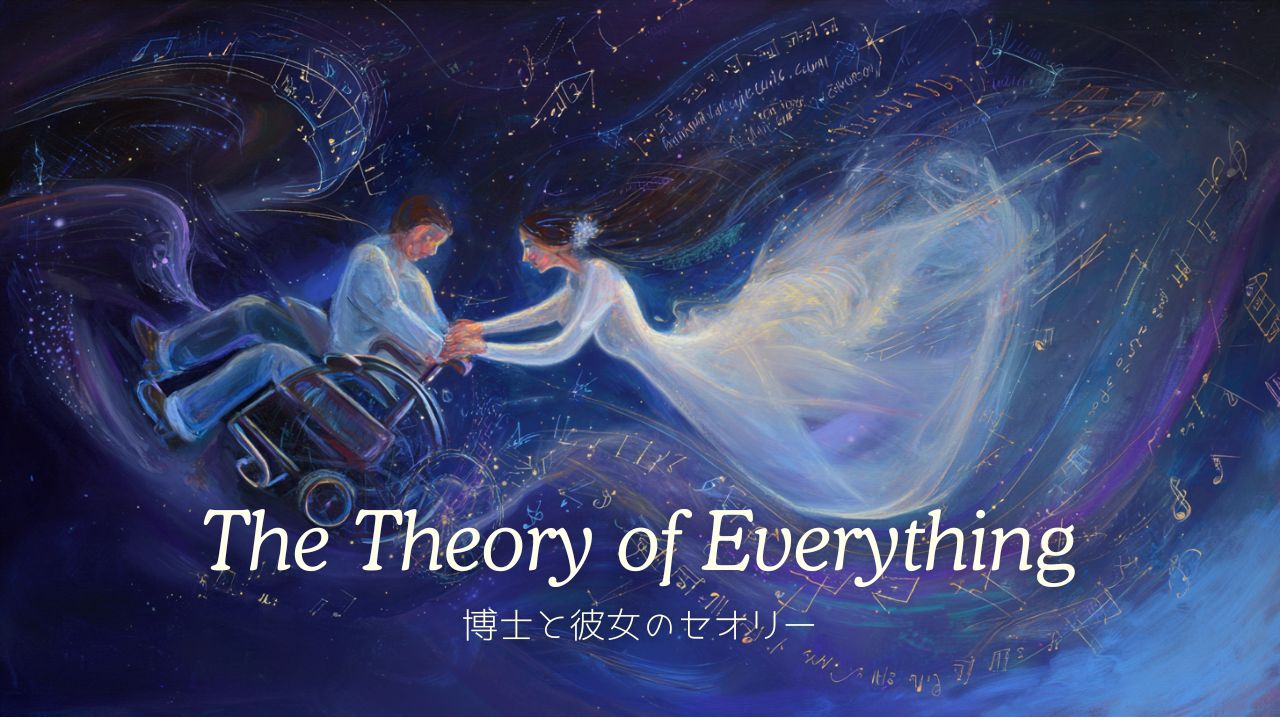
For this day, the film to recommend is The Theory of Everything (2014), which tells the life of theoretical physicist Stephen Hawking, who lived with ALS for fifty-five years.
The film is adapted by Anthony McCarten from the memoir of Jane Hawking, Stephen’s first wife — Travelling to Infinity: My Life with Stephen. Critically, the film is told from Jane’s perspective: the difficulty of being the spouse of an ALS patient, the fundamental tension of a marriage between a devout Christian and an atheist, and the complicated, unflinching reality of both partners eventually forming relationships outside the marriage. Even through these unexpected developments, the film carefully depicts the deep love that persisted between them. It is more than a biopic — it is a portrait of human dignity in the face of disease, the durability of love, and the relentlessness of intellectual curiosity.
Basic Information & Synopsis
→ For synopsis and production information, see our Database Article
Director: James Marsh
Year: 2014
Runtime: 123 minutes
Production: Working Title Films
Commemorative Day: Global ALS/MND Awareness Day (June 21)
Synopsis: Cambridge, 1963. Stephen Hawking, a young cosmology PhD student with extraordinary promise, falls in love with Jane Wilde, a literature student. He is diagnosed with ALS and given two years to live. Jane decides to marry him anyway. The film follows their marriage across decades — Stephen’s deterioration from difficulty walking to wheelchair use to the loss of speech and the adoption of a voice synthesizer, alongside his continuing scientific breakthroughs and his rise to global fame following the publication of A Brief History of Time. It also follows what the marriage actually cost Jane, and the complicated paths both of them eventually took toward separation and toward new relationships, before the film closes on what endured between them regardless.
Background Knowledge
Dr. Stephen Hawking and ALS
Stephen William Hawking (1942–2018) was among the most renowned theoretical physicists of the 20th and 21st centuries, known for his work on black holes — particularly the discovery of Hawking radiation — and his lifelong pursuit of a unified theory combining general relativity and quantum mechanics.
In 1963, at twenty-one, while beginning his cosmology research at Cambridge, Hawking was diagnosed with ALS and told he had two years to live. He lived with the disease for fifty-five years — an extraordinarily long survival that has become a symbol of hope for ALS patients and their families.
Hawking’s form of ALS progressed relatively slowly. He had difficulty walking in his late twenties, used a wheelchair by his thirties, and lost the ability to speak unaided in his forties, after which he used a voice synthesizer. Despite these physical constraints, he continued producing groundbreaking scientific work, and his popular science book A Brief History of Time became an international bestseller. Hawking became the symbolic figure for ALS patients whose cognitive function remains fully intact — his life demonstrated, in the most public way possible, that physical disability does not mean intellectual disability.
ALS and Cognitive Function
ALS has historically been described as a disease that affects only the body while leaving the mind and emotions entirely untouched. For many patients, like Hawking, thinking, emotion, and personality remain intact. However, more recent research has established that a subset of ALS cases involve frontotemporal dementia (FTD) or milder cognitive and behavioral changes. Motor neuron disease with FTD is sometimes called “ALS with dementia,” and ALS and FTD are now understood as existing on a continuum in some cases. The blanket statement that “ALS patients’ cognitive function is never affected” is, by current medical understanding, a simplification. What matters is the accurate recognition that many patients retain rich intelligence and emotional life, and that the presentation of symptoms varies significantly between individuals.
The Background of the Film and Its Character as a Biopic
The film is based on Jane Hawking’s memoir, made in 2014. It addresses not only Stephen’s scientific achievements but the daily difficulties faced by ALS patients and their families, the complexity of love under such conditions, and what it means to maintain human dignity throughout. The film depicts the progression of ALS — from early difficulty walking through wheelchair use, speech loss, and eventually ventilator dependence — with considerable care.
As a biographical film, some caution is warranted: the story is told primarily from Jane’s perspective, and the film includes dramatic compression, altered chronology, and simplified relationships in service of its narrative needs.
What Makes It Exceptional
Eddie Redmayne’s Committed Performance
The film’s central achievement is Eddie Redmayne’s performance as Stephen Hawking. Redmayne spent four months training with ALS patient associations, meeting actual patients and their families to study the disease’s progression in detail. Under the guidance of ALS specialists, he trained to accurately reproduce the physical changes at each stage of the disease — from early walking difficulty through wheelchair use, speech difficulty, and ventilator dependence — with medical precision.
Particularly notable is the depiction of facial muscle paralysis affecting expression, the difficulty of eating due to swallowing impairment, and communication through eye movement. What is most remarkable about Redmayne’s performance is his ability to convey intelligence and spirit that seem to intensify in inverse proportion to declining physical capability. Even as speech becomes impossible, his gaze and minute facial changes communicate Hawking’s rich inner world and unrelenting intellectual drive.
This precision is the product of direct consultation with ALS specialists during production, who checked the disease’s progression and symptoms rigorously — and the performance has been praised by ALS patients and medical professionals as medically accurate.
Felicity Jones’s Nuanced Performance
Felicity Jones’s performance as Jane is equally significant. She met extensively with the real Jane Hawking and listened in detail to the psychological evolution of twenty-five years of caregiving. She renders the full arc of love, devotion, exhaustion, stress, guilt, and eventual release with subtlety and force.
Particularly affecting is the depiction of Jane exhausted by caregiving while never losing her love and respect for Stephen — a precise rendering of the caregiver’s complicated truth: “there are limits, precisely because I love him.”
The Excellence of Sound Design and Visual Technique
The sound design is notable in its own right: the gradual unintelligibility of Stephen’s speech as the disease progresses, the moments when even family members struggle to understand him, and the dramatic shift introduced by the voice synthesizer are all rendered with realism. Jóhann Jóhannsson’s score fuses the mystery of the cosmos with human emotion, unifying the film’s scientific themes with its love story.
The film’s visual technique uses varied approaches — shots from wheelchair-level perspective, juxtapositions of cosmological imagery with daily life — to render the contrast between Stephen’s physical limitations and the scope of his inner world. The visualization of time as a concept is especially effective, overlaying Stephen’s theoretical work on time with the actual passage of time across his life.
Related Articles
- The Theory of Everything Database – Synopsis & Production Details
- James Marsh – Filmmaker Profile
- Eddie Redmayne – Actor Profile
はじめに
愛と科学が織りなす人間賛歌 – スティーヴン・ホーキング博士の真実の物語
毎年6月21日は「世界ALS/MND啓発デー(Global ALS/MND Awareness Day)」です。この日は、ALS/MND協会国際連合(International Alliance of ALS/MND Associations)によって1997年に始められた国際的な記念日で、筋萎縮性側索硬化症(ALS)とその他の運動ニューロン疾患(MND)への理解と支援を世界中で呼びかけています。日付の6月21日が選ばれたのは、北半球では一年で最も昼が長い日、南半球では最も昼が短い日にあたる「至点(ソルスティス)」であり、転換点を象徴するこの日に、病気の原因・治療・治癒の探求が前進することへの願いを込めたためです。ALSという困難な病気と共に生きる患者とその家族への支援、研究促進、そして社会の理解を深めることを目的としています。
ALS(Amyotrophic Lateral Sclerosis)は、全身の運動神経が障害されて筋肉が萎縮していく進行性の神経難病で、国の指定難病に指定されています。国内で特定医療費(指定難病)受給者証を持つALS患者数は、近年おおむね1万人前後で推移しています。病気の進行とともに、手足をはじめ身体の自由がきかなくなり、話すことや食べることのほか、呼吸することも困難になります。一方で、多くの患者では思考力や人格は保たれ、身体が不自由になっても豊かな内面を持ち続けます。ただし、一部の患者では前頭側頭型の認知・行動の変化を伴うことも知られており、症状の現れ方には個人差があります。
この世界ALS/MND啓発デーに際して、ALSと共に生きた偉大な物理学者スティーヴン・ホーキング博士の人生を描いた**『博士と彼女のセオリー』**をご紹介します。本作は、理論物理学者スティーヴン・ホーキングと結婚した女性ジェーン・ホーキングによる回想録『Travelling to Infinity: My Life with Stephen』(邦題『無限の宇宙 ホーキング博士とわたしの旅』)をアンソニー・マッカーテンが脚色したものです。
特に重要なのは、この映画がジェーンの側から見たスティーヴン・ホーキングとの人間関係を描いていることです。ALS患者の配偶者でいる苦労、敬虔なクリスチャンと無神論者の結婚という根本的な価値観の対立、そして夫と妻の双方が他者との関係を持つことになった複雑で生々しい人生事情など、予想外の展開となってもなお二人の間にある深い愛が丁寧に描かれています。この映画は、単なる伝記映画を超えて、ALSという病気と向き合う人間の尊厳、愛の力、そして知的探究心の不屈さを描いた感動的な作品として、多くの人々に希望と勇気を与え続けています。
基本情報・あらすじ
→ あらすじや製作情報はデータベース記事へ
監督: ジェームズ・マーシュ
製作年: 2014年
上映時間: 123分
制作: ワーキング・タイトル・フィルムズ
記念日: 世界ALS/MND啓発デー(6月21日)
あらすじ: 1963年、ケンブリッジ。宇宙論の研究で大きな期待を背負う青年スティーヴン・ホーキングは、文学を学ぶジェーン・ワイルドと出会い恋に落ちます。ALSと診断され、余命2年と告げられた彼を、ジェーンはそれでも選び結婚します。映画は数十年にわたる二人の結婚生活を追います——歩行困難から車椅子、発話の喪失と音声合成装置の導入というスティーヴンの身体の変化、そして『ホーキング、宇宙を語る』の出版による世界的名声への道。同時に、その結婚がジェーンに実際に何を負わせたのか、そして二人がそれぞれ別の関係へと向かいながらも、最終的に二人の間に残ったものを丁寧に描いています。
予備知識
スティーヴン・ホーキング博士とALS
スティーヴン・ウィリアム・ホーキング(1942-2018)は、20世紀から21世紀にかけて最も著名な理論物理学者の一人でした。ブラックホールの特性に関する研究、特に「ホーキング放射」の発見で知られ、一般相対性理論と量子力学を統合する「万物の理論」の探求に生涯を捧げました。
1963年、21歳の時にケンブリッジ大学で宇宙論の研究を始めた若きホーキングは、ALSと診断されます。当時、医師からは「2年の命」と宣告されましたが、結果的に55年間という長期にわたってALSと共に生きることになりました。この異例の長期生存は、ALS患者とその家族にとって希望の象徴となっています。
ホーキング博士のALSは比較的ゆっくりと進行するタイプでした。20代後半には歩行困難となり、30代で車椅子生活となり、40代で発話が困難になって音声合成装置を使用するようになりました。しかし、この身体的制約にも関わらず、彼は科学界に革命的な発見をもたらし続け、一般向けの科学書『ホーキング、宇宙を語る』は世界的ベストセラーとなりました。ホーキング博士は、ALSにおいて認知機能が保たれた患者の象徴的な存在であり、身体の障害が知的能力の障害を意味するわけではないことを、その生涯をもって示しました。
ALSと認知機能をめぐって
かつてALSは「身体だけが侵され、脳や心はまったく影響を受けない病気」と説明されることが一般的でした。映画のホーキング博士のように、多くの患者では思考力・感情・人格が保たれます。しかし近年の研究により、ALSの一部には前頭側頭型認知症(FTD)の合併や、より軽度の認知・行動面の変化を伴う場合があることが分かってきました。運動ニューロン疾患を伴うFTDは「認知症を伴うALS」とも呼ばれ、ALSとFTDが地続きの病態として理解されるようになっています。したがって、「ALS患者の認知機能は一切損なわれない」と一律に断じるのは、現在の医学的理解からするとやや単純化された表現です。重要なのは、多くの患者が豊かな知性と感情を保ち続けること、そして症状の現れ方には個人差があることを、正確に理解することです。
映画製作の背景と伝記映画としての特徴
『博士と彼女のセオリー』は、ホーキング博士の最初の妻ジェーン・ホーキングの回想録『Travelling to Infinity: My Life with Stephen』を原作として2014年に製作されました。この映画は、科学的業績だけでなく、ALS患者とその家族が直面する日常的な困難、愛情の複雑さ、そして人間としての尊厳を維持することの意味を、細やかな心理描写とともに描いています。
特に重要なのは、この映画がALSの進行過程をリアルに描写していることです。初期の歩行困難から始まり、車椅子の使用、発話困難、そして人工呼吸器の装着に至るまで、丁寧な描写がなされています。ただし、伝記映画として見る場合は注意が必要です。映画は主にジェーンの視点から描かれており、エンターテインメント作品として脚色や時系列の変更、人物関係の簡素化なども含まれています。
優れている点
エディ・レッドメインの渾身の演技
『博士と彼女のセオリー』の最大の魅力は、エディ・レッドメインによるスティーヴン・ホーキング博士の圧倒的な演技力です。レッドメインは役作りのために4ヶ月間にわたってALS患者の協会で研修を受け、実際の患者やその家族と面会して病気の進行過程を詳細に学習しました。ALS専門医師の指導の下で、病気の各段階における身体的変化を正確に再現する訓練を受け、歩行困難の初期段階から車椅子使用期、発話困難期、そして人工呼吸器装着後まで、医学的にも正確な演技を実現しています。
特に顔面筋肉の麻痺による表情の変化、嚥下困難による食事の様子、眼球運動による意思疎通など、細部に至るまで丁寧に描写されています。レッドメインの演技で特に秀逸なのは、身体機能の低下と反比例して輝きを増す知性と精神力の表現です。発話が困難になっても、眼差しや微妙な表情の変化により、ホーキング博士の豊かな内面世界と不屈の探究心を見事に表現しています。
この演技により、ALS患者の尊厳と知的能力が完全に保たれていることを、説教的でない自然な形で観客に理解させています。この正確な医学的描写は、ALS分野の専門医師が監修として参加し、病気の進行過程や症状について厳密なチェックが行われた結果でもあり、ALS患者や医療関係者からも「医学的に正確」との評価を得ています。
フェリシティ・ジョーンズの繊細な表現
フェリシティ・ジョーンズのジェーン役も素晴らしい演技でした。彼女は実際のジェーン・ホーキングと長時間面談し、25年間にわたる介護体験の心理的変化を詳細に聞き取りました。愛情、献身、疲労、ストレス、罪悪感、そして最終的な解放に至るまでの複雑な感情の軌跡を、繊細かつ力強く演じています。
特に印象深いのは、ジェーンがスティーヴンの介護に疲れ果てながらも、彼への愛情と敬意を失わない姿の描写で、「愛しているからこそ限界がある」という介護家族の複雑な心境を非常にリアルに表現しています。
音響設計と映像技術の卓越性
音響設計も特筆すべき要素です。スティーヴンの発話困難の進行に合わせて音声の不明瞭さが段階的に表現され、家族でさえ理解が困難になる状況や、音声合成装置導入による劇的な変化がリアルに描写されています。ヨハン・ヨハンソンによる音楽は、宇宙の神秘性と人間の感情を見事に融合させ、科学的テーマと愛の物語を一体化させる重要な役割を果たしています。
技術的演出では、スティーヴンの身体的制約と内面世界のコントラストを効果的に描くため、多様な撮影技術が駆使されています。車椅子の視点からの撮影、宇宙論的イメージと日常生活の対比など、視覚的演出により観客の理解と共感を深めています。特に時間の概念を視覚化する演出は秀逸で、スティーヴンの理論物理学における時間研究と、人生における時間の流れを巧妙に重ね合わせています。