

Basic Info / 基本情報
| English | 日本語 |
|---|---|
| Director | Florian Henckel von Donnersmarck / フロリアン・ヘンケル・フォン・ドナースマルク |
| Year | 2006 |
| Running Time | 137 min (2h 17m) |
| Genre | Drama / Thriller / ドラマ・スパイスリラー |
| Production | Wiedemann & Berg Filmproduktion, Bayerischer Rundfunk |
| Box Office | $77.4 million (Worldwide) |
Synopsis / あらすじ
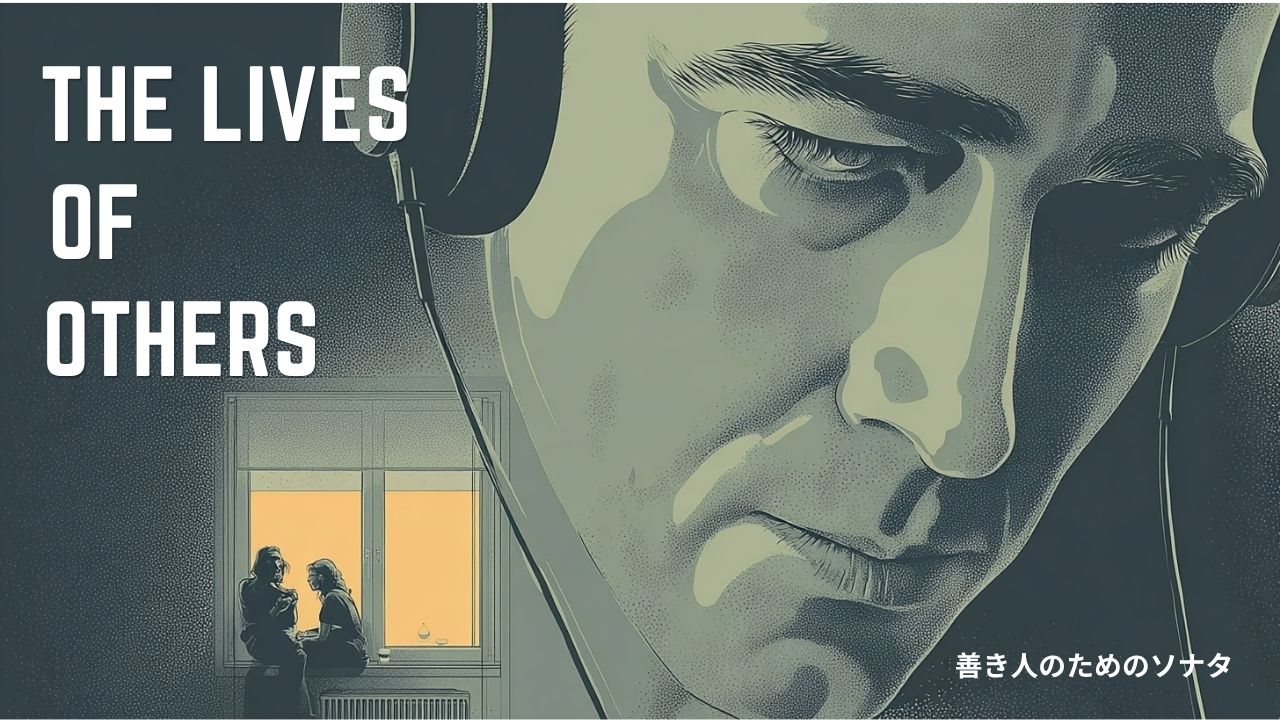
[English / 英語] East Berlin, 1984. Captain Gerd Wiesler (Ulrich Mühe), a highly skilled Stasi officer and expert in surveillance, is assigned to monitor the celebrated playwright Georg Dreyman. Unknown to Wiesler, the mission is fueled by a high-ranking minister’s desire to eliminate Dreyman and claim his lover, the actress Christa-Maria Sieland. From a cold, isolated attic above Dreyman’s apartment, Wiesler spends his days listening to the intimate details of their lives. Gradually, the art, music, and genuine human emotions he intercepts begin to erode his ideological devotion to the state. When Dreyman decides to risk everything by writing a clandestine report on the regime’s suppressed suicide statistics, Wiesler is forced to choose: remain a loyal instrument of a repressive system, or protect the humanity he has unexpectedly rediscovered through the lives of others.
[日本語] 1984年、東ベルリン。シュタージ(国家保安省)の冷徹な尋問エキスパート、ゲルト・ヴィースラー大尉(ウルリッヒ・ミューエ)は、劇作家ゲオルク・ドライマンの監視を命じられます。しかしその実態は、ドライマンの恋人である女優を我が物にするという大臣の私欲によるものでした。ドライマンのアパートに盗聴器を仕掛け、屋根裏の監視室で孤独に潜むヴィースラーは、ヘッドフォンを通じて彼らの生活を克明に記録していきます。しかし、そこで耳にする美しい音楽や芸術、そして真摯な愛の言葉は、これまで彼が忠誠を捧げてきた共産主義体制への硬直した信念を、静かに、しかし確実に溶かしていきます。やがてドライマンが国家の禁忌である「自殺統計」の告発を企てたとき、ヴィースラーは組織の歯車として生きるか、一人の人間として彼らを守るか、究極の選択を迫られます。
Cast & Crew / スタッフ・出演
| Role | English | 日本語 |
|---|---|---|
| Director / 監督 | Florian Henckel von Donnersmarck | フロリアン・ヘンケル・フォン・ドナースマルク |
| Screenplay / 脚本 | Florian Henckel von Donnersmarck | フロリアン・ヘンケル・フォン・ドナースマルク |
| Producer / プロデューサー | Quirin Berg, Max Wiedemann | クイリン・ベルク、マックス・ヴィーデマン |
| Cinematography / 撮影 | Hagen Bogdanski | ハーゲン・ボグダンスキー |
| Music / 音楽 | Gabriel Yared, Stéphane Moucha | ガブリエル・ヤレド、ステファン・ムシャ |
| Editing / 編集 | Patricia Rommel | パトリシア・ロメル |
| Distribution / 配給 | Sony Pictures Classics (US), Buena Vista International | ソニー・ピクチャーズ・クラシックス(米)、ブエナ・ビスタ・インターナショナル |
| Cast / 出演 | Ulrich Mühe (Capt. Gerd Wiesler) | ウルリッヒ・ミューエ(ゲルト・ヴィースラー大尉) |
| Sebastian Koch (Georg Dreyman) | セバスティアン・コッホ(ゲオルク・ドライマン) | |
| Martina Gedeck (Christa-Maria Sieland) | マルティナ・ゲデック(クリスタ=マリア・ジーラント) | |
| Ulrich Tukur (Lt. Col. Anton Grubitz) | ウルリッヒ・トゥクール(アントン・グルビッツ中佐) | |
| Thomas Thieme (Minister Bruno Hempf) | トーマス・ティーメ(ブルーノ・ヘンプフ大臣) | |
| Hans-Uwe Bauer (Paul Hauser) | ハンス=ウーヴェ・バウアー(パウル・ハウザー) |
Additional Information / 追加情報
Awards / 受賞歴
- Academy Awards / アカデミー賞 (2007) – 1 nomination, 1 win:
- Best Foreign Language Film – WON
- European Film Awards (2006) – 5 nominations, 4 wins:
- Best Film – WON
- Best Director – WON (Florian Henckel von Donnersmarck)
- Best Actor – WON (Ulrich Mühe)
- Best Screenplay – WON
- Best Cinematography – nomination
- German Film Awards / ドイツ映画賞 (2006) – 7 wins including:
- Outstanding Feature Film (Gold) – WON
- Best Director – WON
- Best Actor – WON (Ulrich Mühe)
- Best Supporting Actor – WON (Ulrich Tukur)
- Best Screenplay – WON
- BAFTA Awards (2007) – 2 nominations:
- Best Film Not in the English Language – nomination
- Best Original Screenplay – nomination
- César Awards (2007) – 1 nomination:
- Best Foreign Film – nomination
Critical Reception / 批評的評価
- Rotten Tomatoes: 97% (Critics), 95% (Audience)
- Metacritic: 89/100 (Universal Acclaim)
- IMDb: 8.1/10
- Ulrich Mühe’s performance as Wiesler universally considered one of the great screen performances of the 2000s — a study in interiority, almost entirely without dialogue
- Donnersmarck praised for an astonishing debut feature: precise, morally serious, and emotionally overwhelming without a single moment of manipulation
- Widely described as the definitive cinematic portrait of life under East German surveillance
- The film’s ending — spare, perfectly judged, devastating — cited by critics and filmmakers alike as one of the finest final sequences in recent cinema history
- Roger Ebert.com: ★★★★ “A film of enormous intelligence and compassion”
- The New York Times: “Quietly devastating… Mühe gives one of the year’s best performances”
- The Guardian: ★★★★★ “Unmissable. The year’s most humanist film”
- Time Out: “A masterpiece of political drama”
- A.V. Club: “A” — “Profound and deeply moving”
- Taught in history, political science, film, and ethics courses internationally
- Regularly cited alongside 1984, The Trial, and Hannah Arendt in discussions of totalitarianism and moral resistance
- Ulrich Mühe: Died of stomach cancer on July 22, 2007, just months after the film’s global recognition; he had been himself subject to Stasi surveillance, and his own ex-wife had reportedly informed on him — a biographical fact that gives his performance an additional, haunting layer
Box Office Performance / 興行成績
- Worldwide Total: $77.4 million
- Domestic (US/Canada): $11.3 million
- International: $66.1 million (led by Germany and Europe)
- Production Budget: €2 million (approximately $2.5 million)
- Return on Investment: Extraordinary — one of the most profitable art-house films of the decade
- Opening (Germany): March 23, 2006; immediate critical and commercial success
- US Release: February 9, 2007 (following Oscar nomination announcement)
- Performance Analysis:
- Rare foreign-language film to achieve genuine crossover commercial success
- Oscar nomination and win drove sustained theatrical expansion in North America
- Strong European theatrical performance underpinned by subject matter’s historical resonance
- Germany in particular responded to the film as a reckoning with a shared, recent past
- Legacy vs. Box Office:
- Among the highest-grossing foreign-language Oscar winners of its era
- Became a cultural touchstone in Germany and internationally
- Sustained discovery through home media, streaming, and educational distribution
Related Review / 関連レビュー
🔗 English Review
・[World Art Day] A Story of Art Awakening Human Conscience in a Surveillance State, and of Suppressed Expression Setting Souls Free
🔗 日本語レビュー
・【世界芸術自由の日】監視国家で芸術が人間の良心を呼び覚まし、抑圧された表現の自由が人々の魂を解放する物語