
Choose Your Language / 言語を選択:
Introduction
The World You Believe to Be “Real” — Is It Not a Dream Your Brain Shows You?
July 22 is World Brain Day. Established in 2014 by the World Federation of Neurology (WFN) after its founding date (July 22, 1957), this observance aims to raise awareness of brain health and of neurological disorders. Stroke, dementia, epilepsy, migraine — illnesses involving the brain are deeply bound up with the lives of people around the world. This day is also a day of medical advocacy, appealing for the importance of their prevention and care.
At the same time, however, World Brain Day has another face: it is also a day to look anew at the brain, humanity’s greatest mystery. Much of the writing that introduces World Brain Day states that the brain is one of the greatest mysteries in the natural world, and that even scientists cannot yet fully explain the complex relationship between the brain and the mind. This world we feel to be “real” is, when pressed to its root, no more than an image the brain itself has constructed by interpreting the electrical signals it has received. So how far can that “reality the brain makes” be trusted?
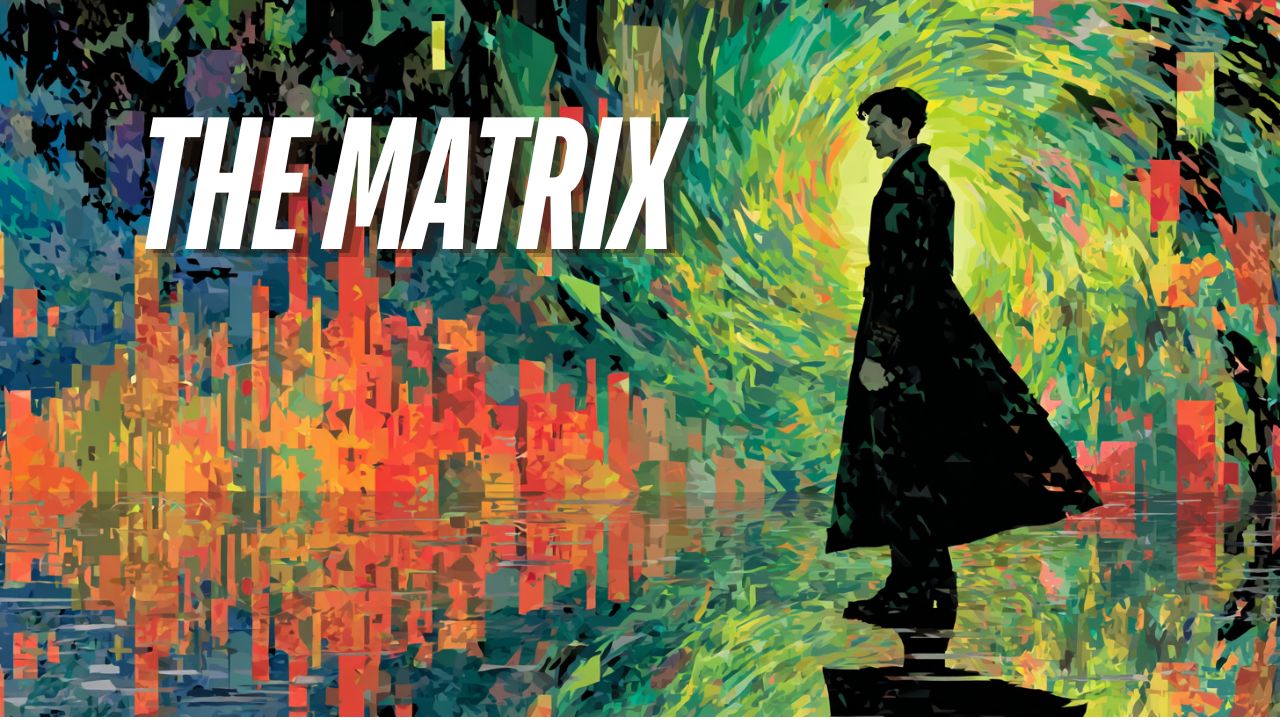
The work that visualized this question as thrillingly and boldly as could be is the 1999 film The Matrix. This science-fiction action film, written and directed by the Wachowskis (Lana Wachowski and Lilly Wachowski), swept the world upon its release and rewrote film history.
What this film thrusts before us is one chilling question. Is this world you think is real actually real? If your brain had been shown an elaborate false reality continuously, ever since you were born — would you be able to notice it? To watch this film on World Brain Day becomes an intellectual adventure that questions, from the root, how elaborately the organ called the brain constructs “reality,” and what that “reality” even is.
Basic Information & Synopsis
→ For synopsis and production information, see our Database Article
Director: Lana Wachowski, Lilly Wachowski
Year: 1999
Runtime: 136 minutes
Production: Warner Bros.
Commemorative Day: World Brain Day (July 22)
Background Knowledge
The Wachowskis, and a Work That Changed Film History
This film was written and directed by the Wachowskis (Lana and Lilly; through the names they used at the time of production, both are now known as trans women). Having distinguished themselves with the earlier crime film Bound (1996), the two brought to fruition in this work a conception they had long nurtured. They drew up a comic-like storyboard running to some 600 pages, and it is said they showed that original vision to the film company to get the production made. This film fused an enormous range of elements — the fight choreography of Hong Kong action cinema, Japanese animation, cyberpunk literature, and philosophy and religion — to create a wholly new visual experience.
The Shock of “Bullet Time”
The greatest technical shock this film gave to film history was the visual effect called “bullet time.” That famous scene in which Neo dodges bullets by bending backward — while time is nearly frozen, the camera alone glides smoothly around its subject — this innovative imagery astonished audiences worldwide. After this film, countless films and games imitated the technique, and “bullet time” became a cultural phenomenon. The film won in four categories including the Academy Award for Visual Effects (Visual Effects, Editing, Sound, and Sound Editing).
Plato’s “Allegory of the Cave”
Forming the philosophical backbone of this film is the “Allegory of the Cave” expounded by the ancient Greek philosopher Plato. Prisoners chained in a cave from birth, raised seeing only the shadows cast on the wall, believe without doubt that those shadows are reality itself. But when one of them is led outside and comes to know the real world, he realizes for the first time that what he had been seeing was no more than shadow — this parable is the very prototype of the story of Neo “waking” from the Matrix. This film splendidly revived this philosophical question from more than two thousand years ago as contemporary science fiction.
The Words the “Red Pill” Left to the Present Day
In this film, the “red pill” that Morpheus offers Neo became, beyond the film itself, a concept that has taken deep root in contemporary culture. This metaphor, meaning “to wake up and become aware of hidden, often inconvenient truths,” is now used around the world. There are not many examples in which an image created by a single film has become part of people’s vocabulary so widely.
What Makes It Exceptional
The Chilling Conception of “the Reality the Brain Sees”
The film’s greatest strength is that it placed at the core of its entertainment a question both philosophical and neuroscientific: might what we believe to be reality be no more than signals fed into the brain? This is the very thought experiment known in philosophy as the “brain in a vat.” If someone took out your brain, immersed it in a nutrient fluid, and artificially supplied it with every sensory signal, could you distinguish that from “reality”? This film lets us experience that abstract question as a story that has anyone gripping their hands in tension. On World Brain Day, for thinking about “what the reality the brain makes is,” there is no work more stimulating than this.
The Miraculous Fusion of Philosophy and Action
The outstanding quality of this film lies in the marvel of its fusion — handling profound philosophical themes while making them work as top-tier action entertainment. Plato’s cave, Descartes’s doubt, Buddhist enlightenment — difficult ideas are woven into this film in many layers. Yet viewers, without having these forced upon them as “study,” are made to think naturally about “what reality is” amid a thrilling story and innovative action. Works that reconcile the pleasure of thinking and the pleasure of watching at such a high level are rare.
A Visual Revolution That Transcends Its Era
Even now, more than a quarter century after its release, this film’s imagery has not grown old. The visual effects, bullet time foremost among them, the distinctive greenish color tone, and the refined production design build up a single, complete aesthetic. That this film was selected for permanent preservation in the National Film Registry of the U.S. Library of Congress as a “culturally, historically, and aesthetically significant work” is owed to that very innovativeness.
Related Articles
- The Matrix Database – Synopsis & Production Details
- The Wachowskis – Filmmaker Profile
- Keanu Reeves – Actor Profile
はじめに
あなたが「現実」と信じているものは、脳が見せる夢ではないか
7月22日は「世界脳の日(World Brain Day)」です。世界神経学連盟(WFN)が、その設立日(1957年7月22日)にちなんで2014年に制定したこの記念日は、脳の健康と、神経疾患への意識を高めることを目的としています。脳卒中、認知症、てんかん、片頭痛——脳に関わる病いは、世界中の人々の暮らしに、深く関わっています。この日は、その予防やケアの大切さを訴える、医療啓発の日でもあります。
しかし同時に、世界脳の日は、もう一つの顔を持っています。それは、脳という、人類最大の謎を見つめ直す日でもある、ということです。世界脳の日を紹介する文章の多くが、こう述べています——脳は自然界における最大の神秘の一つであり、科学者でさえ、脳と心の複雑な関係を、いまだ完全には説明できていない、と。私たちが「現実」だと感じているこの世界は、突き詰めれば、脳が受け取った電気信号を、脳自身が解釈して作り上げた像にすぎません。では、その「脳が作る現実」とは、どこまで信頼できるものなのでしょうか。
この問いを、これ以上なくスリリングに、そして大胆に映像化した作品が、1999年公開の『マトリックス』(The Matrix)です。ウォシャウスキー姉妹(ラナ・ウォシャウスキー、リリー・ウォシャウスキー)が脚本・監督を務めたこのSFアクションは、公開と同時に世界を席巻し、映画史を塗り替えました。
本作が突きつけるのは、一つの戦慄的な問いです。あなたが現実だと思っているこの世界は、本物なのか。もし、あなたの脳が、生まれたときからずっと、精巧な偽の現実を見せられ続けていたとしたら——あなたは、それに気づくことができるだろうか。世界脳の日に本作を観ることは、脳という器官がいかに精巧に「現実」を構築しているか、そして、その「現実」とは何なのかを、根底から問い直す、知的な冒険となります。
基本情報・あらすじ
→ あらすじや製作情報はデータベース記事へ
監督: ラナ・ウォシャウスキー、リリー・ウォシャウスキー
製作年: 1999年
上映時間: 136分
制作: ワーナー・ブラザース
記念日: 世界脳の日(7月22日)
予備知識
ウォシャウスキー姉妹と、映画史を変えた一作
本作の脚本・監督は、ウォシャウスキー姉妹(ラナとリリー。制作当時の名義を経て、現在は二人ともトランス女性として知られます)です。前作の犯罪映画『バウンド』(1996年)で頭角を現した二人は、長年温めてきた構想を、本作で結実させました。彼女たちは、約600ページにも及ぶ漫画のような絵コンテを描き上げ、その独創的なビジョンを映画会社に示して、製作にこぎつけたといいます。本作は、香港アクション映画の殺陣、日本のアニメ、サイバーパンク文学、そして哲学や宗教といった、膨大な要素を融合させ、まったく新しい映像体験を生み出しました。
「バレット・タイム」の衝撃
本作が映画史に与えた最大の技術的衝撃が、「バレット・タイム」と呼ばれる視覚効果です。ネオが銃弾を、のけぞってかわすあの有名な場面——時間がほぼ静止するなか、カメラだけが被写体の周囲を滑らかに回り込む——この革新的な映像は、世界中の観客を驚嘆させました。本作以降、無数の映画やゲームがこの手法を模倣し、「バレット・タイム」は一つの文化現象となりました。本作は、アカデミー視覚効果賞を含む4部門(視覚効果・編集・音響・音響編集)を受賞しています。
プラトンの「洞窟の比喩」
本作の哲学的な背骨をなすのが、古代ギリシアの哲学者プラトンが説いた「洞窟の比喩」です。生まれたときから洞窟に鎖でつながれ、壁に映る影だけを見て育った囚人は、その影こそが現実だと信じて疑わない。しかし、一人が外へ連れ出され、本物の世界を知ったとき、彼は初めて、自分が見ていたものが影にすぎなかったと悟る——この寓話は、まさにマトリックスから「目覚める」ネオの物語の、原型そのものです。本作は、この二千年以上前の哲学的問いを、現代のSFとして見事に蘇らせました。
「赤いピル」が現代に残した言葉
本作で、モーフィアスがネオに差し出す「赤いピル(レッド・ピル)」は、本作を超えて、現代の文化に深く根を下ろした概念となりました。「目を覚まし、これまで隠されていた、しばしば不都合な真実に気づくこと」を意味するこの比喩は、今や世界中で使われています。一つの映画が生み出したイメージが、これほど広く人々の語彙の一部となった例は、そう多くありません。
優れている点
「脳が見る現実」という、戦慄的な着想
本作の最も優れた点は、「私たちが現実だと信じているものは、脳に送り込まれた信号にすぎないのではないか」という、哲学的かつ脳科学的な問いを、エンターテインメントの核に据えたことです。これは、哲学で「水槽の中の脳」と呼ばれる、有名な思考実験そのものです。もし、誰かがあなたの脳を取り出し、培養液に浸し、あらゆる感覚信号を人工的に与えたとしたら、あなたはそれを「現実」と区別できるだろうか——本作は、この抽象的な問いを、誰もが手に汗握る物語として体験させてくれます。世界脳の日に、「脳が作る現実とは何か」を考えるうえで、これほど刺激的な作品はありません。
哲学とアクションの、奇跡的な融合
本作の卓越した点は、深遠な哲学的主題を扱いながら、それを最高峰のアクション・エンターテインメントとして成立させた、その融合の妙にあります。プラトンの洞窟、デカルトの懐疑、仏教的な悟り——本作には、難解な思想が幾重にも織り込まれています。しかし観客は、それらを「お勉強」として押しつけられることなく、スリリングな物語と、革新的なアクションのなかで、自然に「現実とは何か」を考えさせられます。考える快楽と、観る快楽を、これほど高い次元で両立させた作品は稀です。
時代を超える映像革命
公開から四半世紀以上が経った今なお、本作の映像は古びていません。バレット・タイムをはじめとする視覚効果、緑がかった独特の色調、洗練されたプロダクションデザインは、一つの完成された美学を作り上げています。本作が、米国議会図書館の国立フィルム登録簿に「文化的・歴史的・美学的に重要な作品」として永久保存に選ばれたのも、その革新性ゆえです。
関連記事
- マトリックス データベース – あらすじ・製作情報
- ウォシャウスキー姉妹 – 監督プロフィール
- キアヌ・リーブス – 俳優プロフィール