

Choose Your Language / 言語を選択:
Introduction
Three Whales Trapped in the Ice Melted the Walls of Borders and Positions — A Place Where Ego and Goodwill Meet
July 23 is World Whale and Dolphin Day.
On this day in 1982, the International Whaling Commission (IWC) voted for a temporary suspension (moratorium) of commercial whaling to protect whales facing the threat of extinction. To commemorate this historic decision, the day was established in 1986. The day the world, for the first time, offered a unified choice to “protect” the whales whose numbers had continued to decline through more than two centuries of overhunting — that was July 23.
Whales and dolphins have captivated people since ancient times, through their intelligence and sociability, and their magnificent forms. In recent years, they have also come to be known as “climate heroes” that help absorb carbon dioxide. Yet their lives are even now still exposed to threats such as overhunting, marine pollution, entanglement in fishing gear, and collisions with ships. This observance is not simply a day to celebrate a past victory, but also a day that asks each of us how people and the creatures of the sea ought to relate to one another.
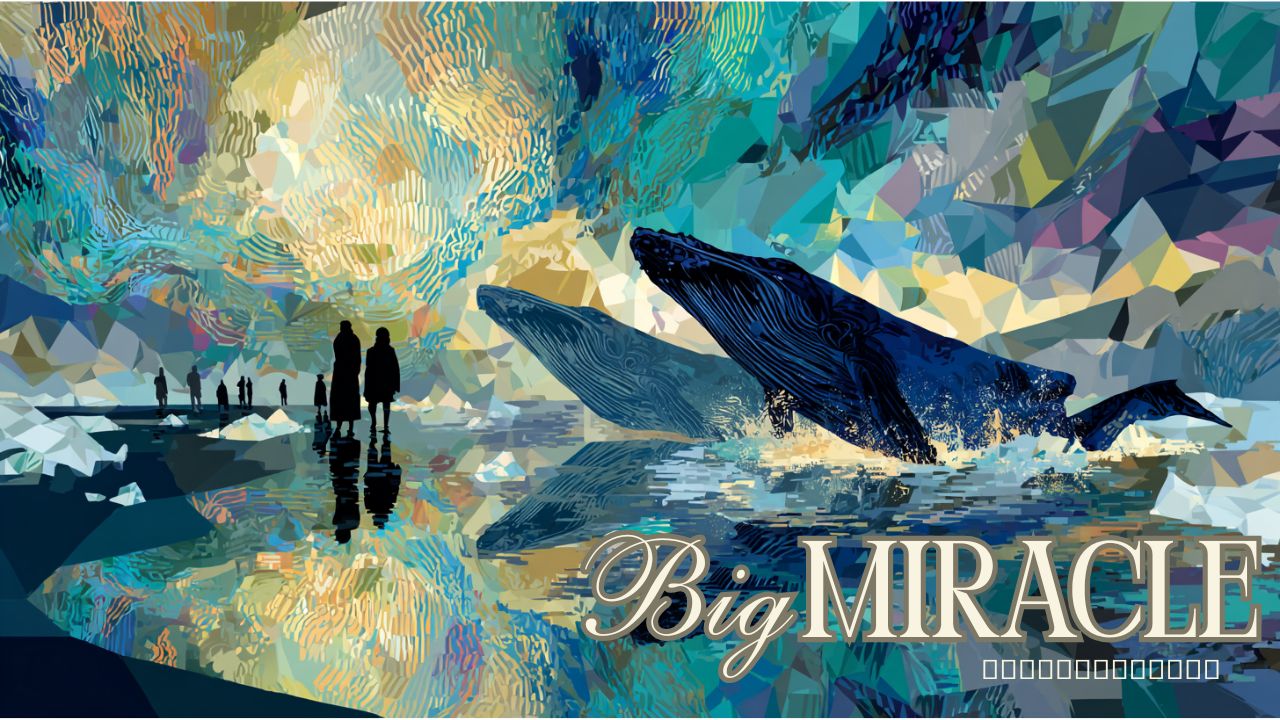
For this day, we recommend the 2012 film Big Miracle (Japanese title: Everyone Loves Whales). It is a film adaptation of the actual event in the autumn of 1988 in which people around the world struggled to save three gray whales trapped in the icy sea of Alaska. Directed by Ken Kwapis and starring John Krasinski and Drew Barrymore, it is a heartwarming rescue drama that also honestly depicts the various motives of the people who gather there — ambition for advancement, corporate image, political calculation — giving it a flavor that is not so straightforward. That is precisely why this film makes us think all the more deeply about what the words “to love whales” mean.
Basic Information & Synopsis
→ For synopsis and production information, see our Database Article
Director: Ken Kwapis
Year: 2012
Runtime: 107 minutes
Production: Universal Pictures
Commemorative Day: World Whale and Dolphin Day (July 23)
Background Knowledge
The Actual Event, “Operation Breakthrough”
This film is based on the whale-rescue operation that actually took place in Barrow, Alaska, in October 1988, commonly known as “Operation Breakthrough.” This event surrounding three gray whales trapped in the ice was reported day after day at the time by media including CNN, becoming a global concern through the power of television and newspapers, in an age without the internet. The original work is the nonfiction book of the same name by journalist Tom Rose, who covered the event on site. That a Soviet icebreaker under the Cold War joined the rescue was also an actual event, not a dramatization.
Drew Barrymore and John Krasinski
Playing the environmental activist Rachel is Drew Barrymore, active since her days as a child actress. Unlike her usual light image, here she earnestly plays a single-minded, awkward activist who pushes forward recklessly for a great cause. Playing her counterpart, Adam, is John Krasinski, known for the television series The Office, who gives a fine performance as a life-sized young man swaying between ambition and conscience. The supporting cast is filled out by accomplished performers such as Kristen Bell, Dermot Mulroney, and Ted Danson.
Director Ken Kwapis
Director Ken Kwapis, known for The Sisterhood of the Traveling Pants among other works, is a portrayer of ensemble dramas and human dramas. Here too, rather than the whales themselves, he carefully shines a light on the many diverse people who surround them. That so many people of differing positions should become involved in a single event — his skill in organizing and showing that complexity through the method of the ensemble drama is on display.
The Gray Whale
At the center of the story is a family of gray whales. The gray whale is known for its long-distance migration, traveling each year between the far-northern seas and the warm southern seas. Once driven to the brink of extinction by overhunting, it is also a species that recovered its population through protection. The protagonist of this story is, precisely, a representative example of “a whale saved through protection” — the very thing the July 23 observance symbolizes.
What Makes It Exceptional
An Honesty That Does Not Make Goodwill and Calculation into Pretty Lies
The film’s greatest strength is that it did not fashion the rescue drama into a mere “heartwarming, moving story.” Many of the people who gather are not moved by pure goodwill alone. A reporter chasing ratings, an oil company seeking to improve its image, a politician conscious of an election — each of these egos is depicted without concealment. Yet the film neither condemns such egos nor covers them over with a fine-sounding tale. Action begun out of calculation nonetheless comes, in the end, to save a life. Directly facing the complexity of human motives while depicting the preciousness of the cooperation that arises even so — this very honesty is what lets the film step one pace beyond an ordinary rescue drama.
A Structure That Overcomes Differences of Position
Many people who would ordinarily be in conflict appear in this film. An environmental organization and an oil company, an environmental activist and Indigenous people, and America and the Soviet Union under the Cold War. These positions, which by nature ought to be incompatible, gradually draw closer to one another around the single point of the three whales. How a common goal melts the walls between people — that this process is depicted without becoming preachy is a great merit of this work.
An Attentiveness That Does Not Exclude the Indigenous Perspective
A story depicting the protection of whales can readily fall into the simplistic scheme of “Indigenous people who hunt whales = evil.” This film, however, properly turns its gaze to the complex position in which the Iñupiat people are placed — the conflict between traditional hunting and the gaze of the world. That it depicts them not by one-sidedly condemning them but as a culture to be respected — this attentiveness teaches us that the issues surrounding whales cannot be neatly divided into simple good and evil.
Related Articles
- Big Miracle Database – Synopsis & Production Details
- Ken Kwapis – Filmmaker Profile
- Drew Barrymore – Actor Profile
はじめに
氷に閉ざされた三頭が溶かした、国境と立場の壁——エゴと善意が交わる場所
7月23日は、「世界クジラ・イルカの日(World Whale and Dolphin Day)」です。1982年のこの日、国際捕鯨委員会(IWC)が、絶滅の危機に瀕したクジラを守るため、商業捕鯨の一時停止(モラトリアム)を可決しました。この歴史的な決定を記念して、1986年にこの日が制定されたのです。二世紀以上にわたる乱獲で数を減らし続けたクジラたちに、初めて世界が一致して「守る」という選択を差し出した日——それが7月23日でした。
クジラやイルカは、その知性と社会性、そして雄大な姿によって、古くから人々を魅了してきました。近年では、彼らが二酸化炭素の吸収を助ける「気候の英雄」であることも知られるようになっています。けれど、その命は今なお、乱獲や海洋汚染、漁具への絡まり、船との衝突といった脅威にさらされ続けています。この記念日は、単に過去の勝利を祝う日ではなく、人と海の生きものがどう関わっていくべきかを、私たち一人ひとりに問いかける日でもあります。
この日に観る作品として、2012年公開の『だれもがクジラを愛してる。』(原題:Big Miracle)をお薦めします。1988年秋、アラスカの氷海に閉じ込められた三頭のコククジラを救おうと、世界中の人々が奮闘した実際の出来事を映画化した一作です。監督はケン・クワピス、主演はジョン・クラシンスキーとドリュー・バリモア。心温まる救出劇でありながら、そこに集う人々のさまざまな思惑——出世欲、企業イメージ、政治的打算——をも正直に描き出す、一筋縄ではいかない味わいを持った作品です。だからこそ本作は、「クジラを愛する」という言葉の意味を、いっそう深く考えさせてくれます。
基本情報・あらすじ
→ あらすじや製作情報はデータベース記事へ
監督: ケン・クワピス
製作年: 2012年
上映時間: 107分
制作: ユニバーサル・ピクチャーズ
記念日: 世界クジラ・イルカの日(7月23日)
予備知識
実際の出来事「オペレーション・ブレイクスルー」
本作は、1988年10月にアラスカ州バローで実際に起きたクジラ救出作戦、通称「オペレーション・ブレイクスルー(Operation Breakthrough)」を基にしています。氷に閉じ込められた三頭のコククジラをめぐるこの出来事は、当時、CNNをはじめとするメディアによって連日報道され、インターネットのない時代に、テレビと新聞の力で世界的な関心事となりました。原作は、この事件を現地で取材したジャーナリスト、トム・ローズによる同名のノンフィクションです。冷戦下のソ連の砕氷艦が救出に加わったことも、脚色ではなく実際の出来事でした。
ドリュー・バリモアとジョン・クラシンスキー
環境活動家レイチェルを演じるのは、子役時代から活躍するドリュー・バリモアです。ふだんの軽やかなイメージとは異なり、本作では、大義のためにがむしゃらに突き進む、一途で不器用な活動家を真摯に演じています。相手役のアダムを演じるのは、テレビシリーズ『THE OFFICE』で知られるジョン・クラシンスキー。野心と良心のあいだで揺れる、等身大の青年像を好演しています。脇を、クリステン・ベル、ダーモット・マルロー二ー、テッド・ダンソンといった実力派が固めています。
監督ケン・クワピス
監督のケン・クワピスは、『旅するジーンズと16歳の夏』などで知られる、群像劇と人間ドラマの描き手です。本作でも、クジラそのものよりむしろ、それを取り巻く多種多様な人間たちの姿に丁寧に光を当てています。一つの出来事に、これほど立場の異なる人々が関わり合う——その複雑さを、群像劇の手法で整理して見せる手腕が発揮されています。
コククジラという存在
物語の中心となるのは、コククジラ(Gray Whale)の親子です。コククジラは、毎年、極北の海と暖かい南の海とのあいだを往復する、長距離の回遊で知られるクジラです。かつては乱獲によって絶滅寸前まで追い込まれましたが、保護によって個体数を回復させた種でもあります。まさに、7月23日の記念日が象徴する「保護によって救われたクジラ」の代表的な存在が、この物語の主役なのです。
優れている点
善意と打算を、きれいごとにしない誠実さ
本作の最も優れた点は、救出劇を単なる「心温まる感動物語」に仕立て上げなかったことです。集まってくる人々の多くは、純粋な善意だけで動いているわけではありません。視聴率を狙う記者、イメージアップを図る石油会社、選挙を意識する政治家——それぞれのエゴが、包み隠さず描かれます。けれど本作は、そうしたエゴを断罪するのでもなく、美談で覆い隠すのでもありません。打算から始まった行動が、それでも結果的に一つの命を救うことにつながっていく。人間の動機の複雑さを直視しながら、それでもなお生まれる協力の尊さを描く——その誠実さこそが、本作をありきたりな救出劇から一歩抜け出させています。
立場の違いを乗り越える構図
本作には、ふだんなら対立するはずの人々が数多く登場します。環境保護団体と石油会社、環境活動家と先住民、そして冷戦下のアメリカとソ連。これらの、本来は相容れないはずの立場が、三頭のクジラという一点をめぐって、少しずつ歩み寄っていきます。共通の目標が、いかにして人と人の壁を溶かしていくか——その過程を、説教臭くならずに描き出した点は、この作品の大きな美点です。
先住民の視点を排除しない目配り
クジラの保護を描く物語は、ともすれば「クジラを狩る先住民=悪」という単純な図式に陥りがちです。しかし本作は、イヌピアットの人々が置かれた複雑な立場——伝統的な狩猟と、世界の視線とのあいだの葛藤——にも、きちんと目を向けています。彼らを一方的に断罪するのではなく、一つの尊重すべき文化として描いたこと。この目配りは、クジラをめぐる問題が、単純な善悪では割り切れないことを教えてくれます。