
Choose Your Language / 言語を選択:
Introduction
Why Did a Film That Distorted History Move People
On August 23, 1305, in Westminster Hall in London, a single Scotsman was tried.
William Wallace. Around 35 years old. On the 5th of that month he had been captured near Glasgow and, bound in chains, sent to London.
It was not something that could be called a trial. There was no jury, no counsel was appointed, and even his opportunity to speak was limited. A crown of oak was placed on his head. It was a mocking staging — the coronation of an outlaw.
The charge was high treason. But Wallace answered.
“I have never been a subject of Edward. Therefore I cannot be a traitor.”
The verdict was handed down that same day. Hanged, drawn and quartered. It was a punishment new even for the time, introduced by Edward I to intimidate rebellious regions. Wallace is said to be the second person to receive this punishment.
He was stripped naked, dragged through the streets of London behind a horse, and taken to Smithfield. Hanged, he was taken down while still alive. He was castrated, his entrails drawn out and burned before his eyes, and then his head was struck off.
The body was cut into four. The head was steeped in tar and displayed on London Bridge, and the limbs were sent to Newcastle, Berwick, Stirling, and Perth. To the four corners under English rule, as a warning.
There is no grave.
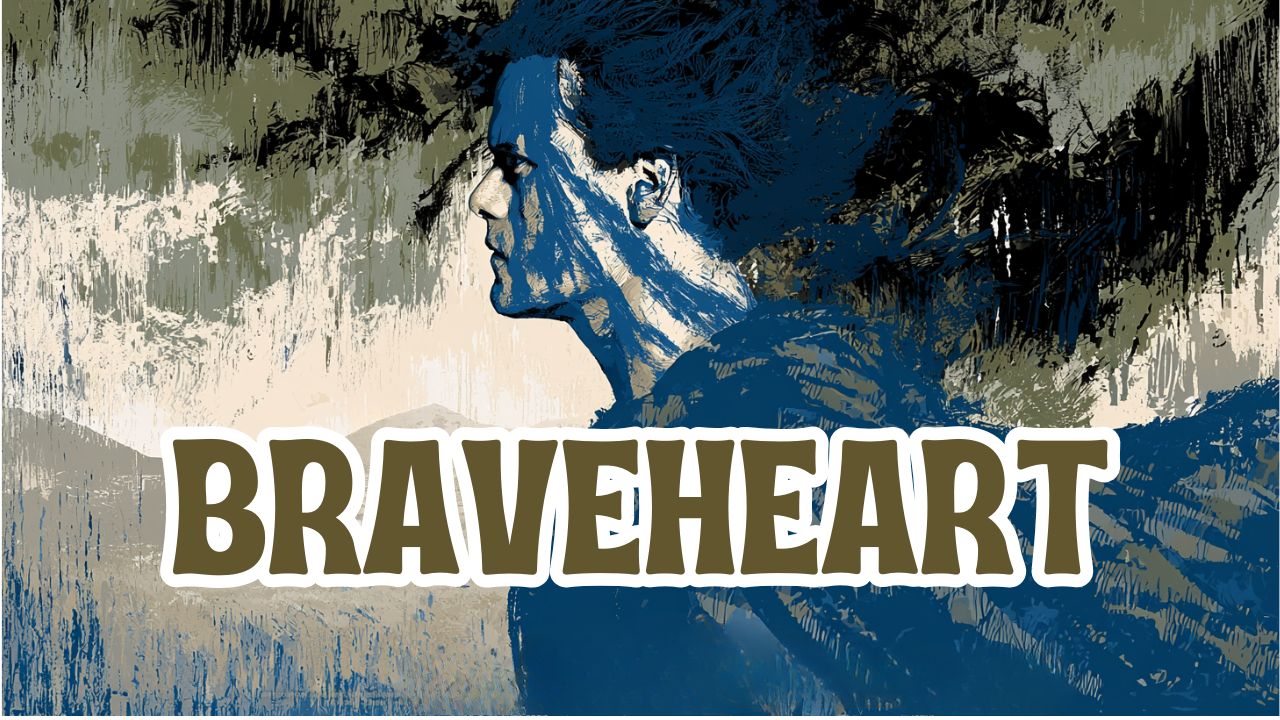
As the film to watch on this day, we take up Braveheart (1995), directed by and starring Mel Gibson.
It is a work that won five categories including Best Picture and Best Director at the 68th Academy Awards.
And it is also known as one of the historical films that deviated most from historical fact in the history of cinema.
Basic Information & Synopsis
→ For synopsis and production information, see our Database Article
Director: Mel Gibson
Year: 1995
Runtime: 178 minutes
Production: Paramount Pictures / 20th Century Fox / Icon Productions
Commemorative Day: The Day of William Wallace’s Execution (August 23)
Background Knowledge
The Real Wallace
There is not so much that is certain.
Born around 1270, probably in Elderslie. He is said to have been raised in a family of the knightly class.
In 1297, his killing of an English sheriff at Lanark is regarded as the start of the rebellion. That same year, on September 11, he defeated the English army at Stirling Bridge.
He was appointed Guardian of Scotland, but was defeated at the Battle of Falkirk in 1298. The deployment of longbowmen was the cause of the English army’s victory.
After that, it is also said that he crossed to the continent to seek support. The possibility of contact with the King of France and the Roman Pope has been pointed out.
On August 5, 1305, he was captured at Robroyston near Glasgow. It was through the guidance of the Scottish knight John de Menteith.
And on August 23, execution.
Edward I
Edward I (1239–1307), depicted in the film as a cold-hearted tyrant, was in fact a fierce person as well.
Bearing the byname “Hammer of the Scots,” he annexed Wales and expelled the Jews from the country.
However, he was at the same time a king who developed England’s legal system. He is sometimes called “the English Justinian.”
He is a complex person to depict as a one-sided villain.
The Work’s Reception
This work was released in 1995 and won five categories at the 68th Academy Awards — Best Picture, Best Director, Best Cinematography, Best Makeup, and Best Sound Effects Editing.
On the other hand, though nominated for Best Original Screenplay, it did not win. It is also said that the assessment over its handling of historical fact had an influence. Incidentally, because this work is not an adaptation of an existing novel but is treated as an original screenplay inspired by such things as Blind Harry’s epic, it was a candidate for Best Original Screenplay rather than Best Adapted Screenplay.
It also succeeded commercially, earning more than 200 million dollars worldwide.
Critical assessment is divided. While there are voices acknowledging the power of the battle scenes and their ability to mobilize emotion, there were also strong voices criticizing its handling of history and its simplified structure of ethnic conflict.
The Influence on Scotland
After this work’s release, tourists increased in Scotland. Visitors to the Wallace Monument are reported to have risen substantially.
Political influence has also been pointed out. The Scottish National Party (SNP) of the time tried to connect the enthusiasm for the film to interest in the independence movement. It is also known that they handed out flyers in front of theaters after screenings.
At the time of the 2014 Scottish independence referendum, this work was often referred to as well.
A film not faithful to historical fact influenced real politics — this, I think, is a phenomenon worth recording.
What Makes It Exceptional
Having confirmed the problems of historical fact, we also state the achievement of this work as a film.
The Battle Scenes
The battle scenes of Stirling and Falkirk were groundbreaking for the time of release.
Mud, blood, chaos. The process by which orderly formations collapse and turn into individual hand-to-hand combat is depicted.
As a work preceding Saving Private Ryan (1998) and Gladiator (2000), its influence on later war films is not small.
The Music
The score by James Horner is a major element of this work.
The melodies using the uilleann pipes (Irish bagpipes) were widely remembered even after release.
However, this too should be pointed out. The uilleann pipes are an Irish instrument and did not exist in Wallace’s time.
The Power of the Direction
Gibson’s direction is skilled at mobilizing emotion.
The composition of the execution scene is especially effective. Enduring torture, told that pleading for mercy would make it easier, and yet refusing. And the final word.
Historically, such a theatrical end is hard to imagine. Executions of the time were not a place for making a prisoner deliver dramatic statements.
Even so, as a film, it functions powerfully.
Related Articles
- Braveheart Database – Synopsis & Production Details
- Mel Gibson – Profile
- James Horner – Profile
はじめに
史実を歪めた映画が、なぜ人を動かしたのか
1305年8月23日、ロンドンのウェストミンスター・ホールで、一人のスコットランド人が裁かれました。
ウィリアム・ウォレス。35歳前後。同月5日にグラスゴー近郊で捕らえられ、鎖につながれてロンドンへ送られていました。
裁判と呼べるものではありませんでした。陪審はなく、弁護人もつかず、彼が発言する機会も限られていました。頭には樫の冠が載せられます。無法者の戴冠という、嘲弄の意味を込めた演出でした。
罪状は大逆罪。しかしウォレスは応じます。
「私はエドワードの臣下であったことがない。だから反逆者にはなりえない」
判決はその日のうちに下されました。絞首、内臓抉り、四つ裂き(hanged, drawn and quartered)。当時としても新しい刑罰で、エドワード1世が反抗的な地域を威圧するために導入したものです。ウォレスは、この刑を受けた二人目とも言われます。
彼は裸にされ、馬に引かれてロンドンの街を引きずられ、スミスフィールドへ運ばれました。絞首されたところで、まだ生きているうちに下ろされます。去勢され、内臓を抜かれ、それを目の前で焼かれ、そして首を落とされました。
遺体は四つに切断されます。頭はタールに浸されてロンドン橋に晒され、四肢はニューカッスル、ベリック、スターリング、パースへ送られました。イングランド支配下の四隅に、見せしめとして。
墓はありません。
この日に観る作品として、メル・ギブソン監督・主演の『ブレイブハート』(1995)を取り上げます。
第68回アカデミー賞で作品賞・監督賞を含む5部門を受賞した作品です。
そして、映画史上最も史実から逸脱した歴史映画の一つとしても知られています。
基本情報・あらすじ
→ あらすじや製作情報はデータベース記事へ
監督: メル・ギブソン
製作年: 1995年
上映時間: 178分
制作: パラマウント・ピクチャーズ/20世紀フォックス/アイコン・プロダクションズ
記念日: ウィリアム・ウォレス処刑の日(8月23日)
予備知識
実際のウォレス
確かなことは、それほど多くありません。
1270年頃、おそらくエルダースリーの生まれ。騎士階級の家に育ったとされます。
1297年、ラナークでイングランド人の州長官を殺害したことが、反乱の始まりとされます。同年9月11日、スターリング橋でイングランド軍を破りました。
スコットランドの守護者に任じられますが、1298年のフォルカークの戦いで敗北。長弓兵の投入がイングランド軍の勝因でした。
その後、大陸へ渡って支援を求めたとも言われます。フランス王やローマ教皇との接触があった可能性が指摘されています。
1305年8月5日、グラスゴー近郊ロブロイストンで捕縛。スコットランド人騎士ジョン・ド・メンティースの手引きによるものでした。
そして8月23日、処刑。
エドワード1世
映画で冷酷な暴君として描かれるエドワード1世(1239-1307)は、実際にも苛烈な人物でした。
「スコットランド人への鎚」という異名を持ち、ウェールズを併合し、ユダヤ人を国外追放しています。
ただし彼は同時に、イングランドの法制度を整備した王でもありました。「イングランドのユスティニアヌス」と呼ばれることもあります。
一面的な悪役として描くには、複雑な人物です。
作品の評価
本作は1995年に公開され、第68回アカデミー賞で作品賞、監督賞、撮影賞、メイクアップ賞、音響効果編集賞の5部門を受賞しました。
一方で、脚本賞(オリジナル脚本賞)にはノミネートされたものの受賞していません。史実の扱いをめぐる評価が影響したとも言われます。なお本作は、既存の小説の映画化ではなく、盲人ハリーの叙事詩などに着想を得たオリジナル脚本という扱いのため、脚色賞ではなくオリジナル脚本賞の候補となりました。
商業的にも成功し、全世界で2億ドル以上を稼ぎました。
批評的な評価は分かれます。戦闘場面の迫力と感情の動員力を認める声がある一方、歴史の扱いと、単純化された民族対立の構図を批判する声も強くありました。
スコットランドへの影響
本作の公開後、スコットランドでは観光客が増加しました。ウォレス記念塔への訪問者は大幅に伸びたと報告されています。
政治的な影響も指摘されています。当時のスコットランド国民党(SNP)は、映画の熱狂を独立運動への関心につなげようとしました。上映後の劇場前でチラシを配ったことも知られています。
2014年のスコットランド独立住民投票の際にも、本作はしばしば言及されました。
史実に忠実でない映画が、現実の政治に影響を与えた——これは、記録すべき現象だと思います。
優れている点
史実の問題を確認したうえで、本作の映画としての達成についても述べます。
戦闘場面
スターリングとフォルカークの戦闘場面は、公開当時としては画期的なものでした。
泥、血、混乱。整然とした陣形が崩れ、個人の格闘に変わっていく過程が描かれます。
『プライベート・ライアン』(1998)や『グラディエーター』(2000)に先立つ作品として、後の戦争映画に与えた影響は小さくありません。
音楽
ジェームズ・ホーナーによるスコアは、本作の大きな要素です。
イリアン・パイプ(アイルランドのバグパイプ)を用いた旋律は、公開後も広く記憶されました。
ただし、これも指摘しておくべきでしょう。イリアン・パイプはアイルランドの楽器であり、ウォレスの時代には存在していません。
演出の力
ギブソンの演出は、感情を動員することに長けています。
処刑場面の構成は、とりわけ効果的です。拷問を受け、慈悲を乞えば楽になると告げられ、それでも拒む。そして最後の一言。
歴史的には、こうした演出的な最期は考えにくいものです。当時の処刑は、囚人に劇的な発言をさせる場ではありませんでした。
それでも、映画としては強力に機能します。
関連記事
- ブレイブハート データベース – あらすじ・製作情報
- メル・ギブソン – プロフィール
- ジェームズ・ホーナー – プロフィール