
Choose Your Language / 言語を選択:
Introduction
The Origin of a Villain — A Shocking Masterpiece About the Monster Society Made
April 29 is National Villain Day.
Observed primarily in popular culture and online communities, the day celebrates the villains of fiction — the antagonists of stories, films, and comics. Its premise is simple: without a villain, a hero’s story cannot exist. And sometimes, the villain is the most compelling figure in the room — the one the audience cannot look away from, the one who stays long after the credits have run.
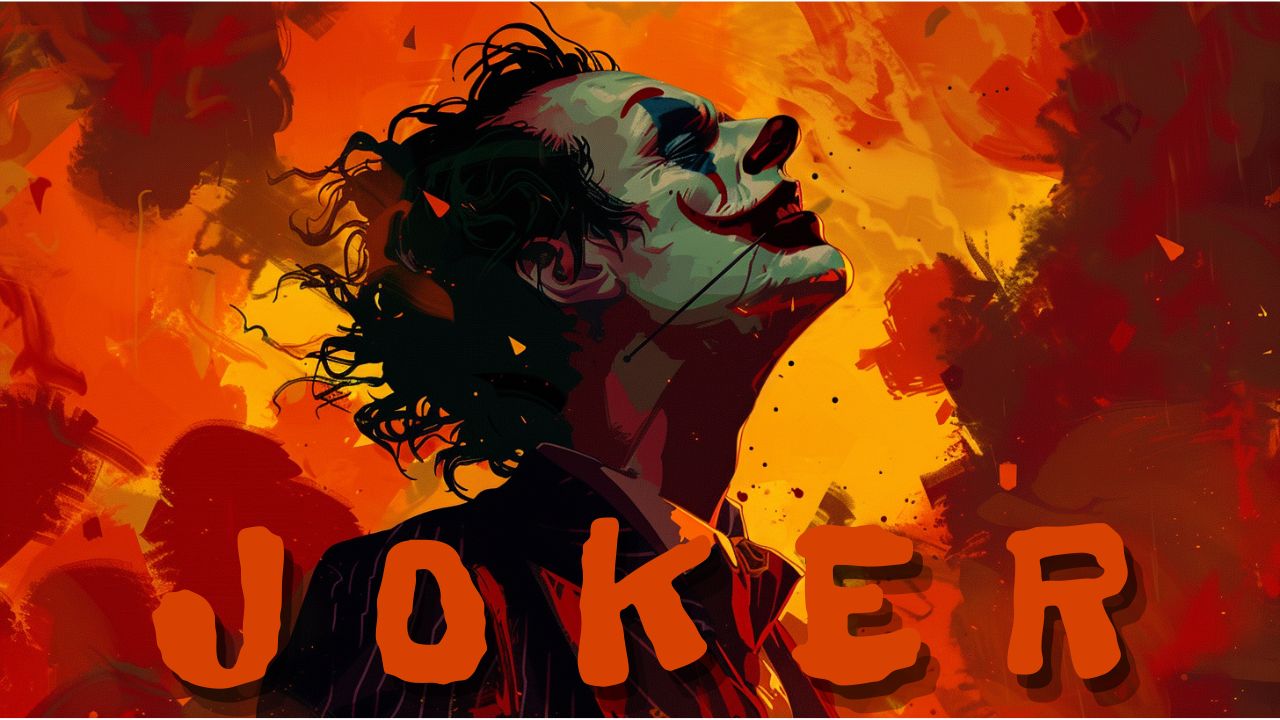
For this day, the film to watch is Joker (2019), directed by Todd Phillips.
The Joker is among the most iconic villains in cinema history. But this 2019 version sets itself apart from every previous interpretation. It does not follow a supervillain. It follows a person: Arthur Fleck, a struggling clown-for-hire in a decaying Gotham City, trying and failing to hold together what remains of his life. The film is a portrait of collapse — and a question aimed directly at the society watching it.
The film won the Golden Lion at the 76th Venice International Film Festival. Joaquin Phoenix won the Academy Award for Best Actor at the 92nd ceremony; Hildur Guðnadóttir won the Academy Award for Best Original Score. Made for $55–70 million, the film grossed $1.079 billion worldwide — the first R-rated film in history to cross the $1 billion mark.
National Villain Day is an occasion to look at a villain not simply as someone to be hated but as someone society produced. Joker is exactly that kind of film.
Basic Information & Synopsis
→ For synopsis and production information, see our Database Article
Director: Todd Phillips
Year: 2019
Runtime: 122 minutes
Production: Warner Bros. Pictures, DC Films
Commemorative Day: National Villain Day (April 29)
Background Knowledge
The Making of the Film — “A Comedy Director Turns the Comic Book World Upside Down”
Director Todd Phillips was known for comedy — Road Trip (2000), the Hangover series (2009–2013). But he had come to feel that a cultural climate of heightened political scrutiny had made the kind of comedy he made increasingly difficult, and conceived of a film that would “turn the comic book world upside down.”
In 2016, Phillips pitched Joker to Warner Brothers as a low-budget standalone. DC Films accepted it as a strategy to differentiate from Marvel. Martin Scorsese was announced as a co-producer in 2017. Phillips and Scott Silver spent about a year writing the screenplay. The final budget was $55–70 million; principal photography began in New York in September 2018 and ended in December.
The Sources — Scorsese and the Memory of New York
The film’s reference points are explicit. Martin Scorsese’s Taxi Driver (1976) — a socially isolated man with a distorted sense of justice moving toward violence — and Scorsese’s The King of Comedy (1982) — a delusional man obsessed with becoming a comedian — are the primary models. The resemblance between Robert De Niro’s Rupert Pupkin and Arthur Fleck is deep and deliberate. In Joker, De Niro plays Murray Franklin — the talk show host Arthur idolizes. The structural echo is intentional.
The 1984 New York City subway shooting — in which Bernard Goetz shot four young men who surrounded him, dividing public opinion on whether it was self-defense — influenced the film’s subway sequence. The case’s moral ambiguity, the difficulty of assigning clear guilt, is reflected in Arthur’s subway killing.
Alan Moore’s graphic novel Batman: The Killing Joke (1988) — with its premise that a single terrible day can turn anyone into the Joker — provides the film’s foundational question.
Casting — Phillips Had Only One Actor in Mind
Warner wanted Leonardo DiCaprio. Phillips had only ever considered Joaquin Phoenix. His reason: “The goal was not to introduce Joaquin Phoenix to the comic book world. It was to introduce the comic book world to Joaquin Phoenix’s world.”
Phoenix had been interested since around 2014 in a low-budget “character study” built around a DC villain. He had declined Marvel projects, resistant to the commitment of playing the same role across multiple films. The film’s standalone nature was part of what brought him to it.
Robert De Niro plays Murray Franklin. Zazie Beetz plays Sophie; Frances Conroy plays Penny Fleck.
What Makes It Exceptional
Joaquin Phoenix’s Body and Soul
The film’s core is Phoenix’s performance. He spent eight months preparing — one small meal per day, losing approximately 24 kilograms. The emaciated body communicates Arthur’s poverty and fragility before he speaks a word.
More important is the laugh and the dance. Phoenix studied videos of people with pathological laughter and constructed a laugh that functions as pain erupting rather than joy expressing. When Arthur’s laugh comes, the rawness makes it easy to forget it is performance. The dance sequences — on the subway, on the stairs — do not read as celebration; they read as descent into something irrevocable.
Phillips has described Arthur’s ordinary face as his real mask, and the Joker as his real self. Phoenix embodies that reversal entirely. The performance won the Academy Award for Best Actor, the BAFTA, the Golden Globe, and the Screen Actors Guild Award.
“Neither Condemning Nor Glorifying” — The Film’s Refusal to Judge
One of the film’s rare qualities is its sustained refusal to render a verdict on Arthur. Phillips does not condemn him. He does not make him a hero either.
The first killing begins as self-defense — and then Arthur pursues one of the men as he tries to escape, and the justification breaks down. But the audience also knows what those men did to Arthur first. The film holds the question open: is this right or wrong? It does not answer. That sustained ambiguity is why the film stays in the mind after it ends.
Hildur Guðnadóttir’s Score
Icelandic composer Hildur Guðnadóttir’s original score is inseparable from the film’s effect. The cello’s low register carries Arthur’s interior darkness; moments of near-beauty resolve into dissonance. The music tracks Arthur’s psychological state continuously, becoming more chaotic as he descends. The licensed songs — “That’s Life,” “Send In the Clowns,” “Rock and Roll Part 2” — add layers of irony and grief. Guðnadóttir won the Academy Award for Best Original Score and the Golden Globe — becoming, at the time, the first solo female composer to win in that Golden Globe category.
The Visual Design of 1980s Gotham
Production designer Mark Friedberg built Gotham on the texture of 1970s–80s New York: graffiti, garbage, cracked pavement — the Gotham of Taxi Driver. Costume designer Mark Bridges dressed Arthur in cheap polyester and acrylic — clothing that reads as old, faded, and worn. The Joker’s red suit was terracotta in the original script; Phillips changed it to red specifically to sever the visual connection from previous screen versions. Every design decision is a narrative one.
Related Articles
- Joker Database – Synopsis & Production Details
- Todd Phillips – Filmmaker Profile
- Joaquin Phoenix – Actor Profile
はじめに
悪役の起源——社会が生み出した怪物を描く衝撃の傑作
毎年4月29日は「National Villain Day(ナショナル・ヴィラン・デー)」です。この日は、物語・映画・コミックなどで登場する悪役キャラクターを祝う日として、主にポップカルチャーやインターネット上で定着しています。
この記念日の核心にあるのは、「悪役なしにはヒーローの物語も成立しない」という視点です。そして時に、悪役こそが物語の中で最も魅力的で、最も記憶に残る存在となります。
この特別な日に観る作品として、トッド・フィリップス監督による2019年の映画**『ジョーカー』**をお薦めします。
ジョーカーはバットマンの宿敵として映画史上最も象徴的な悪役の一人ですが、この2019年版は従来のヴィラン映画とは一線を画します。本作が描くのは単純な「悪」ではありません——社会に見捨てられ、追い詰められた一人の人間が、どのようにして怪物へと変貌していくかという、痛烈な社会批評です。
第76回ヴェネツィア国際映画祭で金獅子賞を受賞。ホアキン・フェニックスは第92回アカデミー賞主演男優賞を受賞し、ヒルドゥル・グドナドッティルの音楽もアカデミー賞作曲賞を受賞しました。製作費5500〜7000万ドルに対し全世界興収10億7900万ドルという記録的な大ヒットとなり、R指定映画として史上初めて10億ドルを超えた作品となりました。
National Villain Dayに『ジョーカー』を観ることは、悪役を単に憎むべき存在としてではなく、社会が生み出した存在として見つめ直す機会となるでしょう。
基本情報・あらすじ
→ あらすじや製作情報はデータベース記事へ
監督: トッド・フィリップス
製作年: 2019年
上映時間: 122分
制作: ワーナー・ブラザース・ピクチャーズ、DCフィルムズ
記念日: ナショナル・ヴィラン・デー(4月29日)
予備知識
制作の背景——「コメディ監督がコミック映画をひっくり返す」
監督のトッド・フィリップスは『ロード・トリップ』(2000年)、『ハングオーバー』シリーズ(2009-2013年)などのコメディで知られていました。しかし「ポリティカル・コレクトネスの風潮の中で、かつて笑いになっていたジョークが炎上リスクを抱えるようになり、コメディを作るのが難しくなった」と感じていた彼は、コミック映画の世界を「ひっくり返す」ことを思いつきます。
2016年、フィリップスはワーナー・ブラザースに低予算のスタンドアローン映画として『ジョーカー』を売り込みました。DC Filmsが競合するマーベルと差別化する戦略として受け入れられ、2017年にマーティン・スコセッシを共同プロデューサーとして企画が発表されました。脚本はフィリップスとスコット・シルバーが約1年かけて執筆しています。
最終予算は5500万ドルから7000万ドル。主要撮影は2018年9月にニューヨーク市で開始され、同年12月に終了しました。
インスピレーションの源泉——スコセッシとニューヨークの記憶
本作の参照元は明確です。マーティン・スコセッシの『タクシードライバー』(1976年)——社会から孤立し、歪んだ正義感を持つ男が暴力に向かう物語——と、同じくスコセッシの『キング・オブ・コメディ』(1982年)——コメディアンになることを夢見る妄想的な男の物語——が最大の参照源となっています。特に『キング・オブ・コメディ』との類似は深く、ロバート・デ・ニーロが演じるルパート・パプキンの人物造形がアーサーと重なります。本作ではそのデ・ニーロがマレー・フランクリン役で出演するという入れ子構造が生まれています。
また1984年のニューヨーク市地下鉄銃撃事件——バーナード・ゲッツという男が、自分を取り囲んだ若者たちを射殺し、正当防衛か否かが世論を二分した事件——も本作の地下鉄シーンに影響を与えています。「誰が悪人か」が判断しきれないあの事件の曖昧さが、アーサーの地下鉄殺人に反映されています。
さらにグラフィックノベル『バットマン:キリング・ジョーク』(アラン・ムーア著、1988年)——「ただ一日の最悪な日が、誰でもジョーカーに変えうる」というテーマ——が本作の根本的な問いと呼応しています。
キャスティング——フェニックスだけを考えていた
ワーナーはレオナルド・ディカプリオの起用を望みましたが、フィリップスは最初からホアキン・フェニックスだけを考えていました。その理由をフィリップスは明確に語っています——「目標は、ホアキン・フェニックスをコミック映画の世界に紹介することではなく、コミック映画をホアキン・フェニックスの世界に紹介することだった」。
フェニックスは2014年頃から、DCコミックスのような悪役を題材にした低予算の「キャラクタースタディ」映画に興味を持っていました。マーベル作品への出演を断った経験があり、複数作品で同じ役を演じることへの抵抗も持っていました。本作の孤高の一作という性格が、フェニックスを動かした理由の一つでした。
マレー・フランクリン役にロバート・デ・ニーロ、ソフィー役にザジー・ビーツ、ペニー役にフランセス・コンロイが起用されています。
優れている点
ホアキン・フェニックスの肉体と魂
本作の核心は、フェニックスの演技です。彼はこの役のために8ヶ月間、1日1回の少量の食事だけを摂り、約24キロを減量しました。痩せこけた体は、アーサーという人物の貧しさと脆さを言葉なしに伝えます。
しかしより重要なのは、笑いとダンスの演技です。フェニックスは制御不能な笑いに苦しむ人々のビデオを研究し、「喜びではなく痛みの爆発」としての笑い方を作り上げました。アーサーの笑いが流れるたびに、それが演技であることを忘れるような生々しさがあります。ダンスもまた「自由の祝福」ではなく「狂気への降下」として機能しており、地下鉄のシーンや階段のシーンで、観客はアーサーの変貌を体で感じます。
フィリップスは「アーサーの普通の顔が本当のマスクで、ジョーカーが本当の人格だ」と語っています。フェニックスはその逆転を、全身で体現しました。この演技により第92回アカデミー賞主演男優賞、BAFTA賞、ゴールデングローブ賞、全米映画俳優組合賞を受賞しています。
「告発もしない、美化もしない」演出
本作が類稀な理由の一つは、アーサーへの判断を保留し続ける演出にあります。フィリップスはアーサーを悪魔として断罪しません。しかし英雄としても描きません。
アーサーが最初の殺人を犯すシーンは正当防衛として始まりますが、逃げようとする男を追いかけて殺す瞬間に、それが崩れます。しかしその男たちが先に暴力をふるっていたことも観客は知っています。「これは正しいか、間違いか」という問いを映画は観客に投げたまま、答えを出しません。この持続する曖昧さが、映画を見終わった後も頭に残り続ける理由です。
ヒルドゥル・グドナドッティルの音楽
アイスランドの作曲家ヒルドゥル・グドナドッティルが手がけたオリジナルスコアは、本作の映像と不可分な存在です。
チェロの低音がアーサーの内面の暗闇を表現し、時折現れる美しいメロディーはすぐに不協和音に変わります。音楽はアーサーの心の状態と常に同期しており、彼が狂気に落ちるにつれてより混沌としていきます。劇中曲として使われる「That’s Life」「Send In the Clowns」「Rock and Roll Part 2」も、皮肉と悲哀の層を重ねています。
グドナドッティルはこのスコアでアカデミー賞作曲賞を受賞し、ゴールデングローブ賞ではそのカテゴリーでソロ女性作曲家として初めての受賞者となりました。
1980年代ゴッサムの視覚設計
プロダクションデザイナーのマーク・フリードバーグは、ゴッサムシティを「荒廃した都市」として描き、『タクシードライバー』のようなざらついた質感を目指しました。落書き、路上のゴミ、ひび割れた歩道が、腐敗していく都市を体現しています。
衣装デザイナーのマーク・ブリッジスはアーサーのコスチュームを「古く、色褪せ、傷んだ」印象に設計——安価なポリエステルのパンツとアクリルのセーターです。ジョーカーへの変貌後の赤いスーツは、当初の脚本ではテラコッタ色でしたが、「過去の作品と繋がりを持たせたくない」というフィリップスの意図により赤に変更されました。視覚のすべてが、物語の一部として機能しています。
関連記事
- ジョーカー データベース – あらすじ・製作情報
- トッド・フィリップス – 監督プロフィール
- ホアキン・フェニックス – 俳優プロフィール