
Choose Your Language / 言語を選択:
Introduction
People Running Toward the Rubble Right After the Bombing — What 40 Minutes of Record Confronts Us With
On August 19, 2003, at the UN headquarters set up in the Canal Hotel in Baghdad, a truck loaded with a bomb blew itself up.
Twenty-two people died. Among them was Sérgio Vieira de Mello, who had been posted there as the Special Representative of the UN Secretary-General. Born in Brazil, he had worked long at the Office of the UN High Commissioner for Refugees, directed the return of 360,000 refugees in Cambodia, and overseen the transition to independence in East Timor. His mission in Iraq was scheduled for four months.
As an attack against the UN, it was among the worst in history.
De Mello’s bereaved family and the foundation bearing his name aimed to make this day one honoring people engaged in humanitarian aid. France, Switzerland, Japan, Brazil, and Sweden became co-sponsoring nations, and in December 2008 the UN General Assembly adopted Resolution 63/139. August 19 became “World Humanitarian Day.”
What this day honors are people doing the work of helping others in dangerous places.
And there is a number that shows how dangerous that work is. In 2023, the number of people killed while engaged in humanitarian aid activity exceeded 280, a record high.
Aid workers are targeted in conflict zones. Medical facilities are bombed from the air. Relief convoys are attacked. The protection stipulated by international humanitarian law often does not, in reality, function.
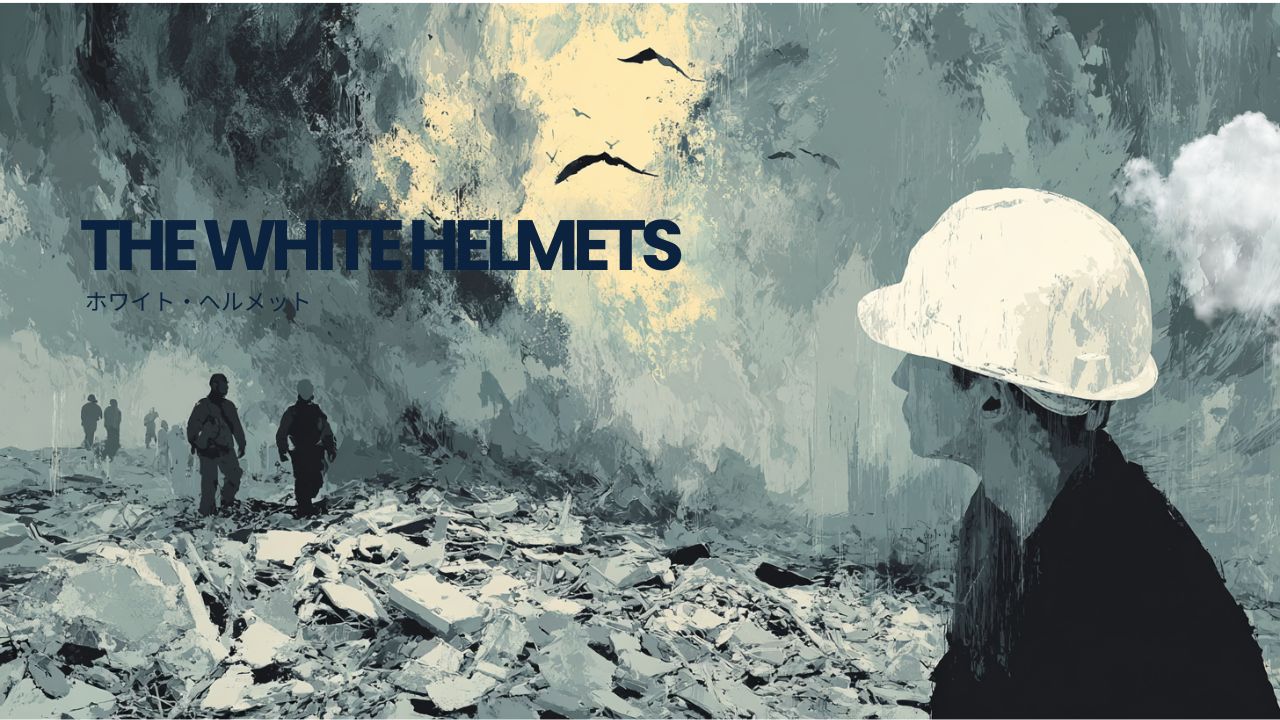
As the film to watch on this day, we recommend the 2016 documentary The White Helmets.
It is a 40-minute short following a civil defense force that continues rescue activity under the Syrian civil war. It won Best Documentary Short at the 89th Academy Awards. It is also Netflix’s first Oscar.
They are neither UN staff nor Red Cross personnel. Former bakers, former tailors, former students. Utterly ordinary citizens became the people who run toward the rubble right after the bombing.
And more than 150 of them have lost their lives to date.
Basic Information & Synopsis
→ For synopsis and production information, see our Database Article
Director: Orlando von Einsiedel
Year: 2016
Runtime: 40 minutes
Production: Grain Media / Violet Films (Netflix)
Commemorative Day: World Humanitarian Day (August 19)
Background Knowledge
The Course of the Production
Director Orlando von Einsiedel and producer Joanna Natasegara are British filmmakers.
In 2014, the two were nominated for the Academy Award for Best Documentary Feature for Virunga, depicting the rangers who fight poaching and oil development in a national park of the Democratic Republic of the Congo.
In the point of recording people who protect others and nature in dangerous places, this work is on the extension of Virunga.
The occasion for their interest in the White Helmets was a rough-quality internet video of a baby being pulled from the rubble.
On the Filming
As stated above, the directors did not enter Syria. It was for reasons of safety.
The interviews were conducted during the period when the members received training in southern Turkey.
The one who shot the local footage was the Syrian cameraman Khaled Khatib. He himself accompanied the White Helmets and recorded the sites of rescue.
At the Academy Awards ceremony, Khatib was not permitted entry into the United States and could not attend. It was the effect of the entry-restriction measure then in force.
The Length of 40 Minutes
This work is a 40-minute short. It is not a feature.
The Documentary Short award is a category that comparatively tends not to draw attention. But this work’s win became Netflix’s first Academy Award and was widely reported.
During the ceremony, the White Helmets were transmitting footage of rescue activity from the ground. The very people being celebrated were, at that moment too, on site.
The Debate Around the Organization
Regarding the White Helmets, there are points that should be noted.
The organization has received funding from Western countries such as the UK, the US, and the Netherlands. For this reason, opinions that question its neutrality exist.
Also, the Syrian government and Russia have claimed that the organization has connections with extremists. On the other hand, the UN and multiple international news organizations state that there is no evidence backing this claim.
Furthermore, that an organized disinformation campaign targeting the organization was carried out has been pointed out in multiple investigative reports.
Humanitarian aid in conflict zones is never separated from politics. In whose controlled territory one operates, from whom one obtains funding — these themselves come to hold political meaning.
When watching this work, keeping in mind that it depicts an organization operating in anti-government-held territory leads to a more accurate understanding.
Afterward
In 2018, several hundred members operating in southern Syria, together with their families, were evacuated to Jordan by way of Israel. It was because the advance of government forces made continuing activity in that region impossible.
After that too, many of the surviving members continued activity within Syria.
In the 2023 Turkey-Syria earthquake, they carried out the first rescues in northwestern Syria.
And at the end of 2024, after the collapse of the Assad regime, the organization is working on reorganization as a nationwide civil defense organization.
What Makes It Exceptional
Returning Numbers to Human Beings
The reporting of conflict is often told in numbers. So many dead, so many tens of thousands displaced.
What this work does is the reverse.
One person pulled from the rubble. Three people digging for them. Their families.
Within 40 minutes, the audience leaves the abstraction of “Syria’s victims” and comes to face concrete faces and voices.
Showing the Fear of the Side That Helps
Much disaster and conflict reporting focuses on victims.
This work follows the side that helps. And it does not hide that they, too, are afraid.
Flinching in reaction to the sound of bombing. Looking around, wary of a second bombing. Making phone calls, worried about the safety of family.
The depiction that they are not moving on heroic sense of mission alone makes this work trustworthy.
Letting Them Speak of Their Former Occupations
There are scenes in which the members speak of what they did before.
Baker. Tailor. Student. Construction worker.
In other words, they are not people raised as professional rescue workers. People who had been living ordinary lives took on this work out of necessity.
This fact shows that humanitarian aid is not necessarily a story of a distant world.
Related Articles
- The White Helmets Database – Synopsis & Production Details
- Orlando von Einsiedel – Profile
はじめに
爆撃の直後、瓦礫へ走る人々——40分の記録が突きつけるもの
2003年8月19日、バグダッドのカナルホテルに置かれた国連本部で、爆弾を積んだトラックが自爆しました。
22人が死亡しました。その中には、国連事務総長特別代表として現地に赴任していたセルジオ・ヴィエイラ・デメロが含まれていました。ブラジル出身の彼は、国連難民高等弁務官事務所で長く働き、カンボジアで36万人の難民帰還を指揮し、東ティモールの独立移行を統括した人物です。イラクでの任務は4か月の予定でした。
国連に対する攻撃としては、史上最悪級のものでした。
デメロの遺族と、彼の名を冠した財団は、この日を人道支援に従事する人々を称える日にすることを目指しました。フランス、スイス、日本、ブラジル、スウェーデンが共同提案国となり、2008年12月、国連総会が決議63/139を採択。8月19日は「世界人道デー」(World Humanitarian Day)となりました。
この日が讃えるのは、危険な場所で人を助ける仕事をしている人々です。
そして、その仕事がどれほど危険かを示す数字があります。2023年、人道支援活動中に殺害された人の数は280人を超え、過去最多を記録しました。
紛争地で援助要員が標的にされる。医療施設が空爆される。救援車列が攻撃される。国際人道法が定める保護は、現実にはしばしば機能していません。
この日に観るべき作品として、2016年のドキュメンタリー**『ホワイト・ヘルメット』**(The White Helmets)を推薦します。
シリア内戦下で救助活動を続ける民間防衛隊を追った40分の短編です。第89回アカデミー賞短編ドキュメンタリー賞を受賞しました。Netflixにとって初のオスカーでもあります。
彼らは国連職員でも、赤十字の要員でもありません。元パン屋、元仕立て屋、元学生。ごく普通の市民が、空爆の直後に瓦礫へ走る人々になりました。
そして、これまでに150人以上が命を落としています。
基本情報・あらすじ
→ あらすじや製作情報はデータベース記事へ
監督: オーランド・フォン・アインジーデル
製作年: 2016年
上映時間: 40分
制作: グレイン・メディア/ヴァイオレット・フィルムズ(Netflix)
記念日: 世界人道デー(8月19日)
予備知識
制作の経緯
監督のオーランド・フォン・アインジーデルと製作のジョアンナ・ナタセガラは、イギリスの映画作家です。
二人は2014年、コンゴ民主共和国の国立公園で密猟や石油開発と闘うレンジャーを描いた『ヴィルンガ』でアカデミー長編ドキュメンタリー賞にノミネートされました。
危険な場所で人や自然を守る人々を記録するという点で、本作は『ヴィルンガ』の延長線上にあります。
彼らがホワイト・ヘルメットに関心を持ったきっかけは、瓦礫から赤ん坊が引き出される粗い画質のネット動画でした。
撮影について
前述のとおり、監督たちはシリアに入っていません。安全上の理由です。
インタビューは、隊員がトルコ南部で訓練を受ける期間に行われました。
現地の映像を撮影したのは、シリア人カメラマンのハーレド・ハティーブです。彼自身がホワイト・ヘルメットに同行し、救助の現場を記録しました。
アカデミー賞授賞式の際、ハティーブは米国への入国を認められず、出席できませんでした。当時発効していた入国制限措置の影響でした。
40分という長さ
本作は40分の短編です。長編ではありません。
短編ドキュメンタリー賞は、比較的注目されにくい部門です。しかし本作の受賞は、Netflixにとって初のアカデミー賞となり、大きく報じられました。
授賞式の最中、ホワイト・ヘルメットは現地から救助活動の映像を発信しています。祝われている当の人々が、その瞬間も現場にいたということです。
組織をめぐる議論
ホワイト・ヘルメットについては、指摘しておくべき論点があります。
同組織は、英国、米国、オランダなど西側諸国から資金援助を受けてきました。このため、中立性を疑問視する意見が存在します。
また、シリア政府とロシアは同組織を過激派と関係があると主張してきました。一方、国連や複数の国際報道機関はこの主張を裏付ける証拠がないとしています。
さらに、同組織を標的とした組織的な偽情報キャンペーンが展開されたことも、複数の調査報道で指摘されています。
紛争地の人道支援は、常に政治から切り離されません。どの陣営の支配地域で活動するか、誰から資金を得るか、それ自体が政治的な意味を持ってしまいます。
本作を観る際は、これが反体制派支配地域で活動する組織を描いた作品であることを踏まえておくと、より正確な理解につながります。
その後
2018年、シリア南部で活動していた隊員とその家族、合わせて数百人が、イスラエル経由でヨルダンへ退避しました。政府軍の進攻により、その地域での活動継続が不可能になったためです。
その後も、生き残った隊員の多くはシリア国内で活動を続けました。
2023年のトルコ・シリア地震では、彼らが北西シリアで最初の救助にあたっています。
そして2024年末、アサド政権が崩壊した後、組織は全国的な民間防衛組織としての再編に取り組んでいます。
優れている点
数字を人間に戻すこと
紛争の報道は、しばしば数字で語られます。死者何人、避難民何万人。
本作がしているのは、その逆です。
瓦礫から引き出される一人。それを掘る三人。彼らの家族。
40分の中で、観客は「シリアの犠牲者」という抽象を離れ、具体的な顔と声に向き合うことになります。
助ける側の恐怖を映すこと
多くの災害・紛争報道は、被害者に焦点を当てます。
本作は助ける側を追います。そして、彼らもまた怖がっていることを隠しません。
爆撃の音に反応して身をすくめる。二度目の爆撃を警戒して周囲を見回す。家族の安否を気遣って電話をかける。
英雄的な使命感だけで動いているのではない、という描写が、この作品を信頼できるものにしています。
元の職業を語らせること
隊員たちが、以前は何をしていたかを語る場面があります。
パン屋。仕立て屋。学生。建設作業員。
つまり彼らは、専門の救助隊員として育成された人ではありません。普通に暮らしていた人々が、必要に迫られてこの仕事に就いたのです。
この事実は、人道支援というものが必ずしも遠い世界の話ではないことを示します。
関連記事
- ホワイト・ヘルメット データベース – あらすじ・製作情報
- オーランド・フォン・アインジーデル – プロフィール