
Choose Your Language / 言語を選択:
Introduction
How the Acquiring of Skills Connects Directly to Human Dignity and Self-Reliance
July 15 is World Youth Skills Day, an international day established by the UN General Assembly in 2014 to promote youth employment, decent work, and entrepreneurship.
Around the world, and especially in conflict zones and impoverished countries, young people lack access to education and vocational training and face unemployment and underemployment. World Youth Skills Day is a day to send the message that all young people should have the opportunity to acquire skills and to play an active role in society.
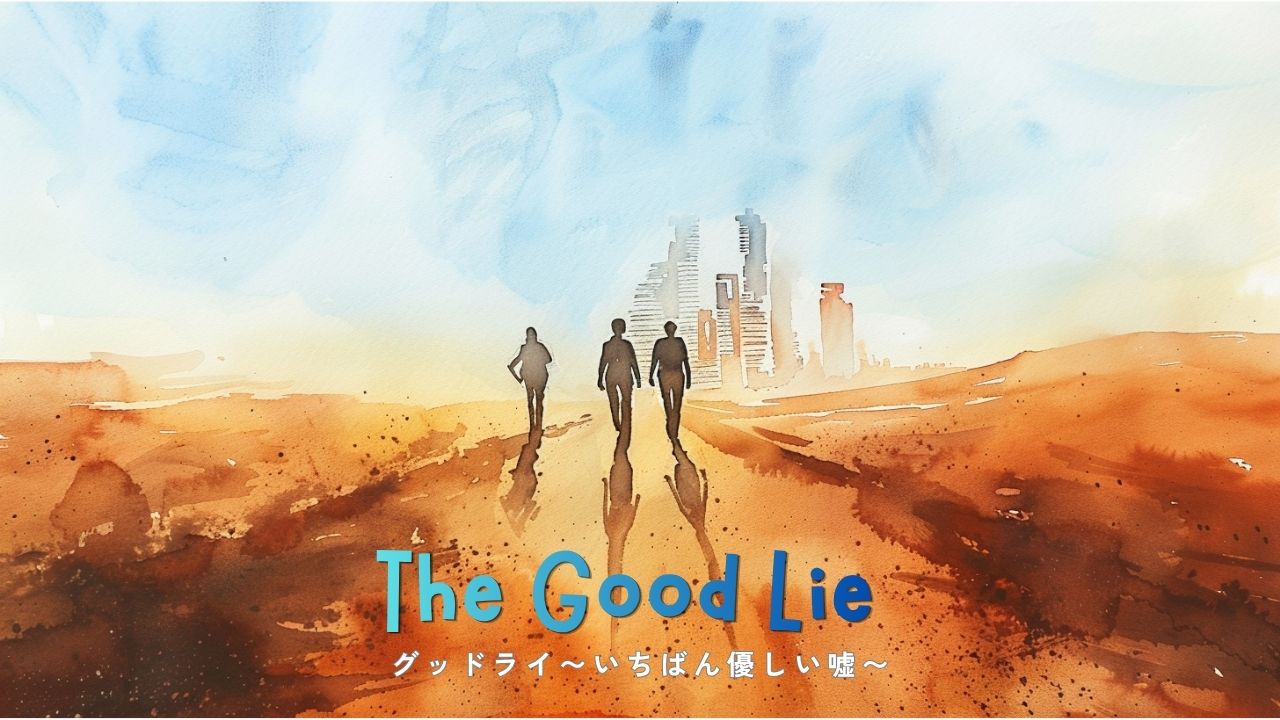
A film fitting for this special day is The Good Lie (produced in 2014, released in Japan in 2015). A moving work, it depicts the story of young people who lost their families in the Second Sudanese Civil War and, after thirteen years of refugee life, migrated to America — the real refugees known as the “Lost Boys.”
Starring Reese Witherspoon and produced by Ron Howard, this film is not merely a story of refugee aid. Through the figures of young people who acquire skills from nothing and become self-reliant in a new environment of a different language and culture, it depicts how the acquiring of skills connects directly to human dignity and self-reliance.
By watching The Good Lie on World Youth Skills Day, we can deeply understand the meaning of skills education and reaffirm the importance of all young people — especially those in difficult circumstances — having the opportunity to learn skills and to work.
Basic Information & Synopsis
→ For synopsis and production information, see our Database Article
Director: Philippe Falardeau
Year: 2014
Runtime: 110 minutes
Production: Alcon Entertainment / Warner Bros.
Commemorative Day: World Youth Skills Day (July 15)
Synopsis: When their village is destroyed in the Second Sudanese Civil War, a group of orphaned children from southern Sudan flee on foot across hundreds of kilometers of wilderness, losing companions along the way to hunger, thirst, and violence before reaching a refugee camp in Kenya. Thirteen years later, several of these young survivors — now the “Lost Boys” — are selected for resettlement in the United States. Scattered to American cities, they encounter a bewildering new world of electricity, telephones, and supermarkets, and are aided by Carrie, a brusque employment counselor. As the young people learn skills, find work, and build self-reliant lives, both they and Carrie are changed by the encounter.
Background Knowledge
The Making of the Film
The Good Lie is the first English-language work by director Philippe Falardeau. Falardeau himself had once abandoned the filming of a documentary following refugees in Sudan, and that interest is said to have led to his directing this film. His style of delicately depicting people who carry loss and trauma is put to use here as well.
The screenplay is by Margaret Nagle, known for Boardwalk Empire among other works, who worked over many years to bring this story to the screen. Filming took place mainly in the American state of Georgia and in South Africa.
The original title, The Good Lie, is a title grounded in an idea akin to that of Mark Twain’s Adventures of Huckleberry Finn — that a lie told for a noble purpose may be forgiven, and that the rightness of a result can sometimes save a person more than the rightness of an act. The two “good lies” placed at the film’s opening and its ending embody the meaning of this title.
The Second Sudanese Civil War (1983–2005) and Its Tragedy
The Second Sudanese Civil War, which forms the film’s background, was a devastating conflict that lasted 22 years, from 1983 to 2005. The fundamental cause of the war was the religious and ethnic conflict between the Arab Islamic regime in the north of Sudan and the non-Arab population of the south (mostly Black, practicing animism or Christianity).
In 1983, when the Nimeiri regime of the time introduced Islamic law (Sharia) into national governance, the non-Arab population of the south strongly resisted, and armed conflict broke out. This civil war lasted about 22 years, claiming around 2.5 million lives, displacing more than 4 million people internally, and turning over 800,000 into refugees in neighboring countries.
Villages were raided, families were torn apart, and children lost their parents. Food shortages, a lack of medical care, a chain of violence — this civil war brought immeasurable suffering to the people of southern Sudan.
A comprehensive peace agreement was finally reached in 2005, and in 2011 South Sudan was born as an independent nation. Yet the scars of the war run deep, and many people still live carrying trauma today.
The “Lost Boys” — A Lost Generation
The “Lost Boys of Sudan” is the name for the groups of boys of the Nuer and Dinka peoples of southern Sudan who were driven from their homes and orphaned in the Second Sudanese Civil War. Around 20,000 children, their villages raided and their parents and families killed, fled on foot over journeys of hundreds of kilometers to survive.
Many of them were young children of only six to ten years of age. With no adult guardians and without sufficient food or water, the children walked on through the wilderness by themselves. The threat of wild animals such as lions and hyenas, dehydration, starvation, and the soldiers pursuing them — many children lost their lives along the way.
The children who survived reached the Kakuma refugee camp in Kenya and refugee camps in Ethiopia.
Life in the refugee camps was by no means easy either. Limited food, unsanitary conditions, a lack of educational opportunity — and yet the children did not lose hope, living on while supporting one another.
2000: The Plan to Resettle in America
In 2000, through cooperation between the United States and Sudan, a resettlement plan was carried out to accept 3,600 “Lost Boys” across various parts of America. This is a system called refugee resettlement, in which a different country accepts refugees already living in a refugee camp. The Office of the United Nations High Commissioner for Refugees (UNHCR) positions this system, along with voluntary repatriation and settlement in a country of asylum, as an indispensable means of refugee protection.
Young people who had known no world beyond their villages and the refugee camp boarded airplanes for the first time and migrated, dispersed to various American cities — Kansas City, Pittsburgh, Boston, Seattle, and others.
What awaited them was a cultural gap beyond imagination. Electricity, running water, telephones, cars, supermarkets — all were first-time experiences. The language barrier too was great, and learning English while searching for work and leading a self-reliant life was not easy.
Yet many of the Lost Boys, with support from employment agencies, local volunteers, and churches, acquired skills, found work, and adapted to American society. Today, many among them have graduated from university and are active as doctors, lawyers, teachers, and entrepreneurs. Some also hold important posts in the government of South Sudan.
What Makes It Exceptional
The Overwhelming Reality Created by a Cast with Real Experience
The most remarkable point of this film is that some of the main cast are actual Lost Boys, who have lived through the same experiences depicted in the film. This is not merely a casting choice but a crucial element that determines the work’s truthfulness.
Ger Duany (as Jeremiah) was born in southern Sudan in 1978 and was separated from his family in the Second Sudanese Civil War. He was forcibly conscripted as a child soldier and, at fourteen, fled to a refugee camp in Ethiopia. He later migrated to America through the resettlement system and graduated from university. In 2014 he was reunited with his mother at the Kakuma refugee camp in Kenya, and in 2015 he was appointed a UNHCR Goodwill Ambassador (for the East Africa and Horn of Africa region). He now works as an actor and model while energetically carrying out activities to bring the voices of refugees to the world.
Emmanuel Jal (as Paul) was also born in a combat zone in southern Sudan in the early 1980s and walked the path of a child soldier. Overcoming difficulties beyond imagination, he now follows the road of music as a rap artist. In 2014 he released his fifth album, “The Key,” and his music is used in the film’s soundtrack. He has also given speeches at the UN and the US Congress, and in 2012 he was selected as a Young Global Leader of the World Economic Forum. He founded the charity “Gua Africa” to overcome the harms of war and poverty, and devotes himself to peace activism as well.
With actors who have real experience performing, a truthfulness and reality not found in other works is added to the film. The emotions reflected in their eyes, the tone of their voices, the movements of their bodies — all are born of genuine experience, moving viewers deeply. The fear shown in the Sudan scenes, the expressions mingling resignation and hope in the refugee camp, the bewilderment and adaptation in America — all of these well up not from acting but from their own memories.
The Production Team of Reese Witherspoon and Ron Howard
In this film, Reese Witherspoon, an Academy Award winner for Best Actress, participates not only as star but also in the production. A powerhouse actress who won the Academy Award for Walk the Line, she plays Carrie, an employment counselor, taking on the important role of supporting the young refugees. Witherspoon’s performance delicately expresses the process by which a career woman who at first handles her work with an emphasis on efficiency grows as a human being through her interactions with the Lost Boys. Her star quality serves as a force that draws audiences to this socially engaged work.
The renowned director Ron Howard, known for A Beautiful Mind and Apollo 13, participates as executive producer, lending the work weight and credibility. Through his involvement, this film was produced not as a mere low-budget independent film but as a full-fledged work with the support of a major Hollywood studio.
The film was also screened as the opening work of the 10th UNHCR Refugee Film Festival and is supported by the UNHCR and the International Organization for Migration (IOM). This shows that the work is positioned not as mere entertainment but as an important work for thinking about the refugee issue.
The Realistic Depiction of African Landscapes and the Refugee Camp
The first half of the film was shot on location in southern Sudan and at the Kakuma refugee camp in Kenya. The vastness of the African land, the scorching sun, the dusty roads, the arid landscape — all of these visually convey the harsh journey of the children.
Especially striking are the scenes of the children walking on for hundreds of kilometers. The wilderness stretching to the horizon, the sun blazing down mercilessly, the dry earth underfoot — a genuine harshness that could never be expressed by CG or a studio set comes through the screen.
The depiction of the Kakuma refugee camp in Kenya is also extremely realistic. The scenes shot at an actual refugee camp — the sight of tents stretching on and on, people sharing limited resources, and yet children playing — honestly depict the everyday life of refugees. There is no “poverty porn” staging here. The camera respects the dignity of the refugees, depicting them not as “pitiable victims” but as human beings who continue to hold hope even in difficult circumstances.
The Honest and At Times Humorous Expression of the Cultural Gap
In the film’s latter half, the scenes after arrival in America depict the cultural gap honestly, and at times humorously, making viewers feel the refugees’ experience as close to home.
Young people who have never seen a telephone, at a loss before a ringing phone. Being overwhelmed by mountains of never-before-seen foods in a supermarket. Being startled that automatic doors open, and afraid to ride an escalator — these scenes, while inviting laughter, make us realize that the everyday life we take for granted in fact holds only within a particular culture and economic environment.
Director Philippe Falardeau’s finest quality is that, however difficult the situation, he never strips the characters of their dignity. The film never looks down on or mocks these cultural gaps. Rather, it emphasizes the intelligence and adaptability of the Lost Boys. They certainly did not know modern technology, but they possess the wisdom to survive in extreme conditions, the courage to protect their companions, and the strength of spirit never to lose hope. The film poses fundamental questions: what is “civilization,” and what is “education”?
Related Articles
- The Good Lie Database – Synopsis & Production Details
- Philippe Falardeau – Filmmaker Profile
- Reese Witherspoon – Actor Profile
はじめに
技能の習得が、いかに人間の尊厳と自立に直結するか
7月15日は「世界ユース技能デー(World Youth Skills Day)」です。この日は2014年に国連総会で制定された国際デーで、若者の雇用、ディーセント・ワーク(働きがいのある人間らしい仕事)、起業家精神を促進することを目的としています。
世界中で、特に紛争地域や貧困国の若者たちは、教育や職業訓練の機会に恵まれず、失業や不完全雇用に直面しています。世界ユース技能デーは、すべての若者が技能を習得し、社会で活躍できる機会を持つべきだというメッセージを発信する日です。
この特別な日にふさわしい映画が、2014年制作、2015年日本公開の『グッドライ〜いちばん優しい嘘〜』(原題:The Good Lie)です。本作は、第二次スーダン内戦で家族を失い、13年間の難民生活を経てアメリカに移住した若者たち——「ロストボーイズ」と呼ばれた実在の難民——の物語を描いた感動作です。
リース・ウィザースプーン主演、ロン・ハワード製作のこの映画は、単なる難民支援の物語ではありません。本作は、ゼロから技能を習得し、言語も文化も異なる新しい環境で自立していく若者たちの姿を通じて、技能の習得がいかに人間の尊厳と自立に直結するかを描き出しています。
世界ユース技能デーに『グッドライ』を観ることで、私たちは技能教育の意味を深く理解し、すべての若者——特に困難な状況にある若者——が技能を学び、働く機会を得ることの重要性を再認識できるでしょう。
基本情報・あらすじ
→ あらすじや製作情報はデータベース記事へ
監督: フィリップ・ファラルドー
製作年: 2014年
上映時間: 110分
制作: アルコン・エンターテインメント/ワーナー・ブラザース
記念日: 世界ユース技能デー(7月15日)
あらすじ: 第二次スーダン内戦で村を破壊されたスーダン南部の孤児となった子どもたちは、何百キロもの荒野を徒歩で逃れ、飢えや渇き、暴力によって道中で仲間を失いながら、ケニアの難民キャンプへとたどり着きます。13年後、生き延びた若者たち——いまや「ロストボーイズ」と呼ばれる彼ら——のうち数人が、アメリカへの第三国定住に選ばれます。アメリカの各都市に散らばった彼らは、電気、電話、スーパーマーケットという戸惑うような新しい世界に出会い、ぶっきらぼうな就職カウンセラーのキャリーに支えられていきます。若者たちが技能を学び、仕事を得て、自立した生活を築いていくなかで、彼らもキャリーも、この出会いによって変わっていきます。
予備知識
制作の経緯
『グッドライ』は、フィリップ・ファラルドー監督にとって初の英語作品です。ファラルドー自身、かつてスーダンで難民を追ったドキュメンタリーの撮影を断念した経験があり、その関心が本作の監督につながったといいます。喪失やトラウマを抱えた人々を繊細に描く作風は、本作にも活かされています。
脚本は『ボードウォーク・エンパイア』などで知られるマーガレット・ネーグルで、この物語の映画化には長い年月をかけて取り組みました。撮影は主にアメリカ・ジョージア州と南アフリカで行われています。
なお、原題『The Good Lie(良い嘘)』は、マーク・トウェインの『ハックルベリー・フィンの冒険』に通じる考え——気高い目的のためにつく嘘は許される、行為の正しさよりも結果の正しさが人を救うことがある——を踏まえたタイトルです。映画の冒頭と結末に置かれた二つの「良い嘘」が、この題名の意味を体現しています。
第二次スーダン内戦(1983-2005年)とその悲劇
映画の背景となった第二次スーダン内戦は、1983年から2005年まで22年間続いた悲惨な紛争です。内戦の根本的な原因は、スーダン北部のアラブ系イスラム政権と、南部の非アラブ系住民(主に黒人で、アニミズムやキリスト教を信仰)との間の宗教的・民族的対立でした。
1983年、当時のヌメイリ政権が国政にイスラム法(シャリーア)を導入したことに、南部の非アラブ系住民が強く反発し、武力衝突が勃発しました。この内戦は約22年間続き、約250万人が犠牲になり、400万人以上が国内避難民となり、80万人以上が隣国への難民となりました。
村々は襲撃され、家族は引き裂かれ、子どもたちは両親を失いました。食料不足、医療の欠如、暴力の連鎖——この内戦は、スーダン南部の人々に計り知れない苦しみをもたらしました。
2005年にようやく包括和平合意が結ばれ、2011年には南スーダンが独立国家として誕生しました。しかし、内戦の傷跡は深く、今なお多くの人々がトラウマを抱えて生きています。
「ロストボーイズ」——失われた世代
「ロストボーイズ(Lost Boys of Sudan)」とは、第二次スーダン内戦で住んでいた場所を追われ、孤児となったスーダン南部のヌエル族やディンカ族の少年たちの集団の呼び名です。約2万人の子どもたちが、村を襲撃され、両親や家族を殺され、生き延びるために何百キロもの道のりを徒歩で逃げました。
彼らの多くは、わずか6歳から10歳程度の幼い子どもでした。大人の保護者もなく、食料も水も十分にない中、子どもたちだけで荒野を歩き続けました。ライオンやハイエナなどの野生動物の脅威、脱水症状、飢餓、そして追ってくる兵士たち——多くの子どもたちが途中で命を落としました。
生き残った子どもたちは、ケニアのカクマ難民キャンプやエチオピアの難民キャンプにたどり着きました。
難民キャンプでの生活も決して楽ではありませんでした。限られた食料、不衛生な環境、教育の機会の欠如——それでも、子どもたちは希望を失わず、互いに支え合いながら生きてきました。
2000年:アメリカへの移住計画
2000年、アメリカとスーダンの協力により、3600人の「ロストボーイズ」をアメリカ各地に受け入れる移住計画が実施されました。これは第三国定住(Refugee Resettlement)と呼ばれる制度で、すでに難民キャンプで生活する難民を別の国が受け入れるものです。国連難民高等弁務官事務所(UNHCR)は、自主帰還、庇護国への定着と共に、難民保護に必要不可欠な手段としてこの制度を位置づけています。
村と難民キャンプ以外の世界を知らなかった若者たちは、初めて飛行機に乗り、アメリカの各都市——カンザスシティ、ピッツバーグ、ボストン、シアトルなど——に分散して移住しました。
彼らを待っていたのは、想像を絶する文化的ギャップでした。電気、水道、電話、車、スーパーマーケット——すべてが初めての経験でした。言語の壁も大きく、英語を学びながら仕事を探し、自立した生活を送ることは容易ではありませんでした。
しかし、多くのロストボーイズは、職業紹介所や地域のボランティア、教会などのサポートを受けながら、技能を習得し、仕事を得て、アメリカ社会に適応していきました。現在では、彼らの中には大学を卒業し、医師、弁護士、教師、起業家として活躍する者も多くいます。また、南スーダン政府で要職に就く者もいます。
優れている点
実体験を持つキャストが生み出す圧倒的なリアリティ
本作の最も特筆すべき点は、主要キャストの一部が実際のロストボーイズであり、映画で描かれているのと同じ経験をしてきたことです。これは単なるキャスティングの選択ではなく、作品の真実性を決定づける重要な要素となっています。
ゲール・ドゥエイニー(ジェレマイア役)は、1978年にスーダン南部で生まれ、第二次スーダン内戦で家族と離ればなれになりました。彼は強制的に少年兵として徴兵され、14歳の時にエチオピアの難民キャンプへ逃れました。その後、第三国定住制度によりアメリカに移住し、大学を卒業しました。2014年にはケニアのカクマ難民キャンプで母親と再会を果たし、2015年にはUNHCR親善大使(東アフリカ・アフリカの角地域)に任命されました。現在は俳優・モデルとして活動しながら、難民の声を世界に届ける活動を精力的に行っています。
エマニュエル・ジャル(ポール役)も、スーダン南部の戦闘地域に1980年代初め頃に生まれ、少年兵として人生を歩みました。想像を絶するほどの困難を乗り越え、現在はラップアーティストとして音楽の道を進んでいます。2014年には5枚目のアルバム「The Key」をリリースし、本作のサウンドトラックにも楽曲が使用されています。また、国連や米国議会などで演説を行い、2012年には世界経済フォーラムのヤング・グローバル・リーダーズに選出されました。彼は戦争や貧困の被害に打ち勝つための慈善団体「Gua Africa」を創設し、平和活動にも尽力しています。
実体験を持つ俳優たちが演じることで、映画には他の作品にはない真実味とリアリティが加わりました。彼らの目に映る感情、声のトーン、身体の動き——すべてが本物の経験から生まれたものであり、観客に深い感動を与えます。スーダンのシーンで見せる恐怖、難民キャンプでの諦めと希望が混じった表情、アメリカでの戸惑いと適応——これらすべてが、演技ではなく彼ら自身の記憶から湧き出ているのです。
リース・ウィザースプーンとロン・ハワードの製作体制
本作は、アカデミー主演女優賞を受賞したリース・ウィザースプーンが主演だけでなく製作にも参加しています。彼女は『ウォーク・ザ・ライン/君につづく道』でアカデミー賞を受賞した実力派女優で、本作ではキャリーという就職カウンセラー役を演じ、難民の若者たちを支える重要な役割を担っています。
リース・ウィザースプーンの演技は、最初は効率重視で仕事をこなすキャリアウーマンが、ロストボーイズとの交流を通じて人間的に成長していく過程を繊細に表現しています。彼女のスター性が、この社会派作品に観客を引き寄せる力となっています。
製作総指揮には、『ビューティフル・マインド』『アポロ13』などで知られる名監督ロン・ハワードが参加しており、作品に重厚感と信頼性を与えています。彼の参加により、本作は単なる低予算のインディペンデント映画ではなく、ハリウッドのメジャースタジオの支援を受けた本格的な作品として製作されました。
また、本作は第10回UNHCR難民映画祭のオープニング作品として上映され、国連難民高等弁務官事務所(UNHCR)と国際移住機関(IOM)が後援しています。これは、本作が単なるエンターテインメントではなく、難民問題について考えるための重要な作品として位置づけられていることを示しています。
アフリカの風景と難民キャンプのリアルな描写
本作の前半は、スーダン南部とケニアのカクマ難民キャンプで実際にロケ撮影が行われました。アフリカの大地の広大さ、灼熱の太陽、埃っぽい道、乾いた風景——これらすべてが、子どもたちの過酷な旅路を視覚的に伝えています。
特に印象的なのは、子どもたちが何百キロも歩き続けるシーンです。地平線まで続く荒野、容赦なく照りつける太陽、足元の乾いた土——CGや撮影所のセットでは決して表現できない、本物の過酷さが画面から伝わってきます。
ケニアのカクマ難民キャンプの描写も非常にリアルです。実際の難民キャンプで撮影されたシーンは、テントが延々と続く光景、限られた資源を分け合う人々、それでも子どもたちが遊ぶ姿——難民の日常生活を誠実に描いています。ここには、「貧困ポルノ」的な演出はありません。カメラは難民たちの尊厳を尊重し、彼らを「かわいそうな犠牲者」ではなく、困難な状況でも希望を持ち続ける人間として描いています。
文化的ギャップの誠実で時にユーモラスな表現
本作の後半、アメリカに到着してからのシーンは、文化的ギャップを誠実に、そして時にユーモラスに描くことで、観客に難民の経験を身近に感じさせます。
電話を見たことがない若者たちが、鳴り響く電話機を前に戸惑う姿。スーパーマーケットで、見たこともない食品の山に圧倒される様子。自動ドアが開くことに驚き、エスカレーターに乗ることを恐れる姿——これらのシーンは、笑いを誘いながらも、私たちが当たり前だと思っている日常が、実は特定の文化と経済環境の中でしか成立しないことを気づかせます。
フィリップ・ファラルドー監督の最も優れた点は、どんなに困難な状況でも、登場人物たちの尊厳を決して奪わないことです。
映画は、これらの文化的ギャップを決して見下したり、バカにしたりしません。むしろ、ロストボーイズの知性と適応力を強調しています。彼らは確かに現代のテクノロジーを知りませんでしたが、極限状態でサバイバルする知恵、仲間を守る勇気、希望を失わない精神力を持っています。映画は、「文明」とは何か、「教育」とは何か、という根本的な問いを投げかけます。