
Choose Your Language / 言語を選択:
Introduction
The Bond Between a Boy and an Orca, and a Story of Freedom That Changed the Real World
July 14 is World Orca Day, celebrated around the world.
This observance was proposed by orca researcher Dr. Ingrid N. Visser at the World Whale Conference held in Boston in November 2013, and was established to raise awareness of orcas and the marine environment they inhabit, and to promote their conservation. Its background is said to lie in an event in New Zealand where local people worked together to return a young orca, stranded in shallow water, to the sea. The week that includes this day is observed as “World Orca Week (WOW),” a period in which people around the world celebrate orcas and reflect on the problems they face, such as marine pollution, the decline of their prey, and the issues of captivity.
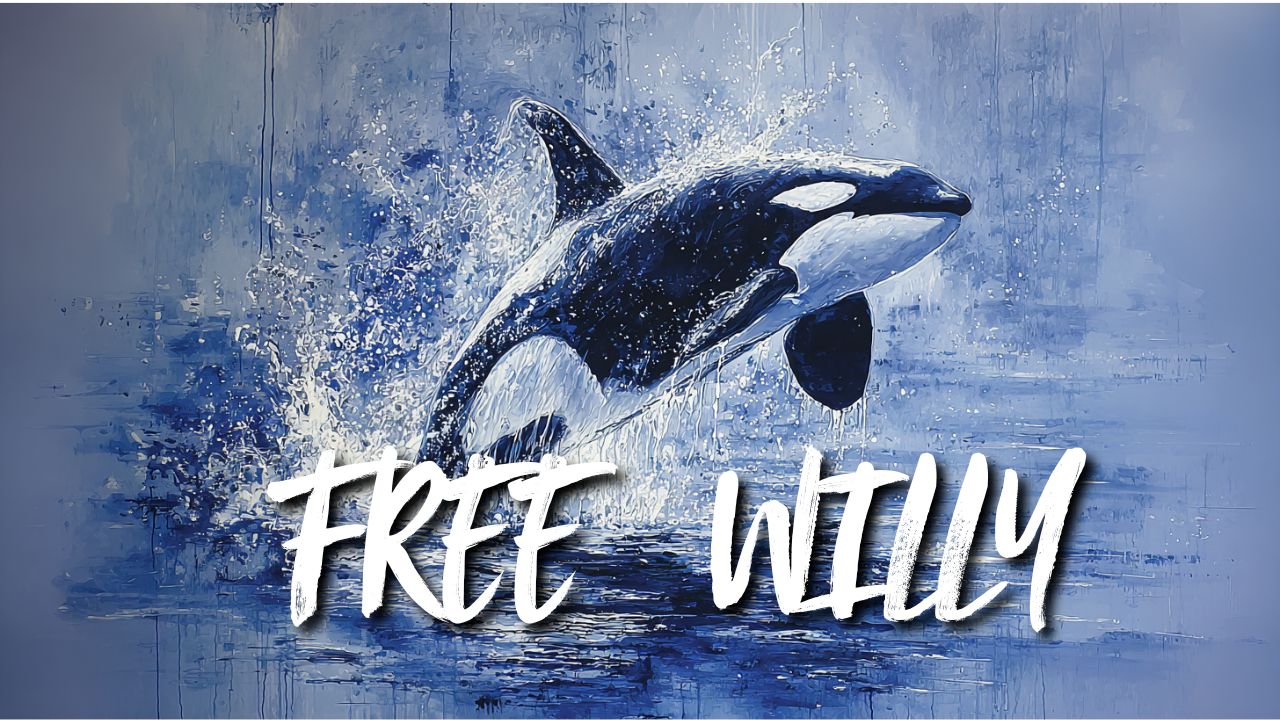
For this special day, we strongly recommend Simon Wincer’s 1993 film Free Willy. A moving story, it depicts the bond of heart between Jesse, a boy abandoned by his family, and Willy, an orca living in loneliness at a marine park, along with a grand adventure in pursuit of freedom.
The way Jesse — the twelve-year-old boy played by Jason James Richter — meets a captured, exhibited orca and builds a bond with it goes beyond a mere animal film, confronting head-on themes deeply connected to the ideals of World Orca Day: the ethics of capturing and keeping wild animals, animal rights and freedom, and what true coexistence between humans and animals might be. Moreover, this film holds a rare degree of social influence in cinema history: it set in motion a worldwide project to return the orca actually used in the film, Keiko, to the wild, and it stirred international debate over the ethics of keeping marine mammals in aquariums.
Basic Information & Synopsis
→ For synopsis and production information, see our Database Article
Director: Simon Wincer
Year: 1993
Runtime: 112 minutes
Production: Warner Bros.
Commemorative Day: World Orca Day (July 14)
Background Knowledge
The Making of the Film and Keith A. Walker
Free Willy was a passion project that screenwriter Keith A. Walker (1935–1996) spent nearly ten years bringing to fruition.
Walker was active as a television writer from the 1970s, writing for numerous TV series such as MASH* (1973), Emergency! (1975), Quincy, M.E., and The Fall Guy (1984). He also wrote 26 episodes for the Rod Serling–hosted radio program The Zero Hour. He worked as an actor as well, known for playing Irving Walsh in The Goonies (1985).
In 1984, Walker conceived the story of Free Willy while working in Astoria, Oregon, during the filming of Richard Donner’s The Goonies. As it happened, this same Astoria would later appear as the town where the Greenwoods live in Free Willy. In Walker’s original screenplay, Jesse was a ten-year-old mute boy living with nuns. However, Richard Donner and producer Lauren Shuler Donner (Donner would later join as executive producer) hired screenwriter Corey Blechman to make substantial revisions, cutting the overly sentimental elements and changing Jesse into a twelve-year-old “street tough” type.
Free Willy would be Walker’s only theatrical film screenplay. His film debut in 1993, at age 59, was a late bloom, but the work became a worldwide hit, successfully making the transition from television to film. Yet only three years after this success, on December 30, 1996, Walker died of cancer at age 61. Free Willy 3: The Rescue, released in 1997, is dedicated to his memory.
The Background and Technology of the Production
To find the orca to play Willy, the production team traveled across the United States, Japan, France, Spain, and Argentina, finally arriving at Keiko, a twelve-year-old orca who had lived at the Reino Aventura amusement park in Mexico City since 1985. From May to June 1992, filming took place at the amusement park while it was under renovation, using wooden backdrops to evoke the atmosphere of the Pacific Northwest.
After filming in Mexico, location shooting was done in Oregon and Washington. Ecola State Park, the Oregon Convention Center, Pioneer Courthouse Square, and the Morrison Bridge appear, and the climactic jump scene was filmed at Hammond Marina in Warrenton. There, a rocket launcher was used to launch an animatronic Willy, achieving that iconic jump.
For close-ups where Willy’s movement was limited, the trailer scenes, and scenes of swimming in the open sea, a full-scale animatronic was used. According to special-effects supervisor Walt Conti, half of the orca shots were filmed with animatronics, and reproducing the fine movements of a real orca required focusing on every nuance. In the climactic scene of clearing the breakwater, CGI was used most heavily. All of Keiko’s stunts were performed by young orca trainer Justin Scherbert. The production worked with animal-welfare experts to take care to minimize stress on Keiko. Filming was limited to short periods, and shooting was stopped whenever Keiko showed reluctance. Even so, the stress that film production itself places on animals later became a subject of debate.
What Makes It Exceptional
Jason James Richter’s Natural Performance
The film’s greatest strength is the emotionally rich, natural performance of its star, Jason James Richter (then thirteen). He fully portrays the change from a closed-off, rebellious boy into one who learns love and responsibility through his bond with Willy. Especially striking is his expression when facing Willy. His performance — conveying the communion of heart with a partner he cannot exchange words with, through expression and physical expression alone — shows a maturity hard to believe of a child actor. His tears in the final farewell scene surely shake the viewer’s heart.
Its Completeness as a Human Drama
Free Willy is an animal film and, at the same time, excels as a boy’s coming-of-age story. The problems Jesse carries — attachment disorder, a lack of trust, having no place to belong — are problems that many children in modern society face. The Greenwoods, and especially the fatherly figure of Glen played by Michael Madsen, are drawn with a delicate balance: ideal, yet never overbearing. The way he keeps his distance from Jesse while supporting him with all his strength when needed makes us consider what a true parent-child relationship is. Supporting characters like Rae and Randolph each play an important role in Jesse’s growth, drawn with care down to the minor parts.
The Parallel Stories of Willy and Jesse
The film’s excellent structure lies in the skillful overlaying of Willy’s and Jesse’s circumstances. The two share a common thread: both have been separated from their families, placed in unwanted environments, and closed off their hearts. Through this parallel, the problem of an animal’s freedom becomes understandable as the problem of a human child as well. The double meaning — that to free Willy is at the same time for Jesse himself to “become free” (to be released from the cage of his own heart) — gives the story its depth.
Related Articles
- Free Willy Database – Synopsis & Production Details
- Simon Wincer – Filmmaker Profile
- Jason James Richter – Actor Profile
はじめに
少年とシャチの絆、そして現実の世界を動かした自由の物語
7月14日は、世界中で祝われる「世界シャチの日」(World Orca Day)です。この記念日は、2013年11月にボストンで開催された世界クジラ会議で、シャチ研究者イングリッド・N・ヴィッサー博士によって提唱され、シャチとその生息する海洋環境への認識を高め、保護を促進することを目的に制定されました。ニュージーランドで浅瀬に取り残された若いシャチを地域の人々が協力して海へ帰した出来事がその背景にあると伝えられています。この日を含む1週間は「World Orca Week(WOW)」として、世界各地でシャチを称え、彼らが直面する海洋汚染や餌の減少、飼育の問題などについて考える期間となっています。
この特別な日に観るべき作品として、サイモン・ウィンサー監督による1993年の『フリー・ウィリー』(Free Willy)を強く推奨します。本作は、家族に見放された少年ジェシーと、水族館で孤独に暮らすシャチのウィリーとの心の絆、そして自由を求める壮大な冒険を描いた感動的な物語です。
ジェイソン・ジェームズ・リクター演じる12歳の少年ジェシーが、捕獲され展示されているシャチと出会い、心の絆を築いていく姿は、単なる動物映画を超えて、野生動物の捕獲と飼育の倫理、動物の権利と自由、人間と動物の真の共存とは何かという、世界シャチの日の理念に深く関わるテーマを真正面から描いています。さらに本作は、実際に映画で使用されたシャチ「ケイコ」の野生復帰プロジェクトを世界規模で発動させ、水族館での海洋哺乳類飼育の倫理について国際的な議論を喚起したという、映画史上稀な社会的影響力を持つ作品でもあります。
基本情報・あらすじ
→ あらすじや製作情報はデータベース記事へ
監督: サイモン・ウィンサー
製作年: 1993年
上映時間: 112分
制作: ワーナー・ブラザース
記念日: 世界シャチの日(7月14日)
予備知識
製作の経緯とキース・A・ウォーカー
『フリー・ウィリー』は、脚本家キース・A・ウォーカー(1935-1996)が10年近くかけて実現させた、情熱のプロジェクトでした。
ウォーカーは1970年代からテレビ脚本家として活躍し、『MAS*H』(1973)、『Emergency!』(1975)、『Quincy, M.E.』、『The Fall Guy』(1984)など、数多くのテレビシリーズの脚本を手がけました。また、ロッド・サーリング司会のラジオ番組『The Zero Hour』では26エピソードを執筆しています。俳優としても活動し、『グーニーズ』(1985)でアーヴィング・ウォルシュ役を演じたことで知られています。
1984年、ウォーカーはリチャード・ドナー監督の『グーニーズ』の撮影中、オレゴン州アストリアで働いている時に『フリー・ウィリー』のストーリーを着想しました。奇しくも、このアストリアが後に『フリー・ウィリー』でグリーンウッド夫妻が暮らす街として登場することになります。ウォーカーのオリジナル脚本では、ジェシーは10歳の口のきけない少年で、修道女たちと暮らしているという設定でした。しかし、リチャード・ドナーとプロデューサーのローレン・シュラー・ドナー夫妻(ドナーは後にエグゼクティブ・プロデューサーとして参加)は、脚本家コーリー・ブレックマンを雇い、感傷的すぎる要素を削減し、ジェシーを12歳の「ストリート・タフ」タイプに変更するなど、大幅な改訂を行いました。
『フリー・ウィリー』は、ウォーカーにとって唯一の劇場映画脚本となりました。1993年、59歳での映画デビューは遅咲きでしたが、作品は世界的な大ヒットとなり、テレビから映画への転換を成功させました。しかし、この成功からわずか3年後の1996年12月30日、ウォーカーは癌により61歳で亡くなりました。1997年公開の『フリー・ウィリー3:ザ・レスキュー』は、彼の追悼に捧げられています。
映画制作の背景と技術
製作チームは、ウィリー役のシャチを探すため、米国、日本、フランス、スペイン、アルゼンチンを回った末、1985年からメキシコシティのレイノアベンチュラ遊園地に住んでいた12歳のシャチ、ケイコに辿り着きました。1992年5月から6月、改修工事中の遊園地で撮影が行われ、太平洋岸北西部の雰囲気を出すため木製の背景が使用されました。
メキシコでの撮影後、オレゴン州とワシントン州でロケが行われました。エコラ州立公園、オレゴンコンベンションセンター、パイオニア裁判所広場、モリソン橋などが登場し、クライマックスのジャンプシーンはウォーレントンのハモンドマリーナで撮影されました。ここではロケットランチャーを使ってウィリーのアニマトロニクスを発射し、あの象徴的なジャンプを実現しています。
ウィリーの動きが制限されるクローズアップや、トレーラーのシーン、外洋を泳ぐシーンでは、実物大のアニマトロニクスが使用されました。特殊効果監修のウォルト・コンティによれば、シャチのショットの半分はアニマトロニクスで撮影されており、本物のシャチの細かい動きを再現するため、あらゆるニュアンスに集中する必要があったといいます。防波堤越えのクライマックスシーンでは、CGIが最も多用されました。ケイコのスタントはすべて、若いシャチのトレーナー、ジャスティン・シャーバートが担当しています。製作陣は動物福祉の専門家と協力し、ケイコへのストレスを最小限に抑えるよう配慮しました。撮影は短時間に限定され、ケイコが嫌がる場合は撮影を中止しました。しかし、映画撮影自体が動物に与えるストレスについても、後に議論の対象となりました。
優れている点
ジェイソン・ジェームズ・リクターの自然な演技
本作最大の優れた点は、主演のジェイソン・ジェームズ・リクター(当時13歳)の感情豊かで自然な演技です。心を閉ざした反抗的な少年から、ウィリーとの絆を通じて愛情と責任感を学ぶ少年への変化を、繊細に演じ切っています。特に印象的なのは、ウィリーと向き合う時の表情です。言葉を交わせない相手との心の交流を、表情と身体表現だけで伝える演技は、子役とは思えない成熟度を示しています。最後の別れのシーンでの涙は、観客の心を確実に揺さぶります。
人間ドラマとしての完成度
『フリー・ウィリー』は動物映画であると同時に、少年の成長物語としても優れています。ジェシーが抱える問題——愛着障害、信頼の欠如、居場所のなさ——は、現代社会の多くの子どもたちが直面する問題です。グリーンウッド夫妻、特にマイケル・マドセン演じるグレンの父親像は、理想的でありながら押し付けがましくない、繊細なバランスで描かれています。ジェシーに距離を保ちながらも、必要な時には全力で支える姿は、真の親子関係とは何かを考えさせます。レイ、ランドルフといったサポートキャラクターも、それぞれがジェシーの成長に重要な役割を果たしており、脇役に至るまで丁寧に描かれています。
ウィリーとジェシーの並行した物語
本作の優れた構成は、ウィリーとジェシーの境遇を巧みに重ね合わせていることです。二人とも家族から引き離され、望まない環境に置かれ、心を閉ざしているという共通点があります。この並行関係により、動物の自由という問題が、人間の子どもの問題としても理解できるようになっています。ウィリーを自由にすることは、同時にジェシー自身が「自由になる」(心の檻から解放される)ことでもあるという二重の意味が、物語に深みを与えています。