
Choose Your Language / 言語を選択:
Introduction
A Record of Twenty Years of Civil Rights Movement That Young People with Disabilities Began at a Summer Camp
July 26 is ADA Day.
On July 26, 1990, the Americans with Disabilities Act (ADA) was enacted in the United States. This law, signed by President George H. W. Bush, prohibits discrimination on the basis of disability across every scene of employment, public services, public facilities, transportation, and communications. In positioning people with disabilities not as objects of protection but as subjects of rights, it is regarded as a culmination of the disability civil rights movement.
The ADA is a domestic law of the United States, but its way of thinking went on to influence the legal frameworks of various countries and the UN Convention on the Rights of Persons with Disabilities of 2006. Japan’s Act for Eliminating Discrimination against Persons with Disabilities (enacted 2013, enforced 2016) also belongs to the same lineage.
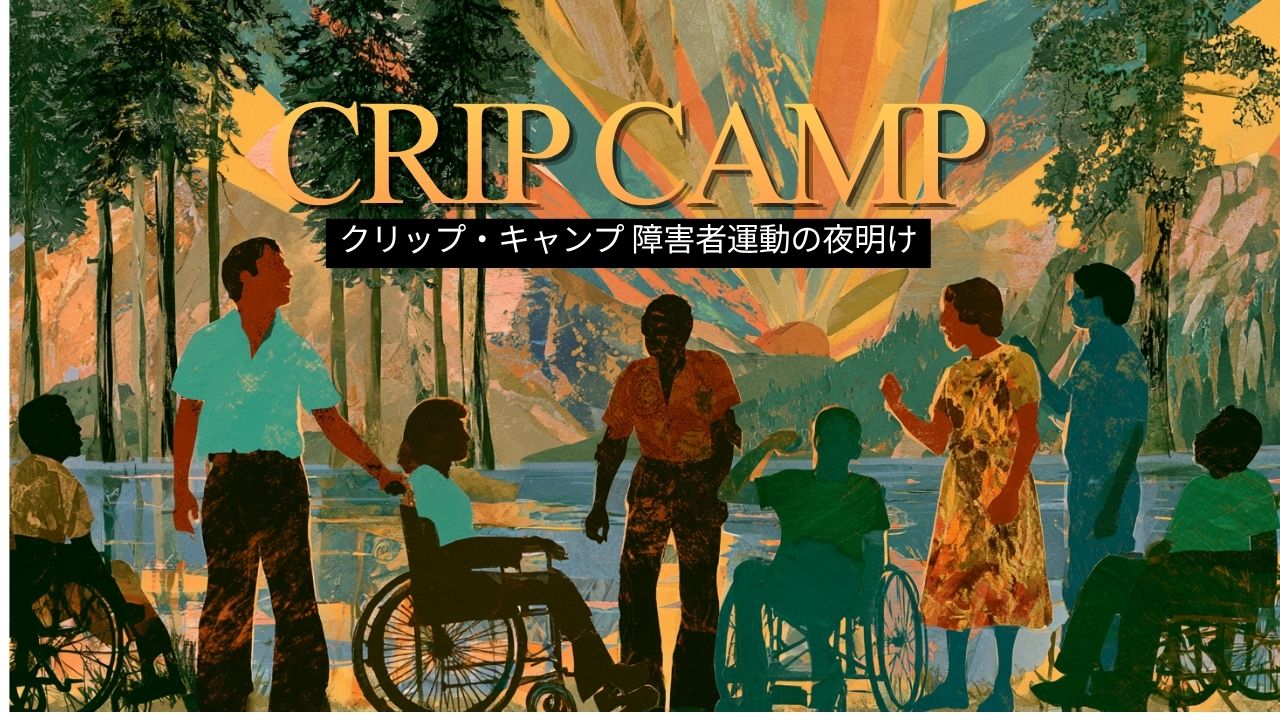
As a film to watch on this day, we offer the 2020 documentary Crip Camp: A Disability Revolution, by Nicole Newnham and James LeBrecht. Produced by Barack and Michelle Obama’s production company Higher Ground Productions, it was distributed on Netflix.
The ADA was not enacted suddenly in 1990. Behind it lay an accumulation of more than twenty years of movement. This film depicts where that movement began, tracing it all the way back to a single summer camp.
Basic Information & Synopsis
→ For synopsis and production information, see our Database Article
Director: Nicole Newnham, James LeBrecht
Year: 2020
Runtime: 106 minutes
Production: Higher Ground Productions / Netflix
Commemorative Day: ADA Day (July 26)
Background Knowledge
That It Is a Film Made by Those Directly Involved
What decisively shapes the character of this film is the fact that co-director James LeBrecht is himself a person with a disability.
A recording engineer and sound designer by profession, long involved in the disability movement, he found in this subject his own life itself. The making of the film is said to have begun with an offhand remark over lunch with co-director Nicole Newnham. The two had been filmmaking companions for fifteen years, LeBrecht having contributed sound to Newnham’s past works. At that lunch, LeBrecht said he had always wanted to see a film about the summer camp he had attended, and from that the project began. Newnham has reflected that just from the scenes of the camp he described, her own thinking about people with disabilities was transformed.
To speak of disability not by observing it from outside but from within. This perspective is what sets this film apart from works of the same kind.
The Footage of Camp Jened
A major factor in this film’s coming into being was that footage of the camp from 1971 survived.
This footage had been shot by a video collective of the time called the “People’s Video Theater.” The sight of young people with disabilities speaking in their own words survived as a record from half a century ago. Without it, this film could not have existed.
The road to tracking down that footage was not a smooth one, however. The two spent months pursuing its whereabouts, and in a list on the back cover of an old video magazine found in a library, they discovered a clue to the collective that had filmed the camp. Tracing the makers’ real names from there, they contacted one of the founders, who was, together with his companions, in the very midst of digitizing that footage. The person who had shot it had moved more than a dozen times since, yet had carried the tapes along without ever discarding them. After the passage of half a century, footage in which LeBrecht himself appears was thus revived for the work.
Camp Jened itself operated from 1951 to 1977 and was closed due to financial difficulties.
Why the Obamas Were Involved
The executive producers are Barack and Michelle Obama’s Higher Ground Productions. It is not that the Obamas had a personal connection to Camp Jened or the disability movement. The reason for their involvement lies in the very purpose of the production company they founded.
In 2018, after leaving the presidency, the Obamas established the production company Higher Ground Productions and concluded a distribution agreement with Netflix. Its aim was to bring widely to audiences the voices of communities that had not been sufficiently told, and stories dealing with themes such as race, class, democracy, and civil rights. The couple entrusted the company’s day-to-day operation to experienced film people, taking a supervisory position themselves through recommending projects and advising on stories.
In April 2019, the company announced its first production lineup. At the end of that roster was the name of this film, then still in production and unknown to the world, as a documentary. A representative of the company is reported to have traveled to an editing room in Northern California to see, not the finished work, but the footage still in production, and decided to take part.
This became the company’s second documentary, following American Factory, which won the Academy Award for Best Documentary Feature. The film’s character — “an underappreciated yet powerful civil rights story” — overlapped precisely with what the company sought to deliver. That the Obamas’ name was attached became a great tailwind carrying this small story to viewers around the world.
The Relationship Between Section 504 and the ADA
Section 504 was an important step preceding the ADA.
Section 504 was enacted in 1973 as part of the Rehabilitation Act, but the regulations for actually implementing it were long left unsigned. The occupation of 1977 pressed the Secretary of Health, Education, and Welfare of the time, Joseph Califano, to sign them. Protests were held simultaneously at federal offices in ten cities across the country, but while most ended in about a day, only the occupation in San Francisco endured, and at last won that signature.
Section 504 applied only to institutions receiving federal funds. The ADA extended that principle to society as a whole, including the private sector. Without the fight over Section 504, there would have been no ADA.
What makes this film fitting for ADA Day is not so much that it depicts the ADA itself, but that it depicts the headwaters of the movement that led to the ADA. The law is a result, not a starting point. This film shows that.
Reception
This film premiered at the Sundance Film Festival in January 2020 and won the Audience Award in the U.S. Documentary category. It was distributed on Netflix on March 25 of the same year. A theatrical release had also been planned for that day but was set aside due to the spread of COVID-19. At the 93rd Academy Awards it was nominated for Best Documentary Feature, and it received many honors, including a Peabody Award and an Independent Spirit Award.
At that year’s ceremony, for the first time in the long history of the Academy Awards, a wheelchair ramp was installed to the stage for the nominees. It is recorded as an occurrence in which the very issue this film has addressed reached the ceremony itself.
What Makes It Exceptional
That It Does Not Make Disability a Tool for Sentiment
What this film is thoroughgoing about is not depicting people with disabilities as objects of sentiment.
What appears in the camp footage is teenagers falling in love, quarreling, and smoking cigarettes. They appear not as symbols of hardship to be overcome, but simply as young people.
What the viewer feels is not sympathy but a sense of having spent that summer alongside them. This sense of distance lends persuasiveness to the depiction of the later movement.
That It Does Not Make the Movement a Tale of Heroes
The occupation over Section 504 is a dramatic event, but this film does not depict it as a heroic victory.
The occupation, lasting 25 days, was harsh for people carrying physical difficulties. People who needed assistance, people who required medical care, went on spending their days on the floor of an office. As the government side cut the phone lines and tried to obstruct the bringing in of food and medicine, that hardship is shown without being hidden.
The victory is depicted not as sentiment but as something obtained at the end of exhaustion.
That It Is Composed of the Voices of Those Directly Involved
The narration of this film is by almost entirely the testimony of those directly involved. Rather than experts explaining from outside, the people who were there speak in their own words.
When Judy Heumann speaks of her experience of being excluded, it is not analysis but experience. This first-person quality creates the film’s intensity.
Related Articles
- Crip Camp Database – Synopsis & Production Details
- Nicole Newnham & James LeBrecht – Filmmaker Profile
はじめに
障害のある若者たちが夏のキャンプから始めた、二十年におよぶ公民権運動の記録
7月26日は「ADA記念日」です。
1990年7月26日、アメリカで「障害を持つアメリカ人法」(Americans with Disabilities Act、ADA)が成立しました。ジョージ・H・W・ブッシュ大統領が署名したこの法律は、雇用、公共サービス、公共施設、交通、通信のあらゆる場面で、障害を理由とする差別を禁じるものです。障害のある人を保護の対象としてではなく、権利の主体として位置づけた点で、障害者公民権運動の到達点とされています。
ADAはアメリカ国内法ですが、その考え方はその後の各国の法整備や、2006年の国連「障害者権利条約」にも影響を与えました。日本の「障害者差別解消法」(2013年成立、2016年施行)も、同じ系譜に連なるものです。
この日に観る一本として、ニコール・ニューナムとジェームズ・レブレクトによる2020年のドキュメンタリー『クリップ・キャンプ 障害者運動の夜明け』(原題:Crip Camp: A Disability Revolution)を挙げます。バラク・オバマとミシェル・オバマの製作会社ハイヤー・グラウンド・プロダクションズが手がけ、Netflixで配信されました。
ADAは1990年に突然成立したわけではありません。その背後には、二十年以上にわたる運動の積み重ねがありました。本作は、その運動がどこから始まったのかを、一つの夏のキャンプまで遡って描いています。
基本情報・あらすじ
→ あらすじや製作情報はデータベース記事へ
監督: ニコール・ニューナム、ジェームズ・レブレクト
製作年: 2020年
上映時間: 106分
制作: ハイヤー・グラウンド・プロダクションズ/Netflix
記念日: ADA記念日(7月26日)
予備知識
当事者が作った映画であること
本作の性格を決定づけているのは、共同監督のジェームズ・レブレクトが当事者であるという事実です。
彼は録音技師・音響デザイナーを本業とし、障害者運動に長く関わってきた人物で、この題材は彼自身の人生そのものでした。制作のきっかけは、共同監督のニコール・ニューナムとの昼食の場での何気ない一言だったと語られています。二人は15年来の映画仲間で、レブレクトはニューナムの過去の作品に音響で参加してきました。その昼食の席で、レブレクトが「自分のいたサマーキャンプについての映画を、ずっと見たかった」と述べたことから、企画が始まりました。ニューナムは、彼が語ったキャンプの情景だけで、障害のある人々についての自分の考えが一変したと振り返っています。
障害を外側から観察するのではなく、内側から語る。この視点が、本作を同種の作品と分けています。
キャンプ・ジェネッドの記録映像
本作が成立した大きな要因は、1971年当時のキャンプの映像が残っていたことです。
この映像は、「ピープルズ・ビデオ・シアター」という当時の映像集団によって撮影されたものでした。障害のある若者たちが自分の言葉で語る姿が、半世紀前の記録として残っていた。これがなければ本作は成立しませんでした。
もっとも、その映像を探し当てるまでの道のりは平坦ではありませんでした。二人は数か月にわたって行方を追い、図書館で見つけた古いビデオ雑誌の裏表紙の一覧に、キャンプを撮影した集団の手がかりを発見します。そこから制作者の本名をたどり、創設者の一人に連絡を取ると、その人物は仲間とともに、まさに当時の映像をデジタル化している最中でした。撮影者はその後十数回も引っ越しを重ねながら、テープを一度も捨てずに運び続けていたのです。半世紀の時を経て、レブレクト自身も写り込んだ映像が、こうして作品に甦りました。
キャンプ・ジェネッド自体は1951年から1977年まで運営され、財政難により閉鎖されています。
オバマ夫妻はなぜ関わったのか
製作総指揮は、バラク・オバマとミシェル・オバマのハイヤー・グラウンド・プロダクションズです。オバマ夫妻がキャンプ・ジェネッドや障害者運動と個人的な縁を持っていたわけではありません。関与の理由は、彼らが立ち上げた製作会社の趣旨そのものにあります。
オバマ夫妻は大統領退任後の2018年、製作会社ハイヤー・グラウンド・プロダクションズを設立し、Netflixと配給契約を結びました。その狙いは、これまで十分に語られてこなかったコミュニティの声や、人種、階級、民主主義、公民権といった主題を扱う物語を、広く届けることにありました。夫妻は会社の日常的な運営を経験豊かな映画人たちに委ね、自らは企画の推薦やストーリーへの助言といった監督的な立場で関わる体制をとっています。
2019年4月、同社は最初の製作ラインナップを発表します。その顔ぶれの末尾に、まだ製作途上で世に知られていなかった一本のドキュメンタリーとして、本作の名がありました。同社の担当者は、完成した作品ではなく制作中の映像を実際に見に北カリフォルニアの編集室まで足を運び、参加を決めたと伝えられています。
本作は、アカデミー長編ドキュメンタリー賞を受賞した『アメリカン・ファクトリー』に続く、同社にとって二本目のドキュメンタリーとなりました。「過小評価されてきた、しかし力強い公民権運動の物語」という本作の性格は、まさに同社が届けようとしたものと重なっていたのです。オバマ夫妻の名前がついたことは、この小さな物語を世界中の視聴者へ運ぶ大きな追い風となりました。
504条とADAの関係
504条は、ADAに先立つ重要な一歩でした。
504条は、リハビリテーション法の一部として1973年に制定されましたが、それを実際に運用するための施行規則がなかなか署名されませんでした。1977年の占拠は、当時の保健教育福祉長官ジョセフ・カリファノにこの署名を迫るものでした。全米十都市の連邦事務所で同時に抗議が行われましたが、その多くが一日ほどで終わるなか、サンフランシスコの占拠だけが持続し、ついに署名を勝ち取ったのです。
504条が対象としたのは、連邦資金を受ける機関に限られていました。ADAは、その原則を民間を含む社会全体に広げたものです。504条の闘いがなければ、ADAはありませんでした。
本作がADA記念日にふさわしいのは、ADAそのものを描いているからというより、ADAに至る運動の源流を描いているからです。法律は結果であって、出発点ではない。そのことを本作は示しています。
評価
本作は2020年1月のサンダンス映画祭で初上映され、USドキュメンタリー部門の観客賞を受賞しました。同年3月25日にNetflixで配信されています。当日には劇場公開も予定されていましたが、新型コロナウイルスの感染拡大により見送られました。第93回アカデミー賞では長編ドキュメンタリー映画賞にノミネートされ、ピーボディ賞やインディペンデント・スピリット賞など、多くの顕彰を受けています。
この年の授賞式では、アカデミー賞の長い歴史のなかで初めて、ノミネート者のために車椅子用のスロープが舞台へと設置されました。本作が扱ってきた問題が、授賞式そのものにも及んだ出来事として記録されています。
優れている点
障害を感動の道具にしないこと
本作が徹底しているのは、障害のある人々を感動の対象として描かないことです。
キャンプの映像に映るのは、恋をし、口論し、煙草を吸う十代の若者たちです。彼らは克服すべき困難の象徴としてではなく、ただの若者として映っています。
観客が抱くのは同情ではなく、彼らと一緒にその夏を過ごしたような感覚です。この距離感が、後の運動の描写に説得力を与えます。
運動を英雄譚にしないこと
504条の占拠は劇的な出来事ですが、本作はそれを英雄的な勝利として描きません。
25日にわたる占拠は、身体的に困難を抱える人々にとって過酷なものでした。介助が必要な人、医療を要する人が、事務所の床で過ごし続けた。政府側が電話線を切り、食料や医薬品の搬入を妨げようとするなかで、その困難が隠されないまま示されます。
勝利は感動ではなく、消耗の果てに得られたものとして描かれます。
当事者の声で構成されていること
本作の語りは、ほぼすべて当事者自身の証言によります。専門家が外から解説するのではなく、その場にいた人々が自分の言葉で語ります。
ジュディ・ヒューマンが排除された経験を語るとき、それは分析ではなく経験です。この一次性が、本作の強度を作っています。