
Choose Your Language / 言語を選択:
Introduction
A Masterpiece of Visual Beauty That Gazes at the Relationship Between Humans and Wild Animals, Through a Miraculous Experience of Drifting with a Bengal Tiger
July 29 is World Tiger Day (International Tiger Day), established at the international conference the “Tiger Summit,” held in St. Petersburg, Russia, in 2010. This international observance was founded to arouse interest in the conservation of the tiger, an endangered species, and to protect the tiger’s habitat in the natural world.
At the time the summit was held in 2010, wild tigers had declined to only about 3,200 in the world. Considering that around 100,000 are said to have lived at the beginning of the twentieth century, this amounts to a loss of more than 95% in just over a century. Out of this sense of crisis, the 13 tiger-range countries set the goal of “TX2” — to double the number of wild tigers by 2022.
Through subsequent conservation efforts, the situation has turned toward improvement. By estimates from the Global Tiger Forum and the WWF, wild tigers have recovered to about 5,574 (announced in 2023), and by the most recent estimates are said to have increased further still. India in particular has achieved remarkable results, recording 3,682 in its 2022 census, coming to hold the majority of the world’s wild tigers. Even so, the tiger remains an endangered species, and threats such as habitat fragmentation, poaching, and friction with humans have not disappeared.
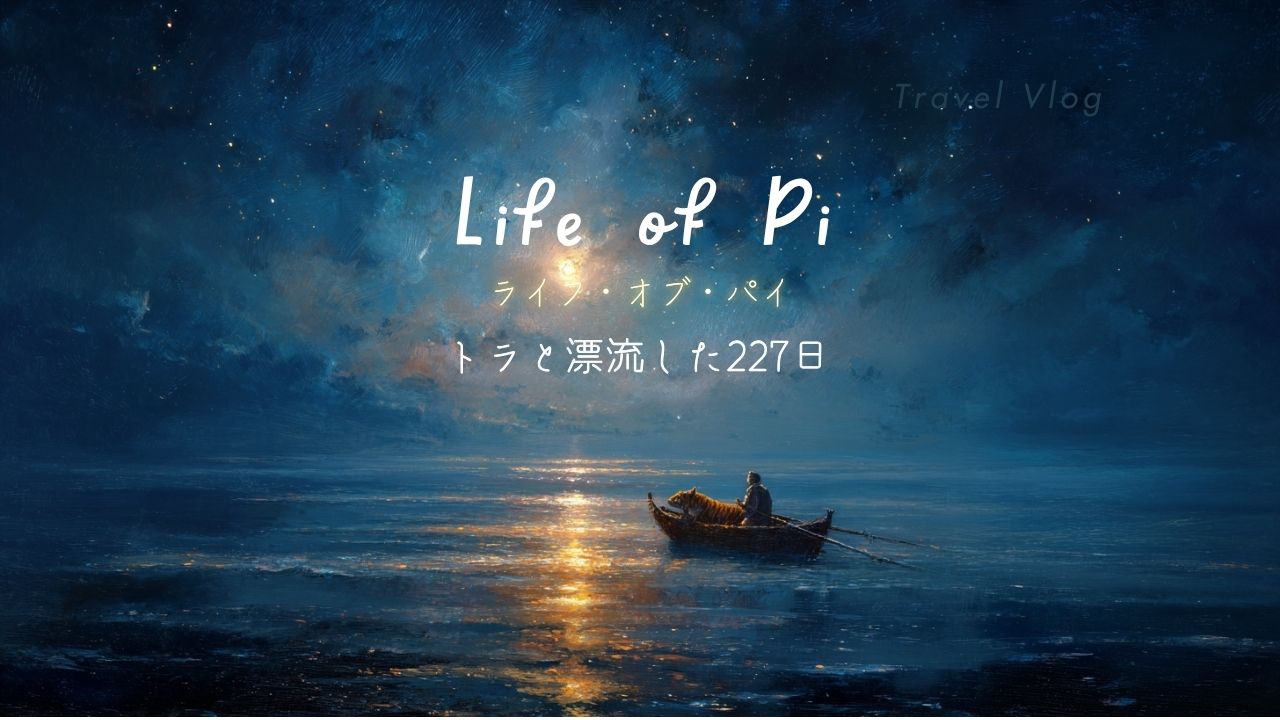
For this special day, we strongly recommend Ang Lee’s 2012 film Life of Pi. Based on Yann Martel’s bestselling novel of the same name, it is an adventure drama depicting the story of an Indian boy, Pi Patel, who drifts for 227 days on the Pacific Ocean together with a Bengal tiger named “Richard Parker.”
Centered on the relationship between the protagonist Pi, played by Suraj Sharma, and the CG-created Bengal tiger, it beautifully depicts, in visual terms, themes such as the distance between humans and wild animals, the beauty and harshness of the natural environment, and the dignity of life. The imagery of the ocean, realized through Ang Lee’s innovative visual technology and 3D cinematography, becomes a visual poem that leaves on viewers a deep impression of the mysteries of the natural world and the dignity of wild animals.
Basic Information & Synopsis
→ For synopsis and production information, see our Database Article
Director: Ang Lee
Year: 2012
Runtime: 127 minutes
Production: 20th Century Fox
Commemorative Day: World Tiger Day (July 29)
Background Knowledge
The Current State of the Bengal Tiger and the Course of Its Conservation
Richard Parker, who appears in the film, is a Bengal tiger. About 100,000 tigers are said to have lived worldwide at the beginning of the twentieth century, but through overhunting and habitat destruction their numbers plummeted, falling to about 3,200 by 2010.
The main threats are habitat destruction (agricultural development, urbanization), poaching (for material for traditional medicine and for pelts), conflict with humans (retaliation following livestock damage or human casualties), and environmental change from climate change.
India began a national tiger conservation program called “Project Tiger” in 1973, promoting the expansion of protected areas, the strengthening of anti-poaching measures, and programs for coexistence with local residents. As a result, India’s wild tigers increased greatly, from 2,226 in 2014 to 3,682 in 2022, achieving the TX2 goal. Recovery has also been reported in other range countries such as Nepal, and the estimated worldwide population has returned to about 5,574 (2023, Global Tiger Forum).
However, this is not a figure that permits optimism. The tiger’s range has shrunk to less than 7% of what it once was, and in parts of Southeast Asia decline still continues. On the IUCN Red List, too, the tiger continues to be classified as an endangered species.
The Background of Yann Martel’s Original Novel
The author Yann Martel has said he got the idea for this story from a review of a novel by the Brazilian writer Moacyr Scliar. His experiences traveling in India are also strongly reflected in it, and the novel, published in 2001, won the Booker Prize the following year, in 2002, and became a worldwide bestseller.
The novel has a strong aspect as a religious parable, layering philosophical themes such as tolerance toward multiple religions, the relationship between faith and reason, and the boundary between reality and story. The film version succeeded in expressing these abstract themes through visual beauty.
The name “Richard Parker” has a literary origin. Beginning with a story by Edgar Allan Poe, a character of the same name recurs in anecdotes concerning shipwreck and cannibalism, and Martel has said that, drawn by that coincidence, he gave the tiger the name.
What Makes It Exceptional
The Depiction of the Tiger Through Innovative CGI Technology
The film’s greatest strength is the overwhelming presence of the Bengal tiger, Richard Parker. Despite most scenes being created in full CG, he is depicted so realistically and with such rich emotion that viewers become convinced this tiger is a real animal.
Rhythm & Hues Studios, which handled the main visual effects, spent a long time on research and development of the tiger, observing and recording the behavior of real tigers in detail. The texture of the fur, the movement of the muscles, the expression of the eyes, even the manner of breathing — the ecological characteristics of real tigers are carefully reproduced, while at the same time a cinematic character quality is skillfully imparted.
In the scenes of eye contact with Pi in particular, the wariness of a wild animal and the subtle tension born of long coexistence are exquisitely expressed. This film won the Academy Award for Best Visual Effects at the 85th Academy Awards.
The Completeness of Ang Lee’s Direction as Visual Art
It can be said that Ang Lee’s visual sensibility reached one of its peaks in this film. The magnificent beauty of the Pacific, the terror of the storm, and the mystery of the stars in the night sky, effectively using 3D technology, bring immersion to viewers.
Especially striking are the scenes in which the sea surface reflects the sky like a mirror, and the scenes in which luminous marine life creates a fantastical spectacle. These images express the beauty and mystery of the natural world in visual terms and, at the same time, prompt deep reflection on the relationship between humans and nature. For this work, Ang Lee won the Academy Award for Best Director for the second time.
Suraj Sharma’s Fresh Lead Performance
The star, Suraj Sharma, was a student with no acting experience, discovered by director Ang Lee through an audition in which several thousand people took part. Although this film was in effect his screen debut, he splendidly played the growth from boy to young man, the psychological changes in an extreme situation, and the complex relationship with the tiger.
For the role, Sharma not only received training in ocean survival but also practiced yoga and meditation. Through this preparation, he expresses the mental and physical changes of a harsh life adrift with persuasiveness.
Especially excellent is his naturalness in the scenes of acting opposite a tiger that was not in fact there. He expresses complex emotions — fear, wariness, attachment, sorrow — with persuasiveness, guiding viewers to identify with the relationship with the tiger.
Related Articles
- Life of Pi Database – Synopsis & Production Details
- Ang Lee – Filmmaker Profile
はじめに
ベンガルトラとの奇跡的な漂流体験を通じて、人間と野生動物の関係を見つめる映像美の傑作
7月29日は、2010年にロシア・サンクトペテルブルクで開催された国際会議「トラサミット」で制定された「世界トラの日」(World Tiger Day/International Tiger Day)です。この国際記念日は、絶滅危惧種であるトラの保存への関心を喚起し、トラの自然界での生息域を保護することを目的として設立されました。
サミットが開かれた2010年当時、野生のトラは世界でわずか約3,200頭にまで減少していました。20世紀初頭には約10万頭が生息していたとされることを考えれば、100年あまりで95%以上が失われた計算になります。この危機感から、トラ生息国13カ国は「TX2」——2022年までに野生のトラを倍増させるという目標を掲げました。
その後の保護努力により、状況は改善に向かっています。グローバル・タイガー・フォーラムとWWFによる推定では、野生のトラは約5,574頭(2023年発表)まで回復し、直近の推計ではさらに増加しているとされます。とりわけインドは目覚ましい成果を挙げ、2022年のセンサスで3,682頭を記録、世界の野生トラの過半を擁するに至りました。とはいえ、トラは依然として絶滅危惧種であり、生息地の分断、密猟、人間との軋轢といった脅威が消えたわけではありません。
この特別な日に観る作品として、アン・リー監督による2012年の『ライフ・オブ・パイ/トラと漂流した227日』(Life of Pi)を強く推奨します。本作は、ヤン・マーテルの同名ベストセラー小説を原作とし、インドの少年パイ・パテルがベンガルトラ「リチャード・パーカー」と共に太平洋上で227日間漂流するという物語を描いた冒険ドラマです。
スラージ・シャルマ演じる主人公パイと、CGで創造されたベンガルトラとの関係を軸に、人間と野生動物の距離、自然環境の美しさと厳しさ、生命の尊厳といったテーマを視覚的に美しく描き出しています。アン・リー監督の革新的な映像技術と3D撮影により実現された海上の映像は、自然界の神秘と野生動物の尊厳を観客に深く印象づける映像詩となっています。
基本情報・あらすじ
→ あらすじや製作情報はデータベース記事へ
監督: アン・リー
製作年: 2012年
上映時間: 127分
制作: 20世紀フォックス
記念日: 世界トラの日(7月29日)
予備知識
ベンガルトラの現状と保護の歩み
映画に登場するリチャード・パーカーはベンガルトラです。20世紀初頭には世界全体で約10万頭のトラが生息していたとされますが、乱獲と生息地の破壊により激減し、2010年には約3,200頭にまで落ち込みました。
主な脅威は、生息地の破壊(農地開発、都市化)、密猟(伝統薬の材料や毛皮を目的とするもの)、人間との衝突(家畜被害や人身被害を受けての報復)、そして気候変動による環境変化です。
インドは1973年に「プロジェクト・タイガー」という国家的なトラ保護プログラムを開始し、保護区の拡大、密猟対策の強化、地域住民との共存プログラムなどを推進してきました。その成果として、インドの野生トラは2014年の2,226頭から2022年には3,682頭へと大きく増加し、TX2目標を達成しています。ネパールなど他の生息国でも回復の報告があり、世界全体の推定個体数は約5,574頭(2023年、グローバル・タイガー・フォーラム)まで戻りました。
ただし、これは楽観を許す数字ではありません。トラの分布域はかつての7%以下にまで縮小しており、東南アジアの一部では依然として減少が続いています。IUCNのレッドリストでも、トラは引き続き絶滅危惧種に分類されています。
ヤン・マーテル原作小説の背景
原作者ヤン・マーテルは、この物語の着想を、ブラジル人作家モアシル・スクリアルの小説の書評から得たと語っています。またインド旅行の体験も色濃く反映されており、2001年に発表された小説は翌2002年にブッカー賞を受賞、世界的なベストセラーとなりました。
小説は宗教的寓話としての側面も強く、多宗教への寛容性、信仰と理性の関係、現実と物語の境界といった哲学的テーマが重層的に描かれています。映画版では、これらの抽象的なテーマを視覚的な美しさで表現することに成功しています。
なお、「リチャード・パーカー」という名前には文学的な由来があります。エドガー・アラン・ポーの小説をはじめ、海難と食人にまつわる逸話に同名の人物が繰り返し登場しており、マーテルはその偶然に惹かれてトラに命名したと述べています。
優れている点
革新的なCGI技術によるトラの表現
本作の最大の優れた点は、リチャード・パーカーというベンガルトラの圧倒的な存在感です。ほとんどのシーンがフルCGで創造されたにも関わらず、観客はこのトラが実在の動物であると確信するほどリアルで、感情豊かに描かれています。
主要な視覚効果を担当したリズム&ヒューズ・スタジオは、トラの研究開発に長い時間を費やし、実際のトラの行動を詳細に観察・記録しました。毛の質感、筋肉の動き、眼の表情、呼吸の仕方まで、実際のトラの生態学的特徴が丹念に再現されており、同時に映画的なキャラクター性も巧みに付与されています。
特に、パイとのアイコンタクトのシーンでは、野生動物としての警戒心と、長期間の共存により生まれた微細な緊張関係が絶妙に表現されています。本作は第85回アカデミー賞で視覚効果賞を受賞しました。
アン・リー監督の視覚芸術としての完成度
アン・リー監督の映像センスは、本作で一つの頂点に達したと言えるでしょう。太平洋の壮大な美しさ、嵐の恐ろしさ、夜空の星々の神秘性が、3D技術を効果的に活用して観客に没入感をもたらします。
特に印象的なのは、海面が鏡のように空を映し出すシーンや、発光する海洋生物が幻想的な光景を作り出すシーンです。これらの映像は、自然界の美しさと神秘性を視覚的に表現すると同時に、人間と自然の関係について深い思索を促します。アン・リーはこの作品で、二度目のアカデミー監督賞を受賞しました。
スラージ・シャルマの瑞々しい主演
主演のスラージ・シャルマは、数千人が参加したオーディションを経てアン・リー監督に見出された、演技経験のない学生でした。本作が事実上の映画デビュー作でありながら、少年から青年への成長、極限状況での心理変化、トラとの複雑な関係を見事に演じ切りました。
役作りのため、シャルマは海洋サバイバルの訓練を受けただけでなく、ヨガと瞑想も実践しました。この準備により、過酷な漂流生活での精神的・肉体的変化を説得力を持って表現しています。
特に優れているのは、実際にはそこに存在しないトラを相手に演技する場面での自然さです。恐怖、警戒、愛着、悲しみといった複雑な感情を説得力を持って表現し、観客がトラとの関係に感情移入できるよう導いています。
関連記事
- ライフ・オブ・パイ/トラと漂流した227日 データベース – あらすじ・製作情報
- アン・リー – 監督プロフィール