

Choose Your Language / 言語を選択:
Introduction
Blood or Time — What Does It Mean to Become a Father?
June 1 is the Global Day of Parents.
The United Nations General Assembly established June 1 as the Global Day of Parents in 2012, in recognition of the selfless commitment, sacrifice, and lifelong love that parents around the world devote to their children. The day asks that child-rearing be understood not merely as a private family matter but as a shared responsibility — one that families, communities, and society as a whole must support.
The 2026 theme is “Together for Parents” — emphasizing the need to support parents, strengthen family bonds, and recognize child-rearing as a shared social responsibility.
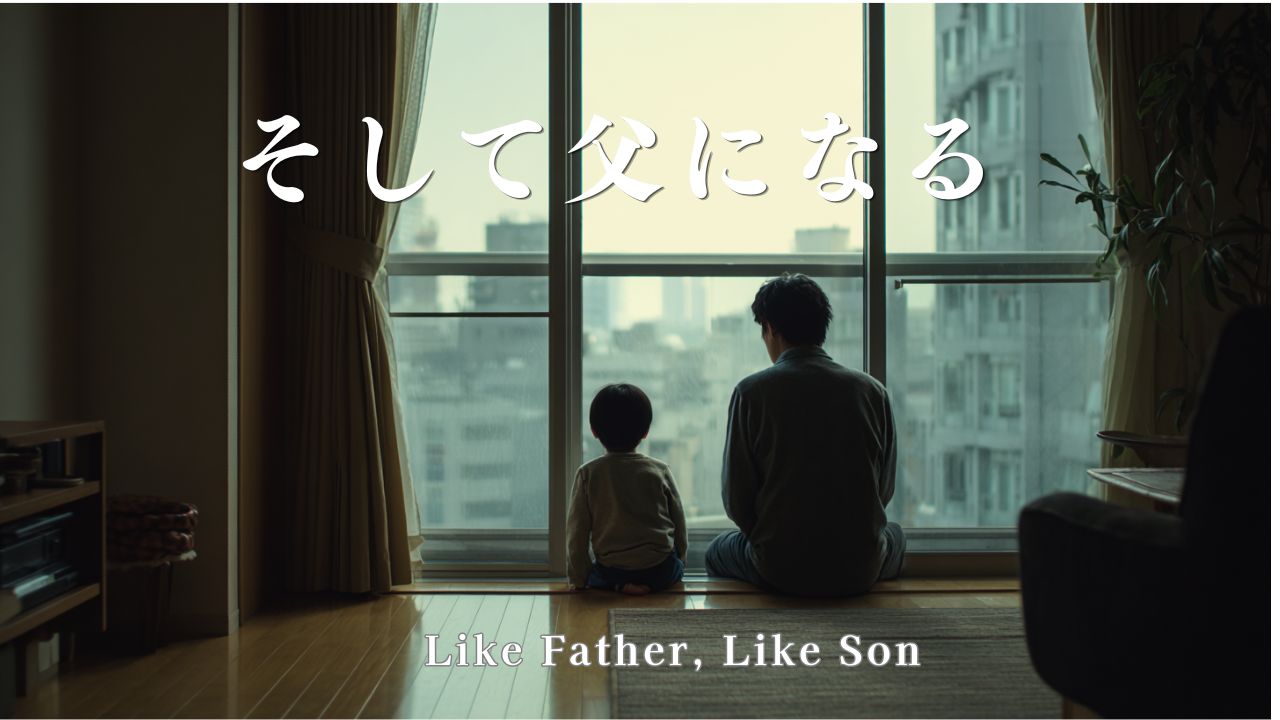
For this day, the film to watch is Like Father, Like Son (そして父になる, 2013), directed by Hirokazu Kore-eda.
The film asks a question that is also the question of the Global Day of Parents: what does it mean to be a parent? When Ryota Nonomiya learns that his six-year-old son was switched at birth at the hospital, he must decide what that means — for his relationship with the boy he has raised, and for his relationship with the boy he has not. Is parenthood blood? Is it time? The film does not answer the question. It insists that the question be held.
The film was in competition for the Palme d’Or at the 66th Cannes Film Festival in 2013, received a ten-minute standing ovation after its premiere screening, and won the Jury Prize. It grossed $31 million worldwide and is recognized internationally as one of Kore-eda’s defining works.
Basic Information & Synopsis
→ For synopsis and production information, see our Database Article
Director: Hirokazu Kore-eda
Year: 2013
Runtime: 121 minutes
Production: Fuji Television, Gaga
Commemorative Day: Global Day of Parents (June 1)
Synopsis: Ryota Nonomiya is an architect living with his wife Midori and their six-year-old son Keita in an immaculate apartment in Tokyo. Ryota is successful, fastidious, and emotionally distant — from his wife, from his son, from most of the world. When the hospital where Keita was born contacts them to say there was a mix-up, and that the biological son of the Nonomiya family has been living for six years with the Saiki family — a warm, chaotic household above an electrical shop — both families must decide what to do. The families arrange visits. The children meet. The parents watch each other. Ryota, for whom achievement and genetic inheritance have always been connected, must examine what he actually believes about what makes a father.
Background Knowledge
Kore-eda and the Theme of Family
The film began with the decision to cast Masaharu Fukuyama in the lead. Kore-eda presented three projects centered on the theme of fatherhood; Fukuyama chose this one. Kore-eda has said: “Fukuyama said Ryota reflects parts of himself he doesn’t like. I, too, was reflecting parts of myself I don’t like. Something between the two of us produced Ryota.” The specificity of that mutual discomfort is in the performance.
Kore-eda had been asking “what is a family?” across his body of work for years before this film, and the film’s central premise — that blood alone does not define family — connects directly to Shoplifters (2018 Palme d’Or) and runs through his career as a consistent preoccupation.
Fukuyama’s First Father Role
This was Fukuyama’s first time playing a father. His description of Ryota as reflecting parts of himself he dislikes gives the performance an unusual quality — not the discomfort of playing someone entirely foreign, but the discomfort of recognition. The ten-minute standing ovation at Cannes, during which both Kore-eda and Fukuyama were visibly moved, suggests the film had found something real.
Spielberg’s Attention
Steven Spielberg saw the film at Cannes and was struck by it. DreamWorks Pictures acquired remake rights in 2013, with the Weitz brothers announced as directors. The project did not proceed. In 2020, Focus Features was reported to be developing an English-language version with director Lulu Wang and screenwriter Sarah Ruhl; that project also did not progress. The persistence of interest in adaptation suggests the film’s central question — blood or time — is recognized as universally resonant.
Critical Reception
Rotten Tomatoes: 87%. Metacritic: 73. Australian critic Andrew Chan described the film as “one of those rare films that completely absorbs the viewer, provokes deep thought, stirs strong emotions, and ultimately leaves them feeling refreshed.” Some critics noted that the film’s thematic point is established early and that the remainder is largely watching Ryota arrive at a conclusion the audience already sees coming. IndieWire included the film in its 2018 list of the greatest Japanese films of the 21st century.
What Makes It Exceptional
A Drama Without Villains
The film contains no one who deserves condemnation. The hospital nurse responsible for the switch is later revealed to have had her own circumstances. Both sets of parents are struggling honestly with an impossible situation.
Ryota is cold, arrogant, and dismissive in ways the film shows clearly. It does not condemn him for this. It follows, with patience, the process by which he begins to change — not through a sudden revelation but through accumulation, through contact with what he has been missing. The restraint of that portrayal is what gives the film its dignity.
The Contrast Between the Two Families
The Nonomiya household and the Saiki household are the film’s two poles: the immaculate high-rise apartment and the warm, cluttered rooms above the electrical shop. The film does not declare which is the better family. It places them beside each other and observes what each has and what each lacks. The contrast is visual, tonal, and emotional — and it does not resolve in favor of either.
The Children’s Natural Performances
Kore-eda is known for not giving child actors scripts. Keita (played by Keita Ninomiya) and Ryusei (played by Hwang Seung-eon) are not performing childhood — they appear to be living it. The scene in which Ryota looks through the photographs on the camera that Keita has been using — and discovers what his son has been photographing — is the film’s emotional turning point, and it works entirely because of the honesty of what the child’s photographs contain. Only a child could have taken them. Only this child would have.
Related Articles
- Like Father, Like Son Database – Synopsis & Production Details
- Hirokazu Kore-eda – Filmmaker Profile
- Masaharu Fukuyama – Actor Profile
はじめに
血か、時間か——「父親」になるとはどういうことか
6月1日は、「世界親の日(Global Day of Parents)」です。
2012年、国連総会が6月1日を「世界親の日」として制定しました。世界中の親たちが子どもたちに捧げてきた無私の愛情、犠牲、そして生涯にわたるコミットメントを称えるために設けられたこの記念日は、子育てを個人の営みとしてではなく、家族・地域・社会全体が支えるべき責任として捉え直すことを訴えています。
2026年のテーマは「Together for Parents(親のために共に)」——子育てを支援し、家族の絆を強め、育児を共有された責任として認識することの必要性を強調しています。
この特別な日に観る作品として、是枝裕和監督による2013年の日本映画**『そして父になる』**(英題:Like Father, Like Son)をお薦めします。
本作は、6歳の息子が出生時に病院で取り違えられていたことを知らされた父親・野々宮良多(福山雅治)の葛藤を描いた作品です。「血のつながり」か「共に過ごした時間」か——この問いは、「親とは何か」という問いそのものです。
2013年第66回カンヌ国際映画祭でパルム・ドール候補となり、上映後は観客から10分間のスタンディングオベーションを受け、是枝監督と福山雅治は涙を浮かべたと言われています。同映画祭で審査員賞を受賞し、世界興収3100万ドルを記録した本作は、是枝裕和の代表作の一つとして国際的に認められています。
基本情報・あらすじ
→ あらすじや製作情報はデータベース記事へ
監督: 是枝裕和
製作年: 2013年
上映時間: 121分
制作: フジテレビジョン、ギャガ
記念日: 世界親の日(6月1日)
あらすじ: 野々宮良多は東京の高級マンションに妻・みどりと6歳の息子・慶多と暮らす建築家。有能で几帳面だが、感情表現が苦手で、妻にも息子にも距離を置きがちです。ある日、慶多が生まれた病院から連絡が届きます——出生時に取り違えが起きていた、と。血のつながった息子は、6年間、電器屋を営む斎木家で育てられていました。二組の家族は面会を重ね、子どもたちは互いの家族を知り始めます。「血か、時間か」——成功と遺伝的継承を結びつけてきた良多は、自分が本当に信じている「父親」像と向き合うことになります。
予備知識
是枝裕和と「家族」というテーマ
本作は福山雅治を主演に迎えることを出発点に企画され、是枝監督が「父親」をテーマにした三つのプロジェクトを提示したところ、福山が本作を選んだという経緯があります。
是枝監督は「良多は、自分が嫌いな部分を持っているキャラクターだと福山は言った。私自身も、自分が好きではない部分を映している。二人の間にある何かが良多を作った」と語っています。
是枝監督は本作以前から「家族とは何か」を問い続けてきた映画作家です。本作の構想が後の『万引き家族』(2018年パルム・ドール)にもつながっており、「血のつながりだけが家族を定義しない」というテーマは是枝作品の一貫した問いです。
福山雅治の「父親役」
本作は、ミュージシャン・俳優として知られる福山雅治にとって初の父親役でした。「自分が好きではない部分を映している」という彼の言葉は、良多というキャラクターの演技に独特のリアリティを与えています。
カンヌのプレミア上映後、観客の10分間のスタンディングオベーションに監督と福山が涙したことは、この映画が普遍的な何かを体現していたことを物語っています。
スピルバーグが注目したリメイク計画
カンヌでの上映を観たスティーヴン・スピルバーグが本作に惚れ込み、2013年にDreamWorks Picturesがリメイク権を取得しました。クリス&ポール・ワイツ兄弟が監督として予定されていましたが実現せず、2020年にはFocus Featuresがルル・ワン監督・サラ・ルール脚本で英語版を開発中と報じられましたが、こちらも進展していません。「血か時間か」という問いがアメリカ社会でも普遍的なテーマとして認識されていたことを示しています。
批評家の評価
Rotten Tomatoesで批評家スコア87%、Metacriticで73点と、国際的に高い評価を受けています。オーストラリア映画批評家協会のアンドリュー・チャンは「観客を完全に引き込み、深く考えさせ、感情を揺さぶり、最終的に清々しい気持ちにさせる稀な映画の一つ」と評しました。一方で「テーマ的なポイントを早い段階で出し切っており、良多が自分の判断の誤りに気づくまで待つだけになる」という批判も一部にあります。IndieWireの2018年「21世紀最高の日本映画」リストにも選ばれました。
優れしている点
「悪者がいない」ドラマの誠実さ
本作には、責められるべき悪役がいません。取り違えた病院の看護師は後に、ある事情があったことが明かされます。二組の夫婦はそれぞれに誠実に苦しんでいます。
特に良多というキャラクターの描き方が秀逸です。彼は冷たく、傲慢で、人を見下す部分があります。しかし映画は彼を断罪しません。彼が変わろうとする様子を、静かに、丁寧に描きます。
二つの家族の対比
野々宮家と斎木家の対比は、「豊かさとは何か」「家族とは何か」という問いを視覚的に体現しています。
整然とした高級マンションと、雑然として温かい電器屋の二階。どちらが「良い家族」かを映画は決めません。ただ、それぞれの豊かさと欠如を並べて見せます。
子どもたちの自然な演技
是枝監督は子役に台本を渡さない演出で知られています。慶多役の二宮慶多、琉晴役の黄升炫(ファン・ショウゲン)ら子どもたちの演技は、「演技」というより「その子どもがそこにいる」という印象を与えます。特に、良多のカメラに収まっていた写真の場面は、子どもの視点からしか撮れない、誠実な場面です。
関連記事
- そして父になる データベース – あらすじ・製作情報
- 是枝裕和 – 監督プロフィール
- 福山雅治 – 俳優プロフィール