
Choose Your Language / 言語を選択:
Introduction
One Step from Nuclear War — The 13 Days “Dialogue” Saved the World
June 10 is the International Day for Dialogue Among Civilizations.
On June 7, 2024, the UN General Assembly adopted Resolution A/RES/78/286, designating June 10 as the International Day for Dialogue Among Civilizations. Proposed by China and co-sponsored by more than 80 countries, the resolution frames the achievements of all civilizations as the “common heritage of humankind,” emphasizing respect for civilizational diversity and the decisive role dialogue plays in maintaining world peace, advancing shared development, and serving human welfare. The first observance was held on June 10, 2025. At a time when hatred, intolerance, and disinformation are spreading across the world, the day’s message — that dialogue is not one option among many but a necessity — rings more urgently than ever.
For this day, the film to watch is Roger Donaldson’s 2000 film Thirteen Days.
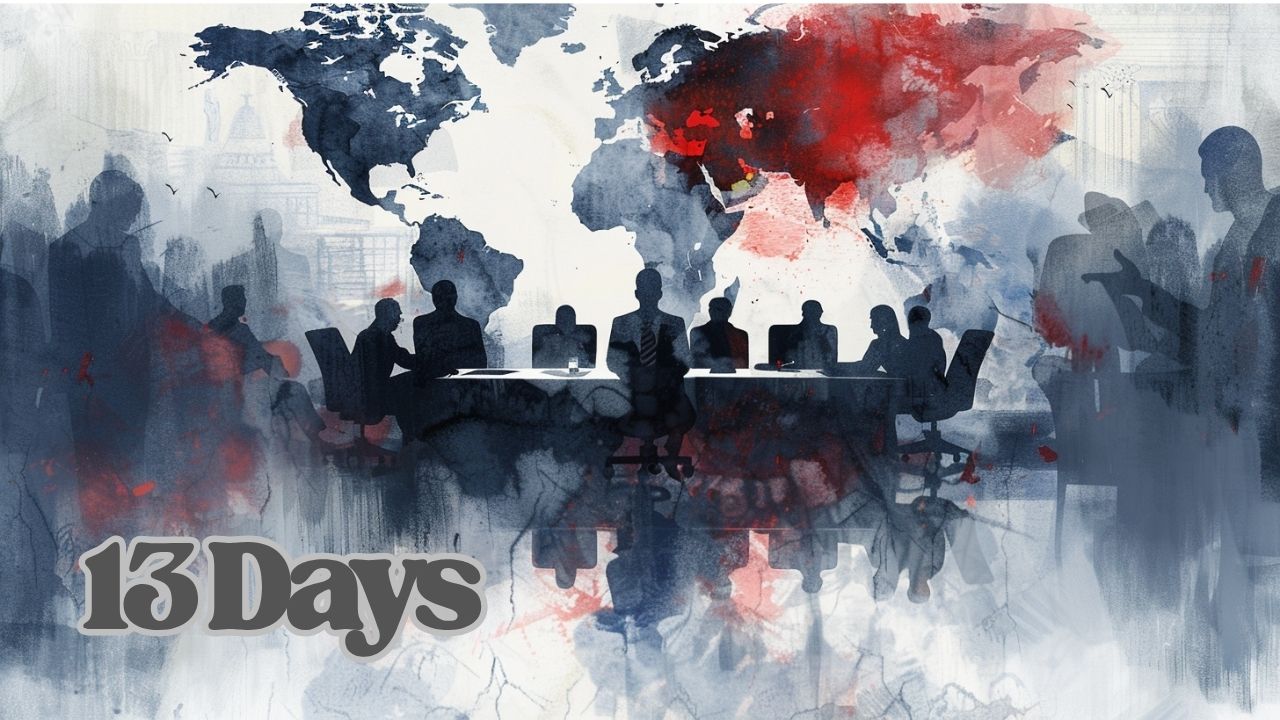
The film depicts the thirteen days when humanity came closest to nuclear war — the Cuban Missile Crisis of October 1962. When it emerges that the Soviet Union is installing nuclear missiles in Cuba, the US and USSR teeter on the brink. As the military presses hard for air strikes and invasion, President Kennedy and his inner circle search for a way to avert catastrophe not through force, but through dialogue. Few films have dramatized the choice the International Day for Dialogue Among Civilizations poses — dialogue or confrontation — in such extreme form.
Told through the eyes of presidential aide Kenny O’Donnell (Kevin Costner), the film follows the tense decision-making inside the White House. With a budget of $80 million and a runtime of 145 minutes, it draws on the actual transcripts of the EXCOMM (Executive Committee of the National Security Council) deliberations, giving it the density of serious historical drama.
Basic Information & Synopsis
→ For synopsis and production information, see our Database Article
Director: Roger Donaldson
Year: 2000
Runtime: 145 minutes
Production: Beacon Pictures
Commemorative Day: International Day for Dialogue Among Civilizations (June 10)
Synopsis: In October 1962, U-2 reconnaissance photographs reveal Soviet nuclear missiles being installed in Cuba, minutes’ flight from American cities. Over the next thirteen days, President John F. Kennedy (Bruce Greenwood), his brother and Attorney General Robert Kennedy (Steven Culp), and aide Kenny O’Donnell (Kevin Costner) face an agonizing choice: bow to the Joint Chiefs’ demands for air strikes and invasion — risking all-out nuclear war — or find another way. Kennedy chooses a naval “quarantine” of Cuba, a measure that is military yet leaves Moscow room to retreat, while quiet back-channel negotiation inches toward a settlement. Built on the actual EXCOMM transcripts, the film turns a story told largely in meeting rooms into a white-knuckle thriller about how dialogue, not force, pulled the world back from the brink.
Background Knowledge
What Was the Cuban Missile Crisis?
The Cuban Missile Crisis was a confrontation between the US and USSR in October 1962, regarded as the closest humanity has come to nuclear war during the Cold War. It began when the Soviet Union sought to place nuclear missiles in Cuba, just off the American coast. After thirteen tense days of negotiation, the two powers avoided a clash. The experience later prompted the creation of the “hotline” allowing the two leaders to communicate directly.
The Source Material — The Kennedy Tapes
The film is based on The Kennedy Tapes: Inside the White House During the Cuban Missile Crisis by Ernest R. May and Philip D. Zelikow, which compiled the secretly recorded EXCOMM meetings. Many of the film’s conference scenes are drawn from these actual transcripts, the source of its realism.
The Director — Roger Donaldson
Director Roger Donaldson had previously worked with Kevin Costner on No Way Out (1987). Skilled at staging political maneuvering and tension, he renders the complex decision-making process here as taut suspense, in keeping with his stated aim of making films “succinct and to the point.”
Kenny O’Donnell as Viewpoint Character
The protagonist, Kenny O’Donnell, was a real aide to Kennedy. By placing him at the film’s point of view, the film draws the audience into the heart of the White House without making JFK or RFK the lead. As discussed below, however, his role in the actual crisis was not as large as the film suggests — a deliberate dramatic choice, giving viewers a figure inside the White House who is not himself a policy expert.
What Makes It Exceptional
Turning “Dialogue” into Gripping Drama
The film’s greatest achievement is making a subject played out largely in meeting rooms into a breathless thriller. With almost no gunfire or explosions, the viewer is nonetheless pulled into the weight of every passing second. Thirteen Days proves that an exchange of words alone can become edge-of-the-seat drama — a virtue well suited to a day that champions the importance of dialogue.
Realism Grounded in the Transcripts, and the Black-and-White Footage
By building its script on the actual EXCOMM recordings and transcripts, the film gives its conference scenes a singular persuasiveness: who argued what, how they clashed, how they reached compromise — rendered with a density no textbook line can convey. (Harvard’s Belfer Center worked with the filmmakers to verify the historical accuracy of the White House deliberations.) Visually, too, the situation outside the White House — the U-2 flights, the movement of military hardware — is intercut in a documentary-like black-and-white texture at various points. This technique, moving between “the historical document (fact)” and “the conference-room drama (the inside story),” further reinforces the transcript-based realism.
Depicting Resistance to the “Temptation of Force”
What the film returns to again and again is the Kennedys’ persistent resistance to the hardline demand to “solve it by force.” Each time the military presses for air strikes, they ask anew: is there really no other way? Rejecting the easiest option (force) and continuing to choose the hardest one (dialogue and containment) — that struggle gives the film its moral weight.
Related Articles
- Thirteen Days Database – Synopsis & Production Details
- Roger Donaldson – Filmmaker Profile
- Kevin Costner – Actor Profile
はじめに
核戦争まであと一歩——「対話」が世界を救った13日間
6月10日は「文明間対話国際デー(International Day for Dialogue Among Civilizations)」です。
2024年6月7日、国連総会は決議A/RES/78/286を採択し、6月10日を文明間対話国際デーと定めました。中国が提案し、80を超える国々が共同提案国となったこの決議は、あらゆる文明の達成を「人類共通の遺産」と位置づけ、文明の多様性を尊重すること、そして対話が世界平和の維持・共通の発展・人類の福祉に果たす決定的な役割を強調しています。第1回の記念日は2025年6月10日に祝われました。憎しみや不寛容、誤情報が世界に広がるいま、「対話は選択肢の一つではなく、不可欠なものだ」——記念日が掲げるこのメッセージは、かつてないほど切実に響きます。
この6月10日に観る作品として、ロジャー・ドナルドソン監督による2000年の映画**『13デイズ』**(Thirteen Days)をお薦めします。
本作が描くのは、人類が核戦争に最も近づいた13日間——1962年10月のキューバ危機です。ソ連がキューバに核ミサイルを配備していることが発覚し、米ソは一触即発の状態に陥ります。軍部が空爆と侵攻を強く迫るなか、ケネディ大統領とその側近たちは、武力ではなく「対話」によって破滅を回避する道を探りました。文明間対話国際デーが問いかける「対話か、対決か」という選択を、これほど極限の形で描いた作品はそう多くありません。
本作はケネディ大統領の補佐官ケネス・オドネル(ケヴィン・コスナー)の視点から、ホワイトハウス内部の緊迫した意思決定を追います。製作費8000万ドル、上映時間145分。EXCOMM(国家安全保障会議執行委員会)の実際の議事録を脚本の土台に用いた、歴史ドラマとしての密度の高い一本です。
基本情報・あらすじ
→ あらすじや製作情報はデータベース記事へ
監督: ロジャー・ドナルドソン
製作年: 2000年
上映時間: 145分
制作: Beacon Pictures
記念日: 文明間対話国際デー(6月10日)
あらすじ: 1962年10月、偵察機U-2が撮影した写真によって、ソ連がキューバに核ミサイルを配備しつつあることが発覚します。アメリカの主要都市まで数分という距離です。続く13日間、ケネディ大統領(ブルース・グリーンウッド)、弟で司法長官のロバート・ケネディ(スティーヴン・カルプ)、そして大統領補佐官ケニー・オドネル(ケヴィン・コスナー)は、苦渋の選択を迫られます。統合参謀本部が求める空爆と侵攻に従い全面核戦争のリスクを負うのか、それとも別の道を見つけるのか。ケネディが選んだのは、軍事行動でありながらソ連に引き返す余地を残す海上「隔離(封鎖)」でした。公式の瀬戸際外交の裏では水面下の交渉が静かに妥結へと近づいていきます。EXCOMMの実際の議事録を土台に、会議室を舞台とする物語を、武力ではなく対話こそが世界を破滅の淵から引き戻したことを描く息詰まるスリラーへと変えた一本です。
予備知識
キューバ危機とは
キューバ危機は、1962年10月に起きた米ソ間の対立で、冷戦期において人類が核戦争に最も近づいた瞬間とされています。ソ連がアメリカの目と鼻の先であるキューバに核ミサイルを配備しようとしたことが発端でした。13日間にわたる緊迫した交渉の末、両国は衝突を回避します。この経験は、後に米ソ間に首脳が直接連絡を取り合う「ホットライン」を設けるきっかけともなりました。
原作——『The Kennedy Tapes』
本作は、アーネスト・R・メイとフィリップ・D・ゼリコウによる『The Kennedy Tapes: Inside the White House During the Cuban Missile Crisis』を原作としています。これは、ケネディがホワイトハウスで秘密裏に録音していたEXCOMM(国家安全保障会議執行委員会)の会議の記録をまとめたものです。映画の会議シーンの多くは、この実際の議事録に基づいており、それが本作のリアリティの源泉となっています。
監督——ロジャー・ドナルドソン
監督のロジャー・ドナルドソンは、ケヴィン・コスナーと『追いつめられて』(1987年)でも組んだ経験を持つ映像作家です。政治的な駆け引きと緊張感の演出に長け、「簡潔で要点を押さえた映画を作る」という自らの信条どおり、本作でも複雑な意思決定の過程をサスペンスフルに描き出しています。
ケネス・オドネルという視点人物
主人公ケネス・オドネルは、ケネディの実在の補佐官です。映画は彼を物語の視点人物に据えることで、JFKやRFKを主役にすることなく、観客をホワイトハウスの中枢へと引き込みます。ただし後述するように、史実における彼の役割は映画ほど大きくはなく、それはむしろ「ホワイトハウスの中にいながら政策の専門家ではない人物」を観客に近い目線として置くための、映画的な選択でした。
優れている点
「対話」を緊張感あるドラマに変えた手腕
本作の最大の達成は、会議室での議論という、本来は地味な題材を、息詰まるスリラーに仕立てた点です。銃撃戦も爆発もほとんどないにもかかわらず、観客は一分一秒の判断の重みに引き込まれます。「言葉のやりとり」そのものが手に汗握るドラマになりうることを、本作は証明しています。これは、対話の重要性を説く文明間対話国際デーにふさわしい美点です。
議事録に基づくリアリティと、白黒映像の演出
EXCOMMの実際の録音・議事録を脚本の土台にしたことで、会議シーンには独特の説得力があります。誰が何を主張し、どう対立し、どう妥協に至ったのか——その生々しい過程が、教科書の一行では決して伝わらない密度で描かれます(ハーバード大学ベルファー・センターが製作陣と組んで歴史的正確性を検証しました)。演出面でも、U-2の偵察飛行や軍備の移動といったホワイトハウスの外の状況が、随所で記録映像を思わせる白黒の質感で挿入されます。「歴史のドキュメント(事実)」と「会議室のドラマ(内幕)」を視覚的に行き来させるこの手法が、議事録に基づくリアリティをさらに裏打ちしています。
「武力への誘惑」への抵抗を描く
本作が繰り返し描くのは、「力で解決せよ」という強硬論への、ケネディたちの粘り強い抵抗です。軍部が空爆を迫るたびに、彼らは「本当に他の道はないのか」と問い直します。最も簡単な選択肢(武力)を退け、最も難しい選択肢(対話と封じ込め)を選び続ける——その葛藤の描写が、本作に倫理的な重みを与えています。
関連記事
- 13デイズ データベース – あらすじ・製作情報
- ロジャー・ドナルドソン – 監督プロフィール
- ケヴィン・コスナー – 俳優プロフィール