
Choose Your Language / 言語を選択:
Introduction
What It Means to Be a Queen, and What It Means to Be a Person — The Death of Diana and the Essence of the Monarchy
June 2 is the anniversary of the Coronation of Queen Elizabeth II.
On June 2, 1953, Elizabeth II was formally crowned at Westminster Abbey in a ceremony of one thousand years of tradition. Thousands of guests attended in person; hundreds of millions listened by radio; and for the first time, the ceremony was broadcast live on television. Three hundred million people stood in the streets of London in the rain to watch the golden carriage pass. The twenty-seven-year-old queen who received the crown that day reigned as Britain’s symbol for seventy years until her death in 2022. What does it mean to be a queen? She spent her life answering that question.
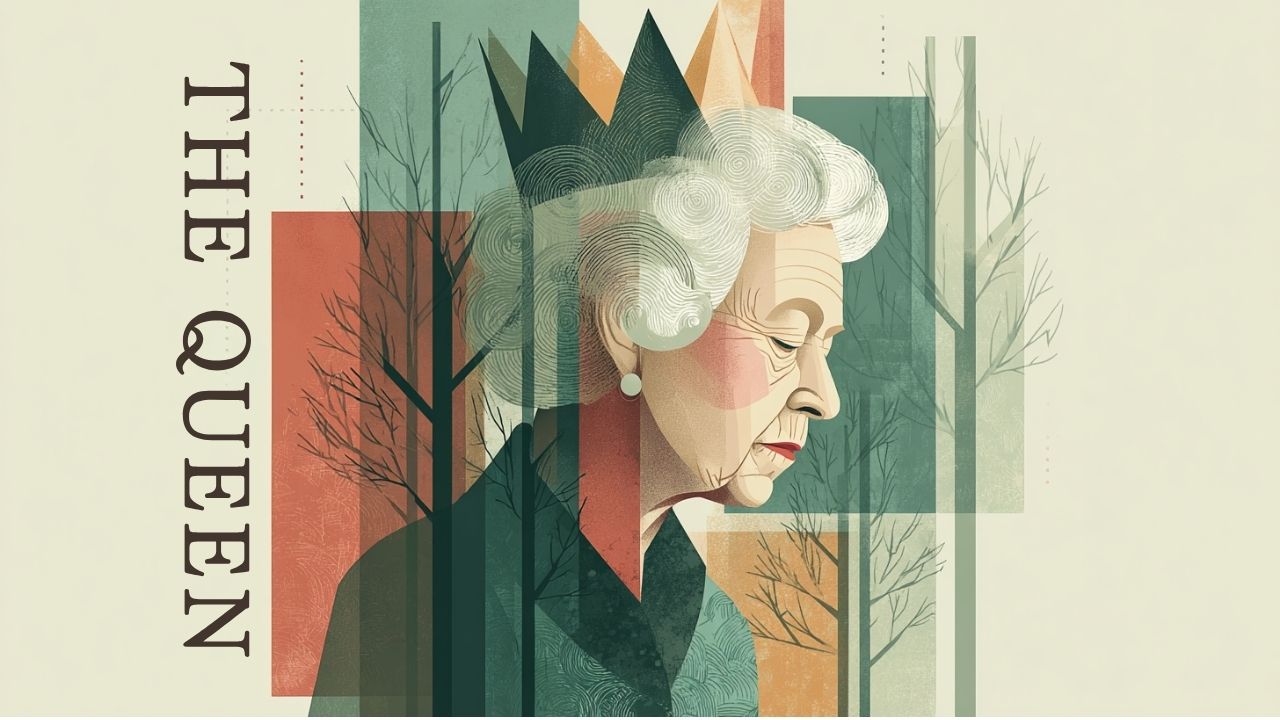
For this day, the film to watch is The Queen (2006), directed by Stephen Frears.
The film depicts the seven days following the death of Diana, Princess of Wales, on August 31, 1997 — the collision between the Royal Family’s instinct to treat Diana’s death as a private matter and the pressure from newly elected Prime Minister Tony Blair and from the British public, who expected a public, official expression of grief. Helen Mirren plays Elizabeth II. Peter Morgan wrote the screenplay. The film asks what the monarchy is, who it serves, and what it costs the person at its center.
Helen Mirren won the Academy Award for Best Actress. Rotten Tomatoes: 96%. Critics described the film as “a moving portrait of the Royal Family in the aftermath of Diana’s death, filled with wit, humor, and pathos.”
Basic Information & Synopsis
→ For synopsis and production information, see our Database Article
Director: Stephen Frears
Year: 2006
Runtime: 103 minutes
Production: Pathé, Canal+, BBC Films
Commemorative Day: Coronation of Queen Elizabeth II Anniversary (June 2)
Background Knowledge
The 1997 Diana Event and Its Shock
Diana died on August 31, 1997, at 36, in a car accident in the Pont de l’Alma tunnel in Paris while the vehicle was attempting to evade pursuing paparazzi. The death of someone widely known as “the People’s Princess” — beloved for her public warmth and her charity work — produced an unprecedented wave of public grief both in Britain and worldwide.
Critically, Diana had separated from Charles in 1992 and divorced in 1996; she was technically no longer a member of the Royal Family. This question of status was central to the Palace’s initial position — and to the film’s central conflict.
Stephen Frears and Peter Morgan
Frears directed My Beautiful Laundrette (1985) and Prick Up Your Ears (1987) — films consistently concerned with British class and power. Morgan’s specialty is political conflict dramatized as dialogue — tightly constructed scenes in which people with different positions talk past each other or toward each other. He subsequently wrote Frost/Nixon (2008) and created the Netflix series The Crown (2016–). This film is the second of his Blair trilogy: it follows the television film The Deal (2003, also Frears, also Michael Sheen as Blair) and precedes The Special Relationship (2010).
Helen Mirren’s Approach
Mirren studied Elizabeth II’s voice, posture, walk, and the micro-expressions of her face in preparation for the role. At the Academy Awards ceremony, her acceptance speech included a dedication to the Queen — an expression of respect for a performance she did not intend as an impersonation but as an act of understanding from the inside. Michael Sheen’s Blair was equally praised; the two performers worked together again across multiple projects.
The Coronation in Context
The 1953 Coronation was the moment when television made the Royal Family directly visible to the whole of Britain for the first time. Forty-four years later, the Diana crisis was the moment when tabloid media, 24-hour news cycles, and the resulting public opinion pressure — in a structure directly analogous to contemporary social media — began to erode the monarchy’s ability to manage its own silence. Watching this film on June 2, the Coronation anniversary, is to hold both the beginning and one of the great crises of that reign simultaneously.
What Makes It Exceptional
Helen Mirren’s “From the Inside” Performance
The film’s center is Mirren’s performance. Her Elizabeth is not sympathized with and not condemned. Mirren approaches the character as someone who believes, with complete sincerity, in a code of conduct that the world around her has stopped sharing — and whose isolation within that code is not stubbornness but a form of integrity that is also a form of blindness.
The scene most often cited is the encounter with a stag in the Scottish hills. No dialogue. Only the exchange of sight between two large, isolated creatures who are somehow in the same position. Mirren’s face in that moment does not explain what the scene means; it simply holds it. The audience understands that Diana’s fate and the Queen’s situation are being placed alongside each other without announcement. The scene’s restraint is its achievement.
A Screenplay That Refuses to Assign Blame
Morgan’s script is built on the refusal to establish a verdict. The Queen’s silence has its own logic — her understanding of what the monarchy is, and what public displays of grief would mean for its dignity, is not irrational. Blair’s intervention has its own logic — he understands what public opinion requires and what the cost of the Palace’s silence will be. Neither is simply right. Neither is simply wrong.
“To make someone right is to make someone wrong” — the screenplay refuses that binary, which is what gives the film its durability. A more conventional political drama would have taken a side. This one holds the tension and leaves it with the audience.
“Private Queen” and “Public Queen”
The film’s most precise achievement is the alternation between Elizabeth as ordinary woman — the grandmother walking her dogs and her grandchildren across the Scottish hills, the woman who gets out of a Land Rover to investigate a sound in the night — and Elizabeth as head of state, working through red boxes, holding audiences, maintaining the performance of permanence. The same person occupies both registers simultaneously. Mirren’s work is to hold both without simplifying either.
Related Articles
- The Queen Database – Synopsis & Production Details
- Stephen Frears – Filmmaker Profile
- Helen Mirren – Actor Profile
はじめに
女王であることと、人間であること——ダイアナの死が暴いた君主制の本質
6月2日は、1953年にエリザベス2世の戴冠式が行われた日です。
1953年6月2日、エリザベス女王2世はウェストミンスター寺院で正式に戴冠し、1000年の伝統に彩られた儀式の中で王位に就きました。何千人もの来賓が式典に参列し、数億人がラジオで耳を傾け、そして初めて生中継テレビで視聴しました。雨が降りしきる中、300万人がロンドンの街路に立ち、金色の馬車で行進する女王とフィリップ殿下の姿を一目見ようとしていました。
27歳の女王が王冠を戴いたその瞬間から、エリザベス2世は2022年の崩御まで70年間、イギリスという国の象徴として君臨し続けました。「女王であること」とはどういうことか——その問いに生涯をかけて向き合い続けた一人の人間の物語が、この映画に刻まれています。
この6月2日に観る作品として、スティーヴン・フリアーズ監督による2006年の映画『クィーン』(The Queen)をお薦めします。
本作は、1997年8月31日のダイアナ元妃の突然の死を受けて、王室と新首相トニー・ブレアが激しく葛藤した7日間を描いた政治ドラマです。王室はダイアナの死を「私的な問題」として扱い、公式な王室の死として扱わない方針を取りますが、トニー・ブレア首相とチャールズ皇太子は、国民が公式な哀悼の表明を求めていることを重視します。
ヘレン・ミレンがエリザベス2世を演じてアカデミー賞主演女優賞を受賞。Rotten Tomatoesで96%という圧倒的な評価を獲得し、「機知とユーモアと哀愁に満ちた、ダイアナ死後の王室の姿を描く感動的な肖像」と評されました。
基本情報・あらすじ
→ あらすじや製作情報はデータベース記事へ
監督: スティーヴン・フリアーズ
製作年: 2006年
上映時間: 103分
制作: パテ、Canal+、BBC Films
記念日: エリザベス2世戴冠記念日(6月2日)
予備知識
1997年のダイアナ事件とその衝撃
1997年8月31日、ダイアナ元妃がパリのアルマ橋トンネルで追いかけるパパラッチを避けようとした車の事故で死亡しました。享年36歳。「国民の王女」と呼ばれ、慈善活動で世界的に親しまれたダイアナの突然の死は、イギリス国内外で空前の悲嘆を引き起こしました。
1992年にチャールズ皇太子と別居し、1996年に離婚したダイアナは、技術的にはすでに王室の一員ではありませんでした。この「身分」の問題が、王室の対応を複雑にしました。
スティーヴン・フリアーズとピーター・モーガン
監督のスティーヴン・フリアーズは『マイ・ビューティフル・ランドレット』(1985年)、『プリック・アップ』(1987年)など、イギリス社会の階級と権力を描いてきた監督です。脚本のピーター・モーガンは、政治的な対立と人間の葛藤を対話劇として描くことを得意とし、後に『フロスト×ニクソン』(2008年)、ネットフリックスドラマ『ザ・クラウン』(2016年〜)を手がけることになります。モーガンにとってトニー・ブレアは繰り返し描く題材で、本作は2003年のテレビ映画『ザ・ディール』(The Deal、同じくフリアーズ監督・マイケル・シーン主演)に続くブレア三部作の第二作にあたります。三部作は後に『ザ・スペシャル・リレーションシップ』(2010年)で完結しました。
ヘレン・ミレンという選択
ヘレン・ミレンはエリザベス2世の役のために、声、姿勢、歩き方、表情の微細な動きまでを徹底的に研究しました。アカデミー賞授賞式のスピーチで「エリザベス2世に捧げる」と述べた彼女の言葉は、演じることへの敬意と愛情を伝えています。マイケル・シーンのトニー・ブレアも高く評価され、後に同じコンビで複数の作品に出演することになります。
君主制の変容という文脈
1953年の戴冠式は、テレビ中継によってイギリス全土の国民が初めて「王室を自分の目で見た」瞬間でした。それから44年後のダイアナ事件は、過熱するタブロイド報道と24時間メディアが生み出した大衆世論の圧力——現代のSNSによる炎上にも通じる構造——が王室の「沈黙の権利」を侵食した瞬間でもありました。6月2日という戴冠記念日に、この映画を観ることは、「王室とは何か」という問いを、始まりと危機の両方から問い直すことになります。
優れしている点
ヘレン・ミレンの「内側から演じる」演技
本作の圧倒的な中心は、ヘレン・ミレンの演技です。エリザベス2世という実在の人物を、同情も批判もせず、ただ内側から理解しようとする演技。「女王」という役割と「人間」という実体の間で引き裂かれている人物の内面が、表情と沈黙から伝わってきます。
特に、スコットランドの山中で牡鹿と目が合う場面のミレンの表情は、本作で最も語られる場面のひとつです。セリフがなく、ただ視線だけが交わされる——それでも観客には何かが伝わります。追い詰められ、大衆の視線という銃口に晒され続けたダイアナの運命と、孤立する女王自身の姿が重なる瞬間でもあります。
「正しさ」を問わない脚本
ピーター・モーガンの脚本の最大の強みは、女王を「冷酷な悪役」にも「誤解された英雄」にもしないことです。女王の沈黙には彼女なりの論理があり、ブレアの介入には彼なりの政治的計算があります。どちらが「正しい」のかを映画は決めません。
「誰かを正しいとすれば、誰かを間違いにしなければならない」——その二元論を意図的に避けた脚本が、本作に長く語り継がれる深みをもたらしています。
「私的な女王」と「公的な女王」の対比
映画が最も巧みに描くのは、バルモラル城での「普通の祖母」としてのエリザベスと、国家の象徴としての「女王」の間の緊張です。孫と犬を連れて野を歩く場面と、赤い書類箱を前に国政に向き合う場面——同じ人間がまったく異なるモードで存在する姿が、君主という役割の特異性を示しています。
関連記事
- クィーン データベース – あらすじ・製作情報
- スティーヴン・フリアーズ – 監督プロフィール
- ヘレン・ミレン – 俳優プロフィール