
Choose Your Language / 言語を選択:
Introduction
1970s Women’s Liberation Movement Central Figures Depicted — Era’s Testimony
March 8 is “International Women’s Day” established by United Nations.
This commemorative day aims improving women’s rights and achieving gender equality, positioned as special day worldwide considering women’s social, economic, political status improvement. This day United Nations officially established 1975 becomes important opportunity promoting women’s complete equal participation in all fields, appealing gender-based discrimination elimination.
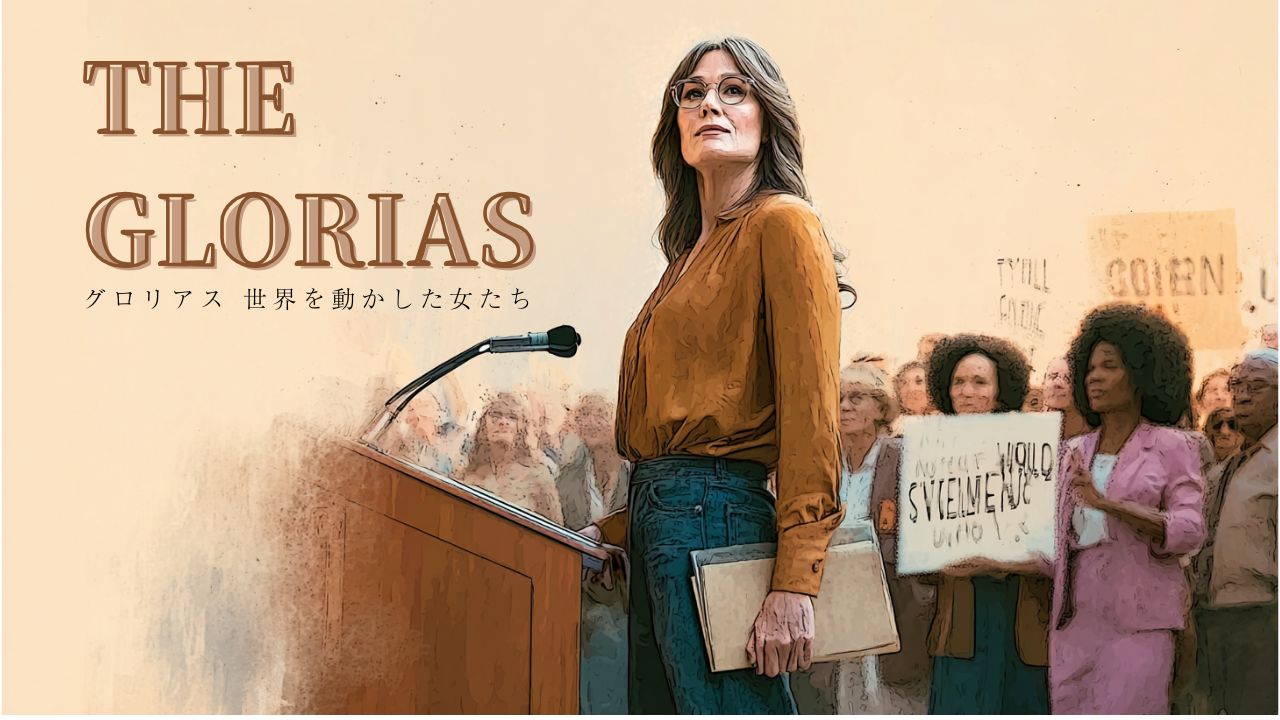
For this meaningful day, recommending Julie Taymor director’s 2020 The Glorias. This work biographical film comprehensively depicting 1970s American women’s liberation movement centered on women’s liberation movement symbolic leader Gloria Steinem’s life.
Julianne Moore and Alicia Vikander perform Gloria in different eras, through interactions with real women activists Betty Friedan, Shirley Chisholm, Dolores Huerta, multifacetedly depicting themes deeply related to International Women’s Day ideals: diverse women’s solidarity, cross-racial and cross-class cooperation, consciousness reform through media, path to political participation. This work overviewing 1970s women’s liberation movement entirety through one activist’s life becomes precious historical testimony understanding how modern women’s rights were acquired.
Basic Information & Synopsis
→ For synopsis and production information, see our Database Article
Director: Julie Taymor
Year: 2020
Runtime: 147 minutes
Production: LD Entertainment, Artemis Rising Foundation
Commemorative Day: International Women’s Day (March 8)
Background Knowledge
Gloria Steinem’s Actual Achievements
Real Gloria Steinem (born 1934) one of 1970s women’s liberation movement’s most symbolic figures. Ms. Magazine established 1972 as pioneering medium handling political/social issues from women’s perspective influenced millions of women.
She published 1969 article “After Black Power, Women’s Liberation,” attracted national attention, established position as women’s liberation movement leader. 1971 co-founded National Women’s Political Caucus, provided training and support for women seeking government electoral and appointed positions. Same year, co-founded Women’s Action Alliance, until 1997 supported women activists’ network, worked advancing women’s causes and legislation.
Her activities wide-ranging: lecture activities, political lobbying, media dissemination, grassroots organizing, using all means working toward women’s rights improvement. 1990s supported “Take Our Daughters to Work Day” establishment, provided opportunities for young women learning about future careers.
Received numerous honors: 1995 Parenting Magazine Lifetime Achievement Award for girls’ self-esteem improvement efforts, Biography Magazine selected as one of America’s 25 most influential women. 1993 inducted National Women’s Hall of Fame, 2013 President Obama awarded Presidential Medal of Freedom, highest civilian honor. 2021 received Princess of Asturias Award Communication and Humanities for limitless dedication to feminism including all voices under equality name.
Ms. Magazine Historical Significance
1972 established Ms. Magazine important media strategy for women’s liberation movement. As America’s first national feminist magazine, began 1971 as New York magazine supplement, 1972 became independent magazine.
First issue test version 300,000 copies sold out in 3 days, subsequent weeks acquired 26,000 subscription orders. First issue included articles about women with abortion experiences, promoting removing sexist expressions from English, literature for understanding women can confront social norms.
Particularly important was “American Women’s Petition” signed by 53 prominent women including Billie Jean King, Judy Collins, Anaïs Nin, Gloria Steinem, Susan Sontag, Nora Ephron, publicly declaring experiencing illegal abortion. This petition based on evidence approximately 25% American women chose abortion, became important background for 1973 Roe v. Wade decision legalizing abortion.
However, 2022 Dobbs decision overturned this right—”reversal tragedy” making this film not mere “past record” but “ongoing story” currently being fought.
What Makes It Exceptional
Multiple Actresses Chronological Performance Innovation
This work’s most innovative point is direction method: Julianne Moore, Alicia Vikander, Leyla George performing different-era Glorias, dialoguing on bus. This method effectively expresses one person’s life continuity and change, women’s liberation movement historical continuity.
Particularly Julianne Moore’s middle-age onward Gloria role, intellectual passionate yet humanly charming performance magnificently captures real person’s essence. Different actresses’ performances naturally connect, persuasively depicting one woman’s growth trajectory.
“Bus” Motif Multilayered Symbolism: This “bus dialogue” direction transcends mere flashback device. Bus itself carries profound historical significance—Rosa Parks’ refusal to give up her seat, Freedom Riders’ interstate journey challenging segregation. By setting Gloria’s self-reflection within bus, Taymor visually connects women’s liberation movement to broader American civil rights struggles. Bus becomes metaphor: women’s movement not isolated battle but one route among interconnected human rights journeys.
Diverse Women Leaders Ensemble Depiction
Film doesn’t focus solely on Gloria but carefully depicts women leaders with diverse backgrounds: Betty Friedan, Shirley Chisholm, Dolores Huerta. Impressively depicts cooperation toward common goal of women’s rights improvement while each having different perspectives and experiences.
Particularly Uzo Aduba playing Shirley Chisholm’s depiction excellent, powerfully expressing strength and intelligence confronting double difficulty of racism and sexism.
Visual Symbolism and Poetic Expression
Director Julie Taymor’s characteristic visual sense demonstrated throughout. Bus moving space time travel setting, vivid color design, symbolic costume design—artistic expression transcending mere biographical film impressive.
Related Articles
- The Glorias Database – Synopsis & Production Details
- Julie Taymor – Filmmaker Profile
- Julianne Moore – Actor Profile
はじめに
1970年代女性解放運動の中心人物たちを描いた時代の証言
3月8日は、国連により制定された「国際女性デー」(International Women’s Day)です。
この記念日は、女性の権利向上と男女平等の実現を目指し、世界中で女性の社会的・経済的・政治的地位の向上について考える特別な日として位置づけられています。1975年に国連が正式に制定したこの日は、すべての分野における女性の完全で平等な参加を促進し、性別に基づく差別の撤廃を訴える重要な機会となっています。
この意義深い日に観る作品として、ジュリー・テイモア監督による2020年の『グロリアス 世界を動かした女たち』(The Glorias)を推奨します。本作は、女性解放運動の象徴的指導者グロリア・スタイネムの人生を軸に、1970年代アメリカの女性解放運動を包括的に描いた伝記映画です。
ジュリアン・ムーアとアリシア・ヴィカンデルが異なる年代のグロリアを演じ、ベティ・フリーダン、シャーリー・チゾム、ドロレス・ウエルタなど実在の女性活動家たちとの交流を通じて、多様な女性たちの連帯、人種と階級を越えた共闘、メディアを通じた意識改革、政治参加への道筋といった、国際女性デーの理念に深く関わるテーマを多角的に描き出しています。
一人の活動家の人生を通じて1970年代女性解放運動の全体像を俯瞰できるこの作品は、現代の女性の権利がいかにして獲得されたかを理解する上で貴重な歴史的証言となっています。
基本情報・あらすじ
→ あらすじや製作情報はデータベース記事へ
監督: ジュリー・テイモア
製作年: 2020年
上映時間: 147分
制作: LD Entertainment、Artemis Rising Foundation
記念日: 国際女性デー(3月8日)
予備知識
グロリア・スタイネムの実際の功績
実在のグロリア・スタイネム(1934年生まれ)は、1970年代女性解放運動の最も象徴的な人物の一つです。1972年に創刊した『Ms.』マガジンは、女性の視点からの政治・社会問題を扱う先駆的な媒体として、数百万人の女性に影響を与えました。
彼女は1969年に「After Black Power, Women’s Liberation」という記事を発表し、全国的な注目を集めて女性解放運動のリーダーとして地位を確立しました。1971年には全国女性政治会議(National Women’s Political Caucus)を共同設立し、政府の選挙および任命職を求める女性に研修と支援を提供しました。同年、女性行動同盟(Women’s Action Alliance)も共同設立し、1997年まで女性活動家のネットワークを支援し、女性の大義と立法の推進に取り組みました。
彼女の活動は多岐にわたり、講演活動、政治ロビー活動、メディアでの発信、草の根組織化など、あらゆる手段を駆使して女性の権利向上に取り組みました。1990年代には「娘を職場に連れて行く日」の設立を支援し、若い女性たちが将来のキャリアについて学ぶ機会を提供しました。
数々の栄誉を受けており、1995年にはParenting誌から女子の自尊心向上への取り組みに対してライフタイム功労賞を、Biography誌からはアメリカで最も影響力のある25人の女性の一人に選出されました。1993年には全米女性の殿堂入りを果たし、2013年にはオバマ大統領から最高位の文民栄誉である大統領自由勲章を授与されました。2021年には平等の名の下にすべての声を含めたフェミニズムへの限りない献身に対して、アストゥリアス皇太子賞コミュニケーション・人文学賞を受賞しました。
*Ms.*マガジンの歴史的意義
1972年創刊の『Ms.』マガジンは、女性解放運動の重要なメディア戦略でした。最初のアメリカ全国フェミニスト雑誌として、1971年にNew York誌の別冊として始まり、1972年に独立した雑誌となりました。
創刊号のテスト版30万部は3日で完売し、その後数週間で2万6千の定期購読注文を獲得しました。創刊号には中絶体験を持つ女性たちに関する記事、英語から性差別的な表現を取り除くことの推進、女性が社会規範に立ち向かうことができることを理解するための文学などが掲載されました。
特に重要だったのは、ビリー・ジーン・キング、ジュディ・コリンズ、アナイス・ニン、グロリア・スタイネム、スーザン・ソンタグ、ノーラ・エフロンなど53人の著名女性が署名した「アメリカ女性請願書」で、違法な中絶を体験したことを公に宣言しました。この請願書は、アメリカ女性の約25%が中絶を選択していたという証拠に基づいており、1973年のロー対ウェイド判決による中絶合法化の重要な背景となりました。
しかし、2022年のドブス判決によりこの権利は覆されました——「逆転の悲劇」により、本作は単なる「過去の記録」ではなく、今まさに戦われている「現在進行形の物語」となっています。
優れている点
複数女優による時系列演技の革新性
本作の最も革新的な点は、ジュリアン・ムーア、アリシア・ヴィカンデル、レイラ・ゴージュが異なる年代のグロリアを演じ、バスの中で対話するという演出手法です。この手法により、一人の人物の人生の連続性と変化、そして女性解放運動の歴史的連続性が効果的に表現されています。
特にジュリアン・ムーアの中年期以降のグロリア役は、知的で情熱的、かつ人間的な魅力に満ちた演技で、実在の人物の本質を見事に捉えています。異なる女優たちの演技が自然に繋がり、一人の女性の成長の軌跡を説得力を持って描いています。
「バス」というモチーフの重層性: この「バスの中での対話」という演出は、単なる回想装置を超えた深い歴史的意義を持っています。バスそのものが——ローザ・パークスの座席譲渡拒否、フリーダム・ライダーズの州境を越えた人種隔離への挑戦——アメリカ公民権運動の象徴だからです。テイモア監督は、グロリアの自己省察をバスという空間に設定することで、女性解放運動がより広範なアメリカ公民権闘争と繋がっていることを視覚的に表現しています。バスは、女性運動が孤立した戦いではなく、相互に結びついた人権運動の一つの道筋であることを示すメタファーとなっています。
多様な女性リーダーの群像描写
映画は、グロリア一人に焦点を当てるのではなく、ベティ・フリーダン、シャーリー・チゾム、ドロレス・ウエルタなど、多様なバックグラウンドを持つ女性リーダーたちを丁寧に描写しています。それぞれが異なる視点と経験を持ちながらも、女性の権利向上という共通目標に向かって協力する様子が印象的に描かれています。
特にウゾ・アドゥーバが演じるシャーリー・チゾムの描写は秀逸で、人種差別と性差別の二重の困難に立ち向かう強さと知性が力強く表現されています。
視覚的な象徴性と詩的表現
ジュリー・テイモア監督特有の視覚的センスが随所に発揮されています。バスという移動空間を通じた時間旅行の設定、鮮やかな色彩設計、象徴的な衣装デザインなど、単なる伝記映画を超えた芸術的表現が印象的です。