
Choose Your Language / 言語を選択:
Introduction
The Magic of Small Kindnesses — A Jewel of Romantic Comedy Set in Paris
May 29 is European Neighbours’ Day.
The observance began in 1999, when Atanase Périfan and the association Paris d’Amis launched an event in Paris’s 17th arrondissement called Immeubles en Fête — “Apartment Buildings in Celebration.” Eight hundred buildings participated in the first year, drawing more than ten thousand residents together. The event spread across France and then across Europe, and is now observed in more than 36 countries by over 30 million participants every year on the last Friday of May.
The day was created in response to a specific problem: the deepening social isolation of urban life, the way people can live in the same building for years without knowing their neighbors’ names, the retreat of individuals behind closed doors. Its premise is simple — open the door and talk to the person next door.
For this day, the film to watch is Amélie (Le Fabuleux Destin d’Amélie Poulain, 2001), directed by Jean-Pierre Jeunet.
The film is set in Montmartre, Paris. Its world is built from the apartment residents, the café regulars, and the street-level human population of a neighborhood — a densely specific network of neighbors. Amélie, a shy waitress played by Audrey Tautou, decides to spend her days engineering small happinesses for the people around her. She asks for nothing in return. The question the film poses — how well do you know the person who lives next door? — is the question European Neighbours’ Day was built to ask.
Basic Information & Synopsis
→ For synopsis and production information, see our Database Article
Director: Jean-Pierre Jeunet
Year: 2001
Runtime: 122 minutes
Production: Claudie Ossard Productions, UGC
Commemorative Day: European Neighbours’ Day (May 29)
Background Knowledge
Jean-Pierre Jeunet’s Visual Aesthetic
Jeunet is known for Delicatessen (1991) and The City of Lost Children (1995) — elaborate, dark, mechanically dense films. Amélie represents a decisive turn toward warmth and lightness while maintaining the visual obsessiveness that characterizes all his work.
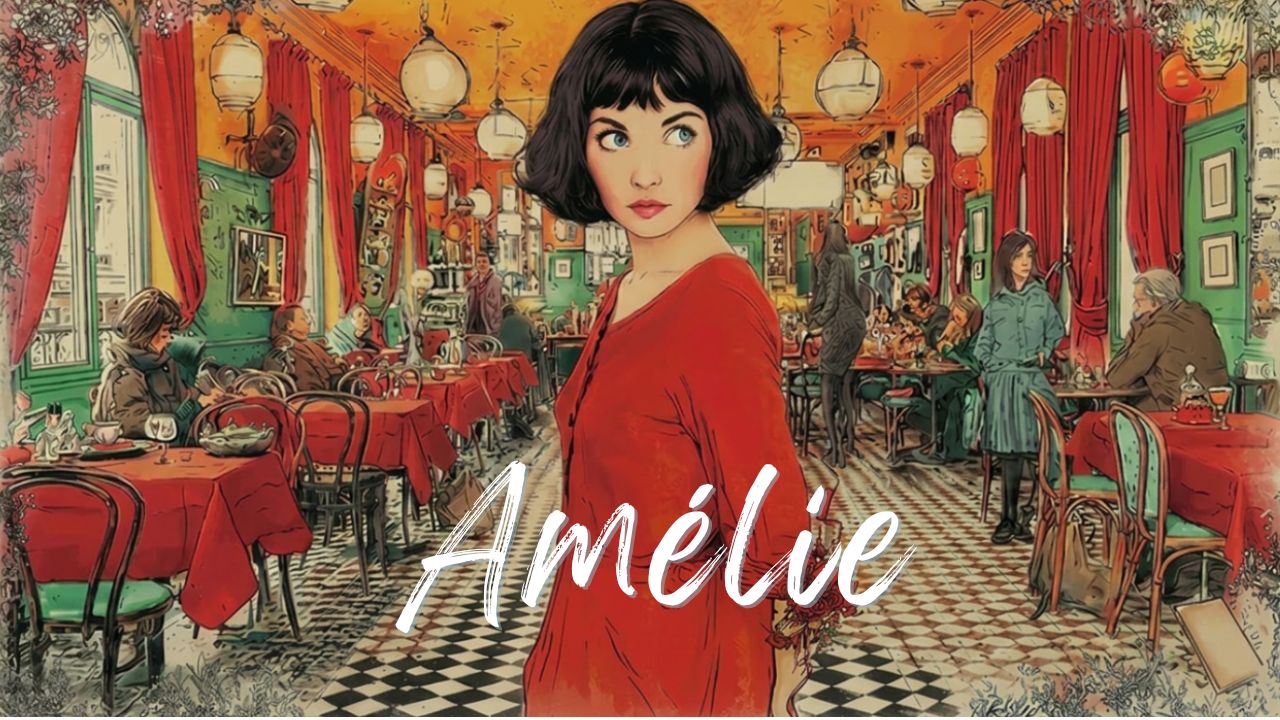
The film’s color palette was designed with extreme intention: red, green, and warm yellows dominate; blue was almost entirely removed from the image through color correction. The effect is of a world that looks like a memory of itself — saturated, heightened, slightly unreal. Every frame is as carefully arranged as a shop window. Jeunet’s visual method here matches the film’s emotional proposition: that the world contains more beauty than we usually notice, and that noticing is its own form of action.
Critical and Commercial Success
Amélie opened in France on April 25, 2001, to immediate acclaim from critics and audiences. It won four César Awards including Best Film and Best Director, two BAFTA Awards including Best Original Screenplay, and received five Academy Award nominations: Best Foreign Language Film, Best Original Screenplay, Best Cinematography, Best Art Direction, and Best Sound. Made for $10 million, it earned $174.2 million worldwide — one of the largest international successes in the history of French cinema.
The “Amélie Effect” and Montmartre
The film’s success produced what critics called the “Amélie effect” — a cultural wave that included the widespread adoption of Amélie’s blunt bob haircut across Europe, a major increase in tourism to Montmartre, and the transformation of the Café des Deux Moulins (a real café used as a shooting location) into one of the most visited destinations in Paris. The café’s walls are now covered with photographs of the production. A film about the value of local human connection became a cause of international pilgrimage.
What Makes It Exceptional
Audrey Tautou’s Performance
The film’s most essential element is Tautou’s Amélie. The character is shy, imaginative, observant, deeply kind, and also capable of petty revenge against people she dislikes — a combination that makes her human rather than saintly. Tautou carries the entire performance in expression and physical presence; Amélie is not a role that relies on dialogue to communicate its interior. The particular smile that appears when a scheme has worked, the specific way excitement shows in her face before she’s ready to admit it — these are precise and irreplaceable. Without Tautou, the film’s emotional logic does not function.
Jeunet’s Poetic Direction
The film’s method is to present ordinary daily life as if it were slightly enchanted — not magical in the fantasy sense, but heightened in the way that attention and affection heighten perception. Every character in the neighborhood, however peripheral, is given a specific characteristic, a particular pleasure or grief. The grocer’s cruelty to his employee and his own secret sadness. The neighbor who has spent twenty years repainting the same Renoir. The ex-boyfriend who appears every year in the same photograph. The accumulation of these details creates the sensation of a neighborhood as a living system — which is exactly what European Neighbours’ Day proposes that a neighborhood can be.
Imperfect Humanity and Gentle Humor
Amélie’s projects are not uniformly benevolent. Her schemes for the grocer, designed to unsettle him, are not kindnesses. Her difficulty actually approaching Nino is recognizable as the specific cowardice of someone who is more comfortable arranging other people’s lives than inhabiting her own. The film finds genuine comedy in this without condescending to it. The warmth comes partly from the imperfections — from the fact that Amélie is not a saint but a person, doing her best in ways that are sometimes sideways.
Related Articles
- Amélie Database – Synopsis & Production Details
- Jean-Pierre Jeunet – Filmmaker Profile
- Audrey Tautou – Actor Profile
はじめに
小さな親切が織りなすパリの魔法を描いた珠玉のロマンティック・コメディ
5月29日は「ヨーロッパ隣人の日(European Neighbours’ Day)」です。
1999年、パリ17区に住むアタナーズ・ペリファンと「パリ・ダミ(Paris d’Amis)」協会が「イムーブル・アン・フェット(Immeubles en Fête)」——直訳すれば「祝祭のアパート」——というイベントを立ち上げたことが始まりです。最初の年に参加した800棟のアパートから1万人以上の住民が集まり、その後フランス全土、さらにヨーロッパ各国へと広がりました。現在は36カ国以上、3000万人以上が参加する国際的な記念日となっており、毎年5月最終金曜日に開催されます。
この記念日が生まれた背景には、現代社会において深刻化していたある問題があります——個人主義の進行、社会的孤立、隣人同士のつながりの希薄化です。同じアパートに住んでいても互いの顔も名前も知らない。そんな都市生活の孤独に対抗するために、「扉を開けて、隣の人と話してみよう」という極めてシンプルな呼びかけから生まれた記念日です。
この5月29日に観る作品として、ジャン=ピエール・ジュネ監督による2001年の『アメリ』(Le Fabuleux Destin d’Amélie Poulain)をお薦めします。
本作の舞台はパリのモンマルトル——アパートの住人たち、カフェの常連客、街角の人々が織りなす濃密な隣人関係の物語です。内気なウェイトレスのアメリ(オドレイ・トトゥ)が、周囲の人々を幸せにするために仕掛ける小さな善行の数々は、見返りを求めない思いやりの連鎖を描いています。ヨーロッパ隣人の日が問いかける「隣に住む人を、あなたはどれだけ知っているか」という問いに、この映画は温かく詩的な形で答えています。
基本情報・あらすじ
→ あらすじや製作情報はデータベース記事へ
監督: ジャン=ピエール・ジュネ
製作年: 2001年
上映時間: 122分
制作: クロディ・オサール・プロダクションズ、UGC
記念日: ヨーロッパ隣人の日(5月29日)
予備知識
ジャン=ピエール・ジュネ監督の映像美学
ジャン=ピエール・ジュネ監督は、『デリカテッセン』(1991年)や『ロスト・チルドレン』(1995年)などで知られる独創的な映像作家です。ジュネ特有の視覚的スタイルは、鮮やかな色彩設計、細部へのこだわり、現実と幻想を巧妙に織り交ぜた演出手法が特徴的です。『アメリ』では赤・緑・温かみのある黄色を基調とした極端なカラーコレクションが施されており、青色を画面からほぼ排除することで、まるで絵画のような独特の映像世界を作り出しています。『アメリ』では、これまでの暗めの作風から一転して、温かく明るいトーンの映像美を確立し、世界中の観客を魅了しました。
世界的な高評価と記録的成功
『アメリ』は2001年4月25日にフランスで公開され、批評家と観客の両方から絶賛されました。ヨーロッパ映画賞で作品賞、セザール賞を4つ(作品賞と監督賞を含む)、英国アカデミー賞を2つ(脚本賞を含む)を受賞しました。アカデミー賞では外国語映画賞、脚本賞、撮影賞、美術賞、音響賞の5部門にノミネートされ、製作費1000万ドルに対して世界で1億7420万ドルの興行収入を上げ、フランス映画として最大級の国際的成功を収めました。
「アメリ現象」とモンマルトル
映画の大ヒットにより、「アメリ現象」と呼ばれる国際的な社会現象が生まれました。アメリのような前髪を短く切ったおかっぱのヘアスタイルが流行し、フランスでは映画のロケ地となったカフェや街角が聖地巡礼の対象となり、アメリが働いていた実在のカフェ「カフェ・デ・ドゥ・ムーラン」には今も世界中から観光客が訪れています。
優れしている点
オドレイ・トトゥの魅力的な演技
本作の最大の優れた点は、オドレイ・トトゥの魅力溢れる主演演技です。内気でありながらも想像力豊かで、人を思いやる温かな心を持つアメリというキャラクターを、表情や仕草の細かな演技で見事に表現しています。善行を成功させた時の満足そうな微笑みや、ニノへの恋心を抱いた時のときめきの表現は、セリフに頼らず表情だけで複雑な感情を伝え、世界中の観客を魅了しました。
ジャン=ピエール・ジュネの詩的な演出
現実の出来事を魔法的な体験として描く手法、鮮やかな色彩設計、細部へのこだわりが、映画全体に特別な雰囲気を作り出しています。アメリの空想シーンや、感情の高ぶりを表現する映像手法は、観客を映画の世界に深く引き込み、日常生活にも魔法が存在するかのような感覚を与えます。
人間らしい複雑さと温かなユーモア
アメリは完璧な聖人ではなく、気に入らない店主への意地悪な面も持っています。完璧でない等身大の人間たちが織りなす物語だからこそ、観客にとってより共感しやすく、温かさが際立ちます。
関連記事
- アメリ データベース – あらすじ・製作情報
- ジャン=ピエール・ジュネ – 監督プロフィール
- オドレイ・トトゥ – 俳優プロフィール