
Choose Your Language / 言語を選択:
Introduction
A Woman Scientist Who Loved the Sea, and Her Life’s Mission — To Protect the “Hope Spots”
June 8 is World Oceans Day.
On June 8, 1992, at a Global Forum held alongside the Earth Summit (the UN Conference on Environment and Development) in Rio de Janeiro, the International Centre for Ocean Development of Canada and the Ocean Institute of Canada hosted an event called “The Blue Planet” and proclaimed June 8 as Ocean Day. Later, on December 5, 2008, the UN General Assembly officially designated June 8 as World Oceans Day through Resolution 63/111, and since 2009 observances have been held around the world each year.
The ocean drives Earth’s systems through temperature, currents, and life, providing and regulating our drinking water, weather, climate, food, and even the oxygen we breathe. Covering 70% of the planet’s surface, the ocean now faces a compound crisis of climate change, overfishing, plastic pollution, and acidification.
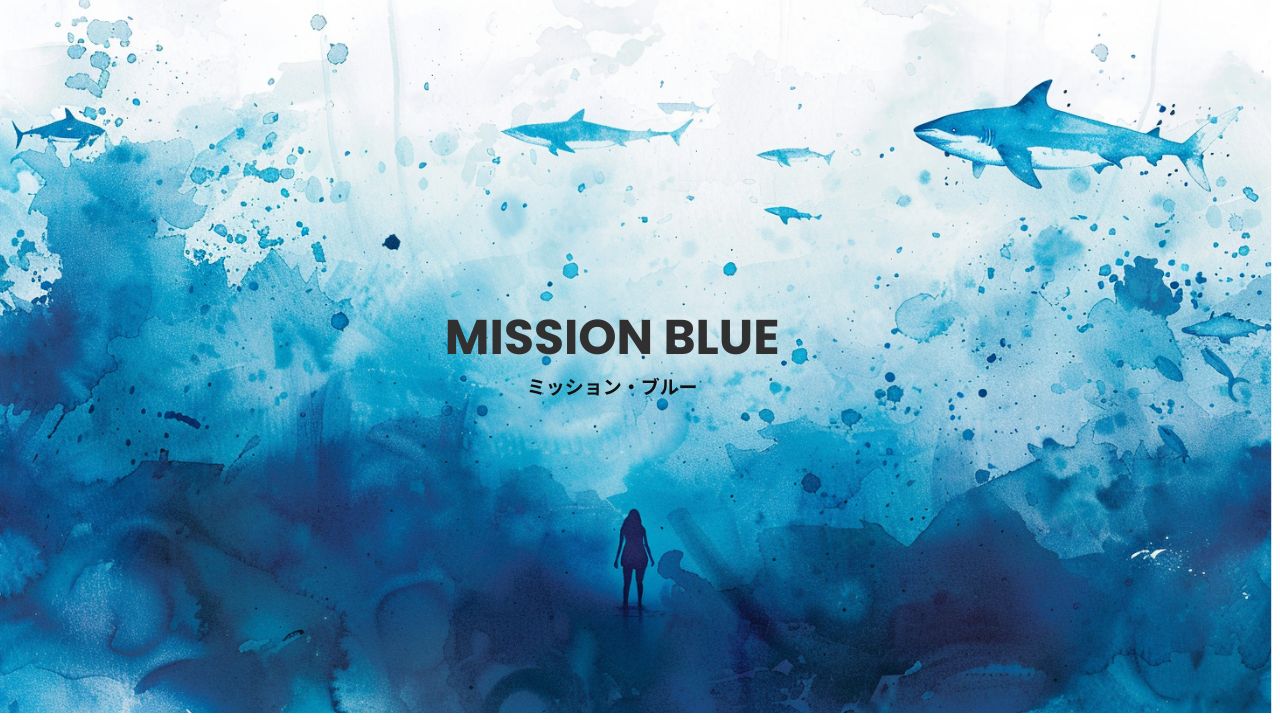
For this day, the film to watch is the 2014 Netflix original documentary Mission Blue, directed by Bob Nixon and Fisher Stevens.
The film follows the life and mission of Dr. Sylvia Earle, one of the world’s foremost marine biologists and ocean explorers. As her words “No Blue, No Green. No Oceans, No Us” suggest, Earle has devoted her life to conveying the ocean’s crisis to the world. She leads a movement to designate “Hope Spots” — special places critical to ocean conservation — as a global network. The film won the 2015 News & Documentary Emmy Award for Outstanding Editing (and was nominated in three categories in total). It remains available to stream on Netflix.
Basic Information & Synopsis
→ For synopsis and production information, see our Database Article
Director: Bob Nixon, Fisher Stevens
Year: 2014
Runtime: 95 minutes
Production: Insurgent Media, Diamond Docs, Netflix
Commemorative Day: World Oceans Day (June 8)
Synopsis: From a girl on a New Jersey farm to the diver nicknamed “Her Deepness,” the film traces the life of Dr. Sylvia Earle (b. 1935), who fell in love with the sea at twelve and went on to spend over 7,000 hours underwater and to break the glass ceiling of a male-dominated science. Built around her 2009 TED Prize wish, the documentary follows her journey to survey candidate “Hope Spots” — from the Galápagos to the Sea of Cortez — while she testifies, from more than fifty years of firsthand experience, to how drastically the ocean has changed. Refusing to end in despair, it pairs the reality of destruction with the possibility of recovery, asking each viewer what protecting the sea — and ourselves — truly requires.
Background Knowledge
Who Is Dr. Sylvia Earle?
Dr. Sylvia Earle is a longtime National Geographic Explorer and served as the first female Chief Scientist of NOAA (1990–1992). Her 1995 book Sea Change was likened to Rachel Carson’s Silent Spring in the urgency with which it warned of ocean degradation, and in 1998 she was named Time magazine’s first “Hero for the Planet.” She has been called “the most important oceanographer on Earth,” with more than 180 publications and over a hundred national and international honors to her name.
The Directors — Bob Nixon and Fisher Stevens
Co-director Bob Nixon helped create Gorillas in the Mist, building a body of work on nature and the environment. Fisher Stevens, widely known as an actor, also has a career as a documentary producer and director; he won the Academy Award for Best Documentary Feature for The Cove (2009), which dealt with the dolphin hunt in Taiji, Japan — a film deeply connected to Japan’s seas. Notably, Mission Blue was nominated for three Emmys and won the award for editing.
What Are Hope Spots?
In 2014, only about 3% of the ocean was protected. Hope Spots are the core concept of the Mission Blue movement, aiming to raise that figure. Like national parks on land, the idea is to establish “no-take zones” and reserves in the sea to allow marine ecosystems to recover. They cover both “places already damaged but capable of recovery” and “places still healthy but worth protecting.”
The TED Prize as a Starting Point
Earle won the TED Prize in 2009. By custom, recipients may declare one “wish to change the world,” and hers was “all the support needed to explore and protect the deep sea.” That TED Talk became the film’s direct point of departure and led to the international spread of the Mission Blue movement — a chain in which a single speech gave rise to a movement, and that movement to a documentary.
What Makes It Exceptional
Depth as a “Scientist’s Autobiography”
What sets the film apart from a simple environmental exposé is that Sylvia Earle’s life itself is its core. A childhood love of the sea, the fight against the glass ceiling in a male-dominated science, the balancing of family and research — her personal journey, layered over deep ocean knowledge and a sense of crisis, makes the film a human drama rather than merely an “environmental movie.” As An Inconvenient Truth anchored its argument in Al Gore’s own story, this film tells the ocean’s crisis through Earle’s life.
The Coexistence of Despair and Hope
Though it includes images that sink the heart — sharks finned alive — the theme running through the whole film is “ocean optimism.” While looking destruction in the eye, it keeps showing, through the concept of Hope Spots, the possibility that “there is still time.” Where many environmental documentaries leave the viewer in helplessness, this one holds the severity of the crisis and the hope of recovery in the same frame — a delicate balance that is part of why it earned the Emmy for editing.
Turning One Voice into a Movement
The film is also a record of how personal passion and scientific knowledge crystallize into an international movement. The process by which Mission Blue grew from a single TED Talk into Hope Spot designations around the world offers a concrete answer to the question, “What can one person do?” As Jane Goodall became an icon for great-ape conservation, Earle became an icon for ocean protection — and her example quietly asks viewers what they themselves can do.
Related Articles
- Mission Blue Database – Synopsis & Production Details
- Bob Nixon – Filmmaker Profile
- Fisher Stevens – Filmmaker Profile
はじめに
海を愛した女性科学者の、生涯をかけた使命——「希望の場所」を守るために
6月8日は「世界海洋デー(World Oceans Day)」です。
1992年6月8日、リオデジャネイロの地球サミット(国連環境開発会議)に並行して開催されたグローバル・フォーラムで、カナダの海洋開発国際センターと海洋学会が「青い惑星」と題するイベントを開催し、6月8日を海洋デーとして宣言しました。その後2008年12月5日、国連総会が決議63/111により6月8日を正式に世界海洋デーと定め、2009年から毎年世界各地で記念行事が行われています。
海洋は気温、海流、生命を通じて地球のシステムを動かし、私たちの飲み水、天気、気候、食料、そして呼吸する空気の酸素までを提供し調節しています。地球の表面の70%を占める海洋が今、気候変動、過剰漁業、プラスチック汚染、酸性化という複合的な危機に直面しています。
この6月8日に観る作品として、ボブ・ニクソンとフィッシャー・スティーヴンス監督による2014年のNetflixオリジナルドキュメンタリー**『ミッション・ブルー』**(Mission Blue)をお薦めします。
本作は、世界最高峰の海洋生物学者・海洋探検家であるシルヴィア・アール博士の生涯と使命を追ったドキュメンタリーです。「海なければ緑なし、海洋なければ人間なし(No Blue, No Green. No Oceans, No Us)」という彼女の言葉が示すように、アール博士は海洋の危機を世界に伝えるために生涯を捧げてきました。海洋保全の鍵となる特別な場所「ホープ・スポット(Hope Spot)」を世界規模のネットワークとして指定する運動を率い、本作は2015年のニュース&ドキュメンタリー・エミー賞 優秀編集賞を受賞しました(全3部門ノミネート)。Netflixで現在も視聴可能です。
基本情報・あらすじ
→ あらすじや製作情報はデータベース記事へ
監督: ボブ・ニクソン、フィッシャー・スティーヴンス
製作年: 2014年
上映時間: 95分
制作: Insurgent Media、Diamond Docs、Netflix
記念日: 世界海洋デー(6月8日)
あらすじ: ニュージャージーの農場の少女から「Her Deepness(深海の女性)」と呼ばれるまで——本作は、12歳で海に恋をし、生涯で7,000時間以上を水中で過ごし、男性社会の科学界でガラスの天井を割ってきたシルヴィア・アール博士(1935年生まれ)の生涯をたどります。2009年のTED賞でのウィッシュを起点に、ガラパゴスやコルテス海など各地のホープ・スポット候補地を調査する旅を追いながら、50年以上の経験を通じて海がいかに変わってしまったかを彼女自身が証言します。破壊の現実を直視しながらも絶望には終わらせず、回復の可能性と並べて描き、海を——そして私たち自身を——守るとはどういうことかを観る者に問いかけます。
予備知識
シルヴィア・アール博士とは
シルヴィア・アール博士は、ナショナルジオグラフィック協会のエクスプローラーを長年務め、NOAA(アメリカ海洋大気庁)初の女性チーフサイエンティスト(1990〜1992年)を経験しました。1995年の著書『Sea Change』は、海洋の劣化を、レイチェル・カーソンが『沈黙の春』で示した警鐘に匹敵する切実さで描いたと評され、1998年にはタイム誌の初代「地球のヒーロー」に選ばれています。「地球上で最も重要な海洋学者」と評されることもあり、180本を超える論文と100以上の国内外の栄誉を持つ、まさに生きる伝説です。
監督——ボブ・ニクソンとフィッシャー・スティーヴンス
共同監督のボブ・ニクソンは『愛は霧のかなたに(Gorillas in the Mist)』の制作に関わり、自然・環境を題材とする作品で実績を積んできました。もう一人のフィッシャー・スティーヴンスは俳優として広く知られますが、ドキュメンタリーのプロデューサー・監督でもあり、和歌山県太地町のイルカ漁を扱った『ザ・コーヴ』(2009年)でアカデミー賞長編ドキュメンタリー映画賞を受賞しています。日本の海と深く関わるこの作品で受賞した彼が、今度は海洋全体の危機に挑みました。なお本作はエミー賞3部門にノミネートされ、編集賞を受賞しています。
ホープ・スポットとは
2014年当時、海洋のわずか3%程度しか保護されていませんでした。ホープ・スポットは、その比率を引き上げることを目標とするミッション・ブルー運動の中核概念です。陸上の国立公園と同じように、海中にも「立ち入り禁止区域」や「保護区」を設けることで海洋生態系を回復させるという考えで、「すでに傷ついているが回復可能な場所」と「まだ健全だが守るべき場所」の両方を対象とします。
TED賞という出発点
アール博士は2009年にTED賞を受賞しました。受賞者は「世界を変える願い(ウィッシュ)」を一つ表明できるのが慣例で、彼女の願いは「深海の探索と保護のために必要なあらゆる支援」でした。このTEDトークが映画の直接の出発点となり、ミッション・ブルー運動の国際的な広がりへとつながりました。一本のスピーチが運動を生み、その運動が一本のドキュメンタリーを生んだのです。
優れている点
「科学者の自伝」としての深み
本作が単なる環境告発ドキュメンタリーと一線を画すのは、シルヴィア・アール博士という人物の生涯そのものが映画の核心だからです。海への愛が生まれた子ども時代、男性支配の科学界でガラスの天井と闘った日々、家族と研究の両立——その個人的な歩みが、海洋への深い知識と危機感に重なることで、単なる「環境映画」を超えた一人の人間のドラマになっています。『不都合な真実』が地球温暖化の主張をアル・ゴア個人の物語で支えたように、本作もアール博士の人生を通して海洋問題を語ります。
絶望と希望の同居
サメが生きたままヒレを切り取られる場面など、心が沈む映像も含まれますが、作品全体を貫くテーマは「オーシャン・オプティミズム(海への楽観)」です。破壊の現実を直視しながらも、ホープ・スポットというコンセプトによって「まだ間に合う」という可能性を示し続けます。多くの環境ドキュメンタリーが観客を無力感のうちに置き去りにしがちな中で、本作は危機の深刻さと回復の希望を同じ画面に共存させます。この繊細なバランスこそ、本作がエミー賞編集賞に輝いた理由の一端でもあるでしょう。
一人の声を運動へと変えた記録
本作は、個人の情熱と科学的知識が、いかにして国際的な運動へと結晶していくかを描く記録でもあります。TEDトークという一本のスピーチから始まったミッション・ブルーが、世界各地のホープ・スポット指定へと広がっていく過程は、「一人の人間に何ができるのか」という問いへの具体的な答えを示しています。ジェーン・グドールが類人猿保護のアイコンとなったように、アール博士は海洋保護のアイコンとなり、その姿は観客自身に「では自分には何ができるか」を静かに問いかけます。